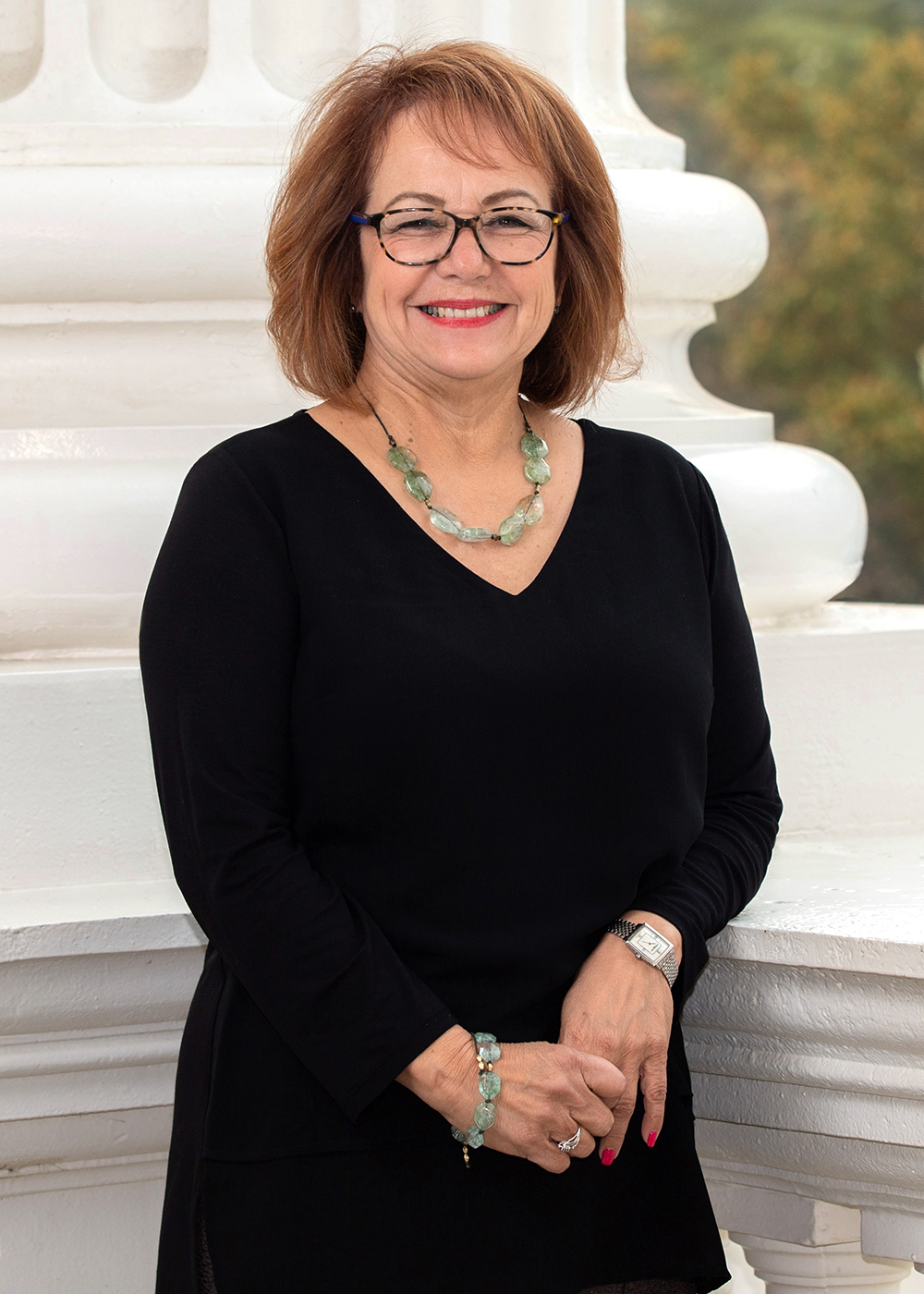
Photo of María Elena Durazo
D California Senate · District 26

Sen. María Elena Durazo

Compare
Total votes
18,987
all sessions
Attendance
98%
302 missed
Near the chamber average
With party
99%
of cast votes
Near the chamber average
Bipartisan score
0%
crosses aisle rarely
Near the chamber average
Sponsored
555
bills & resolutions
Near the chamber average
Committees
8
assignments
555 bills and resolutions

Sponsored bills

Total
555
Primary
172
Co-sponsor
383
This page
555
matching current filters
Co-sponsor AJR 23
Signed into law · California Assembly · Co-sponsor
Title IX: 50th anniversary.

This measure would, on June 23, 2022, commemorate the 50th anniversary of the enactment of Title IX, and would urge Californians to continue to work together to achieve the goals set by Title IX, as specified.

Signed into law Aug 19, 2022 1 co-sponsor
Co-sponsor SJR 12
Signed into law · California Senate · Co-sponsor
Relative to the Equal Rights Amendment.

This measure would urge the Congress of the United States to pass House Resolution 891, resolving that the requirements have been met to ratify the Equal Rights Amendment (ERA) and that it shall now be known as the "Twenty-Eighth Amendment to the Constitution."

Signed into law Aug 19, 2022 1 co-sponsor
Co-sponsor SCR 64
Signed into law · California Senate · Co-sponsor
Relative to Vicente Fernández Day.

This measure would declare that the Legislature honors the life and legacy of Vicente Fernández, and would proclaim February 17, 2022, as Vicente Fernández Day, a day of remembrance and education to ensure that all Californians honor and remember the cultural voice of generations.

Signed into law Aug 19, 2022 1 co-sponsor
Primary SCR 122
In committee · California Senate · Lead sponsor
Relative to the Vin Scully Memorial Highway.

This measure would designate a specified portion of State Route 110 in the County of Los Angeles as the Vin Scully Memorial Highway. The measure would also request the Department of Transportation to determine the cost of appropriate signs showing this special designation and, upon receiving donations from nonstate sources covering the cost, to erect those signs.

In committee Aug 15, 2022 0 co-sponsors
Primary SB 1300
Passed · California Senate · Lead sponsor
Foster youth: Supplemental Security Income.

Existing law provides for the out-of-home placement, including foster care placement, of children who are unable to remain in the custody and care of their parents. Existing law, the federal Social Security Act, provides for benefits for eligible beneficiaries, including survivorship and disability benefits and supplemental security income (SSI) benefits for, among others, blind and disabled children. Existing law requires the county to provide specified information relating to SSI payments to a foster youth receiving those benefits when the youth is approaching their 18th birthday, including providing information regarding the federal requirement that the youth establish continuing disability as an adult in order for SSI benefits to continue. Existing law declares the intent of the Legislature that nonminor dependents who receive federal SSI benefits may serve as their own payee, if it is determined that the nonminor dependent satisfies the criteria established by the Social Security Administration, and should be assisted by the county welfare department in receiving direct payment. Existing law requires a youth in foster care and nearing emancipation to be screened by the county for potential eligibility SSI benefits, as specified. This bill would revise and expand these provisions with respect to nonminor dependents, including requiring the county, if the youth elects to remain in foster care as a nonminor dependent after attaining 18 years of age, to assist the nonminor dependent in establishing continuing disability as an adult, including identifying an appropriate representative payee, which may include the nonminor dependent, a trusted adult, or the county. The bill would specify the duties of the county if selected as a nonminor dependent's representative payee. The bill would revise screening requirements for foster youth nearing emancipation, including requiring the youth to be under the supervision of the county child welfare agency, juvenile probation department, or tribal organization, and requiring the screening to first occur when the youth is over 16 years of age. The bill also would require the county to screen all nonminor dependents for potential eligibility for SSI benefits, and to submit an application on behalf of any nonminor dependent who is screened as being likely to be eligible for those benefits and consents to the application, as specified. The bill would require the county to assist the nonminor dependent or representative payee other than the county to provide information to the Social Security Administration to ensure that the nonminor dependent receives the appropriate number of payments. The bill would replace various references to county welfare departments to instead refer to county placement agencies. By increasing duties of county placing agencies assisting foster youth and nonminor dependents, the bill would impose a state-mandated program. The California Constitution requires the state to reimburse local agencies and school districts for certain costs mandated by the state. Statutory provisions establish procedures for making that reimbursement. This bill would provide that no reimbursement is required by this act for a specified reason.


Passed Aug 11, 2022 0 co-sponsors
Co-sponsor SB 952
Passed · California Senate · Co-sponsor
Pupil instruction: dual language programs: Pathways to Success Grant Program.

Existing law establishes the Pathways to Success Grant Program with the goal of providing pupils in preschool, transitional kindergarten, kindergarten, and grades 1 to 12, inclusive, with dual language immersion programs, developmental bilingual programs for English learners, or early learning dual language learners programs, as those terms are defined. Existing law requires the State Department of Education to administer the program and award a minimum of 10 grants of up to $300,000 to school districts and consortia of school districts in partnership with other specified entities, and additional funding of up to $20,000 to an applicant proposing to establish a dual language immersion program or developmental bilingual program for English learners in a target language other than Spanish, as provided. Existing law makes the implementation of the program contingent upon an appropriation by the Legislature for its purposes in the annual Budget Act or another statute. This bill would revise and recast the Pathways to Success Grant Program. The bill would require the State Department of Education to instead award a minimum of 20 one-time grants of up to $750,000 per grant, as provided, and additional funding of up to $37,500 when awarding a grant to an applicant proposing to establish a dual language immersion program or developmental bilingual program for English learners in a target language other than Spanish, as provided. The bill would require the department to, among other things, determine grant award selection criteria and meet quarterly with grantees to share practices and resources and resolve implementation issues. The bill would require the department to hire a consultant to coordinate program activities and provide technical assistance to the department. The bill would require the department to contract for technical assistance and strategic planning services for grantees and would exempt those contracts from various state contracting requirements. The bill would require the department to submit to the appropriate policy and budget committees of the Legislature an annual progress report, a one-time report on or before June 30, 2025, and a one-time report on or before October 1, 2029, with specified information about the progress and outcomes of the grant program, as provided. This bill would additionally require grant applicants to include a description of how the proposed grant programs align to one or more goals included in the local educational agency's local control and accountability plan. The bill would additionally authorize grant funds to be used for attendance at the quarterly grant recipient meetings and for employment of a dual immersion teacher specialist to support program implementation, as provided.

Passed Aug 11, 2022 1 co-sponsor
Primary SB 1351
Passed · California Senate · Lead sponsor
California Youth Apprenticeship Program.

Existing law establishes within the Department of Industrial Relations the Division of Apprenticeship Standards, under the direction of the Chief of the Division of Apprenticeship Standards, to administer and enforce laws relating to apprenticeships, including evaluating and approving apprenticeship programs. This bill would establish the California Youth Apprenticeship Program for the purpose of awarding grant funds to eligible applicants to provide funding for existing apprenticeship and preapprenticeship programs or to develop new apprenticeship programs to serve a specified target population. The bill would define "target population" as individuals from 16 to 24 years of age who are at risk of disconnection or are disconnected from the education system or employment, unhoused, in the child welfare, juvenile justice, or criminal justice system, live in concentrated poverty, or face barriers to labor market participation, among other criteria. The bill would establish the Office of the California Youth Apprenticeship Program within the Division of Apprenticeship Standards to administer the program. This bill would require the office, among other things, to coordinate with, complement, and enhance existing preapprenticeship and apprenticeship programs and to solicit proposals and select grant recipients from eligible applicants, including, among others, county offices of education, regional consortia of community college districts, and local intermediaries. The bill would specify information required to be included in a grant proposal and would specify eligible purposes for use of grant funds. The bill would require the office to complete planning to implement the program by October 31, 2023, and would require the office to begin soliciting grant proposals by March 31, 2024. This bill would require the office to monitor grant recipients for compliance and would require grant recipients to provide necessary data to the office for purposes of evaluating achievement of the goals and objectives of the program. The bill would provide that the program shall be implemented only if funds are appropriated by the Legislature for purposes of the program. The bill would state various findings and declarations of the Legislature relating to apprenticeships.

Passed Aug 11, 2022 0 co-sponsors
Primary SB 700
Passed · California Senate · Lead sponsor
State Contract Act: High Road Employment Program.

(1) Existing law establishes the Labor and Workforce Development Agency as an executive branch agency within state government, consisting of specified boards and departments, including the California Workforce Development Board and the Employment Development Department. Existing law, the California Workforce Innovation and Opportunity Act, establishes the California Workforce Development Board as the body responsible for assisting the Governor in the development, oversight, and continuous improvement of California's workforce investment system and the alignment of the education and workforce investment systems to the needs of the 21st century economy and workforce. Existing law tasks the board with developing standards, procedures, and criteria for defining high road workforce development and training partnerships. Existing law, the State Contract Act, governs contracting between state agencies and private contractors, and sets forth requirements for the bidding, awarding, and overseeing of contracts for projects. Existing law charges the Department of General Services, in the Government Operations Agency, with various administrative duties under the act. This bill would establish the High Road Employment Program within the Labor and Workforce Development Agency to assist state agencies in complying with specified High Road Employment Plan requirements and with appropriate planning, inclusive decisionmaking, and fair disbursement of community and worker support resources. This bill would require each bidder for a contract with the state, as a condition of eligibility for such a contract, to submit a High Road Employment Plan to the Department of General Services that includes certification, under penalty of perjury, that all workers are properly classified, as specified, and that includes certain job information, including the number of jobs created, and wage and benefit amounts by job classification for nonsupervisory workers. By expanding the scope of the crime of perjury, the bill would impose a state-mandated local program. The bill would also require each plan to demonstrate job quality standards and employment practices that include specified provisions, including, among others, offering a stable employment schedule and compliance with high road standards, as prescribed. The bill would further require the Labor and Workforce Development Agency, the Government Operations Agency, including the Department of General Services, and the Governor's Office of Business and Economic Development to establish, and be referred to as the Interagency High Road Team, and to be collectively responsible for oversight and decisionmaking related to creating High Road Employment Plan evaluation metrics and advancing other objectives relating to high road procurement. The bill would require the team to compile specified information related to high road employment requirements reported by state agencies and to report this information to the Legislature on or before January 1, 2024. (2) Existing law requires the California Workforce Development Board to assist the Governor in developing standards, procedures, and criteria for defining high road employers, high road jobs, high road workforce development, and high road training partnerships in California. This bill would add high road contracting and high road procurement to those standards, procedures, and criteria. The bill would define related terms, including "economic equity" for purposes of the act. The California Constitution requires the state to reimburse local agencies and school districts for certain costs mandated by the state. Statutory provisions establish procedures for making that reimbursement. This bill would provide that no reimbursement is required by this act for a specified reason.
Passed Aug 11, 2022 0 co-sponsors
Co-sponsor AB 4
Passed · California Assembly · Co-sponsor
Medi-Cal: eligibility.

Existing law provides for the Medi-Cal program, which is administered by the State Department of Health Care Services, under which qualified low-income individuals receive health care services. The Medi-Cal program is, in part, governed and funded by federal Medicaid program provisions. The federal Medicaid program provisions prohibit payment to a state for medical assistance furnished to an alien who is not lawfully admitted for permanent residence or otherwise permanently residing in the United States under color of law. Existing law requires individuals under 19 years of age enrolled in restricted-scope Medi-Cal at the time the Director of Health Care Services makes a determination that systems have been programmed for implementation of these provisions to be enrolled in the full scope of Medi-Cal benefits, if otherwise eligible, pursuant to an eligibility and enrollment plan, and extends eligibility for full scope Medi-Cal benefits to individuals who are under 25 years of age, and who are otherwise eligible for those benefits but for their immigration status. Existing law makes the effective date of enrollment for those individuals the same day that systems are operational to begin processing new applications pursuant to the director's determination. Existing law requires an individual eligible for Medi-Cal under these provisions to enroll in a Medi-Cal managed care health plan. Existing law provides that Medi-Cal benefits for individuals who are 65 years of age or older, and who do not have satisfactory immigration statuses or are unable to establish satisfactory immigration statuses, as specified, are to be prioritized in the Budget Act for the upcoming fiscal year if the Department of Finance projects a positive ending balance in the Special Fund for Economic Uncertainties for the upcoming fiscal year and each of the ensuing 3 fiscal years that exceeds the cost of providing those individuals full scope Medi-Cal benefits. Effective January 1, 2022, this bill would instead extend eligibility for full scope Medi-Cal benefits to anyone regardless of age, and who is otherwise eligible for those benefits but for their immigration status, pursuant to an eligibility and enrollment plan. The bill would delete the above-specified provisions regarding individuals who are under 25 years of age or 65 years of age or older and delaying implementation until the director makes the determination described above. The bill would require the eligibility and enrollment plan to ensure that an individual maintains continuity of care with respect to their primary care provider, as prescribed, would provide that an individual is not limited in their ability to select a different health care provider or Medi-Cal managed care health plan, and would require the department to provide monthly updates to the appropriate policy and fiscal committees of the Legislature on the status of the implementation of these provisions. Because counties are required to make Medi-Cal eligibility determinations and this bill would expand Medi-Cal eligibility, the bill would impose a state-mandated local program. The California Constitution requires the state to reimburse local agencies and school districts for certain costs mandated by the state. Statutory provisions establish procedures for making that reimbursement. This bill would provide that, if the Commission on State Mandates determines that the bill contains costs mandated by the state, reimbursement for those costs shall be made pursuant to the statutory provisions noted above.

Passed Aug 11, 2022 1 co-sponsor
Showing 341 to 350 of 555 bills
Previous 1 … 34 35 36 … 56 Next