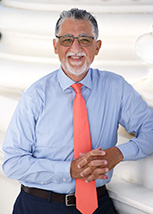
Photo of Anthony Portantino
D California Senate · District 25

Sen. Anthony Portantino

Contact Email
Compare
Total votes
35,772
all sessions
Attendance
96%
931 missed
Near the chamber average
With party
99%
of cast votes
Near the chamber average
Bipartisan score
0%
crosses aisle rarely
Near the chamber average
Sponsored
387
bills & resolutions
Near the chamber average
Committees
0
assignments
387 bills and resolutions

Sponsored bills

Total
387
Primary
140
Co-sponsor
247
This page
387
matching current filters
Co-sponsor SCR 99
Signed into law · California Senate · Co-sponsor
Relative to Take Our Daughters And Sons To Work Day.

This measure would declare April 28, 2022, as Take Our Daughters and Sons to Work Day, and would recognize the goals of introducing our daughters and sons to the workplace and commend all participants of Take Our Daughters And Sons To Work Day.

Signed into law May 27, 2022 1 co-sponsor
Co-sponsor AB 35
Signed into law · California Assembly · Co-sponsor
Civil damages: medical malpractice.

Existing law, referred to as the Medical Injury Compensation Reform Act of 1975 (MICRA) , prohibits an attorney from contracting for or collecting a contingency fee for representing any person seeking damages in connection with an action for injury or damage against a health care provider based upon alleged professional negligence in excess of specified limits. This bill would recast those provisions and base the amount of contingency fee that may be contracted for upon whether recovery is pursuant to settlement agreement and release of all claims executed before a civil complaint or demand for arbitration is filed, or pursuant to settlement, arbitration, or judgment after a civil complaint or demand for arbitration is filed, as specified. The bill would add and revise definitions for these purposes. Existing law provides that in any action against a health care provider based upon professional negligence, the injured plaintiff is entitled to recover noneconomic losses to compensate for pain, suffering, inconvenience, physical impairment, disfigurement, and other nonpecuniary damage. Existing law limits the amount of damages for noneconomic losses in an action for injury against a health care provider based on professional negligence to $250,000. This bill would remove the $250,000 limit on noneconomic damages and expand the recast provisions to include an action for injury against a health care institution, as defined. The bill would increase the applicable limitation based upon whether the action for injury involved wrongful death. The bill would specify that these limitations would increase by $40,000 each January 1st for 10 years and beginning on January 1, 2034, the applicable limitations on noneconomic damages for personal injury and for wrongful death would be adjusted for inflation on January 1st of each year by 2%. Existing law specifies that in any action for injury or damages against a provider of health care services, a superior court shall, at the request of either party, enter a judgment ordering that money damages or its equivalent for future damages of the judgment creditor be paid in whole or in part by periodic payments rather than by a lump-sum payment if the award equals or exceeds $50,000. This bill would increase the minimum amount of the judgment required to request periodic payments to $250,000. Existing law makes statements, writings, or benevolent gestures expressing sympathy or a general sense of benevolence relating to the pain, suffering, or death of a person involved in an accident and made to that person, or to the family of that person, inadmissible as evidence of an admission of liability in a civil action. This bill would specify that statements, writings, or benevolent gestures expressing sympathy, regret, a general sense of benevolence, or suggesting, reflecting, or accepting fault relating to the pain, suffering, or death of a person, or to an adverse patient safety event or unexpected health care outcome, as specified, shall be confidential, privileged, protected, not subject to subpoena, discovery, or disclosure, and shall not be used or admitted into evidence in any civil, administrative, regulatory, licensing, or disciplinary board, agency, or body action or proceeding, and shall not be used or admitted in relation to any sanction, penalty, or other liability, as evidence of an admission of liability or for any other purpose.


Signed into law May 23, 2022 1 co-sponsor
Primary SB 829
In committee · California Senate · Lead sponsor
Motion picture production: armorers: firearm safety.

Existing law authorizes a person who is at least 21 years of age to apply for an entertainment firearms permit from the Department of Justice, which authorizes the permit holder to possess firearms loaned to them for use solely as a prop in a motion picture, television, video, theatrical, or other entertainment production or event. Existing law requires the permit application to contain specified information, including a residential and mailing address, social security number, and date of birth, and requires the payment of a specified fee. Existing law makes it a crime to knowingly furnish incorrect information or knowingly omitting any information from an application for an entertainment firearms permit. This bill, for purposes of motion picture production, would authorize the use of a firearm on a production of a motion picture if the firearm is used with blanks and remains under the supervision of an armorer at all times. The bill would define terms for its purposes. Under the bill, an armorer would have specific responsibilities relating to the use of a firearm in the course of performance, including the sole authority to furnish a performer with a firearm containing blanks for use in the production. The bill would prohibit an armorer from having any other duties, responsibilities, or obligations during the time that a performer is using a firearm. The bill would require an employer to ensure that a fire code official is present on any motion picture production during the time any firearm and blanks are used in the motion picture production. The bill, with prescribed exceptions, would prohibit the use of ammunition in the production of a motion picture. This bill would require the Office of the State Fire Marshal (the OSFM) , in consultation with the Industry-Wide Labor-Management Safety Committee, on or before July 1, 2023, to develop a course with a prescribed curriculum on the safe use and supervision of firearms and blanks by armorers in a motion picture production. The bill would require the OSFM, on or before January 1, 2024, to develop a list of vendors approved to administer the armorers safety course and issue a certificate of completion. On and after July 1, 2024, an employer would be prohibited from employing an armorer unless the armorer has completed an armorers safety course from an approved vendor. The employer would be required to request and keep in their records a copy of the certificate of completion. The bill would require a person seeking to work as an armorer to complete the armorers safety course. This bill would also require the OSFM, in consultation with the Industry-Wide Labor-Management Safety Committee, on or before July 1, 2023, to develop an internet web-based firearms safety course with a prescribed curriculum for motion picture production employees who work in close proximity to an armorer or a performer who will be using a firearm and for performers who will be using a firearm. The bill would require the OSFM, on or before January 1, 2024, to develop a list of vendors approved to make the online firearms safety course available and issue a certificate of completion. On and after July 1, 2024, the bill would require an employer of specified motion picture production employees to require them to take the online firearms safety course and to request and keep in their records a copy of the certificate of completion. The employer would be responsible for the cost of the course. The bill would make an employer who fails to comply with the bill's provisions liable for an unspecified civil penalty for each offense. The bill would authorize the Attorney General, a city attorney, or a county counsel to bring an action to impose a civil penalty, as prescribed. The bill would establish exemptions from its provisions for specified registered security guards and peace officers.

In committee May 19, 2022 0 co-sponsors
Co-sponsor AB 1690
In committee · California Assembly · Co-sponsor
Tobacco products: single-use electronic cigarettes.

Under existing law, the Stop Tobacco Access to Kids Enforcement Act, an enforcing agency, as defined, may assess civil penalties against any person, firm, or corporation that sells, gives, or furnishes specified tobacco and cigarette related items, including cigarette papers, to a person who is under 21 years of age, except as specified. The existing civil penalties range from $400 to $600 for a first violation, up to $5,000 to $6,000 for a 5th violation within a 5-year period. Existing law prohibits the sale, distribution, or nonsale distribution of tobacco products directly or indirectly to any person under 21 years of age through the United States Postal Service or other public or private postal or package delivery service. Under existing law, a district attorney, city attorney, or the Attorney General may assess civil penalties against a violator of not less than $1,000 or more than $2,000 for the first violation and up to $10,000 for a 5th or subsequent violation within a 5-year period. Under existing law, every person, firm, or corporation that knowingly or under circumstances in which it has knowledge, or should otherwise have grounds for knowledge, sells, gives, or furnishes a cigarette, among other specified items, to another person who is under 21 years of age is, except as specified, subject to either a criminal action for a misdemeanor or to a civil action brought by a city attorney, a county counsel, or a district attorney, punishable by a fine of $200 for the first offense, $500 for the 2nd offense, and $1,000 for the 3rd offense. This bill would prohibit a person or entity from selling, giving, or furnishing to another person of any age in this state a single-use electronic cigarette, as defined, except as specified. The bill would prohibit that selling, giving, or furnishing, whether conducted directly or indirectly through an in-person transaction, or by means of any public or private method of shipment or delivery to an address in this state. This bill would authorize a city attorney, county counsel, or district attorney to assess a $500 civil fine against each person determined to have violated those prohibitions in a proceeding conducted pursuant to the procedures of the enforcing agency, as specified. This bill would make its provisions operative on January 1, 2024.

In committee May 16, 2022 1 co-sponsor
Primary SCR 72
Signed into law · California Senate · Lead sponsor
Relative to PTA Day.

This measure would declare February 17, 2022, as PTA Day, commend the National Parent Teacher Association on the occasion of its 125th anniversary, and encourage all California residents to attend and participate in the celebration of this commemorative event.

Signed into law Apr 19, 2022 0 co-sponsors
Showing 221 to 230 of 387 bills
Previous 1 … 22 23 24 … 39 Next