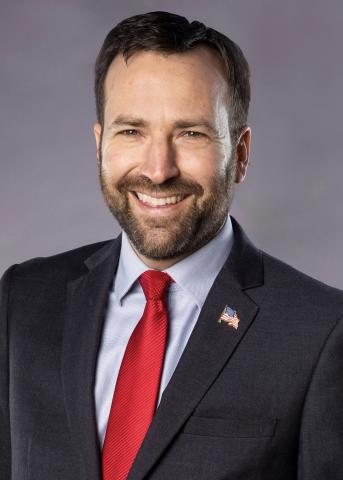
Photo of Ben Allen
D California Senate · District 24

Sen. Ben Allen

Compare
Total votes
14,273
all sessions
Attendance
92%
893 missed
Lower than 86% of chamber peers
With party
99%
of cast votes
Near the chamber average
Bipartisan score
0%
crosses aisle rarely
Near the chamber average
Sponsored
478
bills & resolutions
Near the chamber average
Committees
13
assignments
478 bills and resolutions

Sponsored bills

Total
478
Primary
137
Co-sponsor
341
This page
478
matching current filters
Co-sponsor SCR 53
Signed into law · California Senate · Co-sponsor
Relative to climate change.

This measure would declare that a climate emergency threatens the state, the nation, the planet, the natural world, and all of humanity.

Signed into law Aug 19, 2022 1 co-sponsor
Co-sponsor SCR 64
Signed into law · California Senate · Co-sponsor
Relative to Vicente Fernández Day.

This measure would declare that the Legislature honors the life and legacy of Vicente Fernández, and would proclaim February 17, 2022, as Vicente Fernández Day, a day of remembrance and education to ensure that all Californians honor and remember the cultural voice of generations.

Signed into law Aug 19, 2022 1 co-sponsor
Primary SB 1258
Passed · California Senate · Lead sponsor
Energy Commission: electric vehicle charging infrastructure: assessment.

Existing law requires the State Energy Resources Conservation and Development Commission, working with specified state entities, to prepare a statewide assessment of the electric vehicle charging infrastructure needed to support the levels of electric vehicle adoption required to meet the goals of putting at least 5 million zero-emission vehicles in service by 2030 and of reducing emissions of greenhouse gases to 40% below 1990 levels by 2030. Existing law requires that the assessment expand on the commission's electric vehicle infrastructure projections to consider all necessary charging infrastructure, all vehicle categories, road, highway, and off-road electrification, port and airport electrification, and other programs to accelerate the adoption of electric vehicles to meet those goals, and examine existing and future infrastructure needs throughout California, including in low-income communities. This bill would require the assessment's examination of existing and future infrastructure needs throughout California to also include emerging electric vehicle use cases such as electric autonomous vehicle fleets.

Passed Aug 11, 2022 0 co-sponsors
Primary SB 1352
Passed · California Senate · Lead sponsor
Political Reform Act of 1974: preelection statements.

The Political Reform Act of 1974 imposes various requirements on elected officers, candidates for elective office, and committees. Among these requirements, the act requires certain persons and committees to file preelection statements disclosing the contributions and expenditures made in connection with specified elections at specified times before the election. This bill would require an additional preelection statement to be filed no later than 70 days before the election, for the period ending 75 days before the election. By expanding the scope of existing crimes with respect to reporting requirements under the Political Reform Act of 1974, the bill would impose a state-mandated local program. The California Constitution requires the state to reimburse local agencies and school districts for certain costs mandated by the state. Statutory provisions establish procedures for making that reimbursement. This bill would provide that no reimbursement is required by this act for a specified reason. The Political Reform Act of 1974, an initiative measure, provides that the Legislature may amend the act to further the act's purposes upon a 23 vote of each house of the Legislature and compliance with specified procedural requirements. This bill would declare that it furthers the purposes of the act.

Passed Aug 11, 2022 0 co-sponsors
Co-sponsor SB 602
Passed · California Senate · Co-sponsor
Review of conservatorships: care plans.

Existing law generally provides for the establishment, review, and termination of conservatorships. Existing law specifies the persons who may be appointed as a conservator and requires the court to review a conservatorship 6 months after the initial appointment of the conservator, one year after the appointment of the conservator, and annually thereafter. Existing law sets forth the powers and duties of a conservator for the care, custody, and control of a conservatee. This bill, commencing January 1, 2024, would require a conservator, within 60 days of appointment and within 30 days before a hearing to determine the continuation or termination of an existing conservatorship, to file a care plan regarding the care, custody, and control of the conservatee. The bill would require the care plan to be delivered to specified persons, including the conservatee and their attorney, but would otherwise make the care plan confidential, except as specified, thereby limiting public access to the records. The bill would require the Judicial Council to develop a mandatory form for the care plan, which would be required to include specified information, including descriptions of the conservatee's living arrangement and level of care and any plans to modify those within the next 12 months. The bill would impose sanctions for a conservator's failure to timely file a care plan, including authorizing the court to impose a civil penalty in any amount up to $1,000, payable to the estate of the conservatee, and authorizing the court to remove a conservator for failure to file a care plan. The bill would require an investigator to review the most recent care plan as part of an investigation. Existing constitutional provisions require that a statute that limits the right of access to the meetings of public bodies or the writings of public officials and agencies be adopted with findings demonstrating the interest protected by the limitation and the need for protecting that interest. This bill would make legislative findings to that effect.

Passed Aug 11, 2022 1 co-sponsor
Primary SB 1290
Passed · California Senate · Lead sponsor
Sidewalk vendors.

Existing law prohibits a local authority, as defined, from regulating sidewalk vendors, except in accordance with specified provisions. Existing law establishes that a violation of a local authority's sidewalk vending program is punishable only by an administrative fine, subject to an ability-to-pay determination, and recision of a permit issued to a sidewalk vendor for the term of that permit upon the 4th violation or subsequent violations, as specified. This bill would require the Governor's Office of Business and Economic Development, by January 1, 2025, to complete and submit to the Legislature a report on local sidewalk vending in California in consultation with other entities, organizations, authorities, and stakeholders, as specified. The bill would repeal that provision on January 1, 2029.

Passed Aug 11, 2022 0 co-sponsors
Co-sponsor SB 364
Passed · California Senate · Co-sponsor
Pupil meals.

(1) Existing law establishes a system of public elementary and secondary schools in this state. This system comprises local educational agencies throughout the state that provide instruction to pupils in kindergarten and grades 1 to 12, inclusive, at schoolsites operated by these agencies. Existing law requires the governing board of a school district and the county superintendent of schools to make applications for free or reduced-price meals available to pupils at all times during each regular schoolday. Existing law authorizes the governing boards of school districts and county superintendents of schools to make applications for free or reduced-price meals electronically available online. Existing law specifies requirements to be met by the governing boards of school districts, county offices of education, and school food authorities that choose to provide access to an online application. This bill would require applications for free or reduced-price meals made electronically available online by school district governing boards or county offices of education to comply with specified requirements, including provisions prohibiting the misuse of information provided online by applicants. The bill would require applications for free and reduced-price meals, which are authorized to be submitted at any time during a schoolday, to be processed within 10 days of submission. To the extent that this provision would impose new duties on local educational agencies, it would constitute a state-mandated local program. The bill would make private third-party vendors who violate its provisions subject to specified civil penalties. The bill would specify that its provisions would not prevent the use of information provided by a school meal applicant from being used by a governmental entity to increase access to a government-administered anti-hunger program. The bill would authorize each school district and county superintendent of schools to establish a secured internet website providing access to an online data collection form as part of the annual enrollment process, and would require the department to host a sample application by July 1, 2024, unless the Superintendent of Public Instruction determines that use of the form would negatively impact the local control funding formula. (2) Existing law provides for the federal Supplemental Nutrition Assistance Program (SNAP) , administered in California as CalFresh, under which each county distributes nutrition assistance benefits provided by the federal government to eligible households. Existing law establishes the California Work Opportunity and Responsibility to Kids (CalWORKs) program, under which each county provides cash assistance and other benefits to qualified low-income families using federal, state, and county funds. Existing law establishes the Medi-Cal program, which is administered by the State Department of Health Care Services and under which qualified low-income persons receive health care benefits. Existing federal law provides for the Pandemic Electronic Benefit Transfer (P-EBT) program, under which the Secretary of Agriculture of the United States is authorized to approve state plans to provide eligible children with temporary emergency nutrition assistance benefits during fiscal years 2020 and 2021 in any case in which a school is closed or has reduced the number of days or hours that students attend the school during a public health emergency designation during which the school would otherwise be in session. This bill would establish the Better Out of School Time (BOOST) Nutrition EBT Program, to be administered by the State Department of Social Services, to provide benefits to eligible pupils during regularly scheduled summer breaks. The bill would make eligible pupils who receive benefits under Medi-Cal, CalFresh, or CalWORKs, or are in foster care. The bill would make implementation of the BOOST Nutrition EBT Program contingent upon an appropriation in the annual Budget Act or another statute for its purposes. The bill would require the department to seek all available funding for, and maximize participation in, the P-EBT program. The bill would also require the department to issue BOOST Nutrition EBT benefits to any pupil who was eligible to receive benefits under the P-EBT program, as of July 1, 2021, for the 5-month period following the end of the P-EBT program, and any child who was eligible to receive benefits under the P-EBT program, as of July 1, 2021, for the 5-month period following the end of the P-EBT program and who also receives benefits under Medi-Cal, CalFresh, or CalWORKs, or is in foster care. By imposing new duties on local educational agencies, the bill would impose a state-mandated local program. (3) The California Constitution requires the state to reimburse local agencies and school districts for certain costs mandated by the state. Statutory provisions establish procedures for making that reimbursement. This bill would provide that, if the Commission on State Mandates determines that the bill contains costs mandated by the state, reimbursement for those costs shall be made pursuant to the statutory provisions noted above.

Passed Aug 11, 2022 1 co-sponsor
Primary SB 611
Passed · California Senate · Lead sponsor
Income taxes: credits: motion pictures.

The Personal Income Tax Law and the Corporation Tax Law allow various credits against the taxes imposed by those laws, including credits to a qualified taxpayer in an amount equal to 20% or 25% of qualified expenditures for the production of a qualified motion picture in California (film credits) . Existing law provides additional credits, among other credits, for the production of a qualified motion picture in California, as specified, that is in its 2nd or subsequent years of receiving a tax credit allocation, in an aggregate amount not to exceed 5% of the qualified expenditures of that motion picture relating to original photography outside of the Los Angeles zone, as defined. Existing law also provides additional credits, among other additional credits, for the production of those same qualified motion pictures in an amount equal to 10% of qualified wages paid for services performed relating to original photography outside of the Los Angeles zone to qualified individuals who reside in the state but outside the Los Angeles zone. Existing law requires the California Film Commission to establish a procedure for applicants to file a written application for allocation of the credits that includes, among other things, a summary of the applicant's voluntary programs to increase the representation of minorities and women in specified job classifications. Existing law also requires the California Film Commission to implement a pilot Career Pathways Training program to fund technical skills training to individuals from underserved communities for entry into film and television industry jobs. This bill would require an applicant to include in the credit application a workforce development plan summarizing the applicant's voluntary programs to increase the representation of individuals from underserved communities instead of the summary of programs to increase representation of minorities and women. The bill would authorize additional credit amounts for the production of a qualified motion picture in an amount equal to 20% of the qualified wages paid to qualified individuals who are graduates of the Career Pathways Training program, or an equivalent program, if specified conditions are met, including that the motion picture has filed a workforce development plan with, and approved by, the California Film Commission. This bill would include a change in state statute that would result in a taxpayer paying a higher tax within the meaning of Section 3 of Article XIIIA of the California Constitution, and thus would require for passage the approval of 23 of the membership of each house of the Legislature. This bill would take effect immediately as a tax levy.

Passed Aug 11, 2022 0 co-sponsors
Co-sponsor SB 911
Passed · California Senate · Co-sponsor
State government: California Board to Fund Public Interest Media.

Existing law creates the California Public Broadcasting Commission in state government as an independent commission to encourage the growth and development of public broadcasting services to the people of this state. This bill would create the California Board to Fund Public Interest Media that would operate pursuant to these provisions if it is funded by an appropriation by the Legislature, private donations, or both. The bill would require the Speaker of the Assembly, the President pro Tempore of the Senate, the minority leaders of the Assembly and the Senate, and the Governor to appoint individuals to the 15 member board, as specified. The bill would require the board to do various things, including encouraging independent, local public service news coverage and awarding grants to individuals or organizations. The bill would require the board to provide an opportunity for verbal and written public comment on the grant applications under its consideration. The bill would also authorize the board to accept federal grants, and gifts, donations, bequests, or grants of funds from private sources and public agencies for these purposes, to be deposited into the California Fund for Public Interest Media, which the bill would also create. The bill would require the board to report to the Governor and the Legislature annually on its activities, as specified. The bill would repeal these provisions on January 1, 2028.

Passed Aug 3, 2022 1 co-sponsor
Primary SB 54
Signed into law · California Senate · Lead sponsor
Solid waste: reporting, packaging, and plastic food service ware.

(1) The California Integrated Waste Management Act of 1989, administered by the Department of Resources Recycling and Recovery, generally regulates the disposal, management, and recycling of solid waste. The act requires disposal facility operators to submit information to the department on the disposal tonnages that are disposed of at the disposal facility, and requires solid waste handlers and transfer station operators to provide information to disposal facility operators for purposes of that requirement. The act requires recycling and composting operations and facilities to submit periodic information to the department on the types and quantities of materials that are disposed of, sold, or transferred to other recycling or composting facilities or specified entities. This bill would provide that these reporting requirements do not apply to materials that are used by facilities defined as end users pursuant to the regulations adopted by the department or that are otherwise exempt pursuant to those regulations. The bill would also clarify that recycling is not limited to the processing of materials that would otherwise become solid waste, but also includes processes applied to nonhazardous materials that have value principally as a feedstock for that processing, regardless of whether the materials have been discarded or constitute solid waste. The bill would further clarify that, regardless of whether a recycling operation or facility is required to register and report pursuant to specified regulations adopted by the department, that recycling operation or facility is not a solid waste handler unless the operation or facility is, in fact, handling solid waste. (2) The California Integrated Waste Management Act of 1989 regulates the disposal, management, and recycling of, among other solid waste, plastic packaging containers and single-use foodware accessories. The Sustainable Packaging for the State of California Act of 2018 prohibits a food service facility located in a state-owned facility, operating on or acting as a concessionaire on state property or under contract to provide food service to a state agency, from dispensing prepared food using a type of food service packaging unless the type of food service packaging is on a list that the department publishes and maintains on its internet website that contains types of approved food service packaging that are reusable, recyclable, or compostable. Existing law makes a legislative declaration that it is the policy goal of the state that, annually, not less than 75% of solid waste generated be source reduced, recycled, or composted. This bill would establish the Plastic Pollution Prevention and Packaging Producer Responsibility Act, which would cover certain single-use packaging and plastic single-use food service ware, as provided. As part of its comprehensive statutory scheme, the bill would require the producers, as defined, of these covered materials to source reduce plastic covered material, to ensure that covered material offered for sale, distributed, or imported in or into the state on or after January 1, 2032, is recyclable or compostable, and to ensure that plastic covered material offered for sale, distributed, or imported in or into the state meets specified recycling rates. In particular, the bill would require not less than 65% of plastic covered material to be recycled on and after January 1, 2032, and would authorize the department to increase or decrease the specified recycling rates in certain circumstances. The bill would require certain material types and forms to be considered recyclable in the state, and would authorize those material types and forms to be labeled as recyclable, under certain circumstances. The bill would prohibit a producer from selling, offering for sale, importing, or distributing covered materials in the state unless the producer is approved to participate in the producer responsibility plan of a producer responsibility organization (PRO) , as prescribed, for the source reduction, collection, processing, and recycling of covered material. Alternatively, the bill would require a producer to comply with the act individually without participating in a PRO's plan. The bill would impose various requirements on PROs and producers in relation to the act, including registration, reporting, recordkeeping, and auditing requirements, and preparing a budget and annual report. The bill would require a PRO or producer to provide certain certifications under penalty of perjury. By expanding the scope of the crime of perjury, the bill would impose a state-mandated local program. The bill would require a PRO to establish a charge for its participant producers sufficient to ensure the requirements of the act are met by the PRO, and would therefore impose a tax. The bill would specify the purposes for which the revenue from the charge may be spent, including the costs of the PRO, the costs of a producer responsibility advisory board that the bill would create, and other costs specified in the PRO's budget. The bill would require a PRO, commencing in the 2027 calendar year, and until January 1, 2037, to remit a $500,000,000 surcharge each year, as provided, to the California Department of Tax and Fee Administration (CDTFA) to be deposited into the California Plastic Pollution Mitigation Fund, which the bill would create, and would outline requirements applicable to the collection and administration of the surcharge. The bill would require the PRO to establish and impose on its participant producers an environmental mitigation surcharge in an amount sufficient to raise that sum and to remit those moneys, and would authorize a PRO to collect up to $150,000,000 from plastic resin manufacturers who sell plastic covered material to producers who are participants of the PRO, as prescribed. The bill would therefore impose a tax. The bill would require moneys in the California Plastic Pollution Mitigation Fund to be expended, upon appropriation by the Legislature, by specified state agencies on purposes relating to mitigating the environmental impacts of plastic. The bill would prohibit those appropriations from replacing or reducing funding for those purposes from any other source, including certain appropriations in the Budget Act of 2019. The bill would require the department to adopt regulations to implement the act, as prescribed, and would require the department to publish certain information and lists on its internet website. The bill would require that local jurisdictions and recycling service providers include in their collection and recycling programs covered material contained on the lists published by the department, except as specified. By imposing additional requirements on local jurisdictions, the bill would impose a state-mandated local program. The bill would require the department to prepare, or to select an independent third-party contractor to complete, one or more initial statewide needs assessments designed to determine the necessary steps and investment needed for covered material to achieve the requirements of the act. The bill would require the PRO to reimburse the department for the cost of developing the needs assessments, thereby imposing a tax. The bill would require a PRO to pay a charge named the "California circular economy administrative fee" to the department and would require the department to set the charge at an amount adequate to cover the department's and any other state agency's costs of implementing and enforcing the comprehensive statutory scheme. The bill would require the administrative fees to be deposited into the California Circular Economy Fund, which the bill would create. The bill would make moneys in the fund available upon appropriation by the Legislature to the department for the department's activities pursuant to the act and to reimburse any outstanding loans made from other funds used to finance the initial costs of the department's activities. The bill would require the department and agencies receiving funding under the act to report specified information to the Legislature concerning the act's implementation. The bill would require, if the department determines that a PRO or producer has not achieved specified targets established pursuant to the act, the department to adopt regulations that contain certain provisions of the act, as prescribed. The bill would provide for its enforcement, including authorizing the department to impose an administrative civil penalty in an amount not to exceed $50,000 per day per violation, except as specified, on any entity that is not in compliance with the act's requirements. The bill would require the department to deposit collected penalties into the Circular Economy Penalty Account, which the bill would create. The bill would make moneys in the account available upon appropriation by the Legislature for purposes that further the act. (3) Existing constitutional provisions require that a statute that limits the right of access to the meetings of public bodies or the writings of public officials and agencies be adopted with findings demonstrating the interest protected by the limitation and the need for protecting that interest. This bill would make legislative findings to that effect. (4) The California Constitution requires the state to reimburse local agencies and school districts for certain costs mandated by the state. Statutory provisions establish procedures for making that reimbursement. This bill would provide that with regard to certain mandates no reimbursement is required by this act for a specified reason. With regard to any other mandates, this bill would provide that, if the Commission on State Mandates determines that the bill contains costs so mandated by the state, reimbursement for those costs shall be made pursuant to the statutory provisions noted above. (5) This bill would include a change in state statute that would result in a taxpayer paying a higher tax within the meaning of Section 3 of Article XIIIA of the California Constitution, and thus would require for passage the approval of 23 of the membership of each house of the Legislature.


Signed into law Jun 30, 2022 0 co-sponsors
Showing 381 to 390 of 478 bills
Previous 1 38 39 40 48 Next