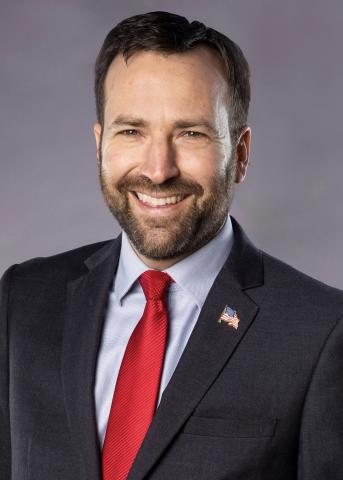
Photo of Ben Allen
D California Senate · District 24

Sen. Ben Allen

Compare
Total votes
25,548
all sessions
Attendance
94%
1,112 missed
Lower than 88% of chamber peers
With party
99%
of cast votes
Near the chamber average
Bipartisan score
0%
crosses aisle rarely
Near the chamber average
Sponsored
478
bills & resolutions
Near the chamber average
Committees
13
assignments
478 bills and resolutions

Sponsored bills

Total
478
Primary
137
Co-sponsor
341
This page
478
matching current filters
Co-sponsor SR 114
Passed · California Senate · Co-sponsor
Relative to President Joseph Biden.

Maddy summarySenate Resolution 114 is a non-binding tribute from the California State Senate honoring President Joseph Biden for his extensive public service career. The resolution details his background, legislative achievements, and leadership roles as a senator, vice president, and president, specifically highlighting his work on infrastructure, climate action, and pandemic response. It concludes by formally thanking the President for stepping down to allow new leaders to take office and directs the Senate Secretary to distribute copies of the resolution.

Passed Aug 15, 2024 1 co-sponsor
Co-sponsor SB 980
Passed · California Senate · Co-sponsor
The Smile Act.

Existing law establishes the Medi-Cal program, which is administered by the State Department of Health Care Services and under which qualified low-income individuals receive health care services, including certain dental services. The Medi-Cal program is, in part, governed and funded by federal Medicaid program provisions. Under existing law, early and periodic screening, diagnostic, and treatment (EPSDT) services are covered under Medi-Cal for an individual under 21 years of age in accordance with certain federal provisions. Under existing law, for persons 21 years of age or older, laboratory-processed crowns on posterior teeth are a covered benefit when medically necessary to restore a posterior tooth back to normal function based on the criteria specified in the Medi-Cal Dental Manual of Criteria. This bill, The Smile Act, for purposes of the above-described Medi-Cal coverage for laboratory-processed crowns, would remove the condition that the tooth be posterior and would apply the coverage to persons 13 years of age or older. The bill would also add, as a covered Medi-Cal benefit for persons of any age, subject to prior authorization, a dental implant if tooth extraction or removal is medically necessary or if the corresponding tooth is missing. The bill would condition this coverage on there being no other covered functional alternatives for prosthetic replacement to correct the person's dental condition, as specified, on the person being without medical conditions for which dental implant surgery would be contraindicated, on receipt of any necessary federal approvals, and on the availability of federal financial participation. Under the bill, the above-described provisions would not be construed to exclude Medi-Cal coverage for laboratory-processed crowns on teeth or dental implants if otherwise required under EPSDT services.

Passed Aug 15, 2024 1 co-sponsor
Primary SCR 162
Signed into law · California Senate · Lead sponsor
Relative to Alzheimer's and Brain Awareness Month and The Longest Day.

This measure would recognize the month of June 2024 as Alzheimer's and Brain Awareness Month, would recognize June 20, 2024, as The Longest Day in California, and would urge all Californians to wear purple on this day to help spread global awareness of the Alzheimer's Association's vision of a world without Alzheimer's disease. The measure would recognize the importance of ongoing state and federal support for, and investment in, innovative neurological research and cutting-edge treatments for neurological disorders.

Signed into law Aug 13, 2024 0 co-sponsors
Co-sponsor SR 112
In committee · California Senate · Co-sponsor
Relative to universal school meals.

Maddy summarySenate Resolution 112 is a non-binding request asking the U.S. Congress to pass and the President to sign a federal law that would expand universal free school meals nationwide. The resolution highlights that California already has such a program and cites research suggesting it improves student health, attendance, and academic performance while reducing stigma and administrative costs. By formally urging federal action, the bill aims to replicate California's model across the country to ensure all students have access to nutritious meals regardless of their family's income.

In committee Aug 6, 2024 1 co-sponsor
Co-sponsor AB 2841
Signed into law · California Assembly · Co-sponsor
Controlled substances: Research Advisory Panel: meetings.

Existing law creates a Research Advisory Panel, as specified, to conduct hearings on, and in other ways study, research projects concerning cannabis or hallucinogenic drugs in this state and the treatment of abuse of controlled substances. Existing law, the Bagley-Keene Open Meeting Act, requires, with specified exceptions, that all meetings of a state body be open and public and all persons be permitted to attend. Existing law authorizes certain state bodies to hold closed session meetings for certain purposes, including allowing the Department of Resources Recycling and Recovery or its auxiliary committees to hold closed sessions for the purpose of discussing trade secrets or confidential or proprietary information. This bill would authorize the Research Advisory Panel to hold closed sessions for the purpose of discussing, reviewing, and approving research projects that contain sensitive and confidential information, including trade secrets, intellectual property, or proprietary information in its possession, the public disclosure of which is prohibited by law. The Bagley-Keene Open Meeting Act authorizes a state body that is an advisory board, advisory commission, advisory committee, advisory subcommittee, or similar multimember advisory body to hold an open meeting by teleconference, subject to specified requirements. This bill would deem the Research Advisory Panel a multimember advisory body solely for the purposes of the above-described teleconferencing provisions. The bill would require the panel to provide a report to the Legislature on or before January 1, 2026, that provides an update on the backlog of applications, as specified. This bill would make its provisions repealed or inoperative, as specified, on January 1, 2027. Existing constitutional provisions require that a statute that limits the right of access to the meetings of public bodies or the writings of public officials and agencies be adopted with findings demonstrating the interest protected by the limitation and the need for protecting that interest. This bill would make legislative findings to that effect. This bill would declare that it is to take effect immediately as an urgency statute.

Signed into law Jul 18, 2024 1 co-sponsor
Primary SCR 156
Signed into law · California Senate · Lead sponsor
Relative to International Day of Play in California.

Maddy summaryThis bill officially designates June 11, 2024, as the International Day of Play in California to honor the global observance established by the United Nations. It encourages communities and organizations across the state to hold events and raise awareness about the benefits of play for children's development and well-being. Additionally, the measure expresses gratitude to California-based toy companies for their contributions to creating enriching play experiences for youth. As a commemorative resolution, it does not create new laws or alter existing policies but serves to recognize the value of play and acknowledge the efforts of local industry leaders.

Signed into law Jul 3, 2024 0 co-sponsors
Primary SB 867
Signed into law · California Senate · Lead sponsor
Safe Drinking Water, Wildfire Prevention, Drought Preparedness, and Clean Air Bond Act of 2024.

The California Drought, Water, Parks, Climate, Coastal Protection, and Outdoor Access For All Act of 2018, approved by the voters as Proposition 68 at the June 5, 2018, statewide primary election, authorizes the issuance of bonds in the amount of $4,100,000,000 pursuant to the State General Obligation Bond Law to finance a drought, water, parks, climate, coastal protection, and outdoor access for all program. Article XVI of the California Constitution requires measures authorizing general obligation bonds to specify the single object or work to be funded by the bonds and further requires a bond act to be approved by a 23 vote of each house of the Legislature and a majority of the voters. This bill would enact the Safe Drinking Water, Wildfire Prevention, Drought Preparedness, and Clean Air Bond Act of 2024, which, if approved by the voters, would authorize the issuance of bonds in the amount of $10,000,000,000 pursuant to the State General Obligation Bond Law to finance projects for safe drinking water, drought, flood, and water resilience, wildfire and forest resilience, coastal resilience, extreme heat mitigation, biodiversity and nature-based climate solutions, climate-smart, sustainable, and resilient farms, ranches, and working lands, park creation and outdoor access, and clean air programs. This bill would declare that it is to take effect immediately as an urgency statute.

Signed into law Jul 3, 2024 0 co-sponsors
Co-sponsor AB 247
Signed into law · California Assembly · Co-sponsor
Education finance: school facilities: Kindergarten Through Grade 12 Schools and Local Community College Public Education Facilities Modernization, Repair, and Safety Bond Act of 2024.

(1) The California Constitution prohibits the Legislature from creating a debt or liability that singly or in the aggregate with any previous debts or liabilities exceeds the sum of $300,000, except by an act that (1) authorizes the debt for a single object or work specified in the act, (2) has been passed by a 23 vote of all the Members elected to each house of the Legislature, (3) has been submitted to the people at a statewide general or primary election, and (4) has received a majority of all the votes cast for and against it at that election. This bill would set forth the Kindergarten Through Grade 12 Schools and Local Community College Public Education Facilities Modernization, Repair, and Safety Bond Act of 2024 as a state general obligation bond act that would provide $10,000,000,000 to construct and modernize education facilities, including $8,500,000,000 for elementary and secondary educational facilities and $1,500,000,000 for community college facilities, as specified. This bond act would become operative only if approved by the voters. (2) The Leroy F. Greene School Facilities Act of 1998 provides for the adoption of rules, regulations, and procedures, under the administration of the Director of General Services, for the allocation of state funds by the State Allocation Board for the construction and modernization of public school facilities. This bill would require a school district to submit to the Department of General Services a 5-year school facilities master plan as a condition of participating in the school facilities program under the act. The bill would amend the methodology for calculating the local contribution a school district is required to make in order to be eligible to receive state funding under the act, as specified. The bill would require a school district that seeks new construction or modernization funding under the act after November 5, 2024, to submit an updated report of the school district's existing school building capacity to the State Allocation Board. The bill would authorize the allocation of state funds under the act for the replacement of school buildings that are at least 75 years old, for specified assistance to school districts with a school facility located on a military installation, as specified, and small school districts, as defined, and for the testing and remediation of lead levels in water fountains and faucets used for drinking or preparing food on schoolsites, as provided. The bill would authorize new construction and modernization grants to be used for seismic mitigation purposes, certain health and safety projects, and, among other things, to establish schoolsite-based infrastructure to provide broadband internet access. The bill would also authorize modernization grants to be used for the control, management, or abatement of lead. The bill would increase the maximum level of total bonding capacity, as defined, that a school district could have and still be eligible for financial hardship assistance under the act from $5,000,000 to $15,000,000. The bill, commencing with the 2026–27 fiscal year, would increase that $15,000,000 maximum by a specified inflation adjustment each fiscal year. The bill would authorize the State Allocation Board to provide assistance for purposes of procuring interim housing to school districts and county offices of education impacted by a natural disaster for which the Governor has declared a state of emergency. The bill would also make conforming changes. The bill would make these provisions effective upon the adoption by the voters of the Kindergarten Through Grade 12 Schools and Local Community College Public Education Facilities Modernization, Repair, and Safety Bond Act of 2024. (3) This bill would declare that it is to take effect immediately as an urgency statute.

Signed into law Jul 3, 2024 1 co-sponsor
Primary SB 588
Passed · California Senate · Lead sponsor
Property taxation: welfare exemption: lower income households: cap.

The California Constitution authorizes the Legislature to exempt from taxation, in whole or in part, property that is used exclusively for religious, hospital, or charitable purposes, and is owned or held in trust by a nonprofit entity. Pursuant to this constitutional authority, existing law partially exempts, as described, from property taxation property that is used exclusively for rental housing and related facilities and that is owned and operated by specified entities if any of specified criteria are met. Under existing law, one of those criteria requires, except in the case of a limited partnership in which the managing general partner is a nonprofit corporation eligible for the exemption, that 90% or more of the occupants of the property be lower income households whose rents do not exceed the rent limits prescribed by a specified law. Existing law limits the total exemption amount allowed to a taxpayer under that criteria, with respect to a single property or multiple properties for any fiscal year on the sole basis of the application of that criterion, to $20,000,000 of assessed value. This bill would remove, for the 2024–25 fiscal year through the 2028–29 fiscal year, the above-described limit on the total exemption amount for any property for which a claim is filed and granted if, in addition to the above-described requirement, at least 90% of the property's units are made continuously available to, as defined, or are occupied by lower income households, as defined, at a rent that does not exceed the rent for lower income households, as prescribed by specified law, the property is owned and operated by an eligible nonprofit corporation, and the claimant provides an affidavit, signed under penalty of perjury, that any additional moneys that would have been used to pay any ad valorem property taxes on the property if not for the removal of the exemption cap will be used for the construction or rehabilitation of single or multifamily residential units on specified properties. The bill would require the claimant seeking an exemption pursuant to the bill's provisions to provide to the county assessor any additional documents and materials requested by the county assessor necessary to evaluate the claimant's eligibility for the exemption. The bill would also provide that the claimant is liable for property tax for the years for which the property received the bill's tax benefit if single or multifamily residential units were not constructed or rehabilitated or were not in the course of construction or rehabilitation by specified dates, as specified. By expanding the crime of perjury and imposing additional duties on local tax officials, the bill would impose a state-mandated local program. Existing law requires any bill authorizing a new tax expenditure to contain, among other things, specific goals, purposes, and objectives that the tax expenditure will achieve, detailed performance indicators, and data collection requirements. This bill would include findings and reporting requirements in compliance with this requirement. The California Constitution requires the state to reimburse local agencies and school districts for certain costs mandated by the state. Statutory provisions establish procedures for making that reimbursement. This bill would provide that with regard to certain mandates no reimbursement is required by this act for a specified reason. With regard to any other mandates, this bill would provide that, if the Commission on State Mandates determines that the bill contains costs so mandated by the state, reimbursement for those costs shall be made pursuant to the statutory provisions noted above. Existing law requires the state to reimburse local agencies annually for certain property tax revenues lost as a result of any exemption or classification of property for purposes of ad valorem property taxation. This bill would provide that, notwithstanding those provisions, no appropriation is made and the state shall not reimburse local agencies for property tax revenues lost by them pursuant to the bill. This bill would take effect immediately as a tax levy.

Passed Jul 1, 2024 0 co-sponsors
Primary SB 1339
Passed · California Senate · Lead sponsor
Step-down care.

Existing law generally requires the State Department of Public Health to license, inspect, and regulate health facilities, defined to include, among other types of health facilities, an acute psychiatric hospital. Existing law requires the State Department of Health Care Services to license and establish regulations for psychiatric residential treatment facilities. Existing law requires the State Department of Health Care Services to license and regulate facilities that provide residential nonmedical services to adults who are recovering from problems related to alcohol, drug, or alcohol and drug misuse or abuse, and who need alcohol, drug, or alcohol and drug recovery treatment or detoxification services. Existing law also requires the department to implement a voluntary certification program for alcohol and other drug treatment recovery services. Existing law, the California Community Care Facilities Act, generally provides for the licensing and regulation of community care facilities by the State Department of Social Services, to provide 24-hour nonmedical care of persons in need of personal services, supervision, or assistance. Existing regulation includes an adult residential facility as a community care facility for those purposes. This bill would require the State Department of Health Care Services (department) , by January 1, 2027, and in consultation with relevant public agencies and stakeholders, to establish, and provide for the administration of, a voluntary certification program for supportive community residences. The bill would define a "supportive community residence" as specified residential dwellings providing housing for adults with a substance use disorder, mental health diagnosis, or dual diagnosis seeking a cooperative living arrangement as a transitional or long-term residence during the process of recovery. The bill would require the certification program to include standards and procedures for operation, such as types of certifications needed and services navigation, and procedures and penalties for enforcing laws and regulations governing supportive community residences. The bill also would require the department to create and maintain a searchable online database of certified facilities, which would include specified contact and complaint information for those residences, and would require the database to be updated on a monthly basis. The bill would prohibit a supportive community residence from providing any licensed services onsite, including, but not limited to, incidental medical services. The bill would authorize the department to charge a fee for certification of supportive community residences in an amount not to exceed the reasonable cost of administering the program, not to exceed $2,000, and would establish the Supportive Community Residence Program Fund for collection of the fee. Under the bill, a certification would be valid for a period of 2 years and the bill would authorize the department to charge a recertification fee not to exceed $500. The bill would require a referring entity, as defined, to provide information relating to the license or certification status of a step-down care facility when informing an individual with a substance use disorder, mental health diagnosis, or dual diagnosis of options for step-down care covered by the individual's health insurance. The bill would require a referring entity to verify the license or certification of a step-down care facility if a particular step-down care facility is not covered by an individual's insurance. The bill would define a "step-down care facility" to include a supportive community residence, a community care facility, or other residential treatment or detox facility. The bill would require a referring entity to report any suspected fraudulent license or certification to the appropriate state agency. By placing new requirements on local agencies acting as referring entities, the bill would impose a state-mandated local program. Existing law, the Knox-Keene Health Care Service Plan Act of 1975, provides for the licensure and regulation of health care service plans by the Department of Managed Health Care, and makes a willful violation of the act a crime. Existing law also provides for the regulation of disability insurers by the Department of Insurance. Existing law requires a health care service plan contract or disability insurance policy issued, amended, or renewed on or after January 1, 2023, that provides coverage for medically necessary treatment of mental health and substance use disorders that credentials health care providers of those services for the health care service plan's or disability insurer's networks to assess and verify the qualifications of a health care provider, as specified. For facility contracts issued, amended, or renewed on and after January 1, 2025, this bill would require a health care service plan or disability insurer that provides coverage for mental health and substance use disorders and credentials step-down care facilities for the health care service plan's or disability insurer's networks, to assess and verify the qualifications of a step-down care facility within 60 days after receiving a completed provider credentialing application. Because a violation of the bill's requirements by a health care service plan would be a crime, the bill would impose a state-mandated local program. The California Constitution requires the state to reimburse local agencies and school districts for certain costs mandated by the state. Statutory provisions establish procedures for making that reimbursement. This bill would provide that with regard to certain mandates no reimbursement is required by this act for a specified reason. With regard to any other mandates, this bill would provide that, if the Commission on State Mandates determines that the bill contains costs so mandated by the state, reimbursement for those costs shall be made pursuant to the statutory provisions noted above.


Passed Jun 26, 2024 0 co-sponsors
Showing 241 to 250 of 478 bills
Previous 1 … 24 25 26 … 48 Next