

Step-down care.
Summary
Existing law generally requires the State Department of Public Health to license, inspect, and regulate health facilities, defined to include, among other types of health facilities, an acute psychiatric hospital. Existing law requires the State Department of Health Care Services to license and establish regulations for psychiatric residential treatment facilities. Existing law requires the State Department of Health Care Services to license and regulate facilities that provide residential nonmedical services to adults who are recovering from problems related to alcohol, drug, or alcohol and drug misuse or abuse, and who need alcohol, drug, or alcohol and drug recovery treatment or detoxification services. Existing law also requires the department to implement a voluntary certification program for alcohol and other drug treatment recovery services. Existing law, the California Community Care Facilities Act, generally provides for the licensing and regulation of community care facilities by the State Department of Social Services, to provide 24-hour nonmedical care of persons in need of personal services, supervision, or assistance. Existing regulation includes an adult residential facility as a community care facility for those purposes. This bill would require the State Department of Health Care Services (department) , by January 1, 2027, and in consultation with relevant public agencies and stakeholders, to establish, and provide for the administration of, a voluntary certification program for supportive community residences. The bill would define a "supportive community residence" as specified residential dwellings providing housing for adults with a substance use disorder, mental health diagnosis, or dual diagnosis seeking a cooperative living arrangement as a transitional or long-term residence during the process of recovery. The bill would require the certification program to include standards and procedures for operation, such as types of certifications needed and services navigation, and procedures and penalties for enforcing laws and regulations governing supportive community residences. The bill also would require the department to create and maintain a searchable online database of certified facilities, which would include specified contact and complaint information for those residences, and would require the database to be updated on a monthly basis. The bill would prohibit a supportive community residence from providing any licensed services onsite, including, but not limited to, incidental medical services. The bill would authorize the department to charge a fee for certification of supportive community residences in an amount not to exceed the reasonable cost of administering the program, not to exceed $2,000, and would establish the Supportive Community Residence Program Fund for collection of the fee. Under the bill, a certification would be valid for a period of 2 years and the bill would authorize the department to charge a recertification fee not to exceed $500. The bill would require a referring entity, as defined, to provide information relating to the license or certification status of a step-down care facility when informing an individual with a substance use disorder, mental health diagnosis, or dual diagnosis of options for step-down care covered by the individual's health insurance. The bill would require a referring entity to verify the license or certification of a step-down care facility if a particular step-down care facility is not covered by an individual's insurance. The bill would define a "step-down care facility" to include a supportive community residence, a community care facility, or other residential treatment or detox facility. The bill would require a referring entity to report any suspected fraudulent license or certification to the appropriate state agency. By placing new requirements on local agencies acting as referring entities, the bill would impose a state-mandated local program. Existing law, the Knox-Keene Health Care Service Plan Act of 1975, provides for the licensure and regulation of health care service plans by the Department of Managed Health Care, and makes a willful violation of the act a crime. Existing law also provides for the regulation of disability insurers by the Department of Insurance. Existing law requires a health care service plan contract or disability insurance policy issued, amended, or renewed on or after January 1, 2023, that provides coverage for medically necessary treatment of mental health and substance use disorders that credentials health care providers of those services for the health care service plan's or disability insurer's networks to assess and verify the qualifications of a health care provider, as specified. For facility contracts issued, amended, or renewed on and after January 1, 2025, this bill would require a health care service plan or disability insurer that provides coverage for mental health and substance use disorders and credentials step-down care facilities for the health care service plan's or disability insurer's networks, to assess and verify the qualifications of a step-down care facility within 60 days after receiving a completed provider credentialing application. Because a violation of the bill's requirements by a health care service plan would be a crime, the bill would impose a state-mandated local program. The California Constitution requires the state to reimburse local agencies and school districts for certain costs mandated by the state. Statutory provisions establish procedures for making that reimbursement. This bill would provide that with regard to certain mandates no reimbursement is required by this act for a specified reason. With regard to any other mandates, this bill would provide that, if the Commission on State Mandates determines that the bill contains costs so mandated by the state, reimbursement for those costs shall be made pursuant to the statutory provisions noted above.
Bill status
passed
3 of 5 stages cleared
Introduction
Feb 2024
Committee Review
Jun 2024
Senate Passage
May 2024
Assembly Passage
Governor
Introduced Feb 16, 2024
Last action Jun 26, 2024
Floor votes · Senate May 24, 2024
How they voted
38–0
Passed · 2 other
Total votes 40
May 24, 2024
D
Democratic31
93% Yea
R
Republican9
100% Yea
Vote distribution
All Yea
All Nay
Mixed
No data
Full legislative history
Actions timeline
Total actions
23
Key actions
9
Committee
4
Amendments
7
Jun 26, 2024
Lower · Passed
June 26 hearing postponed by committee.
lower
Jun 17, 2024
Lower · Passed
From committee with author's amendments. Read second time and amended. Re-referred to Com. on HEALTH.
lower
Jun 3, 2024
Committee
Referred to Com. on HEALTH.
lower
May 24, 2024
Upper · Passed
Read third time. Passed. (Ayes 38. Noes 0. Page 4211.) Ordered to the Assembly.
upper
May 16, 2024
Upper · Passed
Read second time and amended. Ordered to second reading.
upper
May 16, 2024
Upper · Passed
From committee: Do pass as amended. (Ayes 7. Noes 0. Page 3980.) (May 16).
upper
Apr 29, 2024
Upper · Passed
Read second time and amended. Re-referred to Com. on APPR.
upper
Apr 25, 2024
Upper · Passed
From committee: Do pass as amended and re-refer to Com. on APPR. (Ayes 11. Noes 0. Page 3756.) (April 24).
upper
Apr 15, 2024
Upper · Passed
From committee with author's amendments. Read second time and amended. Re-referred to Com. on HEALTH.
upper
Apr 3, 2024
Committee
Re-referred to Com. on HEALTH.
upper
Mar 20, 2024
Upper · Passed
From committee with author's amendments. Read second time and amended. Re-referred to Com. on RLS.
upper
Feb 29, 2024
Committee
Referred to Com. on RLS.
upper
Feb 16, 2024
Introduced
Introduced. Read first time. To Com. on RLS. for assignment. To print.
upper
1 primary · 0 co-sponsors
Sponsors
Role
Legislator
Party
State
District
P
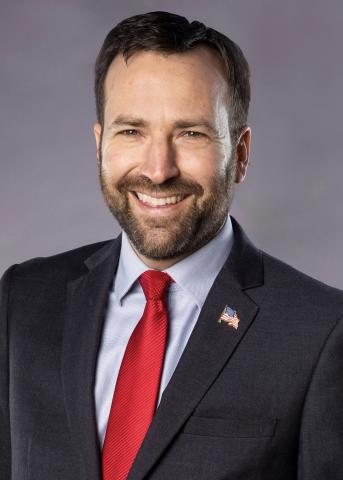
Ben Allen
DDemocratic
Ask Maddy
·
AI policy assistant
Ask Maddy about SB 1339
Scope: CA
Hi! I can help you understand SB 1339. What would you like to know?
Try one of these
i
Maddy answers using official bill text and legislative records. Always verify before sharing.
Sources cited inline