Maddy summaryThis bill establishes April 16 as National Librarian Day in California to honor the profession. It requires state agencies and public entities to acknowledge this date, though it does not mandate specific actions or funding. The measure serves as a commemorative recognition rather than a policy change affecting daily operations.
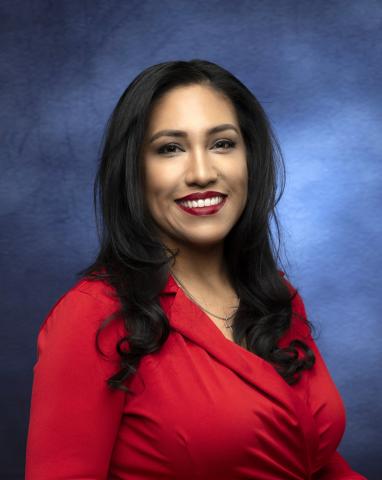
Sen. Suzette Valladares
Sponsored bills
Maddy summaryThis bill designates April 2, 2026, as World Autism Awareness Day within the state of California. It directly affects state agencies and the general public by officially recognizing this specific date for awareness activities. The primary mechanism is a simple legislative declaration that adds this observance to the state calendar without creating new laws or funding requirements. Once enacted, the resolution serves as a formal record of the state's acknowledgment of the global observance.
The California Environmental Quality Act (CEQA) requires a lead agency, as defined, to prepare, or cause to be prepared, and certify the completion of an environmental impact report on a project that it proposes to carry out or approve that may have a significant effect on the environment or to adopt a negative declaration if it finds that the project will not have that effect. CEQA also requires a lead agency to prepare a mitigated negative declaration for a project that may have a significant effect on the environment if revisions in the project would avoid or mitigate that effect and there is no substantial evidence that the project, as revised, would have a significant effect on the environment. If a lead agency determines that a project will have a significant transportation impact, existing law authorizes the lead agency to mitigate the transportation impact to a less than significant level by helping to fund or otherwise facilitating housing or related infrastructure projects, including by contributing an amount, to be determined pursuant to guidance issued by the Office of Land Use and Climate Innovation, to the Transit-Oriented Development Implementation Fund for purposes of the Transit-Oriented Development Implementation Program. Existing law makes those moneys available to the Department of Housing and Community Development, upon appropriation by the Legislature, for the purpose of awarding funding for affordable housing or related infrastructure projects under the program in accordance with specified priorities. On or before July 1, 2026, and at least once every 3 years thereafter, existing law requires the office, in consultation with other state agencies, to issue guidance related to the implementation of these provisions, as provided. This bill would authorize a lead agency for a land use project to require an applicant to contribute to the Transit-Oriented Development Implementation Fund if certain cost conditions are met and the department and the office have validated the reductions in vehicle miles traveled that are attributable to the project, as specified. This bill would declare that it is to take effect immediately as an urgency statute.
The Personal Income Tax law authorizes an exemption credit of $227 for each dependent of a taxpayer for each taxable year beginning on or after January 1, 1999, adjusted for inflation, which may be reduced if a taxpayer's federal adjusted gross income exceeds a threshold amount. The credit amount for the 2025 taxable year is $475. This bill would increase that credit to $700 for taxable years beginning on or after January 1, 2026, and before January 1, 2031, and would require that the Franchise Tax Board adjust that amount for inflation for taxable years beginning on or after January 1, 2027, as prescribed. This bill would take effect immediately as a tax levy.
The Personal Income Tax Law and the Corporation Tax Law allow various credits against the taxes imposed by those laws. This bill, for taxable years beginning on or after January 1, 2027, and before January 1, 2032, would allow a credit against the taxes imposed by those laws for specified agricultural businesses that operate on at least 50 acres of land, as provided, equal to 25% of the business's qualified expenditures, as defined. The bill would increase the credit to 30% of qualified expenditures if the taxpayer purchases specified low-emission equipment or the qualified taxpayer has qualified expenditures related to operations in a high or very high fire hazard severity zone, as specified. The bill would limit the credit to no more than $1,000,000. The bill would cap the aggregate amount of the credit allowed at $250,000,000 for each taxable year, and would require a taxpayer to request a credit reservation from the Department of Food and Agriculture, as provided. The bill would require the Department of Food and Agriculture to coordinate with the Franchise Tax Board for the administration of the credit. The bill would require the Franchise Tax Board and the Department of Food and Agriculture to share specified information, and would make the unauthorized disclosure of that information a misdemeanor. By expanding the scope of a crime, this bill would impose a state-mandated local program. Existing law requires any bill authorizing a new tax expenditure to contain, among other things, specific goals, purposes, and objectives that the tax expenditure will achieve, detailed performance indicators, and data collection requirements. This bill would also include additional information required for any bill authorizing a new tax expenditure. The California Constitution requires the state to reimburse local agencies and school districts for certain costs mandated by the state. Statutory provisions establish procedures for making that reimbursement. This bill would provide that no reimbursement is required by this act for a specified reason. This bill would take effect immediately as a tax levy.
Existing state sales and use tax laws impose a tax on retailers measured by the gross receipts from the sale of tangible personal property sold at retail in this state or on the storage, use, or other consumption in this state of tangible personal property purchased from a retailer for storage, use, or other consumption in this state. The Sales and Use Tax Law provides various exemptions from those taxes. This bill would, on and after January 1, 2027, and before January 1, 2032, exempt from those taxes the gross receipts from the sale of, and the storage, use, or other consumption of, infant car seats, as defined. Existing law requires a bill authorizing a new tax expenditure to contain, among other things, specific goals the tax expenditure will achieve, detailed performance indicators, and data collection requirements. This bill would include additional information required for any bill authorizing a new tax expenditure. The Bradley-Burns Uniform Local Sales and Use Tax Law authorizes counties and cities to impose local sales and use taxes in conformity with the Sales and Use Tax Law, and existing laws authorize districts, as specified, to impose transactions and use taxes in accordance with the Transactions and Use Tax Law, which generally conforms to the Sales and Use Tax Law. Amendments to the Sales and Use Tax Law are automatically incorporated into the local tax laws. This bill would provide that the exemption created by the bill does not apply to local sales and use taxes or transactions and use taxes. Existing law imposes or dedicates certain state sales and use tax rates for local funding, including through the Local Revenue Fund 2011. Existing law requires the state to reimburse counties and cities for revenue losses caused by the enactment of sales and use tax exemptions. This bill would provide that, notwithstanding Section 2230 of the Revenue and Taxation Code, no appropriation is made and the state shall not reimburse any local agencies for sales and use tax revenues lost by them pursuant to this bill. This bill would take effect immediately as a tax levy.
Maddy summaryThis Senate Resolution establishes April 16, 2026, as "Breaking the Silence Day of Awareness" in California to highlight the issue of unreported child sexual abuse. The measure encourages individuals, schools, and community organizations to participate in educational outreach that helps people recognize signs of abuse and fosters open dialogue about the topic. By promoting awareness and reducing stigma, the resolution aims to support survivors and encourage early intervention without imposing new legal requirements or funding mandates.
Existing law establishes the Elderly Parole Program for the purpose of reviewing the parole suitability of inmates who are 50 years of age or older and who have served a minimum of 20 years of continuous incarceration on their sentence. Existing law requires the Board of Parole Hearings, when considering the release of qualifying inmates, to give special consideration to whether certain criteria have reduced the elderly inmate's risk for future violence. Existing law excludes various persons from these provisions, including, among others, persons convicted of serious felonies, persons convicted of first-degree murder of a peace officer, or persons sentenced to life in prison without the possibility of parole. This bill would additionally exclude, among others, persons receiving an enhancement to their sentence for committing certain sexual offenses including, among others, rape, sodomy, or lewd and lascivious acts, and habitual sex offenders. The bill would specify that these exclusions apply to all persons incarcerated as of January 1, 2027, regardless of the person's previous eligibility for parole or the status of any parole petition filed prior to that date.
Existing law, the Knox-Keene Health Care Service Plan Act of 1975, provides for the licensure and regulation of health care service plans by the Department of Managed Health Care and makes a willful violation of the act a crime. Existing law also provides for the regulation of disability insurers by the Department of Insurance. Existing law requires a health care service plan contract or disability insurance policy issued, amended, or renewed on or after January 1, 2021, to provide coverage for medically necessary treatment of mental health and substance use disorders under the same terms and conditions applied to other medical conditions. Existing law requires a plan or insurer, if services for the medically necessary treatment of a mental health or substance use disorder are not available in network within the geographic and timely access standards set by law or regulation, to arrange coverage to ensure the delivery of medically necessary out-of-network services and any medically necessary followup services that, to the maximum extent possible, meet those geographic and timely access standards. Existing law prohibits an enrollee or insured from paying an out-of-network provider more than the same cost sharing that the individual would pay for the same covered services received from an in-network provider. This bill would require a health care service plan or disability insurer to reimburse a noncontracting individual health professional the greater of the average contracted rate or 125% of the amount Medicare reimburses for similar services, as specified, for out-of-network services that are provided as described above. The bill would prohibit an enrollee or insured from owing the health professional more than the in-network cost-sharing amount, and would prohibit the health professional from billing or collecting an amount from the enrollee or insured that is more than that amount. The bill would require any communication from the health professional to an enrollee or insured, before the receipt of information about the amount the individual owes for services provided, to include a notice informing the individual that it is not a bill and not to pay until they are informed by their plan or insurer of any applicable cost sharing. The bill would require a plan or insurer to inform an enrollee or insured and the noncontracting individual health professional of the in-network cost-sharing amount owed by the individual at the time of payment by the plan or insurer to the health professional. Under the bill, the payments made by the plan or insurer and enrollee or insured pursuant to these provisions would constitute full payment. Because a willful violation of these provisions by a health care service plan would be a crime, the bill would impose a state-mandated local program. The California Constitution requires the state to reimburse local agencies and school districts for certain costs mandated by the state. Statutory provisions establish procedures for making that reimbursement. This bill would provide that no reimbursement is required by this act for a specified reason.
The California Constitution authorizes the Governor to affirm, modify, or reverse the decision of the Board of Parole Hearings with respect to the granting, denial, revocation, or suspension of parole of a person sentenced to an indeterminate term upon conviction of murder. Existing law classifies certain felonies as violent felonies for purposes of various provisions of the Penal Code. This bill would additionally authorize the Governor to reverse or modify the decision of the board to grant parole to an inmate sentenced for conviction of a violent felony to an indeterminate prison term, as specified, or to a determinate prison term, as specified, if the board's decision is to grant the inmate parole pursuant to the Elderly Parole Program or youth offender parole program. Existing law requires the Board of Parole Hearings to meet with each indeterminately sentenced inmate during the 6th year before the inmate's minimum eligible parole date for the purpose of reviewing and documenting the inmate's activities and conduct pertinent to parole eligibility. One year before the inmate's eligible parole date, existing law requires a panel of the board to meet with the inmate and to grant parole unless the panel or board sitting en banc determines that the gravity of the current convicted offense, or the timing and gravity of current or past convicted offenses, is such that consideration of the public safety requires a more lengthy period of incarceration for the inmate. Existing law, the Bagley-Keene Open Meeting Act, requires, with specified exceptions, that all meetings of a state body be open and public and all persons be permitted to attend. Existing law authorizes certain state bodies to hold closed session meetings for certain purposes, including allowing a state body to hold a closed session when considering and acting upon the determination of a term, parole, or release of any individual or other disposition of an individual case. This bill would require the board to provide an annual report to the Legislature, and publish that report on its internet website, detailing, among other things, the voting record of commissioners, as specified, and whether the prosecuting agency appeared at the parole hearing. The bill would also require recording of parole, en banc, and rescission hearings to be recorded and transcribed, and the recording retained indefinitely by the board. The bill would prohibit an en banc review conducted by the board from being held in a closed session. Existing law, as amended by Proposition 9, the Victim's Bill of Rights Act of 2008: Marsy's Law, at the November 4, 2008, statewide general election, requires the board, following a decision denying parole, to schedule the next hearing 3, 5, 7, 10, or 15 years from the date of the last hearing, as specified. Existing law also authorizes the board, in its discretion and after considering the views and interests of the victim, to advance a hearing to an earlier date, when a change in circumstances or new information establishes a reasonable likelihood that consideration of the public and victim's safety does not require additional incarceration. Existing law authorizes an inmate, every 3 years, to request that the board exercise its discretion to advance a hearing and provides the procedure for an inmate to make that request. This bill would require the Board of Parole Hearings, in determining suitability for parole, to consider specified information and give substantial weight to the nature and circumstances of the commitment offense that includes, among other things, the degree of violence involved and the vulnerability of the victim. The bill would change the length of time between requests to advance to 5 years and would also change the inmate's burden to require the inmate to show that there has been a material and substantial change in circumstances or new information. The bill would require the board to provide notice of a request to advance to the prosecuting agency and registered victim, and would authorize the board to summarily deny a request to advance in certain circumstances, including when the request is duplicative or repetitive or fails to include sufficient documentation or explanation. The bill would require the board to set a hearing, following a decision denying parole, at 5 years if the inmate is serving a term of conviction for, among other things, murder involving a victim 14 years of age or younger, or various sexual offenses involving a victim 14 years of age or younger. The bill would require that the board deny a request to advance for an individual serving a term for those offenses, unless the request demonstrates clear and convincing evidence of a material and substantial change in circumstances. These provisions would become operative only if Assembly Constitutional Amendment ____ of the 2025–26 Regular Session, amending Section 8 of Article V of the Constitution, is approved by the voters at the November 3, 2026, statewide election. The bill would make related findings and declarations and would declare that its provisions are severable.