

Existing law, the Safe Neighborhoods and Schools Act, enacted as an initiative statute by Proposition 47, as approved by the electors at the November 4, 2014, statewide general election, makes the theft of money, labor, or property petty theft punishable as a misdemeanor, whenever the value of the property taken does not exceed $950. Under existing law, if the value of the property taken exceeds $950, the theft is grand theft, punishable as a misdemeanor or a felony. Proposition 47 requires shoplifting, defined as entering a commercial establishment with the intent to commit larceny if the value of the property taken does not exceed $950, to be punished as a misdemeanor. Under existing law, entering a commercial establishment with the intent to take property exceeding $950 is burglary, punishable as a misdemeanor or a felony. This bill would amend Proposition 47 by reducing the threshold amount for petty theft and shoplifting from $950 to $400. The bill would provide that it shall become effective only when submitted to, and approved by, the voters of California.
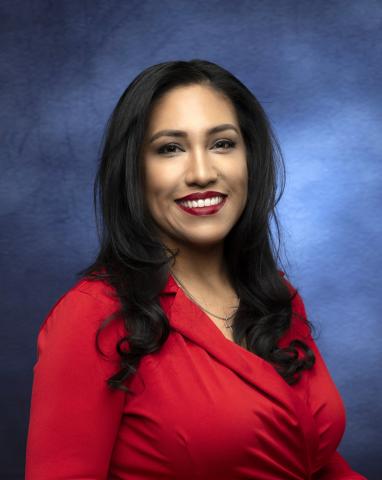
Sen. Suzette Valladares
Sponsored bills
The Safe Neighborhoods and Schools Act, enacted as an initiative statute by Proposition 47, as approved by the electors at the November 4, 2014, statewide general election, made various changes relating to theft and the possession of controlled substances, including by, among other things, generally reducing the penalty for those crimes, including reducing the penalty for possession of concentrated cannabis, establishing a procedure by which individuals convicted of those crimes prior to the passage of the act may petition for resentencing under the act, and creating the crime of shoplifting. The act also requires the Director of Finance to calculate the savings accruing to the state as a result of the implementation of the act and requires the Controller to transfer that sum from the General Fund to the Safe Neighborhoods and Schools Fund, which was created by the act. The act specifies the manner of distribution of those funds and the purposes for which they may be used. This bill would repeal the changes and additions made by Proposition 47, except those related to reducing the penalty for possession of concentrated cannabis. Existing law makes it a crime for a caretaker of an elder or a dependent adult, or a person who is not a caretaker and who knows or reasonably should know that the victim is an elder or a dependent adult, to violate specified laws proscribing theft, embezzlement, forgery, fraud, or identity theft with respect to the property or personal identifying information of that elder or dependent adult. Existing law makes a violation of those provisions punishable as a misdemeanor or a felony when the moneys, labor, goods, services, or real or personal property taken or obtained is of a value exceeding $950. This bill would reduce the value threshold for a violation of those provisions to be punishable as a felony from $950 to $400. Existing law defines grand theft as the wrongful taking of money, labor, or property of a value exceeding $950, except as specified. Existing law also makes it grand theft where the money, labor, or real or personal property is taken by a servant, agent, or employee from their principal or employer and aggregates $950 or more in any consecutive 12-month period. This bill would reduce the value threshold for committing grand theft under those provisions from $950 to $400. This bill would provide that it would become effective only upon approval of the voters, and would provide for the submission of this measure to the voters for approval at the next statewide general election.
Existing law prescribes various requirements to be satisfied before the exercise of a power of sale under a mortgage or deed of trust and prescribes a procedure for the exercise of that power. Existing law, until January 1, 2026, prescribes a process in connection with a trustee's sale of property under a power of sale contained in a deed of trust or mortgage on real property containing one to 4 residential units, inclusive, that provides specified bidding priorities to certain parties, including prospective owner-occupants. This bill would prescribe requirements that would apply to sales of real property containing one to 4 residential dwelling units, inclusive, that is acquired through foreclosure under a mortgage or deed of trust by an institution or that is acquired at a foreclosure sale by an institution, as defined. The bill would require the institution, during the first 30 days after a property is listed, as specified, to only accept offers from eligible bidders, as defined, and to respond, in writing, to all offers received from eligible bidders before considering any other offers. This bill would require an eligible bidder to submit an affidavit or declaration, as specified, with their offer to an institution. By expanding the crime of perjury, this bill would impose a state-mandated local program. This bill would also prohibit an institution from conducting a bundled sale, as defined. The California Constitution requires the state to reimburse local agencies and school districts for certain costs mandated by the state. Statutory provisions establish procedures for making that reimbursement. This bill would provide that no reimbursement is required by this act for a specified reason.
Existing law establishes the State Department of Education under the administration of the Superintendent of Public Instruction, and assigns to the department numerous responsibilities relating to the governance of the public elementary and secondary schools in the state. Existing law establishes the California Assessment of Student Performance and Progress (CAASPP) and requires the department to ensure that local educational agencies comply with certain requirements related to CAASPP. This bill would require the department, on an annual basis, to include a report on its internet website that allows the public to view, among other assessment data, certain CAASPP test results by English language acquisition status, as provided. The bill would require the department to publicly report on an annual basis enrollment data by English language acquisition status and disability, as specified.
The Child Care and Development Services Act, administered by the State Department of Social Services, requires the department to administer childcare and development programs that offer a full range of services to eligible children from infancy to 13 years of age, inclusive. The Early Education Act requires the Superintendent of Public Instruction to, among other things, provide an inclusive and cost-effective preschool program. Both acts require that families meet specified requirements to be eligible for federal- and state-subsidized childcare and development services and preschool programs, including, among other requirements, that the family needs childcare services or full-day preschool because, among other reasons, the family is homeless, the child's parents are seeking employment or permanent housing, or the child's parents are employed. Existing law requires both the Superintendent of Public Instruction and the State Department of Social Services to adopt rules and regulations on eligibility, enrollment, and priority of services needed to implement their respective acts. Existing law specifies priority for services pursuant to the acts and requires that first priority be given to neglected or abused children, as specified. Existing law also requires that 2nd priority be given equally to all eligible families, regardless of the number of parents in the home, that are income eligible. Existing law further requires that if 2 or more families are in the same priority in relation to income, the family that has a child with exceptional needs shall be admitted first. This bill would additionally require that priority be given to a child from a family in which the primary home language is a language other than English if there are no families with a child with exceptional needs. The bill would make conforming changes. The bill would make related findings and declarations. This bill would incorporate additional changes to Sections 8210 and 8211 of the Education Code proposed by AB 185 to be operative only if this bill and AB 185 are enacted and this bill is enacted last. This bill would incorporate additional changes to Sections 8210 and 8211 of the Education Code proposed by SB 185 to be operative only if this bill and SB 185 are enacted and this bill is enacted last. This bill would incorporate additional changes to Section 10271 of the Welfare and Institutions Code proposed by SB 1047 to be operative only if this bill and SB 1047 are enacted and this bill is enacted last.
Existing law requires hotels, as defined, to provide at least 20 minutes of training to their staff on how to recognize human trafficking as it pertains specifically to the hotel sector. Existing law does not create liability against a hotel or its employees for the lack of reporting a human trafficking case. This bill would allow civil penalties to be imposed against a hotel, as defined, if a supervisory employee, as defined, of the hotel knew of or acted with reckless disregard of the activity constituting sex trafficking activity, as defined, that occurred within the hotel and failed to inform law enforcement, the National Human Trafficking Hotline, or another appropriate victim service organization, as specified, or if any employee of that hotel was acting within the scope of employment and knowingly benefited from participating in a venture that the employee knew, or acted in reckless disregard of the activity constituting sex trafficking activity within the hotel. This bill would authorize a city, county, or city and county attorney to seek equitable relief against a hotel, and to seek a civil penalty of $1,000 for the first violation, $3,000 for a 2nd violation within the same calendar year, and $5,000 for a 3rd and any subsequent violation of sex trafficking within the same calendar year. The bill would authorize a court to consider specified factors and exercise its discretion to increase the amount of the civil penalty, not to exceed $10,000, for any 4th or subsequent violation. The bill would require that the action be commenced within 5 years of the violation, or within 5 years of the date the victim attains the age of majority.
(1) The Personal Income Tax Law and the Corporation Tax Law, in conformity with federal income tax law, generally defines "gross income" as income from whatever source derived, except as specifically excluded, and provides various exclusions from gross income. This bill would, for taxable years beginning before January 1, 2027, provide an exclusion from gross income for any qualified taxpayer, as defined, for amounts received for costs and losses associated with the 2017 Thomas Fire and the 2018 Woolsey Fire, as provided. (2) Existing law establishes the continuously appropriated Tax Relief and Refund Account and provides that payments required to be made to taxpayers or other persons from the Personal Income Tax Fund are to be paid from that account. This bill would authorize the refund of overpayments of tax as a result of the above-described exclusion, in prior tax years, payable out of the Tax Relief and Refund Account. By authorizing new payments from a continuously appropriated fund, this bill would make an appropriation. (3) Existing law requires that any bill introduced on or after January 1, 2020, that would authorize certain tax expenditures, as defined, contain, among other things, specific goals, purposes, and objectives that the tax expenditure or exemption will achieve, detailed performance indicators, and data collection requirements. This bill would include additional information required for any bill authorizing a new tax expenditure. (4) This bill would apply its provisions to taxable years beginning before, on, and after the effective date of this bill. The bill would make legislative findings and declarations regarding the public purpose served by this bill. This bill would declare that it is to take effect immediately as an urgency statute.
Existing law requires the governing board of a school district to give diligent care to the health and physical development of pupils and authorizes the governing board of a school district to employ properly certified persons for that work. Existing law requires school districts, county offices of education, and charter schools to provide emergency epinephrine auto-injectors to school nurses or trained volunteer personnel, and authorizes school nurses and trained personnel to use epinephrine auto-injectors to provide emergency medical aid to persons suffering, or reasonably believed to be suffering, from an anaphylactic reaction, as provided. This bill would require the State Department of Education to create the California Food Allergy Resource internet web page to provide voluntary guidance to school districts, county offices of education, and charter schools to help protect pupils with food allergies. The bill would require the department to ensure that the internet web page provides practical information, planning steps, and strategies for reducing allergic reactions to food within schools and early education centers. The bill would require the internet web page to include specified content, including state and federal resources available to pupils with food allergies, methods for pupils, or their parents and guardians, to initiate individualized food allergy management and prevention plans and to obtain food ingredient lists from school food providers, and strategies to minimize the risk of food anaphylaxis in school. The bill would encourage local educational agencies to consult the internet web page and use it as an equitable resource to ensure the inclusiveness of pupils with food allergies at school and to make it available to pupils, parents, and guardians annually.
The Planning and Zoning Law authorizes the legislative body of any county or city to adopt ordinances that regulate the use of buildings, structures, and land as between industry, business, residences, open space, and other purposes. This bill would prohibit a city or county legislative body from adopting or enforcing an ordinance requiring a public hearing as a condition of reconfiguring existing space to increase the bedroom count within an existing dwelling unit. The bill would apply these provisions only to a permit application for no more than 2 additional bedrooms within an existing dwelling unit. The bill would specify that these provisions are not to be construed to prohibit a local agency from requiring a public hearing for a proposed project that would increase the number of dwelling units within an existing structure. The bill would include findings that ensuring adequate housing is a matter of statewide concern and is not a municipal affair, and that the provision applies to all cities, including charter cities. By imposing additional duties on local officials, the bill would impose a state-mandated local program. The California Constitution requires the state to reimburse local agencies and school districts for certain costs mandated by the state. Statutory provisions establish procedures for making that reimbursement. This bill would provide that no reimbursement is required by this act for a specified reason.
Existing law generally regulates classes of insurance, including homeowners' insurance. Existing law creates the Department of Insurance, headed by the Insurance Commissioner. This bill would require the commissioner to convene a working group, on or before July 1, 2023, to study the feasibility, potential implications, and advisability of allowing admitted insurers to offer homeowners' and commercial property insurance policies that include a deductible for covered losses resulting from wildfires. The bill would require the commissioner to identify industries, including, but not limited to, farming, that have struggled to obtain affordable commercial property coverage due to increased wildfire risk and require the working group to study the utility and risks a commercial policy containing a deductible for wildfire losses could have for these industries. This bill would require the working group to include, among other things, representatives from the insurance industry. The bill would require the commissioner to prepare a report, on or before July 1, 2024, summarizing the working group's findings and recommendations, and to post that report on its internet website.