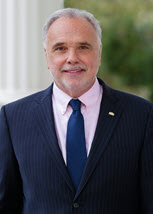
Photo of Mike Morrell
R California Senate · District 23

Sen. Mike Morrell

Compare
Total votes
18,326
all sessions
Attendance
95%
843 missed
Lower than 77% of chamber peers
With party
96%
of cast votes
Lower than 96% of chamber peers
Bipartisan score
3%
crosses aisle rarely
Higher than 93% of chamber peers
Sponsored
581
bills & resolutions
Lower than 87% of chamber peers
Committees
0
assignments
581 bills and resolutions

Sponsored bills

Total
581
Primary
183
Co-sponsor
398
This page
581
matching current filters
Co-sponsor AJR 23
Failed · California Assembly · Co-sponsor
Federal Patient Protection and Affordable Care Act: requirement to purchase health insurance.

This measure would urge the President to remove any financial oversight responsibilities of the Internal Revenue Service with regard to the administration of the federal Patient Protection and Affordable Care Act and instead have those duties transferred to a separate board, created by and accountable to Congress.

Failed Nov 30, 2014 1 co-sponsor
Primary SB 945
Failed · California Senate · Lead sponsor
Pupil assessment: California Assessment of Student Performance and Progress: history-social science.

Existing law establishes the Measurement of Academic Performance and Progress (MAPP) , and, commencing with the 2013–14 school year, requires the MAPP to be composed of (1) a consortium summative assessment in English language arts and mathematics for grades 3 to 8, inclusive, and grade 11, as specified, (2) science grade level assessments in grades 5, 8, and 10, measuring specified content standards, (3) the California Alternate Performance Assessment in grades 2 to 11, inclusive, in English language arts and mathematics and science in grades 5, 8, and 10, as specified, and (4) the Early Assessment Program. Existing law requires the Superintendent of Public Instruction, on or before March 1, 2016, to submit to the State Board of Education, the appropriate policy and fiscal committees of the Legislature, and the Director of Finance, recommendations on expanding the MAPP to include additional assessments, including assessments in history-social science, in accordance with specified requirements. This bill would change the name of the MAPP to the California Assessment of Student Performance and Progress (CAASPP) . The bill would require the CAASPP, commencing with the 2018–19 school year, to also be composed of a summative assessment in history-social science that is adopted by the state board, as specified. The bill would require the recommendations of the Superintendent submitted to the state board, the appropriate policy and fiscal committees of the Legislature, and the Director of Finance to include a plan to implement a summative assessment in history-social science commencing with the 2018–19 school year.

Failed Nov 30, 2014 0 co-sponsors
Co-sponsor AB 1924
Failed · California Assembly · Co-sponsor
Public postsecondary education: Baccalaureate Degree Pilot Program.

(1) Existing law establishes a system of public elementary and secondary schools operated by local educational agencies throughout the state. Existing law also establishes a system of public postsecondary education in this state that includes 3 segments: the California Community Colleges, the California State University, and the University of California. This bill would express the intent of the Legislature to establish a pilot program with the goal of creating a model of articulation and coordination among K–12 schools, community colleges, and campuses of the California State University that will allow students to earn a baccalaureate degree for a total cost as close as possible to $12,000. The bill would establish a Baccalaureate Degree Pilot Program that would include campuses of the California State University, community college districts, and county offices of education in up to 7 areas of the state, but would only include institutions that explicitly request inclusion in the program. The bill would require the public postsecondary educational institutions and local educational agencies participating in the pilot program to coordinate their efforts to expedite the progress of participating students from high school to community college to California State University. Because the bill would impose new duties on community college districts and county offices of education, it would constitute a state-mandated local program. The bill would authorize participating high school students to earn an unlimited number of Advanced Placement course credits, and provide these students with priority enrollment at participating community colleges. The bill would impose grade point average and time requirements on participating students at the community college stage of the pilot program. The bill would require a participating California State University campus to accept a minimum of 60 semester units earned by a participating student at a high school or community college. The bill would require a participating student to receive priority enrollment status at a participating California State University, and would require the participating student to enroll at that California State University either in the summer term or the fall semester immediately succeeding the pupil's completion of the required community college coursework. This bill would limit bachelor's degrees awarded at the participating California State University to a participating student to baccalaureate degrees in one or more of specified fields of study. The bill would prohibit the mandatory systemwide fees and tuition and mandatory campus-based fees charged to a participating student from being increased during the first 2 academic years of his or her attendance at a California State University campus under the pilot program. The bill would authorize the institutions participating in the pilot program, in consultation with the appropriate private entities, to develop summer internships for participating students relating to their fields of study for academic credit. (2) The California Constitution requires the state to reimburse local agencies and school districts for certain costs mandated by the state. Statutory provisions establish procedures for making that reimbursement. This bill would provide that no reimbursement is required by this act for a specified reason.

Failed Nov 30, 2014 1 co-sponsor
Primary AB 2097
Failed · California Assembly · Lead sponsor
Taxation: homeowners' exemption and renters' credit.

(1) Existing property tax law provides, pursuant to the authority of a specified provision of the California Constitution, for a homeowners' exemption in the amount of $7,000 of the full value of a "dwelling," as defined, and authorizes the Legislature to increase this exemption. This bill, beginning with the lien date for the 2015–16 fiscal year, would increase the homeowners' exemption from $7,000 to $20,000 of the full value of a dwelling. This bill would also require, for the 2016–17 fiscal year and for each fiscal year thereafter, the county assessor to adjust the amount of the homeowners' exemption by the percentage change, for the first 3 quarters of the prior calendar year, in the House Price Index for California, as specified. (2) The California Constitution requires the Legislature, whenever it increases the homeowners' property tax exemption, to provide a comparable increase in benefits to qualified renters. The Personal Income Tax Law authorizes various credits against the taxes imposed by that law, including a credit for qualified renters in the amount of $120 for married couples filing joint returns, heads of household, and surviving spouses if adjusted gross income is $50,000 or less, and in the amount of $60 for other individuals if adjusted gross income is $25,000 or less. Existing law requires the Franchise Tax Board to annually adjust for inflation these adjusted gross income amounts. This bill would, for taxable years beginning on and after January 1, 2015, increase this credit for a qualified renter to $340 for married couples filing joint returns, heads of household, and surviving spouses if adjusted gross income is $50,000 or less, as adjusted for inflation, and to an amount equal to $170 for other individuals if adjusted gross income is $25,000 or less, as adjusted for inflation. The bill would also require, for taxable years beginning on or after January 1, 2016, the Franchise Tax Board to annually adjust for inflation, based upon the California Consumer Price Index, the amount of these credits. The bill would also make technical, nonsubstantive changes to the renters' credit. (3) By requiring county assessors to implement a new amount for the property tax homeowners' exemption, this bill would impose a state-mandated local program. The California Constitution requires the state to reimburse local agencies and school districts for certain costs mandated by the state. Statutory provisions establish procedures for making that reimbursement. This bill would provide that, if the Commission on State Mandates determines that the bill contains costs mandated by the state, reimbursement for those costs shall be made pursuant to these statutory provisions. (4) This bill would take effect immediately as a tax levy.


Failed Nov 30, 2014 0 co-sponsors
Co-sponsor AB 2043
Failed · California Assembly · Co-sponsor
Safe, Clean, and Reliable Drinking Water Supply Act of 2014.

(1) Existing law, the Safe, Clean, and Reliable Drinking Water Supply Act of 2012, if approved by the voters, would authorize the issuance of bonds in the amount of $11,140,000,000 pursuant to the State General Obligation Bond Law to finance a safe drinking water and water supply reliability program. Existing law provides for the submission of the bond act to the voters at the November 4, 2014, statewide general election. This bill would repeal these provisions. (2) Under existing law, various measures have been approved by the voters to provide funds for water supply and protection facilities and programs. This bill would enact the Safe, Clean, and Reliable Drinking Water Supply Act of 2014, which, if adopted by the voters, would authorize the issuance of bonds in the amount of $8,035,000,000 pursuant to the State General Obligation Bond Law to finance a safe drinking water and water supply reliability program. This bill would provide for the submission of the bond act to the voters at the November 4, 2014, statewide general election. (3) This bill would declare that it is to take effect immediately as an urgency statute.

Failed Nov 30, 2014 1 co-sponsor
Co-sponsor SB 682
Failed · California Senate · Co-sponsor
California State University: student enrollment.

Existing law establishes the California State University, which is administered by the Trustees of the California State University, as one of the segments of public postsecondary education in this state. Existing law authorizes the trustees to, by rule, require all persons to pay fees, rents, deposits, and charges for services, facilities, or materials provided by the trustees to such persons, and requires the trustees to control and expend all money appropriated for the support and maintenance of the California State University. This bill would appropriate $22,000,000 to the California State University for purposes of enrolling additional students. The bill would express legislative intent that the appropriated funds be used for specified matters and would include legislative findings and declarations related to student enrollment.

Failed Nov 30, 2014 1 co-sponsor
Primary AB 2460
died · California Assembly · Lead sponsor
California Apprenticeship Council: membership.

Existing law establishes in the Division of Apprenticeship Standards a California Apprenticeship Council, specifies its membership, and establishes the amount of reimbursement to a member for his or her attendance at a specified meeting or hearing together with his or her actual and necessary travel expenses incurred in connection with that meeting or hearing. This bill would make a nonsubstantive change to that provision.

died Nov 30, 2014 0 co-sponsors
Primary SB 1216
Failed · California Senate · Lead sponsor
Taxation: homeowners' exemption and renters' credit.

(1) Existing property tax law provides, pursuant to the authority of a specified provision of the California Constitution, for a homeowners' exemption in the amount of $7,000 of the full value of a "dwelling," as defined, and authorizes the Legislature to increase this exemption. This bill, beginning with the lien date for the 2015–16 fiscal year, would increase the homeowners' exemption from $7,000 to $20,000 of the full value of a dwelling. This bill would also require, for the 2016–17 fiscal year and for each fiscal year thereafter, the county assessor to adjust the amount of the homeowners' exemption by the percentage change in the House Price Index for California for the first 3 quarters of the prior calendar year, as specified. (2) The California Constitution requires the Legislature, whenever it increases the homeowners' property tax exemption, to provide a comparable increase in benefits to qualified renters. The Personal Income Tax Law authorizes various credits against the taxes imposed by that law, including a credit for qualified renters in the amount of $120 for married couples filing joint returns, heads of household, and surviving spouses if adjusted gross income is $50,000 or less, and in the amount of $60 for other individuals if adjusted gross income is $25,000 or less. Existing law requires the Franchise Tax Board to annually adjust for inflation these adjusted gross income amounts. This bill would, for taxable years beginning on and after January 1, 2015, increase this credit for a qualified renter to $340 for married couples filing joint returns, heads of household, and surviving spouses if adjusted gross income is $50,000 or less, as adjusted for inflation, and to an amount equal to $170 for other individuals if adjusted gross income is $25,000 or less, as adjusted for inflation. The bill would also require, for taxable years beginning on or after January 1, 2016, the Franchise Tax Board to annually adjust for inflation, based upon the California Consumer Price Index, the amount of these credits. The bill would also make technical, nonsubstantive changes to the renters' credit. (3) By requiring county assessors to implement a new amount for the property tax homeowners' exemption, this bill would impose a state-mandated local program. The California Constitution requires the state to reimburse local agencies and school districts for certain costs mandated by the state. Statutory provisions establish procedures for making that reimbursement. This bill would provide that, if the Commission on State Mandates determines that the bill contains costs mandated by the state, reimbursement for those costs shall be made pursuant to these statutory provisions. (4) This bill would take effect immediately as a tax levy.
Failed Nov 30, 2014 0 co-sponsors
Primary AB 2245
died · California Assembly · Lead sponsor
Economic development.

Existing law provides for various economic development programs that foster community sustainability and for community and economic development initiatives throughout the state. This bill would make findings and declarations relating to current economic conditions and unemployment. The bill would declare the intent of the Legislature to enact legislation that would promote job and business growth, and encourage economic development.

died Nov 30, 2014 0 co-sponsors
Co-sponsor AB 1925
Failed · California Assembly · Co-sponsor
Public postsecondary education: Baccalaureate Degree Pilot Program: University of California.

Existing law establishes a system of public elementary and secondary schools operated by local educational agencies throughout the state. Existing law also establishes a system of public postsecondary education in this state that includes 3 segments: the California Community Colleges, the California State University, and the University of California. This bill would express the intent of the Legislature to establish a pilot program with the goal of establishing a coordinated curriculum that enables students, including, but not necessarily limited to, students who have earned college course credit through concurrent enrollment in high school and community college, to earn a baccalaureate degree from a participating University of California campus within 3 years of graduating from a secondary school, at a total cost to the student as close as possible to $25,000, excluding the cost of mandatory campus-based fees. The bill would authorize the University of California to establish a Baccalaureate Degree Pilot Program that includes any campus of the University of California, any campus of the California Community Colleges that volunteers to participate, and any secondary educational institution that volunteers to participate. The bill would place specified conditions on the operation of the pilot program, which would apply to the University of California only to the extent made applicable by action of the Regents of the University of California.

Failed Nov 30, 2014 1 co-sponsor
Showing 251 to 260 of 581 bills
Previous 1 25 26 27 59 Next