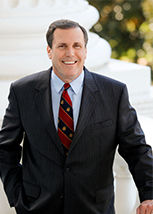
Photo of Scott Wilk
R California Senate · District 21

Sen. Scott Wilk

Contact Email
Compare
Total votes
25,318
all sessions
Attendance
96%
859 missed
Near the chamber average
With party
95%
of cast votes
Near the chamber average
Bipartisan score
3%
crosses aisle rarely
Near the chamber average
Sponsored
1,250
bills & resolutions
Near the chamber average
Committees
0
assignments
1,250 bills and resolutions

Sponsored bills

Total
1,250
Primary
196
Co-sponsor
1,054
This page
1,250
matching current filters
Co-sponsor ACR 86
Signed into law · California Assembly · Co-sponsor
Animals: overpopulation: spay and neutering services.

This measure would encourage the state and local municipalities to develop and fund high-volume spay and neuter clinics across the state to provide sterilization services, and would encourage other actions relating to pets, including actions to control animal breeding and encourage spaying and neutering, as specified.

Signed into law Apr 19, 2024 1 co-sponsor
Co-sponsor SB 1011
died · California Senate · Co-sponsor
Encampments: penalties.

Under existing law, a person who lodges in a public or private place without permission is guilty of disorderly conduct, a misdemeanor. Existing law also provides that a person who willfully and maliciously obstructs the free movement of any person on any street, sidewalk, or other public place is guilty of a misdemeanor. Under existing law, a nuisance is anything that is injurious to health or indecent or offensive to the senses, or an obstruction to the free use of property, so as to interfere with the comfortable enjoyment of life or property. Existing law also provides that a nuisance is anything that obstructs the free passage or use of any public park, square, street, or highway, among other things. Under existing law, a public nuisance is a nuisance that affects the entire community, neighborhood, or a considerable number of persons. Existing law provides various remedies against a public nuisance, including abatement by any public body or officer authorized by law. This bill would prohibit a person from sitting, lying, sleeping, or storing, using, maintaining, or placing personal property upon a street or sidewalk if a homeless shelter, as defined, is available to the person. The bill would also prohibit sitting, lying, sleeping, or storing, using, maintaining, or placing personal property within 500 feet of a public or private school, open space, or major transit stop, as specified. The bill would specify that a violation of this prohibition is a public nuisance that can be abated and prevented, as specified. The bill would also provide that a violation of the prohibition may be charged as a misdemeanor or an infraction, at the discretion of the prosecutor. The bill would prohibit a person from being found in violation of the bill's provisions unless provided notice, at least 72 hours before commencement of any enforcement action, as specified. By imposing criminal penalties for a violation of these provisions, this bill would impose a state-mandated local program. The California Constitution requires the state to reimburse local agencies and school districts for certain costs mandated by the state. Statutory provisions establish procedures for making that reimbursement. This bill would provide that no reimbursement is required by this act for a specified reason.


died Apr 16, 2024 1 co-sponsor
Co-sponsor SB 923
In committee · California Senate · Co-sponsor
Theft.

Existing law, the Safe Neighborhoods and Schools Act, enacted by Proposition 47, as approved by the voters at the November 4, 2014, statewide general election, defines and prohibits an act of shoplifting and prohibits prosecution for an act of shoplifting under any other law. Existing law defines shoplifting as entering a commercial establishment with intent to commit larceny while the establishment is open during regular business hours. This bill would revise the definition of shoplifting to require an intent to steal retail property or merchandise. Existing law provides that a person with a prior conviction for specified sex offenses may be charged with a felony for shoplifting or for theft of property not exceeding $950 in value. This bill would require a person convicted of petty theft or shoplifting, if the person has 2 or more prior convictions for specified theft-related offenses, to be punished by imprisonment in the county jail for up to one year, or for 16 months, or 2 or 3 years, and would make conforming changes. This bill would provide that its provisions would become effective only upon approval of the voters, and would provide for the submission of its provisions to the voters for approval at the next statewide general election.

In committee Apr 10, 2024 1 co-sponsor
Primary SB 1039
In committee · California Senate · Lead sponsor
Community colleges: classroom instructor salaries.

Existing law establishes the California Community Colleges under the administration of the Board of Governors of the California Community Colleges. Existing law authorizes the establishment of community college districts under the administration of community college governing boards, and authorizes these districts to provide instruction at community college campuses throughout the state. Existing law requires each community college district to expend during each fiscal year 50% of the district's current expense of education, as defined, for payment of salaries of classroom instructors, as defined. This bill would define salaries of classroom instructors to also include counselors and librarians and would require, commencing with the 2025–26 fiscal year, each community college district to expend during each fiscal year 60% of the district's current expense of education, as defined, for payment of salaries of classroom instructors, as defined. The bill would also make conforming changes.

In committee Apr 4, 2024 0 co-sponsors
Primary SB 829
Passed · California Senate · Lead sponsor
Ticket sellers: exclusivity.

Existing law provides for the comprehensive regulation of ticket sellers, including prohibiting a ticket seller from contracting to sell or accepting payment for tickets unless the ticket seller has lawful possession of the ticket; has a contractual right to obtain the ticket; or informs the purchaser the seller does not have possession of the tickets, has no contract to obtain the offered ticket, and may not be able to supply the ticket at the contracted price, as specified. This bill would prohibit the operator of an entertainment facility and a primary ticket seller from entering into a contract that provides for the primary ticket seller to be the exclusive ticket seller for the operator of the entertainment facility. The bill would prohibit threatening or seeking to enforce such a provision or to otherwise penalize an operator of an entertainment facility for entering into an agreement with another primary ticket seller. Existing law defines a primary contractor as the person or organization who is responsible for the event for which tickets are being sold. Existing law declares that regulation of ticket sellers does not apply to a primary contractor or seller of tickets for the primary contractor operating under a written contract with the primary contractor. This bill would declare that the provisions of this bill apply to a primary contractor and a seller of tickets for the primary contractor operating under a written contract with the primary contractor. Existing law declares that violations of statutory regulations of ticket sellers are punishable as a misdemeanor. This bill would make entering into a contract that provides for the primary ticket seller to be the exclusive ticket seller for the operator of the entertainment facility punishable as a misdemeanor. Because the bill would expand the scope of an existing crime, the bill would impose a state-mandated local program. The California Constitution requires the state to reimburse local agencies and school districts for certain costs mandated by the state. Statutory provisions establish procedures for making that reimbursement. This bill would provide that no reimbursement is required by this act for a specified reason.
Passed Apr 4, 2024 0 co-sponsors
Co-sponsor SB 1219
In committee · California Senate · Co-sponsor
Crimes: prostitution.

Existing law, until January 1, 2023, prohibited loitering in a public place with the intent to commit prostitution, as defined, and made that crime a misdemeanor. Existing law defines specified behavior as disorderly conduct and prohibits that behavior. Under existing law, disorderly conduct includes, among other things, soliciting prostitution, prowling, peeping, surreptitious photographing or filming of an identifiable person, and the distribution of certain images of another person taken under circumstances in which the person understands that the image shall remain private, the distribution of which causes serious emotional distress. This bill would make it a misdemeanor to loiter in a public place with the intent to commit prostitution, as defined, and would make other conforming changes. The bill would make a person guilty of disorderly conduct if they operate a motor vehicle in any public place and repeatedly beckon to, contact, or attempt to contact or stop pedestrians or other motorists, or impede traffic, with the intent to solicit prostitution. The bill would authorize a court to suspend, for not more than 30 days, the privilege of a person to operate a motor vehicle for a first conviction of these offenses. The bill would, for a 2nd or subsequent conviction, require the vehicle used in the commission of the crime to be impounded for 30 days, as specified. By creating a new crime and expanding the scope of an existing crime, this bill would impose a state-mandated local program. The California Constitution requires the state to reimburse local agencies and school districts for certain costs mandated by the state. Statutory provisions establish procedures for making that reimbursement. This bill would provide that no reimbursement is required by this act for a specified reason.

In committee Apr 2, 2024 1 co-sponsor
Co-sponsor AB 1787
In committee · California Assembly · Co-sponsor
Theft: shoplifting.

Existing law, the Safe Neighborhoods and Schools Act, enacted as an initiative statute by Proposition 47, as approved by the electors at the November 4, 2014, statewide general election, makes the theft of money, labor, or property petty theft punishable as a misdemeanor, whenever the value of the property taken does not exceed $950. Under existing law, if the value of the property taken exceeds $950, the theft is grand theft, punishable as a misdemeanor or a felony. Proposition 47 requires shoplifting, defined as entering a commercial establishment with the intent to commit larceny if the value of the property taken does not exceed $950, to be punished as a misdemeanor. This bill would reduce the threshold amount for petty theft and shoplifting from $950 to $450. The bill would make a person guilty of petty theft with a prior offense if the person is convicted of petty theft or shoplifting and has one or more prior convictions for specified theft-related offenses and would make the crime punishable by imprisonment in the county jail for up to one year or as a felony for a term of 3, 5, or 7 years. This bill would make a person guilty of aggregated theft if the person commits 2 or more offenses of shoplifting within a 12-month period. The bill would require aggregated theft to be punished as a misdemeanor by imprisonment in the county jail not exceeding one year or as a felony for 16 months or for 2 or 3 years. The bill would require each additional offense of shoplifting after a conviction of aggregated theft to be punished as a felony for a term of 3, 5, or 7 years. The bill would make the above provisions effective only upon submission to, and approval by, the voters, as specified. Existing law, until January 1, 2026, makes a person guilty of organized retail theft if the person acts in concert with one or more persons to steal merchandise from one or more merchant's premises or online marketplace with the intent to sell, exchange, or return the merchandise for value, acts in concert with 2 or more persons to receive, purchase, or possess merchandise knowing or believing it to have been stolen, or acts as an agent of another to steal merchandise from one or more merchant's premises or online marketplaces as part of an organized plan to commit theft. Under existing law, these crimes are punishable as either misdemeanors or felonies if the violations are committed on 2 or more separate occasions within a 12-month period and the aggregated value of the merchandise stolen, received, purchased, or possessed within that 12-month period exceeds $950. This bill would reduce the amount of the aggregated value of the merchandise stolen, received, purchased, or possessed from $950 to $450. The bill would repeal the sunset provision, thereby extending the crime indefinitely. By extending the time that organized retail theft would be a crime, this bill would impose a state-mandated local program. Existing law, until January 1, 2026, authorizes a city or county prosecuting authority or county probation department to create a diversion or deferred entry of judgment program for persons who commit a theft offense or repeat theft offenses, as specified. This bill would repeal the sunset provision, thereby extending the authorization of the program indefinitely. The California Constitution requires the state to reimburse local agencies and school districts for certain costs mandated by the state. Statutory provisions establish procedures for making that reimbursement. This bill would provide that no reimbursement is required by this act for a specified reason.

In committee Mar 19, 2024 1 co-sponsor
Co-sponsor SB 986
died · California Senate · Co-sponsor
Ballot label: bond measure fiscal impact.

Existing law requires the Legislative Analyst to prepare a fiscal analysis of each statewide measure for the ballot pamphlet, and requires the title and summary of a measure that appears on the ballot to contain a summary of the Legislative Analyst's estimate of the net state and local government fiscal impact. Existing law prescribes the form and content of the ballot label for candidates and measures on the ballot, and requires the ballot label for statewide measures to include a condensed version of the title and summary, including the fiscal impact summary. Existing law requires local governments, when submitting a measure for voter approval for the issuance of bonds that will be secured by an ad valorem tax, to provide voters a statement that includes estimates of the total debt service and tax rates required to fund the bonds, as specified. This bill would require, for state bond measures and for local measures to approve the issuance of bonds that will be secured by an ad valorem tax, the ballot label to include a summary of the measure's fiscal impact in a specified form. Because this bill would impose new requirements on local elections officials, the bill would impose a state-mandated local program. The California Constitution requires the state to reimburse local agencies and school districts for certain costs mandated by the state. Statutory provisions establish procedures for making that reimbursement. This bill would provide that, if the Commission on State Mandates determines that the bill contains costs mandated by the state, reimbursement for those costs shall be made pursuant to the statutory provisions noted above.

died Mar 19, 2024 1 co-sponsor
Showing 71 to 80 of 1,250 bills
Previous 1 … 7 8 9 … 125 Next