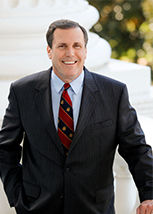
Photo of Scott Wilk
R California Senate · District 21 · Former member

Sen. Scott Wilk

Contact Email
Compare
Total votes
25,318
all sessions
Attendance
96%
859 missed
Near the chamber average
With party
95%
of cast votes
Lower than 98% of chamber peers
Bipartisan score
3%
crosses aisle rarely
Higher than 95% of chamber peers
Sponsored
1,250
bills & resolutions
Near the chamber average
Committees
0
assignments
1,250 bills and resolutions

Sponsored bills

Total
1,250
Primary
196
Co-sponsor
1,054
This page
1,250
matching current filters
Co-sponsor SCR 53
Signed into law · California Senate · Co-sponsor
Relative to National Military Appreciation Month.

This measure would honor the men and women who have served and are serving in our nation's military, and would recognize the month of May 2017 as National Military Appreciation Month.

Signed into law Sep 14, 2017 1 co-sponsor
Co-sponsor SCA 12
Passed · California Senate · Co-sponsor
A resolution to propose to the people of the State of California an amendment to the Constitution of the State, by amending Section 4 of, and adding Sections 4.5 and 4.6 to, Article XI thereof, relating to counties.

(1) The California Constitution requires that a county charter provide for a governing body of 5 or more members, elected by district, at large, or at large with a requirement that they reside in a district, and provide for the compensation, terms, and removal of members of the governing body. Existing law also requires a general law county to have a board of supervisors consisting of 5 members, and requires, except as provided, each member of the board of supervisors to be elected by the district which the member represents. This measure would, commencing January 1, 2022, in a county that is found at a decennial United States census, beginning with the 2020 United States census, to have a population of more than 5,000,000, require, and deem any applicable law, including a county charter, to require, a governing body consisting of the greater of either 5 members or a sufficient number of members so as to ensure that each member represents a district containing a population equivalent to no more than 2 districts in the United States House of Representatives. The measure would require that the members of the governing body serve for a term of 4 years and limit election to the governing body to no more than 3 terms. The measure would also provide that, in such a county, the expenditures for the governing body and its staff may not exceed, for any subsequent fiscal year after the release of the census finding that the county has a population of more than 5,000,000, the amount that was allocated for the expenses of the governing body and its staff in the county's adopted budget for the fiscal year in which that same census was conducted, unless adjusted as provided. (2) The California Constitution additionally requires that a county charter provide for an elected sheriff, an elected district attorney, an elected assessor, and other officers. This measure would require a county that is found at a decennial United States census, beginning with the 2020 United States census, to have a population of more than 5,000,000, to have an elected county executive. The measure would provide for the election of the county executive to a term of 6 years at a general election, and would limit election to that office to no more than 2 terms. The measure would require the county executive to appoint, supervise, and dismiss any appointed department head, and to appoint the members of county commissions, subject to confirmation by the governing body of the county. The measure would additionally require the county executive to develop and submit the county budget to the governing body, for approval or amendment by that body, and to approve, with or without line-item vetoes, the budget as transmitted back by the governing body. (3) The California Constitution provides that charter counties are subject to statutes that relate to apportioning population of governing body districts. This measure would recast this provision to provide that charter counties are subject to federal, state, and local laws that relate to apportioning population of governing body districts. (4) This measure would also make other technical, nonsubstantive changes. (5) This measure would declare that its provisions are severable.


Passed Sep 14, 2017 1 co-sponsor
Co-sponsor AJR 13
Signed into law · California Assembly · Co-sponsor
Relative to the National Aeronautics and Space Administration.

This measure would urge the President and the Congress of the United States to continue to place an emphasis on increasing funding to NASA's budget and encouraging the expansive use of public-private partnerships to propel the industry forward into the next generation of advancement.

Signed into law Sep 7, 2017 1 co-sponsor
Co-sponsor SB 268
Passed · California Senate · Co-sponsor
Los Angeles County Metropolitan Transportation Authority.

Existing law creates the Los Angeles County Metropolitan Transportation Authority with specified powers and duties relative to transportation planning, programming, and operations in the County of Los Angeles. The authority is governed by a 14-member board of directors that consists of the Mayor of the City of Los Angeles, 2 public members and one Los Angeles City Council member appointed by the mayor, 4 members appointed from the other cities in the county, the 5 members of the Los Angeles County Board of Supervisors, and a nonvoting member appointed by the Governor. Existing law requires the authority to submit a plan to the Legislature for revising the composition of the authority, if the number of members of the board of supervisors is increased, within 60 days of the increase. This bill would require the authority, the Los Angeles County Division of the League of California Cities, the California Contract Cities Association, and the Los Angeles County City Selection Committee to prepare and provide to the Legislature by December 1, 2018, a plan agreed to by 2 3 vote of the designated representatives"?> at least 3 of these entities, for reorganizing the membership of the authority to include 22 members, and to provide equitable and proportional voting representation for each area of the county on the authority, including more representation for cities other than the City of Los Angeles. The bill would require the plan to provide for the reconstitution of the authority no later than January 1, 2020. The bill, commencing on January 1, 2020, would require the membership of the authority to be reconstituted pursuant to the plan. The bill, if a plan is not submitted or is not implemented, would, commencing on January 1, 2020, provide for the authority to consist of 22 members, including the 5 members of the Los Angeles County Board of Supervisors, the Mayor of the City of Los Angeles, 5 members of the Los Angeles City Council and one public member appointed by the mayor, one member appointed by the City of Long Beach, 8 members from cities other than Los Angeles appointed by the Los Angeles County City Selection Committee, and one nonvoting member appointed by the Governor. The bill would require every appointee to serve a 4-year term without limitation or until the expiration of the term of his or her elected office. The bill would also delete, on January 1, 2020, the requirement for the authority to submit a plan to the Legislature if the number of members of the board of supervisors is increased. By imposing new duties on local government within the County of Los Angeles, the bill would impose a state-mandated local program. The California Constitution requires the state to reimburse local agencies and school districts for certain costs mandated by the state. Statutory provisions establish procedures for making that reimbursement. This bill would provide that, if the Commission on State Mandates determines that the bill contains costs mandated by the state, reimbursement for those costs shall be made pursuant to the statutory provisions noted above.

Passed Sep 5, 2017 1 co-sponsor
Co-sponsor SB 769
Passed · California Senate · Co-sponsor
Baccalaureate Degree Pilot Program.

Existing law, until July 1, 2023, authorizes the Board of Governors of the California Community Colleges, in consultation with the California State University and the University of California, to establish a statewide baccalaureate degree pilot program. Existing law requires a district baccalaureate degree pilot program to commence by the beginning of the 2017–18 academic year and requires a student participating in a baccalaureate degree pilot program to complete his or her degree by the end of the 2022–23 academic year. This bill would extend the operation of the statewide baccalaureate degree pilot program until July 1, 2028, and would extend the time by which a student participating in a baccalaureate degree pilot program is required to complete his or her degree to the end of the 2027–28 academic year.

Passed Sep 1, 2017 1 co-sponsor
Co-sponsor AB 943
Passed · California Assembly · Co-sponsor
Land use regulations: local initiatives: voter approval.

The Planning and Zoning Law, among other things, authorizes the legislative body of any county or city to adopt ordinances to regulate land use. Existing law also establishes procedures by which city or county ordinances may be enacted or amended by initiative, including requiring that an ordinance proposed by the voters of the city or county be approved by a majority of the votes cast on the ordinance. This bill, in the case of an ordinance or an amendment of an ordinance that would reduce density or stop development or construction of any parcels located less than one mile from a major transit stop, as defined, within a city, county, or city and county that is proposed by the voters of the city, county, or city and county in accordance with specified law, would require that the proposed ordinance or amendment of an ordinance receive 55% of the votes cast on the ordinance in order to become effective. The bill would exclude from this requirement the proposal and submission to the voters of an ordinance or amendment of an ordinance by the legislative body of the city, county, or city and county and the adoption or amendment of a city, county, or city and county charter, and would exclude ordinances that apply to or implement amendments to a city or county general plan pertaining to certain lands specified in that general plan. The bill would also exclude ordinances that apply primarily to lands located outside an established city urban restriction boundary or ordinances that revise or continue previously established city urban restriction boundaries. This bill would limit application of this requirement to a county or city and county that had a population of 750,000 or more, or a city located within such a county, as of January 1, 2017. The bill would require the county counsel for the county or city and county in which the proposed ordinance or amendment of an ordinance would apply, or the city attorney of the city in which the proposed ordinance or amendment of an ordinance would apply, to determine whether the proposed ordinance or amendment of an ordinance would reduce density or stop development or construction of any parcels located less than one mile from a major transit stop within the city, county, or city and county. The bill would declare that it addresses a matter of statewide concern and would therefore apply to charter cities and charter counties. By requiring local officials to determine whether a proposed ordinance or amendment of an ordinance would reduce density or stop development or construction of any parcels located less than one mile from a major transit stop within a city, county, or city and county, this bill would impose a state-mandated local program. The California Constitution requires the state to reimburse local agencies and school districts for certain costs mandated by the state. Statutory provisions establish procedures for making that reimbursement. This bill would provide that, if the Commission on State Mandates determines that the bill contains costs mandated by the state, reimbursement for those costs shall be made pursuant to the statutory provisions noted above.

Passed Sep 1, 2017 1 co-sponsor
Co-sponsor AB 1428
Passed · California Assembly · Co-sponsor
Peace officers: transparency.

Existing law requires a department or agency that employs peace officers to establish a procedure to investigate complaints by members of the public against those officers. Existing law requires the department or agency to provide written notification to the complaining party of the disposition of a complaint made pursuant to those provisions within 30 days of the disposition. This bill would also require a department or agency to provide written notification to the complaining party of the current procedural status of an ongoing complaint investigation at least every 45 days. The bill would require a department or agency that employs peace officers to make available for public inspection the rules and procedures that have been adopted by that department or agency for imposing discipline and providing for the administrative appeal of an adverse decision by a peace officer. By imposing additional duties on local agencies, the bill would impose a state-mandated local program. Existing law requires each law enforcement agency to annually furnish to the Department of Justice a report of specified incidents when a peace officer is involved in the use of force, including an incident involving the shooting of a civilian by a peace officer. This bill would require each county district attorney's office that conducts an investigation into an incident involving the shooting of a civilian by a peace officer to report the findings of that investigation on a publicly accessible Internet Web site within 30 days of the conclusion of the investigation. The bill would also require each department or agency that employs peace officers to post reports about serious uses of force by peace officers on its Internet Web site within 30 days of completing any investigation or adjudication related to the use of force and to, at least quarterly, post a report on its Internet Web site containing aggregate statistical information on serious uses of force for which any investigation, adjudication, or both have been completed. By imposing additional reporting duties on local law enforcement agencies, the bill would impose a state-mandated local program. The California Constitution requires the state to reimburse local agencies and school districts for certain costs mandated by the state. Statutory provisions establish procedures for making that reimbursement. This bill would provide that, if the Commission on State Mandates determines that the bill contains costs mandated by the state, reimbursement for those costs shall be made pursuant to the statutory provisions noted above.

Passed Sep 1, 2017 1 co-sponsor
Co-sponsor SB 197
Passed · California Senate · Co-sponsor
Sales and use taxes: exemption: military and veteran medical facilities.

Existing state sales and use tax laws impose a tax on retailers measured by the gross receipts from the sale of tangible personal property sold at retail in this state, or on the storage, use, or other consumption in this state of tangible personal property purchased from a retailer for storage, use, or other consumption in this state. The Sales and Use Tax Law provides various exemptions from those taxes, including an exemption for the sale of, or the storage, use, or other consumption of, meals and food products that are furnished or served by any nonprofit veteran's organization for purposes of fundraising, as specified. This bill, on and after April 1, 2017, and before January 1, 2023, would exempt from these taxes the gross receipts from the sale of, and the storage, use, or other consumption in this state of, building materials and supplies purchased by a qualified person for use by that qualified person in the construction of specified military and veteran medical facilities. The bill would make a legislative finding and declaration that the retroactive application of the bill serves a public purpose and does not constitute a gift of public funds. The Bradley-Burns Uniform Local Sales and Use Tax Law authorizes cities and counties to impose local sales and use taxes in conformity with the Sales and Use Tax Law, and existing laws authorize districts, as specified, to impose transactions and use taxes in accordance with the Transactions and Use Tax Law, which generally conforms to the Sales and Use Tax Law. Amendments to the Sales and Use Tax Law are automatically incorporated into the local tax laws. Existing law requires the state to reimburse cities and counties for revenue losses caused by the enactment of sales and use tax exemptions. This bill would provide that, notwithstanding these provisions, no appropriation is made and the state shall not reimburse cities and counties for sales and use tax revenues lost by them pursuant to this bill.

Passed Sep 1, 2017 1 co-sponsor
Co-sponsor AB 1027
Signed into law · California Assembly · Co-sponsor
Driver's licenses: examinations: motorcycle licenses.

Under existing law, upon application for an original driver's license, except student licenses, the Department of Motor Vehicles shall require an examination of the applicant. Existing law requires that the examination test the applicant's knowledge and understanding of, among other things, the provisions of the Vehicle Code governing the operation of vehicles upon the highways. Existing law authorizes the department to accept a certificate of satisfactory completion of an approved novice motorcyclist training program, as specified, in lieu of a driving test on motorcycle license applications. With regard to a person under 21 years of age, existing law requires completion of an approved motorcycle safety training program for issuance of a class M1 or M2 license or endorsement. This bill would instead authorize the department to accept any certificate of satisfactory completion of an approved motorcyclist training program, as specified, in lieu of a driving test on motorcycle license applications. With regard to a person under 21 years of age, the bill would instead require completion of a novice motorcycle safety training program for issuance of a class M1 or M2 license or endorsement.

Signed into law Sep 1, 2017 1 co-sponsor
Showing 561 to 570 of 1,250 bills
Previous 1 … 56 57 58 … 125 Next