

Under existing law, there are programs providing assistance for, among other things, emergency housing, multifamily housing, farmworker housing, home ownership for very low and low-income households, and downpayment assistance for first-time home buyers. Existing law also authorizes the issuance of bonds in specified amounts pursuant to the State General Obligation Bond Law and requires that proceeds from the sale of these bonds be used to finance various existing housing programs, capital outlay related to infill development, brownfield cleanup that promotes infill development, and housing-related parks. Existing law, the Veterans and Affordable Housing Bond Act of 2018, authorized, the issuance of bonds in the amount of $4,000,000,000 to finance various existing housing programs, as well as infill infrastructure financing and affordable housing matching grant programs, as well as financing for a specified program for farm, home, and mobilehome purchase assistance for veterans, pursuant to the State General Obligation Bond Law. This bill would enact the Veterans and Affordable Housing Bond Act of 2026, which, if adopted, would authorize the issuance of bonds in the amount of $11,250,000,000, pursuant to the State General Obligation Bond Law. Of the proceeds from the sale of these bonds, $10,000,000,000 would be used to finance programs to fund affordable rental housing and home ownership programs, including, among others, the Multifamily Housing Program, the CalHome Program, and the Joe Serna, Jr. Farmworker Housing Grant Program, and $1,250,000,000 would be used to provide additional funding for the above-described program for farm, home, and mobilehome purchase assistance for veterans, as provided. This bill would provide for submission of the bond act to the voters at the November 3, 2026, statewide general election, in accordance with specified law. This bill would declare that it is to take effect immediately as an urgency statute.
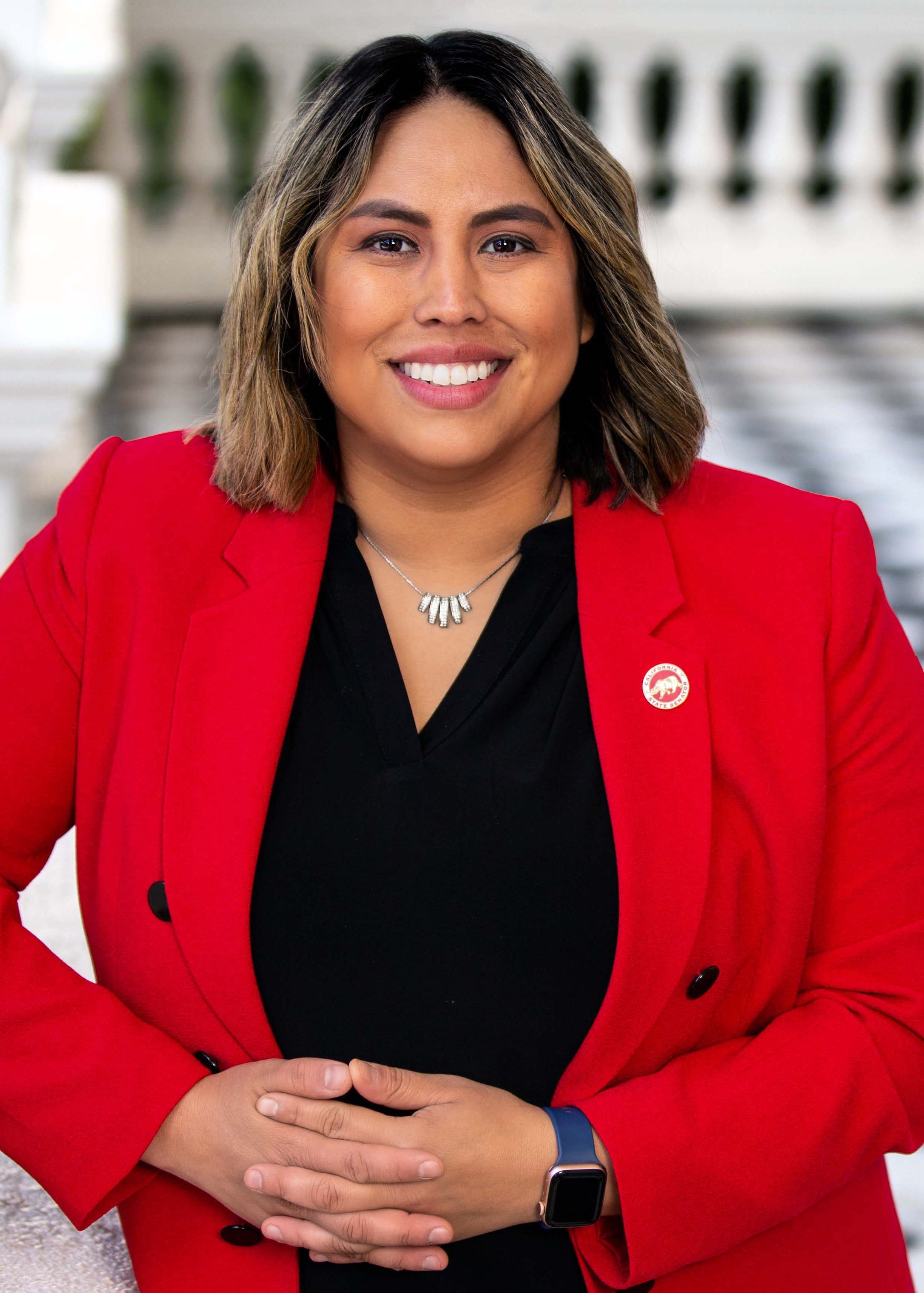
Sen. Caroline Menjivar
Sponsored bills
Existing law, the Davis-Stirling Common Interest Development Act, governs the formation and operation of common interest developments. Existing law requires that a common interest development be managed by an association. Existing law requires an association of a common interest development to levy regular and special assessments to perform its obligations under the governing documents and the act, as provided. Existing law requires an association to prepare an annual budget report and a policy statement, as specified. Existing law requires the association to either deliver to all members the full report or a summary of the report that includes specified information, on the first page, whenever the annual budget report or a policy statement is prepared, as provided. This bill would require the annual budget report to include a comparison breakdown of the anticipated expenses of the previous fiscal year versus actual expenditures of the previous fiscal year and a statement regarding compensation of a management company, as provided. The bill would require a summary of an annual budget to also include the comparison breakdown and the statement regarding compensation of a management company, as specified. Existing law prohibits increases in regular assessments for any fiscal year, unless the board complies with certain requirements, including certain information in its annual budget report. Existing law prohibits an association from increasing regular assessments by more than 20 percent, without the approval of a majority of a quorum of members. This bill would prohibit an association from increasing a regular assessment, unless the board includes the above-referenced information pertaining to regular assessments. The bill would, instead, prohibit a board from increasing regular assessments by more than 8%, without the approval of the majority of a quorum of members. Existing law requires the association to notify a member 10 days before a meeting to consider or impose discipline on a member, or a monetary charge, as a means of reimbursing the association for costs incurred by the association in the repair of damage to the common area and facilities caused by a member, as provided. Existing law requires the notification to include, among other information, the nature of the alleged violation, or nature of the damage to the common area and facilities. This bill would require the association to make any physical evidence used to determine a violation of the governing documents has occurred available to the member at least 5 business days before the hearing or deadline for the member's response, if the association seeks to impose a monetary penalty against a member for violation of the governing documents, as provided.
Maddy summaryThis Senate Resolution formally recognizes June as Lesbian, Gay, Bisexual, Transgender, and Queer (LGBTQ+) Pride Month in California. The document honors the history of the LGBTQ+ civil rights movement, specifically commemorating the 1969 Stonewall Uprising that sparked modern advocacy. It also acknowledges significant milestones, such as the passage of marriage equality laws and the increasing representation of LGBTQ+ individuals in public office and various sectors.
Maddy summaryThis bill designates the year 2026 as the 60th anniversary of the pilot regional centers. It serves as a commemorative resolution to acknowledge the milestone history of these centers without altering any laws or policies. The measure affects no specific individuals or groups and does not create new obligations or change existing regulations. Its sole purpose is to formally recognize the date in official records.
Maddy summaryThis bill designates May 2026 as Asthma and Allergy Awareness Month. It requires state officials to issue a formal proclamation recognizing the month and highlighting the importance of managing these health conditions. The measure does not create new laws or funding but serves as a symbolic gesture to draw public attention to asthma and allergies.
Existing law establishes the Medi-Cal program, which is administered by the State Department of Health Care Services and under which qualified low-income individuals receive health care services. The Medi-Cal program is, in part, governed and funded by federal Medicaid program provisions. Existing law sets a schedule of benefits that are covered by the Medi-Cal program. The federal Medicaid program prohibits payment to a state for medical assistance furnished to an alien who is not lawfully admitted for permanent residence or otherwise permanently residing in the United States under color of law. Existing state law extends Medi-Cal eligibility for the full scope of Medi-Cal benefits to individuals who do not have satisfactory immigration status if they are otherwise eligible for those benefits, with the exception of specified dental benefits for individuals who are 19 years of age or older. Existing law makes an individual who is 19 years of age or older, who does not have satisfactory immigration status, and who applies for Medi-Cal on or after January 1, 2026, or loses eligibility for eligibility for full-scope Medi-Cal on or after January 1, 2026, eligible only for pregnancy-related services and emergency medical treatment. Existing law, beginning no sooner than July 1, 2027, as specified, requires individuals who do not have satisfactory immigration status, who are not pregnant, and who are 19 to 59 years of age, inclusive, to pay a monthly premium of $30, subject to certain exceptions. This bill would require the Director of the Department of Finance to determine and report to the Legislature and the Governor the cost of implementing eligibility for the full scope of Medi-Cal benefits for individuals who do not have satisfactory immigration status if they are otherwise eligible, and whether including those costs the General Fund would be in a deficit, as defined. The bill would then, on January 1 of the year following such a determination, end the above-described limitations on services for those who apply for Medi-Cal after January 1, 2026, or who lose eligibility for the full-scope of Medi-Cal benefits on or after January 1, 2026, thereby making an individual who is 19 years of age or older, who does not have satisfactory immigration status, eligible for the full scope of Medi-Cal benefits subject to certain limitations, such as the payment of premiums and certain dental benefits. The bill would require that the implementation of eligibility for the full-scope of Medi-Cal benefits be done by groups categorized by age, beginning with individuals over 49 years of age. Because counties are required to make Medi-Cal eligibility determinations and this bill would alter Medi-Cal eligibility, the bill would impose a state-mandated local program. The California Constitution requires the state to reimburse local agencies and school districts for certain costs mandated by the state. Statutory provisions establish procedures for making that reimbursement. This bill would provide that, if the Commission on State Mandates determines that the bill contains costs mandated by the state, reimbursement for those costs shall be made pursuant to the statutory provisions noted above.
Existing law requires the Board of Parole Hearings to conduct a youth offender parole hearing for offenders sentenced to state prison who committed specified crimes when they were under 25 years of age. Existing law makes a person who was convicted of a controlling offense that was committed when the person was under 18 years of age and for which the sentence is life without the possibility of parole eligible for release on parole at a youth offender hearing by the board during the person's 25th year of incarceration. Existing law specifies that these provisions do not alter the rights of a victim at a parole hearing. Under existing law, a murder perpetrated by specified means or under certain circumstances is defined as murder of the first degree. Existing law, as added by Proposition 7, an initiative measure approved by the voters at the November 7, 1978, statewide general election, requires that a person convicted of first-degree murder be subject to death or confinement in prison for a term of life without the possibility of parole in any case in which specified special circumstances are charged and found to be true. Proposition 7 does not provide for amendment by the Legislature. This bill, the Youth Rehabilitation and Opportunity Act, would instead make a person who was convicted of a controlling offense that was committed when the person was 25 years of age or younger and for which they were sentenced to life without the possibility of parole eligible for parole after their 25th year of incarceration, except as specified. The bill would require the board to complete, by January 1, 2028, all hearings for individuals who are or will be entitled to have their parole suitability considered at a youth offender parole hearing by these provisions, as specified.
This measure would recognize May 10, 2026, as the 119th annual Mother's Day and would urge all Californians to recognize, appreciate, and be grateful for the gifts and good works of mothers on that day.
Maddy summaryThis bill designates Monday, May 4, 2026, as California Peace Officers' Memorial Day to honor law enforcement officers. It does not create new laws or change existing policies but serves as a formal proclamation to recognize the date. The measure affects the state by establishing an official day of remembrance for peace officers.
Maddy summaryThis bill designates April 2026 as Child Abuse Prevention Month to raise awareness about preventing child abuse. The measure does not change laws or allocate funding but instead directs state agencies to acknowledge the month through official proclamations. By recognizing this period, the legislature aims to highlight the importance of child safety without altering existing policies.