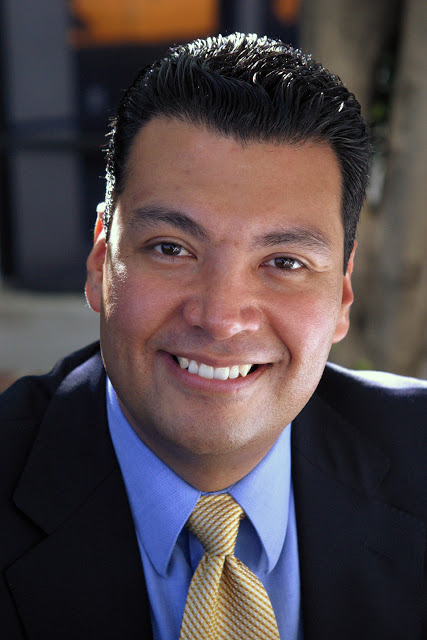
Photo of Alex Padilla
D California Senate · District 20

Sen. Alex Padilla

Compare
Total votes
18,975
all sessions
Attendance
92%
1,085 missed
Near the chamber average
With party
99%
of cast votes
Near the chamber average
Bipartisan score
0%
crosses aisle rarely
Near the chamber average
Sponsored
424
bills & resolutions
Near the chamber average
Committees
0
assignments
424 bills and resolutions

Sponsored bills

Total
424
Primary
190
Co-sponsor
234
This page
424
matching current filters
Primary SB 475
Signed into law · California Senate · Lead sponsor
Guide dogs for the blind.

Existing law establishes within the Department of Consumer Affairs a State Board of Guide Dogs for the Blind that, among others things, has exclusive authority to license schools for the training of guide dogs for the blind and the instruction of blind persons in the use of guide dogs. Existing law requires a fee equal to 0.004 of a school's annual expenses be paid for renewal of a school's license. This bill would specify that the license renewal fee shall be no more than 0.005 of a school's annual expenses, as determined by the board by regulation, and would require the fee to be paid by April 30 of each year.

Signed into law Aug 6, 2009 0 co-sponsors
Co-sponsor AB 1555
Signed into law · California Assembly · Co-sponsor
Telecommunications: California Advanced Services Fund.

Under existing law, the Public Utilities Commission has regulatory authority over public utilities, including telephone corporations. Existing law authorizes the commission to supervise and regulate every public utility and do all things necessary and convenient in the exercise of its power and jurisdiction. Existing law, until January 1, 2013, establishes the California Advanced Services Fund (CASF) in the State Treasury, and requires a surcharge, which is imposed by the commission and collected through retail telecommunications customers' bills, to be deposited in that fund, for the purpose of encouraging the deployment of advanced communications services, as provided in a specified order of the commission. Pursuant to that order, which establishes a program providing matching funds to build broadband infrastructure in unserved and underserved areas, eligible applicants for these funds are telephone corporations having a specified certificate from the commission and wireless carriers subject to registration with the commission. This bill would, for the sole purpose of providing matching funds pursuant to the federal American Recovery and Reinvestment Act of 2009, make any entity eligible for funding pursuant to that act eligible to apply for participation in the matching funds program if that entity otherwise satisfies the eligibility requirements under the program. This bill would declare that it is to take effect immediately as an urgency statute.

Signed into law Jul 29, 2009 1 co-sponsor
Primary SB 424
Signed into law · California Senate · Lead sponsor
Vehicles: manufacturers and distributors.

(1) Existing law makes it a violation of the Vehicle Code for the holder of a vehicle dealer's license to commit specified actions, including, among other things, to advertise for sale, sell, or purchase for resale a new vehicle of a line-make for which the dealer does not hold a franchise. Existing law also lists various exceptions to this requirement. This bill would expand the list of existing exceptions to also include a vehicle acquired in the ordinary course of business as a new vehicle by a dealer franchised to sell that vehicle if specified conditions are met, including if the manufacturer or distributor of the vehicle files a bankruptcy petition. (2) Existing law generally requires a manufacturer, manufacturer branch, remanufacturer, remanufacturer branch, distributor, distributor branch, transporter, or dealer of vehicles to be licensed by the Department of Motor Vehicles. Under existing law, it is unlawful for a manufacturer, manufacturer branch, distributor, or distributor branch to, among other things, dishonor a warranty, rebate, or other incentive offered to the public or a dealer, as specified, or to unfairly discriminate in favor of a dealership owned or controlled, in whole or part, by a manufacturer or an entity that controls or is controlled by a manufacturer or distributor. This bill would prohibit a manufacturer, manufacturer branch, distributor, or distributor branch from preventing, or attempting to prevent, by contract or otherwise, a dealer from acquiring, adding, or maintaining a sales or service operation for another line-make of motor vehicles at the same or expanded facility at which the dealer currently operates a dealership if the dealer complies with any reasonable facilities and capital requirements of the manufacturer or distributor or from requiring a dealer to establish or maintain exclusive facilities, personnel, or display space if the imposition of the requirement would be unreasonable in light of all existing circumstances, including economic conditions. In any proceeding under these provisions in which the reasonableness of a facility requirement is an issue, the manufacturer or distributor would have the burden of proof. The bill would also prohibit additional specified unlawful acts by a manufacturer, manufacturer branch, distributor, or distributor branch against a dealer. (3) Under existing law, a violation of the above provisions relating to occupational licensing and business regulations in the Vehicle Code is a misdemeanor. Because this bill would create a new crime, it would impose a state-mandated local program. (4) The California Constitution requires the state to reimburse local agencies and school districts for certain costs mandated by the state. Statutory provisions establish procedures for making that reimbursement. This bill would provide that no reimbursement is required by this act for a specified reason. (5) This bill would declare that it is to take effect immediately as an urgency statute.

Signed into law Jul 2, 2009 0 co-sponsors
Co-sponsor SCR 28
Signed into law · California Senate · Co-sponsor
Relative to senior volunteers.

This measure would declare May 2009 to be "Senior Volunteer Month" to honor the contributions of California's senior volunteers.

Signed into law May 29, 2009 1 co-sponsor
Primary SB 9
Signed into law · California Senate · Lead sponsor
Public works: labor compliance.

(1) Existing law defines "public works," for purposes of regulating public works contracts, as, among other things, construction, alteration, demolition, installation, or repair work that is performed under contract and paid for, in whole or in part, out of public funds. Pursuant to existing law, all workers employed on public works shall be paid not less than the general prevailing rate of per diem wages for work, except for public works projects of $1,000 or less. This bill would specify that, for purposes of these provisions, the definition of "public works" includes a capital improvement project undertaken by a charter city to extend that city's water, sewer, or storm drain system or similar system to a disadvantaged community in an unincorporated area, but would provide that it does not include any subsequent project to construct, expand, reconstruct, install, or repair such systems that have been so extended, where that project is conducted within that city's political boundaries. (2) Existing law authorizes the awarding body for a public works project to not require the payment of the general prevailing rate of per diem wages on public works projects of specified sizes and types of work, if the awarding body elects to initiate and enforce a labor compliance program containing specified requirements for every public works project under the authority of the awarding body. This bill would instead authorize the awarding body for a public works project to not require the payment of the general prevailing rate of per diem wages on public works projects of specified sizes and types of work, if the awarding body elects to meet certain requirements with regard to any public works project under its authority, including payment of a fee to the Department of Industrial Relations for the enforcement of prevailing wage obligations, as specified, which would be determined by the department and deposited in the State Public Works Enforcement Fund. This bill would establish the State Public Works Enforcement Fund in the State Treasury, and would continuously appropriate moneys in the fund for the department's enforcement of prevailing wage requirements applicable to public works projects and labor compliance enforcement. The bill would require the department to meet certain requirements with regard to all projects required to pay a fee into the State Public Works Enforcement Fund, including the adoption of regulations setting forth the manner in which the department will ensure compliance with and enforce prevailing wage requirements on the project, and would require the department to report to the Legislature on the fund, as specified. (3) Existing law requires an awarding body that chooses to use funds from the Kindergarten-University Public Education Facilities Bond Act of 2002 for a public works project or an awarding body for any contract for a public works project financed in any part with funds made available by the Water Security, Clean Drinking Water, Coastal and Beach Protection Act of 2002 to initiate and enforce, or contract with a 3rd party to initiate and enforce, a labor compliance program for that public works project. This bill would require the Director of Industrial Relations, with the approval of the Director of Finance, to assess a fee on any awarding body using funds derived from any bonds issued by the state to fund public works projects, as specified, which would be deposited in the State Public Works Enforcement Fund. The bill would also require an awarding body that chooses to use funds derived from either the Kindergarten-University Public Education Facilities Bond Act of 2002 or the Kindergarten-University Public Education Facilities Bond Act of 2004, or the body awarding any contract for a public works project financed in any part with funds made available by the Water Security, Clean Drinking Water, Coastal and Beach Protection Act of 2002 of the Safe, Reliable High-Speed Passenger Train Bond Act for the 21st Century, to pay a fee to the department sufficient to support the department's costs in ensuring compliance with and enforcing prevailing wage requirements on the project and labor compliance enforcement, as specified. The bill would require all fees collected pursuant to these provisions to be deposited in the State Public Works Enforcement Fund and to be used only for enforcement of prevailing wage requirements on those projects. The bill would authorize the department to waive the fee for an awarding body if specified criteria are met. (4) Existing law gives specified authority for certain school district governing boards, governing boards of community college districts and community college facility construction projects, cities, counties, qualified entities that operate a wastewater facility, solid waste management facility, or water recycling facility, transit operators, and unified school districts to enter into design-build contracts for specified projects if certain requirements are met, including the establishment and enforcement of a labor compliance program or the contracting with a 3rd-party to operate a labor compliance program. Existing law gives specified authority for the San Diego Model School Development Agency to award construction contracts, as specified, and requires it to establish and enforce a labor compliance program or to contract with a 3rd-party to operate a labor compliance program. This bill would instead require entities contracting under the above provisions to pay a fee to the department, established by the department as specified, sufficient to support the department's costs in ensuring compliance with and enforcing prevailing wage requirements on the project and labor compliance. The bill would require all fees collected pursuant to these provisions to be deposited in the State Public Works Enforcement Fund and to be used only for enforcement of prevailing wages requirements on those projects. The bill would authorize the department to waive the fee if specified criteria are met.


Signed into law Feb 20, 2009 0 co-sponsors
Showing 301 to 310 of 424 bills
Previous 1 … 30 31 32 … 43 Next