

Existing law requires that each death be registered with the local registrar of births and deaths in the district in which the death was officially pronounced or the body was found. Existing law establishes the required contents of the death certificate, including, but not limited to, the decedent's name, sex, race, and the disease or conditions leading directly to death and antecedent causes, among other relevant identifying and medical information. When the facts are incorrectly stated in a certificate of death, including a typographical error, existing law authorizes a person to make an affidavit under oath stating the changes necessary to make the record correct. Existing law requires that specified information be filed with the state or local registrar, and if the amendments are accepted, the State Registrar is required to transmit copies of the amendment to the county recorder in whose offices the copies of the original record and information are on file. Existing law requires the amendment to be filed with and become a part of the record to which it pertains. This bill would authorize a family member of the deceased, when a judicial determination is made on the manner of a deceased person's death, to submit a written request to the State Registrar for a new death certificate reflecting the newly determined manner of death. This bill would require the request to be supported by a certified copy of the plea, verdict, statement of decision, or a judgment showing that the manner of death was determined by a finder of fact to be different than stated on the existing certificate. The bill would require the State Registrar to review the request and issue a new death certificate if specified conditions are met, including, but not limited to, that the request identifies the determination of manner of death in the certified court record. The bill would require the State Registrar to transmit copies of the new death certificate and the new certificate will supplant any previously issued certificate for the deceased person. The bill would require the local registrar to transmit any copies of the previously issued death certificate to the State Registrar if it is practical to do so and if it is not practical to do so, seal a cover over the copy, as specified. The bill would specify that a plea, verdict, statement of decision, or judgment reflects a judicial determination that the manner of death was homicide if it shows criminal responsibility or civil liability for the death of the deceased person. The bill would authorize a family member of the deceased to include additional certified court records with their request to permit the State Registrar to determine the manner of death. The bill would require a determination by the State Registrar to be based solely on the request and the submitted certified court documents. By imposing new duties on local registrars, this bill would impose a state-mandated program. The California Constitution requires the state to reimburse local agencies and school districts for certain costs mandated by the state. Statutory provisions establish procedures for making that reimbursement. This bill would provide that, if the Commission on State Mandates determines that the bill contains costs mandated by the state, reimbursement for those costs shall be made pursuant to the statutory provisions noted above.
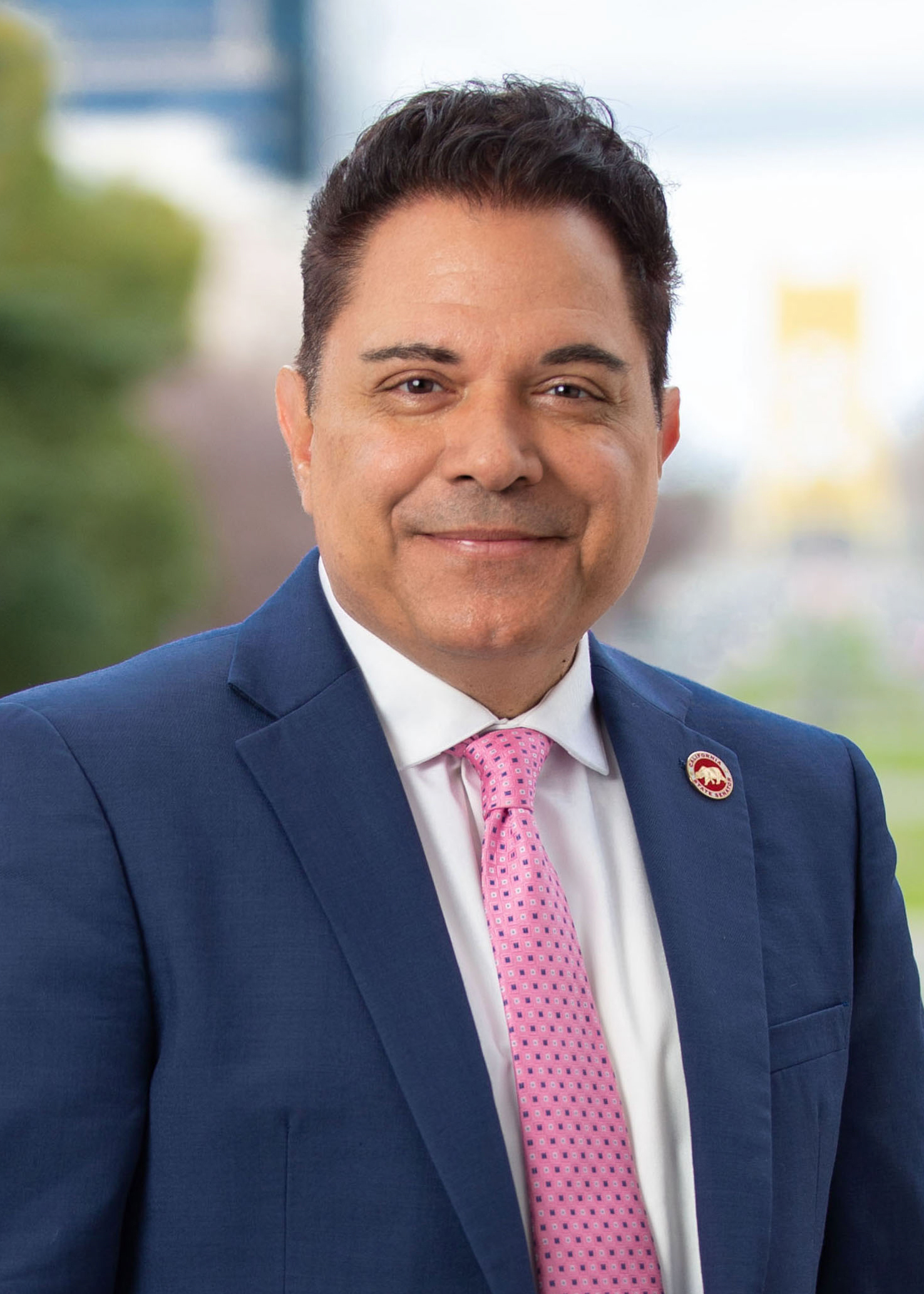
Sen. Steve Padilla
Sponsored bills
Existing law, the Sherman Food, Drug, and Cosmetic Law, under the administration and enforcement of the State Department of Public Health, provides for the regulation of various subjects relating to the manufacturing, processing, labeling, advertising, and sale of food, drugs, and cosmetics. Existing law places product testing and disclosure requirements on various products, including baby food and prenatal vitamins. A violation of the Sherman Food, Drug, and Cosmetic Law is punishable as a misdemeanor. This bill would, commencing January 1, 2028, require a manufacturer of a bulk protein product or a packaged protein product, as defined, that is sold, manufactured, delivered, held, or offered for sale in this state to test a representative sample of each lot of the product for heavy metals, as defined. The bill would require both a manufacturer and brand owner to provide test results to an authorized agent of the department upon their request, as specified. The bill would, commencing January 1, 2028, require a brand owner of a packaged protein product that is sold, manufactured, delivered, held, or offered for sale in the state to disclose specified product information to the public, including, among other things, the heavy metal testing information. Commencing on or after January 1, 2028, the bill would require a statement regarding heavy metal testing to be included on the outermost package of a packaged protein product sold in a retail store and on the product details page on an internet website for products sold online or directly to consumers. The bill would, commencing January 1, 2028, prohibit a person from selling in the state or manufacturing, delivering, holding, or offering for sale in the state a protein product that does not comply with these provisions. By creating a new crime, the bill would impose a state-mandated local program. The California Constitution requires the state to reimburse local agencies and school districts for certain costs mandated by the state. Statutory provisions establish procedures for making that reimbursement. This bill would provide that no reimbursement is required by this act for a specified reason.
Existing law establishes the Division of Labor Standards Enforcement within the Department of Industrial Relations. Existing law authorizes the division, which is headed by the Labor Commissioner, to enforce the Labor Code and all labor laws of the state, the enforcement of which is not specifically vested in any other officer, board, or commission. This bill would prohibit an employer from using a worker's personal information, as defined, to train an artificial intelligence system to replicate, automate, or replace a worker's job, and would prohibit an employer from selling, disclosing, or otherwise providing access to a worker's personal information to a third party for the purpose of training an artificial intelligence system to replicate, automate, or replace a worker's job. The bill would prohibit a vendor providing services to an employer under a contract from providing access to the personal information of an employer's worker to a third party or using the personal information of an employer's worker to train artificial intelligence, as specified. The bill would require a contract between an employer and vendor to include a requirement that the vendor implement and maintain reasonable security procedures to protect the worker's personal information from, among other things, unauthorized or illegal access. The bill would define terms for these provisions, including "employer" and "personal information." The bill would require the Labor Commissioner and authorize a public prosecutor to enforce these provisions. The bill would authorize a worker, or their exclusive representative, who suffered a violation of these provisions to bring a civil action for damages, injunctive relief, punitive damages, and attorney's fees and costs. The bill would establish a statutory penalty for a violation of these provisions of up to $500 for each violation. The bill would include findings that changes proposed by this bill address a matter of statewide concern rather than a municipal affair and, therefore, apply to all cities, including charter cities.
Existing law, the Cal Grant Program, establishes the Cal Grant A Entitlement Awards, the Cal Grant B Entitlement Awards, the California Community College Expanded Entitlement Awards, the California Community College Transfer Entitlement Awards, the Competitive Cal Grant A and B Awards, the Cal Grant C Awards, and the Cal Grant T Awards under the administration of the Student Aid Commission. Existing law establishes eligibility requirements for awards under the Cal Grant Program for participating students attending qualifying postsecondary educational institutions. Existing law limits an award for access costs, as defined, under the Cal Grant B Program to no more than $1,551, except as specified, but allows this amount to be adjusted in the annual Budget Act. This bill, commencing with the 2027–28 award year, would instead require the award for access costs under the Cal Grant B program to be at least the maximum per-student amount provided in the 2025–26 award year and would require that award amount to be increased annually by the amount of the percentage increase, if any, in the California Consumer Price Index for All Urban Consumers, as specified.
Maddy summaryThis bill designates April 2, 2026, as World Autism Awareness Day within the state of California. It directly affects state agencies and the general public by officially recognizing this specific date for awareness activities. The primary mechanism is a simple legislative declaration that adds this observance to the state calendar without creating new laws or funding requirements. Once enacted, the resolution serves as a formal record of the state's acknowledgment of the global observance.
Maddy summaryThis Senate Resolution designates the week of May 3 through May 10, 2026, as Cinco de Mayo Week in California. The measure urges all Californians to celebrate the historical victory at the Battle of Puebla and to acknowledge the contributions of Latinos to the state's culture, economy, and defense of democratic institutions. It highlights the role of Latino communities in various fields, including the arts, business, and public service, while recognizing their support for free institutions both in California and Mexico. The resolution is a commemorative action intended to honor the spirit and achievements of Latinos rather than to enact new laws or policies.
Maddy summaryThis Senate Resolution urges the Pro Football Hall of Fame to induct legendary quarterback Jim Plunkett into its hall for the Class of 2027. The bill highlights Plunkett's historic achievements, including winning two Super Bowls as the only Latino player to do so and being the first Latino selected first overall in the NFL Draft. It notes that despite his accolades and previous nominations, he has not yet been inducted and requires 80 percent of the votes from the selection committee to be honored. The resolution formally requests the Hall of Fame to consider his induction as a matter of pride for California residents.
This measure would recognize March 21, 2026, as the beginning of the International Day of Nowroz and extend best wishes for a peaceful and prosperous Nowroz to all Californians.
This measure would acknowledge the Muslim holy month of Ramadan and express the Legislature's deepest respect to Muslims across California and throughout the world on this significant occasion.
Existing law designates specific days as holidays in this state, including Cesar Chavez Day on March 31, and requires the Governor to annually proclaim March 31 as Cesar Chavez Day. This bill would instead designate March 31 as Farmworkers Day and would require the Governor to annually proclaim March 31 as Farmworkers Day. This bill would declare that it is to take effect immediately as an urgency statute.