

The California Fair Employment and Housing Act establishes the Civil Rights Department within the Business, Consumer Services, and Housing Agency and requires the department to, among other things, bring civil actions to enforce the act. Existing law requires, on or before September 1, 2024, the Department of Technology to conduct, in coordination with other interagency bodies as it deems appropriate, a comprehensive inventory of all high-risk automated decision systems that have been proposed for use, development, or procurement by, or are being used, developed, or procured by, any state agency. This bill would generally regulate the development and deployment of an automated decision system (ADS) used to make consequential decisions, as defined. The bill would define "automated decision system" to mean a computational process derived from machine learning, statistical modeling, data analytics, or artificial intelligence that issues simplified output, including a score, classification, or recommendation, that is designed or used to assist or replace human discretionary decisionmaking and materially impacts natural persons. This bill would require a developer of a covered ADS, as defined, to take certain actions, including providing a potential deployer instructions explaining how the covered ADS should be used by the deployer to make or facilitate a consequential decision. This bill would require a deployer of a covered ADS to take certain actions, including provide certain disclosures to a subject of a consequential decision made or facilitated by the covered ADS that results in an adverse outcome, as defined, and provide the subject with an opportunity to appeal the outcome of the consequential decision, as prescribed. This bill would authorize the Attorney General to bring a specified civil action for noncompliance.
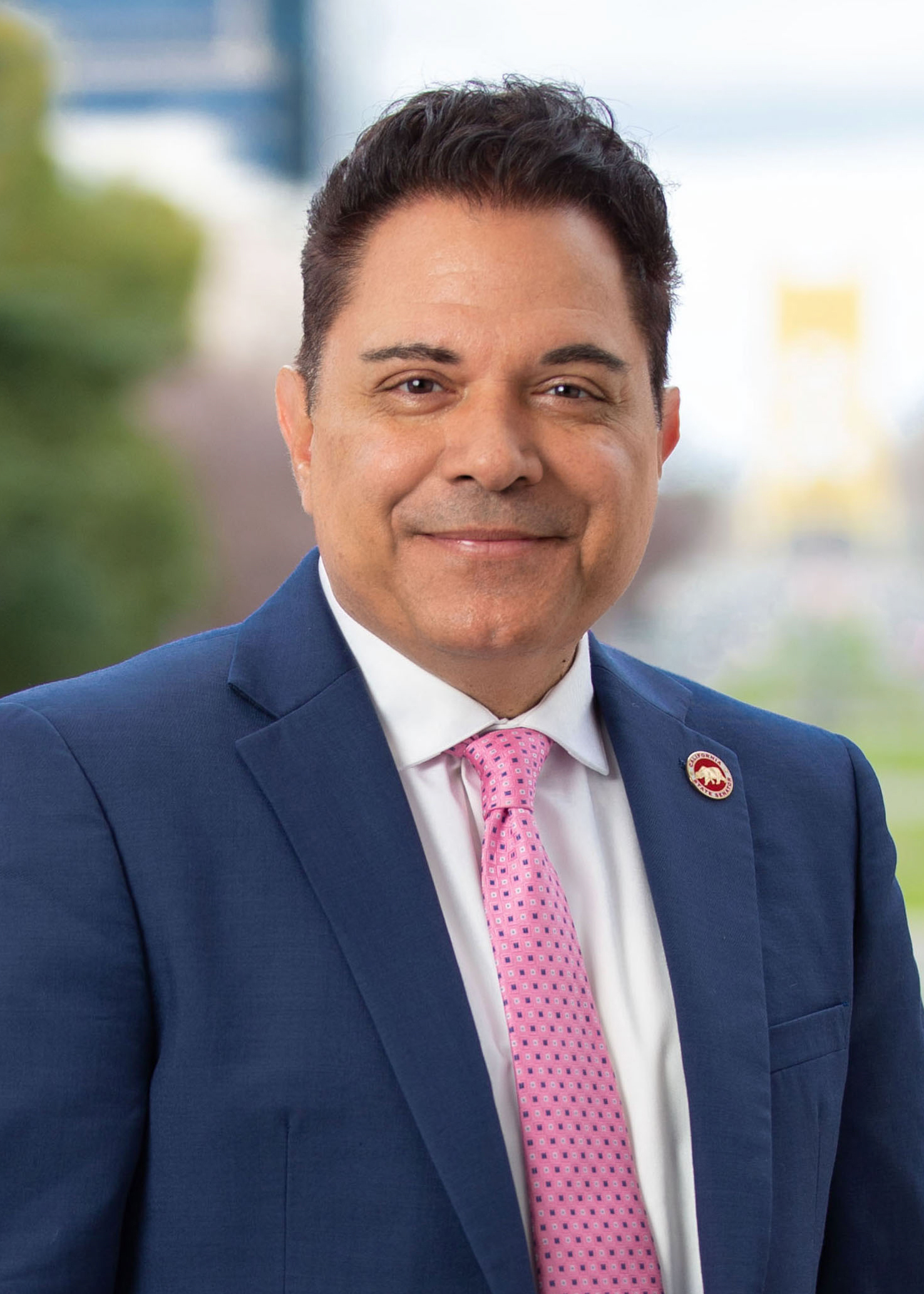
Sen. Steve Padilla
Sponsored bills
Existing law generally regulates artificial intelligence, including companion chatbots, as defined. Existing law requires an operator, as defined, to prevent a companion chatbot on its companion chatbot platform from engaging with users unless the operator maintains a protocol for preventing the production of suicidal ideation, suicide, or self-harm content to the user. Existing law requires an operator, for a user the operator knows is a minor, to take certain prescribed action, including disclosing to the user that the user is interacting with artificial intelligence. This bill would delete those provisions imposing requirements on an operator if the operator knows the user is a minor. The Digital Age Assurance Act requires a person who owns, maintains, or controls a software application, as defined, to request age bracket data sent by a real-time secure application programming interface or operating system with respect to a particular user from an operating system provider or a covered application store when the application is downloaded and launched. This bill would require an operator, as defined, of a companion chatbot to, beginning July 1, 2027, before making a new or substantially modified companion chatbot available to users in the state, do various things with respect to child safety, including perform and document a comprehensive risk assessment related to the design, configuration, and operation of the companion chatbot with respect to minor users that contains, among other things, a summary of the results of any evaluation of each covered harm, as defined, pertaining to the companion chatbot. The bill would require an operator to submit to independent child safety audits of its compliance with the bill, as specified. The bill would require an auditor to produce a report that describes whether the operator has established and adhered to policies and practices to comply with the bill that includes, among other things, the signature of the lead auditor certifying the results of the audit under penalty of perjury. By expanding the scope of the crime of perjury, this bill would impose a state-mandated local program. The bill would authorize the Attorney General to, for cause, request and obtain a copy of an AI child safety audit report from the operator and would make a child safety audit report submitted to the Attorney General confidential. This bill would authorize certain public prosecutors to bring a civil action to enforce the bill's provisions, as specified, and would authorize a child who suffers an actual harm as a result of a violation of this chapter, or a parent or guardian acting on behalf of that child, to bring a civil action against the operator, as specified. Existing constitutional provisions require that a statute that limits the right of access to the meetings of public bodies or the writings of public officials and agencies be adopted with findings demonstrating the interest protected by the limitation and the need for protecting that interest. This bill would make legislative findings to that effect. The California Constitution requires the state to reimburse local agencies and school districts for certain costs mandated by the state. Statutory provisions establish procedures for making that reimbursement. This bill would provide that no reimbursement is required by this act for a specified reason.
Existing law, the California Occupational Safety and Health Act of 1973, exists for the purpose of assuring safe and healthful working conditions for all California workers by authorizing the enforcement of effective standards, assisting and encouraging employers to maintain safe and healthful working conditions, and providing for research, information, education, training, and enforcement in the field of occupational safety and health. Existing law establishes the Occupational Safety and Health Standards Board within the Department of Industrial Relations for the adoption of occupational safety and health standards and establishes the Division of Occupational Safety and Health in that department for the enforcement of those occupational safety and health standards, as prescribed. This bill would require the division, on or before January 1, 2030, to propose to the standards board, for its consideration and possible adoption, a standard that protects the health and safety of employees who risk high or prolonged exposure to transboundary pollution, as defined, in outdoor occupational environments, as specified. The bill would require the division to consider identifying an exposure threshold for hydrogen sulfide at which acute or chronic health effects occur to reference in the standards and may consider exposure thresholds for other relevant pollutants. The bill would authorize the division to develop the standard in consultation with other specified groups. The bill would authorize the standards board to adopt emergency regulations to implement these provisions.
Existing law vests the Public Utilities Commission with regulatory authority over public utilities, including electrical corporations. Existing law authorizes the commission to fix the rates and charges for every public utility and requires that those rates and charges be just and reasonable. This bill, the California Technology Innovation and Ratepayer Protection Act, would require the commission, on or before January 1, 2028, to establish new tariffs or update existing electric rules for the interconnection of participating customer facilities and the provision of retail electric service, transmission, distribution, and generation services to participating customers, as specified. The bill would require the commission, as part of establishing and updating electric rules, to, at a minimum, evaluate the risks and benefits of the tariffs to nonparticipating customers, ensure that the tariffs prevent the creation of stranded costs for, or cost shifts to, nonparticipating customers, and, for unbundled customers, ensure that charges generally included in the generation component of the unbundled customer's consolidated bill are assessed as a separate line item on their bill. The bill would require, as part of a new or existing proceeding, the commission to establish a tariff for the interconnection of a participating customer seeking to receive retail electric service at the transmission level that meets certain requirements, as specified. The bill would authorize a participating customer to participate in a new demand response program authorized by the commission, as specified. The bill would authorize an electrical corporation to submit an exceptional case filing to approve a contract between the electrical corporation and a data center seeking interconnection at the transmission level for those facilities that seek to obtain retail electric service after January 1, 2027, but before the commission has approved the tariff, as specified. Under existing law, a violation of the Public Utilities Act or any order, decision, rule, direction, demand, or requirement of the commission is a crime. Because the above provisions would be a part of the act, and a violation of a commission action implementing this bill's requirements would be a crime, the bill would impose a state-mandated local program. The California Constitution requires the state to reimburse local agencies and school districts for certain costs mandated by the state. Statutory provisions establish procedures for making that reimbursement. This bill would provide that no reimbursement is required by this act for a specified reason.
Existing law generally designates the State Air Resources Board as the state agency with the primary responsibility for the control of vehicular air pollution, and designates air pollution control districts and air quality management districts with the primary responsibility for the control of air pollution from all sources other than vehicular sources. Existing law requires the state board to inventory sources of air pollution within the air basins of the state, determine the kinds and quantity of air pollutants, and monitor air pollutants in cooperation with districts and other agencies. Existing law requires the state board to adopt standards of ambient air quality for each air basin in consideration of the public health, safety, and welfare, including, but not limited to, health, illness, irritation to the senses, aesthetic value, interference with visibility, and effects on the economy. Existing law authorizes these standards to vary from one air basin to another. This bill would require the state board, in consultation with specified entities, to develop, as provided, a response framework that establishes best practices and guidance for addressing fugitive and natural sources of hydrogen sulfide gas and for community preparation and response to hydrogen sulfide exposure events originating from these sources. The bill would require the state board, in developing the response framework, to conduct at least 3 public workshops, including at least one located in the Tijuana River Valley region, at least one located in the Salton Sea region, and at least one selected in consultation with a community that has experienced significant hydrogen sulfide exposure. The bill would require the Office of Environmental Health Hazard Assessment to update the acute and chronic reference exposure levels for hydrogen sulfide and to develop additional health guidance values for hydrogen sulfide, if the need is identified by the state board, in consultation with the office, during development of the response framework.
The California Constitution authorizes the Legislature to exempt from taxation, in whole or in part, property that is used exclusively for religious, hospital, or charitable purposes, and is owned or held in trust by a nonprofit entity. Pursuant to that authority, existing law provides for a welfare exemption under which property used exclusively for an exempt purpose and owned and operated by specified entities, including foundations, limited liability companies, or corporations meeting certain statutory requirements is exempt from taxation. This bill would specify that for the purposes of the welfare exemption provisions above, "property used exclusively for religious, hospital, scientific, or charitable purposes" shall not include property, or any portion thereof, operated as a detention facility, as defined. The bill would declare that the above provision is declarative of, and not a change in, existing law.
Existing law provides for the establishment of air pollution control districts and air quality management districts and prescribes the membership of the governing boards of air pollution control districts and air quality management districts. Those governing boards comprise combinations of mayors, city council members, and county supervisors, selected as prescribed, except for the governing board of the San Diego County Air Pollution Control District, which has a differently prescribed membership and certain specified duties. This bill would, as of July 1, 2027, prescribe the membership of the governing board of the Imperial County Air Pollution Control District (air district) and prescribe many of those same duties as are required for the San Diego County Air Pollution Control District. In particular, the bill would require the air district to appoint a specified liaison to consult with the United States Navy and the United States Marine Corps, as specified, and create and maintain an internet website providing access to specified information, including, among other information, the agendas and minutes of the governing board of the air district and all current and pending permit information and settled enforcement actions. The bill would require the district, in establishing the internet website, to establish a process for permitholders that have sensitive operations to request that physical identifying information be redacted from the publicly posted information. The bill would require that air monitoring data be made available to the public on the internet website within a reasonable period of time, as specified, and would require the governing board of the district to establish an air monitoring data program, as provided. The bill would require the air district, by January 1, 2029, to post all applications for an authority to construct or permit to operate. By requiring local governments to appoint members to the air district governing board in a specified manner and by adding to the duties of the air district, this bill would impose a state-mandated local program. This bill would specify the continuing funding sources for the air district. This bill would make certain provisions inoperative on July 1, 2027, and would repeal these provisions as of January 1, 2028. This bill would make legislative findings and declarations as to the necessity of a special statute for the Imperial County Air Pollution Control District. The California Constitution requires local agencies, for the purpose of ensuring public access to the meetings of public bodies and the writings of public officials and agencies, to comply with a statutory enactment that amends or enacts laws relating to public records or open meetings and contains findings demonstrating that the enactment furthers the constitutional requirements relating to this purpose. This bill would make legislative findings to that effect. The California Constitution requires the state to reimburse local agencies and school districts for certain costs mandated by the state. Statutory provisions establish procedures for making that reimbursement. This bill would provide that, with regard to certain mandates, no reimbursement is required by this act for a specified reason. With regard to any other mandates, this bill would provide that, if the Commission on State Mandates determines that the bill contains costs so mandated by the state, reimbursement for those costs shall be made pursuant to the statutory provisions noted above.
Existing law requires a vlogger to compensate a minor under 18 years of age if the minor is engaged in the work of vlogging, as specified. Existing law generally provides for the protection of minors on the internet, including by imposing certain requirements on an operator of an internet website, online service, online application, or mobile application if it is directed to minors or the operator has actual knowledge that a minor is using it. Among those provisions, existing law requires the operator to permit a minor who is a registered user to remove content or information that the user posted on the operator's internet website, online service, online application, or mobile application, as specified. This bill would require a social media platform to provide a clear and conspicuous mechanism by which a child influencer, as defined, can request a vlogger, either directly or through a specified notice process, to delete or edit certain paid content that features the child influencer as a minor, as prescribed. The bill would require the vlogger to delete or edit the content so that the child influencer is no longer featured within 10 business days of receiving the request. The bill would define "vlogger" to mean a person who is a parent, legal guardian, or family member of a child influencer who shared images or video content featuring that child influencer constituting at least 30% of the person's content shared on social media platforms and who received compensation for sharing that content featuring the child influencer. The bill would authorize a child influencer to bring a specified civil action against a vlogger who violates the bill.
The Manufactured Housing Act of 1980 sets forth various standards relating to manufactured homes, mobilehomes, special purpose commercial coaches, and commercial coaches, including, but not limited to, construction and alteration of those homes. Existing law, including the Manufactured Housing Act of 1980 and the Uniform Commercial Code–Secured Transactions, defines the term "manufactured home" for various purposes to mean a structure that, among other things, is transportable in one or more sections, is 8 body feet or more in width, or 40 body feet or more in length, in the traveling mode, or, when erected on site, is 320 or more square feet, and is built on a permanent chassis. This bill would modify that definition to mean a structure that was constructed on or after June 15, 1976, with or without a foundation system, and has the same meaning as defined in specified federal law. Existing law, pursuant to the National Manufactured Housing Construction and Safety Standards Act of 1974, authorizes the Department of Housing and Community Development to assume responsibility for the enforcement of manufactured home and mobilehome construction and safety standards relating to any issue with respect to which a federal standard has been established. Existing law also authorizes the department to adopt regulations to ensure acceptance by the United States Secretary of Housing and Urban Development of California's plan for the administration and enforcement of federal manufactured home and mobilehome safety and construction standards. Existing law makes any person who knowingly violates any provision of the Manufactured Housing Act of 1980 or any rule or regulation issued pursuant to that act, except as specified, guilty of a misdemeanor. This bill would require the department, by July 1, 2027, to review, revise, and adopt regulations to permit the construction, installation, sale, and occupancy of a manufactured home built without a permanent chassis in parity with those applicable to a manufactured home built with a permanent chassis. The bill would exempt those regulations from the rulemaking provisions of the Administrative Procedure Act. The bill would also require the department to report to the Legislature by July 1, 2027, on the status of the above-described regulations. This bill would require the department, by July 1, 2029, to prepare and submit a report to the Legislature evaluating the statutory and administrative changes necessary to regulate, finance, title, tax, and protect homeowners in divided-tenure and leasehold homeownership arrangements, as specified, and to contract with appropriate outside parties who shall consult with certain entities, including county assessors and recorders, in preparing that report. By imposing additional duties on local officials, and by expanding the scope of a crime, this bill would impose a state-mandated local program. The California Constitution requires the state to reimburse local agencies and school districts for certain costs mandated by the state. Statutory provisions establish procedures for making that reimbursement. This bill would provide that with regard to certain mandates no reimbursement is required by this act for a specified reason. With regard to any other mandates, this bill would provide that, if the Commission on State Mandates determines that the bill contains costs so mandated by the state, reimbursement for those costs shall be made pursuant to the statutory provisions noted above.
Existing law establishes, within the California Health and Human Services Agency, the State Department of Public Health, which has authority over various programs promoting public health, including the California Tobacco Control Program. Existing law requires the department to, among other things, establish a program on tobacco use and health to reduce tobacco use in California by conducting health education interventions and behavior change programs at the state level, in the community, and other nonschool settings. Existing law also requires the department to conduct statewide surveillance of tobacco-related behaviors, knowledge, and attitudes and evaluate the department's local and state tobacco control programs. Under existing law, the department funds the Kick It California program, which is a tobacco cessation program. Existing law, the California Cigarette and Tobacco Products Licensing Act of 2003, provides for the licensure by the California Department of Tax and Fee Administration of manufacturers, distributors, wholesalers, importers, and retailers of cigarette or tobacco products that are engaged in business in California. The act authorizes the department to suspend or revoke a retailer's license or impose a civil penalty for a violation of the act's provisions and requires all moneys collected under the act to be deposited in the Cigarette and Tobacco Products Compliance Fund to be available for expenditure, upon appropriation by the Legislature, for specified uses. Existing law requires a retailer to conspicuously display its license to engage in the sale of cigarettes or tobacco products at each retail location in a manner visible to the public. This bill would require the State Department of Public Health, no later than July 1, 2027, to make available signage to raise lung cancer screening awareness, as specified, which would include, among other things, eligibility criteria for lung cancer screening and the toll-free telephone number of the Kick It California tobacco cessation program. The bill would require the sign to be available at no cost on the department's internet website. The bill would require, beginning January 1, 2028, a retailer, as defined, to conspicuously display the signage at each retail location. The bill would make a retailer who violates that requirement liable for a civil penalty of $500 for each offense at a retail location and would require those penalties to be deposited into the Cigarette and Tobacco Products Compliance Fund.