

Existing law generally designates the State Air Resources Board as the state agency with the primary responsibility for the control of vehicular air pollution, and air pollution control districts and air quality management districts with the primary responsibility for the control of air pollution from all sources other than vehicular sources. The California Constitution provides that the University of California constitutes a public trust, and requires the university to be administered by the Regents of the University of California, a corporation in the form of a board, with full powers of organization and government, subject to legislative control only for specified purposes. This bill would request the Regents of the University of California to conduct a pilot project in the County of Imperial and the Coachella Valley to develop a 3-day wintertime regional dust forecast capability and a dust storm early warning system for the monsoon season, as specified. The bill would repeal its provisions on January 1, 2030.
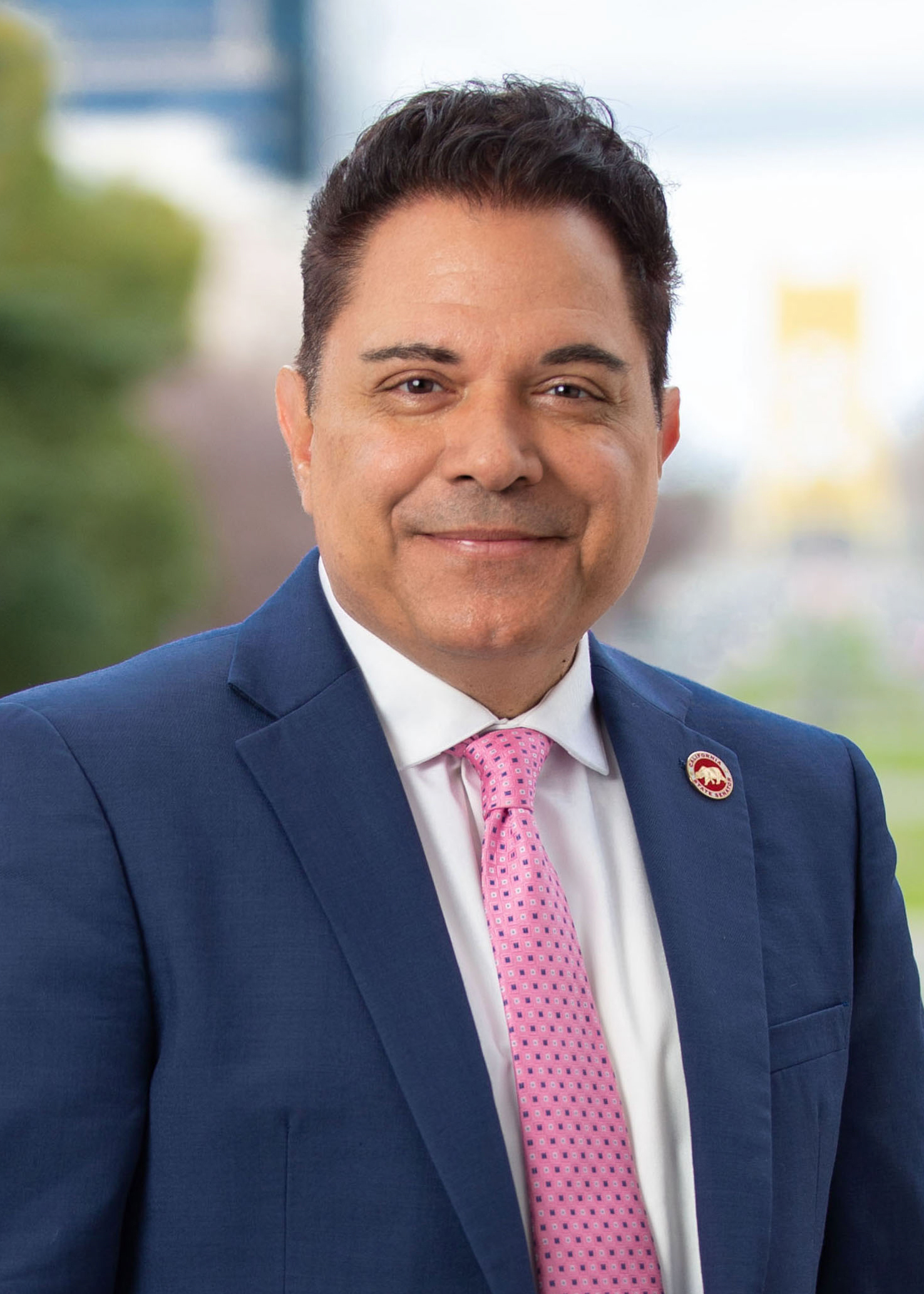
Sen. Steve Padilla
Sponsored bills
Existing law vests the Public Utilities Commission (PUC) with regulatory authority over public utilities, including electrical corporations, while local publicly owned electric utilities are under the direction of their governing boards. Existing law establishes a state policy that eligible renewable energy resources and zero-carbon resources supply 90% of all retail sales of electricity to California end-use customers by December 31, 2035, 95% of all retail sales of electricity to California end-use customers by December 31, 2040, 100% of all retail sales of electricity to California end-use customers by December 31, 2045, and 100% of electricity procured to serve all state agencies by December 31, 2035, as provided. Existing law requires the PUC, State Energy Resources Conservation and Development Commission (Energy Commission) , and State Air Resources Board to issue a joint report to the Legislature by January 1, 2021, and every 4 years thereafter, that includes specified information relating to the implementation of that state policy. This bill would require the PUC, Energy Commission, and state board, in consultation with all California balancing authorities and as part of a public process, on or before January 1, 2026, and subsequently as part of the above-described joint report, to issue a report to the Legislature that contains a clean energy infrastructure plan setting out the infrastructure and processes necessary for the state to accomplish the above-described state policy, as provided.
Existing law establishes the Department of Industrial Relations within the Labor and Workforce Development Agency to, among other things, foster, promote, and develop the welfare of the wage earners of California, to improve their working conditions, and to advance their opportunities for profitable employment. Existing law requires the department to collect various forms of data, statistics, and research regarding labor within the state. This bill would require the Department of Industrial Relations, in conjunction with the Secretary of Labor and Workforce Development and the Director of Housing and Community Development, to develop a certification program for employers that pay a living wage, which the bill would define as the lowest wage that allows full-time and part-time wage earners to afford a decent standard of living, as specified. In order to determine a decent standard of living, the bill would require the department to examine housing costs by county, by region, and in the state and create a formula to ascertain the living wage for each county, each region, and the state. The bill, commencing in 2025, would also require the department to report to the Legislature by December 15 of each year the living wage in each county, each region, and the state and develop a method to annually adjust figures to account for housing cost inflation and inflation broadly.
Maddy summaryThis Senate Resolution formally recognizes May as Maternal and Mental Health Awareness Month in California to highlight critical issues facing women and birthing people. The document draws attention to disparities in reproductive care, noting that many women lack access to hospitals with obstetrics services and that costs for fertility treatments remain a significant barrier. It also emphasizes the high prevalence of untreated mental health conditions among new mothers, particularly within communities of color and those with lower incomes. While the resolution does not create new laws, it serves to raise public awareness about the need for equitable access to both physical and mental health services during the reproductive years.
The California Safe Drinking Water Act provides for the operation of public water systems and imposes on the State Water Resources Control Board various duties and responsibilities for the regulation and control of drinking water in the State of California. The act requires the state board to adopt primary drinking water standards for contaminants in drinking water based upon specified criteria, and requires a primary drinking water standard to be established for hexavalent chromium. Existing law authorizes the state board to grant a variance from primary drinking water standards to a public water system. Existing law makes certain violations of the act a crime. The bill would authorize, until January 1, 2029, the state board to grant an extension of up to 3 years beyond any other compliance period established by the state board for a public water system to achieve compliance with the primary drinking water standard for hexavalent chromium, as prescribed. The bill would require a public water system to comply with all requirements that the state board has established for a public water system during the compliance period, including public notice. The bill would prohibit a public water system from being deemed in violation of the primary drinking water standard for hexavalent chromium while implementing a compliance plan that has been approved by the state board if an extension is provided. To the extent that a public water system, when submitting a compliance plan or submitting a report pursuant to these provisions, would make any false statement or representation, this bill would expand the scope of a crime and impose a state-mandated local program. The California Constitution requires the state to reimburse local agencies and school districts for certain costs mandated by the state. Statutory provisions establish procedures for making that reimbursement. This bill would provide that no reimbursement is required by this act for a specified reason.
Existing law provides for the licensure and regulation of various types of health facilities, including hospitals, by the State Department of Public Health. Existing law establishes the Medi-Cal program, which is administered by the State Department of Health Care Services and under which qualified low-income individuals receive health care services. The Medi-Cal program is, in part, governed and funded by federal Medicaid program provisions. Existing law sets forth various provisions relating to disproportionate share hospitals (DSH) , which are hospitals providing acute inpatient services to Medi-Cal beneficiaries that meet the criteria for disproportionate share status, as specified; small and rural hospitals; and critical access hospitals, as certified by the Secretary of the United States Department of Health and Human Services under the federal Medicare rural hospital flexibility program. Existing law sets forth other provisions relating to safety net hospitals in different contexts, including among others, special health authorities and Medi-Cal reimbursement. This bill would establish a definition for "safety net hospital" and would state the intent of the Legislature that this definition serve as a recommended definition for policymakers to elect to utilize when crafting policy aimed at focusing on or supporting those hospitals. Under the bill, the definition would not be construed as affecting existing or new references to safety net hospitals, unless future legislation or other action expressly makes reference to this definition, as specified. Under the bill, "safety net hospital" would mean a Medicaid DSH-eligible hospital; a rural hospital, including a small and rural hospital and a critical access hospital, as specified; or a sole community hospital, as classified by the federal Centers for Medicare and Medicaid Services and in accordance with certain federal provisions.
This measure would declare May 23, 2024, as GM1 Gangliosidosis Awareness Day in California.
The California Beverage Container Recycling and Litter Reduction Act requires a beverage manufacturer to pay to the Department of Resources Recycling and Recovery a processing fee for each beverage container, as defined, sold or transferred in this state. The act requires the department to deposit the fee into the California Beverage Container Recycling Fund, a continuously appropriated fund. The act requires the department to pay processing payments to processors and recycling centers from the fund, as specified. The act requires the processing payment to be at least equal to the difference between the scrap value of the beverage containers and the sum of certain actual operational costs for certified recycling centers and a reasonable financial return for recycling centers, as specified. Existing regulations require a reasonable financial return for recycling centers equal to 10% of certain statewide averages. The act requires the processing fee to be 65% of the processing payment, except as specified. This bill would specify, for purposes of calculating the processing payment, that 10% is a reasonable financial return for recycling centers.