Maddy summaryThis Senate Resolution (SR 57) symbolically acknowledges the 16th anniversary of California-Mexico Advocacy Day, an annual event organized by the Senate’s Select Committee on California-Mexico Cooperation. It recognizes the importance of California-Mexico economic ties - supporting over 500,000 California jobs through trade - and highlights the event’s role in discussing cross-border issues like public health and border commerce. The resolution has no policy impact; it simply formally recognizes the event through a symbolic Senate acknowledgment.
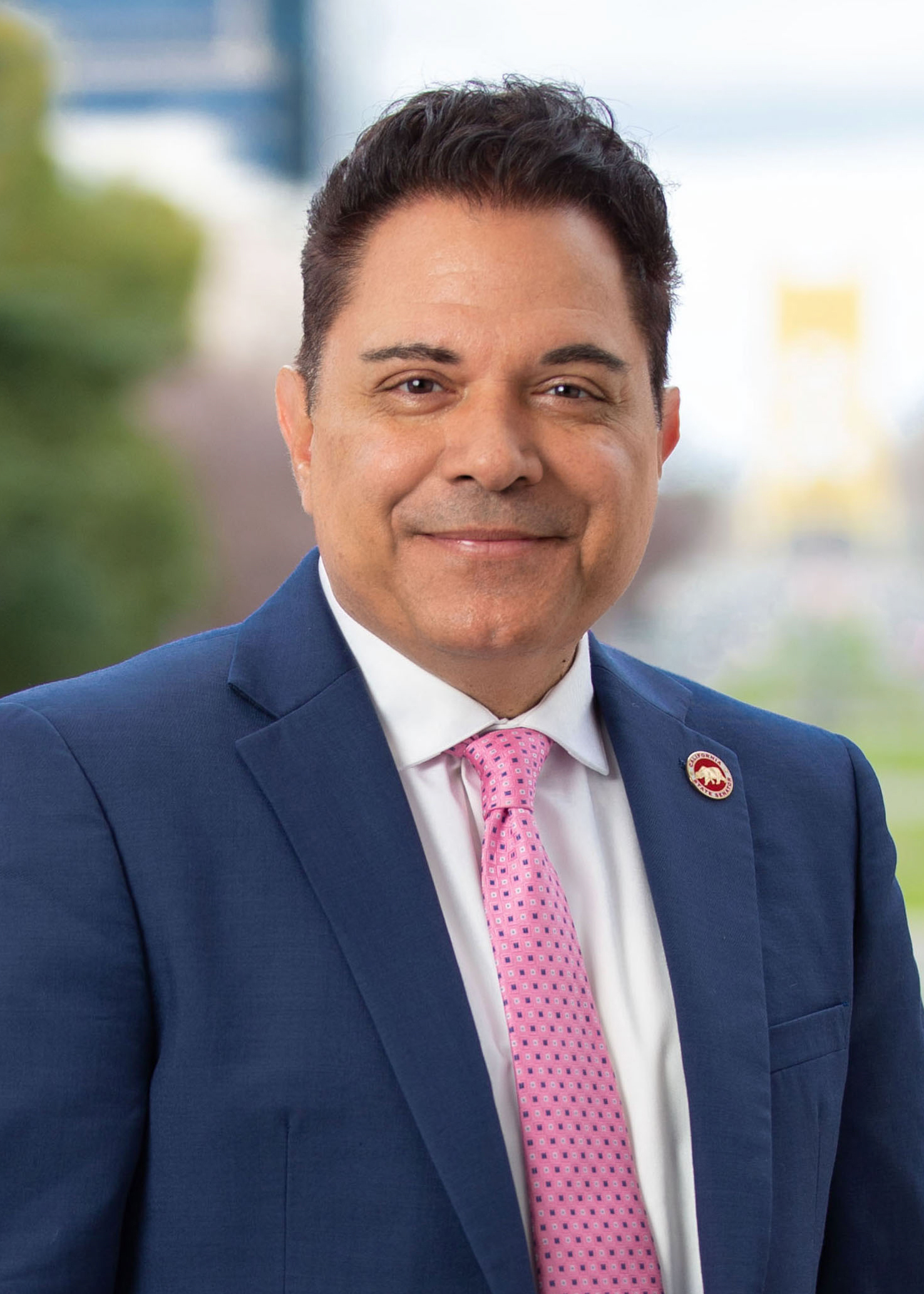
Sen. Steve Padilla
Sponsored bills
Existing law establishes the Division of Occupational Safety and Health in the Department of Industrial Relations, and charges the division with the enforcement of various laws affecting safe working conditions, including the California Occupational Safety and Health Act of 1973. Existing law requires the Director of Industrial Relations to prepare and submit to the Legislature an annual report on the activities of the Division of Occupational Safety and Health, as specified. Existing law establishes the University of California, under the administration of the Regents of the University of California, as one of the segments of postsecondary education in the state. Existing law requires the Department of Industrial Relations to contract with the University of California, Los Angeles Labor Center, to conduct a study evaluating opportunities to improve worker safety and safeguard employment rights, as specified, and to convene an advisory committee to make recommendations regarding the scope of the study, as described. This bill would require the department, upon appropriation by the Legislature, to contract with the University of California, Berkeley Labor Occupational Health Program and the University of California, Los Angeles Labor Occupational Safety and Health Program to conduct a study to evaluate the understaffing and vacancies within the division and make recommendations to the department, the Department of Human Resources, and the Legislature on policies the state shall use to inform the consideration and establishment of career pathways to the Compliance Safety and Health Officer classification. The bill would authorize the University of California to subcontract the responsibility for conducting the study to other specified entities. The bill would require the University of California and its subcontractors, if any, to issue a report that includes certain information about the understaffing and vacancies of Compliance Safety and Health Officers within the division. The bill would further require the University of California to convene an advisory committee consisting of members from specified state agencies, worker advocacy organizations, other academic institutions, and other entities, as specified, to make recommendations regarding the scope of the above-described study, and provide specified findings and recommendations to the division, as prescribed. The bill would require the advisory committee, within 60 days of entering into the contract the University of California, to hold at least one meeting, and the department, 18 months after entering into the contract with the University of California, to post the completed report on the division's internet website and to forward the completed report to the members of the advisory committee, the Governor, and specified legislative committee chairs. The bill would define terms for these purposes, and include finding and declaration relating to these provisions.
Maddy summarySenate Resolution 64 designates September 2025 as "California Wine Month" to celebrate the state's wine industry. The resolution recognizes the industry's economic impact (supporting hundreds of thousands of jobs, 95% of U.S. wine exports), cultural significance, and sustainability efforts (90% of wine made in certified sustainable wineries). It is a ceremonial resolution with no new policy or funding requirements, solely honoring the wine community's contributions.
Maddy summaryThis is a commemorative resolution, not a bill with policy changes. It recognizes key historical milestones of transgender people in California, including Indigenous gender diversity documented in 1775, 19th-century transgender figures in San Francisco's Tenderloin, early activism like the 1959 Cooper Do-nuts Riot, and legal precedents such as Sir Lady Java's 1967 employment discrimination case. The resolution has no binding effect and does not create new laws or directly affect any individuals or groups. It serves solely to honor these historical contributions.
Maddy summarySenate Resolution 54 designates August 15, 2025, as Korean Independence Day in California. The resolution commemorates the 80th anniversary of Korea's liberation from Japanese colonization on August 15, 1945, and recognizes the contributions of California's Korean American community - home to over 530,000 residents - to the state's cultural and economic life. As a symbolic gesture without legal effect, it formally honors this historical milestone and the enduring U.S.-South Korea alliance.
The California Constitution establishes the Citizens Redistricting Commission, which is required to adjust the boundary lines of congressional, Senate, Assembly, and State Board of Equalization districts in the year following the year in which the national census is taken at the beginning of each decade. This measure, which would include a legislative finding that it is in response to redistricting in Texas in 2025, would, notwithstanding the authority of the Citizens Redistricting Commission, require the state to temporarily use the congressional districts reflected in AB 604 of the 2025–26 Regular Session for every congressional election until the new congressional boundary lines are drawn by the commission in 2031.
(1) Existing law authorizes a candidate for elective office to submit a petition containing a specified number of signatures in lieu of all or part of the fee for filing nomination papers. Existing law requires the Secretary of State to make forms for securing signatures available to each candidate commencing 60 days before the first day for circulating nomination papers, except as specified, and requires candidates to file in-lieu-filing-fee petitions at least 30 days before the close of the nomination period. This bill, for the June 2, 2026, statewide direct primary election, would require the Secretary of State to make those forms available beginning December 19, 2025. This bill would require the Secretary of State to prepare a calendar of key election dates and deadlines and requirements for the nomination of candidates by the date that the in-lieu-filing-fee petition forms are made available. (2) Existing law requires each county elections official to provide the Secretary of State with specified information regarding the number of voters and their party preferences in the county and each supervisorial, Congressional, Senate, Assembly, and Board of Equalization district in the county on the 135th day before each direct primary election, with respect to all voters who are registered voters on the 154th day before the primary election. Existing law requires the Secretary of State to compile a statewide list of this information within 30 days after receiving it from each county elections official. This bill would require the Secretary of State to determine, by December 19, 2025, whether it is feasible to include in the statewide list described above the number of voters by party preference in each congressional district with respect to all voters who are registered voters on the 154th day before the June 2, 2026, statewide direct primary election. If the Secretary of State determines it is not feasible, the bill would not require that information to be included in the information provided by the counties and the compiled statewide list. The bill would require the Secretary of State to prepare a supplemental statewide list showing that information on a date specified by the Secretary of State, but not later than the 88th day before the June 2, 2026, statewide direct primary election. (3) Existing law authorizes a candidate for elective office to designate that certain specified words appear below the candidate's name on the ballot, including, among others, the word "incumbent." This bill, for the June 2, 2026, statewide direct primary election, would prohibit a candidate for the office of Representative in Congress from choosing the word "incumbent" as a designation to appear on the ballot. The bill would make conforming changes relating to the deadline for a person to file nomination documents for an office if a current holder of the office does not file nomination documents. These provisions would become operative only if ACA 8 of the 2025–26 Regular Session is approved by the voters and another state adopts a new congressional district map that takes effect after August 1, 2025. (4) The bill would repeal the provisions described in paragraphs (1) to (3) above on January 1, 2027. (5) Existing law requires a constitutional amendment submitted to the people by the Legislature to appear on the ballot of the first statewide election occurring at least 131 days after the adoption of the proposal. This bill would call a special election to be held throughout the state on November 4, 2025, and, notwithstanding the 131-day requirement, would require the submission of ACA 8 of the 2025–26 Regular Session to the voters at that special election. The bill would authorize a local election called on or before August 8, 2025, and scheduled to be held on November 4, 2025, to be consolidated with the statewide special election. The bill would require that the impartial analysis prepared by the Legislative Analyst for the state voter information guide for the special election include specified content regarding 2021 and 2025 congressional district maps. The bill would specify the procedures under which the special election would be conducted. Counties that conduct all-mailed ballot elections using vote centers would be required to maintain at least one vote center for every 30,000 registered voters from November 1, 2025, to November 4, 2025, and at least one vote center for every 60,000 registered voters from October 25, 2025, through October 31, 2025. Other counties would be authorized to consolidate polling places at a maximum ratio of one for every 10,000 registered voters. The bill would appropriate an amount from the General Fund to the Controller for the actual and reasonably necessary costs for counties to conduct the special election, as determined by the Director of Finance. The bill would also appropriate an amount from the General Fund to the Secretary of State for the actual and reasonably necessary costs for the Secretary of State to administer the special election, as determined by the Director of Finance. This bill would declare that it is to take effect immediately as an urgency statute.

This measure would urge the United States Congress and the President of the United States to fully fund the United States Environmental Protection Agency's Comprehensive Infrastructure Solution for the Tijuana River due to the ongoing impacts on public health, the environment, and the local economy caused by transboundary flow pollution. The measure would urge the United States Congress and the President of the United States to take additional specified actions to address ongoing transboundary flow pollution.
Existing law, the Local Health Care District Law, authorizes the organization and incorporation of local health care districts and specifies the powers of those districts, including, among other things, the power to establish, maintain, and operate, or provide assistance in the operation of, one or more health facilities or health services, including, but not limited to, outpatient programs, services, and facilities; retirement programs, services, and facilities; chemical dependency programs, services, and facilities; or other health care programs, services, and facilities and activities at any location within or without the district for the benefit of the district and the people served by the district. Existing law forms a local health care district in the County of Imperial, designated as the Imperial Valley Healthcare District, that includes all of the County of Imperial. Existing law requires the initial board of directors of the Imperial Valley Healthcare District to be appointed from and by specified bodies, including among others, the Imperial County Board of Supervisors, the Pioneers Memorial Healthcare District Board of Directors, and the Heffernan Memorial Healthcare District Board of Directors. Following the appointment of the initial board of directors, existing law requires the board of directors to adopt a resolution to divide the Imperial Valley Healthcare District into voting districts for the purpose of electing members of the board of directors from and by the electors of those voting districts. Existing law prohibits a member of the initial board of directors from being eligible to become an elected board member of a district for the first round of elections. This bill would instead authorize a member of the initial board of directors to become the first elected member for a voting district if the member is otherwise eligible for the position and is elected by the electors of that voting district.
This measure would applaud the California Girl Scout Councils for 113 years of building girls of courage, confidence, and character, who make the world a better place, and recognize March 12, 2025, as Girl Scout Day in California.