

Existing law establishes procedures for an adult petitioner to obtain a court order for a change of name to conform to the petitioner's gender identity. Existing law requires the court to make an order to show cause with regard to the petition and a process for persons interested to make known any objection to the change of name by filing a written objection within 6 weeks of the making of the order. Existing law requires, in the case of a conforming name change petition for a minor that does not include the signatures of both living parents, the petition and the order to show cause to be served as prescribed on the nonsigning parent within 30 days of the order. This bill, commencing July 1, 2026, would eliminate the mechanism to file an objection to an adult petitioner's change of name to conform to the petitioner's name to the petitioner's gender identity. The bill would require the court to enter an order granting the petition without a hearing within 6 weeks of the petition's filing, as specified. The bill would require, for a change of name to conform a minor petitioner's name to their gender identity signed by all living parents of the minor, the court to enter, within 6 weeks of the filing of the petition and without a hearing, an order that the change of name is granted. The bill would require, if the petition is not signed by all living parents of the minor, the court to make an order reciting specified information, and require the petition and the order to be served on any parent who did not sign the petition within 4 weeks of the date of the order. The bill would require that no hearing date be set unless an objection is timely filed and shows good cause for opposing the name change. Existing law authorizes a person to file a petition with the superior court for a court order to issue a new marriage license and certificate, confidential marriage license and certificate, or birth certificate to reflect a change in gender and sex identifier. Existing law provides a process for specified individuals to be given notice and an opportunity to respond to the petition, as specified, including that any objection to the petition must be filed within 6 weeks of the making of the order or the court will, without hearing, enter an order granting the petition. Existing law requires, if no service on any party is required, the court to grant the petition without a hearing if no written objection is timely filed within 6 weeks of the filing of the petition. Existing law requires the petitioner to file a judgment ordering a new birth certificate or marriage license and certificate to be filed with the State Registrar or county clerk, as applicable, within 30 days from the date of the judgment. This bill, commencing July 1, 2026, would eliminate the requirement that a petitioner file the judgment within 30 days from the date of the judgment.
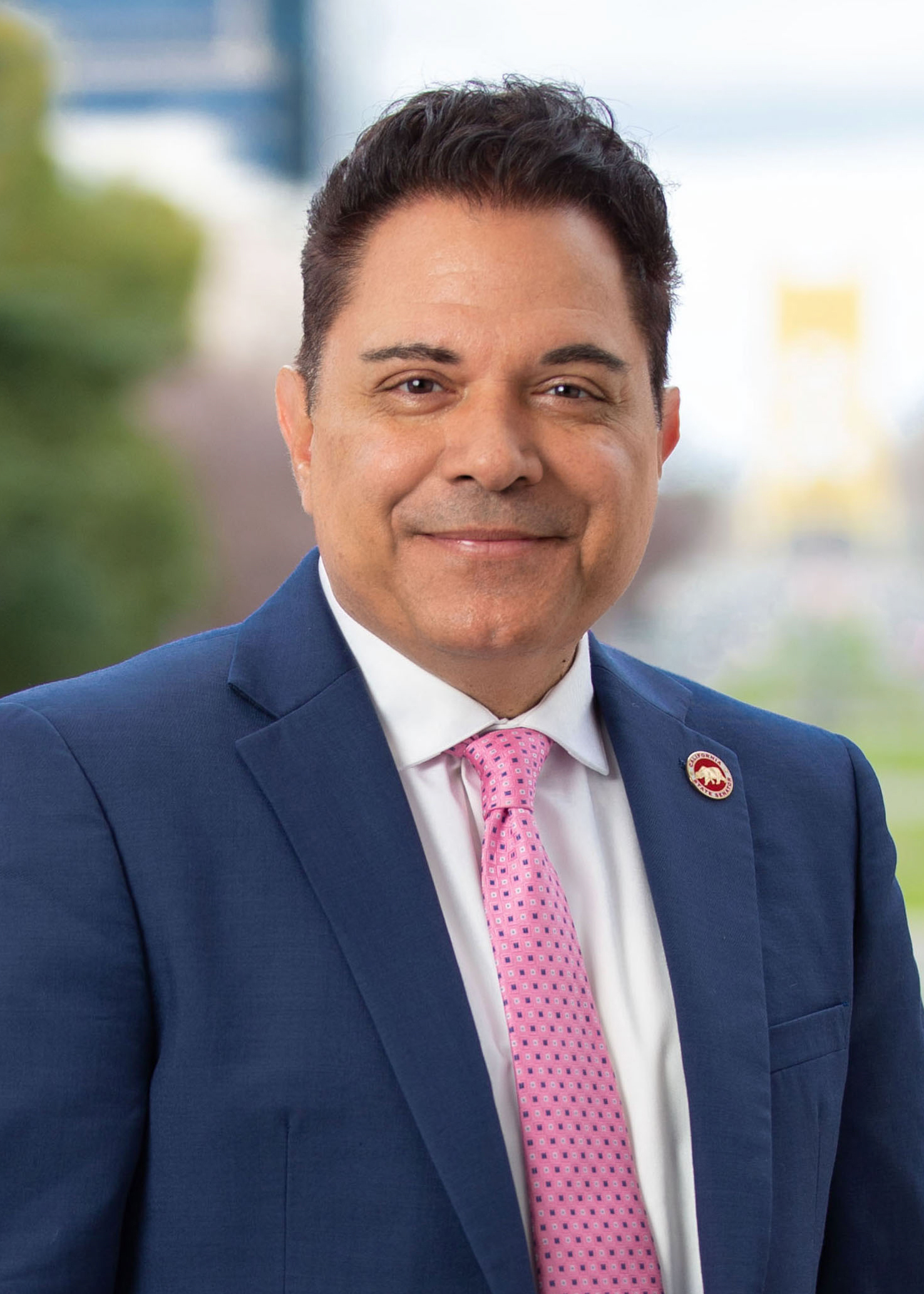
Sen. Steve Padilla
Sponsored bills
Existing law requires a state agency to review all proprietary state lands under its jurisdiction, as specified, to determine what land is in excess of its needs, and to report on these lands to the Department of General Services. Existing law prescribes a process for the disposition of surplus state property. This bill would, notwithstanding those provisions, authorize the Director of General Services to sell, exchange, or lease to the City of Imperial, upon those terms and conditions the director determines are in the best interest of the state, all or any part of the property known as the California Highway Patrol El Centro Area office located at 2331 U.S. Highway 86, Imperial, in the County of Imperial. To the extent the property involves specified bonds, the bill would require the proceeds of the sale or lease to be expended on bond payments, as specified, and other costs, including costs for the review of the sale or lease of the property and bond counsel. The bill would exempt the sale, exchange, or lease of the property from the California Environmental Quality Act. The California Constitution requires that the proceeds from the sale of surplus state property be used to pay the principal and interest on bonds issued pursuant to the Economic Recovery Bond Act, until the principal and interest on those bonds are paid in full, the final payment of which was made in the 2015–16 fiscal year, after which these proceeds are required to be deposited into the Special Fund for Economic Uncertainties. Under existing law, moneys in the fund are continuously appropriated for specified purposes, except as provided. By depositing the proceeds attributable to the sale or lease of the above-described property into the Special Fund for Economic Uncertainties, this bill would make an appropriation. This bill would make legislative findings and declarations as to the necessity of a special statute for the City of Imperial.
Existing law, the Pharmacy Law, provides for the licensure and regulation of pharmacists and pharmacies by the California State Board of Pharmacy. Existing law, until January 1, 2026, authorizes a physician or pharmacist to, without a prescription or permit, furnish hypodermic needles and syringes for human use to a person 18 years of age or older, and authorizes a person 18 years of age or older to, without a prescription or license, obtain hypodermic needles and syringes solely for personal use from a physician or pharmacist, as a public health measure, as specified. Existing law, until January 1, 2026, requires a pharmacy that furnishes nonprescription syringes to provide written information or verbal counseling to consumers, as specified, at the time of furnishing or sale of nonprescription hypodermic needles or syringes. Existing law, when no other penalty is provided, makes a knowing violation of the Pharmacy Law a misdemeanor and, in all other instances, makes a violation punishable as an infraction. This bill would delete the January 1, 2026, repeal date, thereby extending those provisions indefinitely, and would make other conforming changes. By indefinitely extending an existing requirement under the Pharmacy Law, the violation of which is a crime, the bill would impose a state-mandated local program. The California Constitution requires the state to reimburse local agencies and school districts for certain costs mandated by the state. Statutory provisions establish procedures for making that reimbursement. This bill would provide that no reimbursement is required by this act for a specified reason.
Existing law requires all health care providers and laboratories to report cases of human immunodeficiency virus (HIV) infection to the local health officer and requires the local health officer to report unduplicated HIV cases to the State Department of Public Health. Existing law requires public health records related to HIV or acquired immunodeficiency syndrome (AIDS) , containing personally identifying information, that were developed or acquired by a state or local public health agency, or an agent of that agency, to be confidential and not disclosed, except as otherwise provided by law for public health purposes or pursuant to a written authorization by the person who is the subject of the record or by their guardian or conservator. Existing law authorizes certain state or local public health officials to disclose those records to other local, state, or federal public health agencies or to medical researchers when the confidential information is necessary to carry out specified duties of the agency or researcher, including in the investigation, control, or surveillance of disease. This bill would additionally authorize a health care provider of a patient with an HIV infection that has already been reported to a local health officer as described above to disclose identifying information about the patient to a local health jurisdiction or the department if the disclosure is necessary to complete or supplement an HIV case report or for the local health jurisdiction or the department to carry out its duties in the investigation, control, or surveillance of disease, or the coordination of, linkage to, or reengagement in care for a person, as specified. The bill would make conforming changes to related provisions.
Existing law establishes the Medi-Cal program, which is administered by the State Department of Health Care Services and under which qualified low-income individuals receive health care services. The Medi-Cal program is, in part, governed and funded by federal Medicaid program provisions. Existing law generally imposes penalties on a person who negligently, willfully, or maliciously discloses the results of a human immunodeficiency virus (HIV) test to a third party in a manner that identifies or provides identifying characteristics of the person to whom the test results apply, as specified. Existing law, notwithstanding the above-described restrictions, authorizes the recording of the HIV test results by the physician who ordered the test in the test subject's medical record and authorizes other disclosure of the results without written authorization of the test subject, or the subject's representative, to the test subject's providers of health care, excluding a regulated health care service plan, for purposes of diagnosis, care, or treatment of the patient. This bill would authorize a provider of health care to disclose the results of an HIV test that identifies or provides identifying characteristics of a Medi-Cal beneficiary without written authorization of the test subject, or the subject's representative, to the Medi-Cal managed care plan to which the beneficiary is assigned, if applicable, and to external quality review organizations conducting external quality reviews of Medi-Cal managed care plans, for the purpose of administering quality improvement programs, including, but not limited to, value-based payment programs and healthy behavior incentive programs, designed to improve HIV care for Medi-Cal beneficiaries. Under the bill, HIV test results that do not identify or provide identifying characteristics of the test subjects would be authorized for disclosure without written authorization by the Medi-Cal managed care plan to departmental staff for the above-described purpose. The bill would make certain clarifying or declaratory statements with regard to related provisions.
(1) The United States Constitution generally requires a state to give full faith and credit to the public acts, records, and judicial proceedings of every other state. Existing law generally authorizes a California court or attorney to issue a subpoena if a foreign subpoena has been sought in this state but prohibits the issuance of a subpoena based on another state's law that interferes with a person's right to allow a child to receive gender-affirming health care or gender-affirming mental health care. Existing law generally prohibits a provider of health care, a health care service plan, or a contractor from disclosing medical information regarding a patient, enrollee, or subscriber without first obtaining an authorization unless an exception applies, including that the disclosure is in response to a subpoena. Existing law prohibits a provider of health care, a health care service plan, or a contractor from releasing medical information related to a person or entity allowing a child to receive gender-affirming health care or gender-affirming mental health care in response to a civil action, including a foreign subpoena, based on another state's law that authorizes a person to bring a civil action against a person or entity that allows a child to receive gender-affirming health care or gender-affirming mental health care. This bill would additionally prohibit a provider of health care, a health care service plan, or a contractor from releasing medical information related to a person seeking or obtaining gender-affirming health care or gender-affirming mental health care in response to a criminal or civil action, including a foreign subpoena, based on another state's law that interferes with an individual's right to seek or obtain gender-affirming health care or gender-affirming mental health care. The bill would also prohibit a provider of health care, health care service plan, contractor, or employer from cooperating with or providing medical information to an individual, agency, or department from another state or, to the extent permitted by federal law, to a federal law enforcement agency that would identify an individual and that is related to an individual seeking or obtaining gender-affirming health care, as specified. The bill would prohibit these entities from releasing medical information related to sensitive services, as defined, in response to a foreign subpoena that is based on a violation of another state's laws authorizing a criminal action against a person or entity for provision or receipt of legally protected health care activity, as defined. The bill would also generally prohibit the issuance of a subpoena based on a violation of another state's law that interferes with a person's right to seek or obtain gender-affirming health care or gender-affirming mental health care, as specified. (2) Existing law requires the Department of Justice to maintain the Controlled Substance Utilization Review and Evaluation System (CURES) for the electronic monitoring of the prescribing and dispensing of certain controlled substances by a health care practitioner authorized to prescribe, order, administer, furnish, or dispense those controlled substances. Existing law authorizes the department to enter into an agreement with an entity operating an interstate data sharing hub, or an agency operating a prescription drug monitoring program in another state, for purposes of interstate data sharing of prescription drug monitoring program information. Existing law limits the entities to which data may be provided from CURES, as well as the type of data that may be released and the uses to which it may be put. This bill would prohibit a state or local agency or employee, appointee, officer, contractor, or official or any other person acting on behalf of a public agency from knowingly providing any CURES data or knowingly expending any resources in furtherance of any interstate investigation or proceeding seeking to impose civil, criminal, or disciplinary liability based upon another state's law for the provision or receipt of legally protected health care activity, as defined. The bill would prohibit the department from sharing data with an out-of-state law enforcement agency without a warrant, subpoena, or court order and would prohibit an out-of-state user from providing any data in furtherance of an investigation or proceeding to impose liability based on another state's law for the provision or receipt of legally protected health care activity. This bill would make it a misdemeanor for a person to access the CURES database when not authorized by law and would make it a misdemeanor for a person who is authorized to access the database to knowingly furnish information from the CURES database to a person who is not authorized by law to receive that information. By creating new crimes, the bill would impose a state-mandated local program. (3) This bill would provide that its provisions are severable. (4) This bill would incorporate additional changes to Section 11165 of the Health and Safety Code proposed by AB 82 to be operative only if this bill and AB 82 are enacted and this bill is enacted last. (5) The California Constitution requires the state to reimburse local agencies and school districts for certain costs mandated by the state. Statutory provisions establish procedures for making that reimbursement. This bill would provide that no reimbursement is required by this act for a specified reason. (6) This bill would declare that it is to take effect immediately as an urgency statute.
Existing law requires a social media platform to take various steps to prevent cyberbullying of minors on the platform, including by requiring the platform to establish a prominent mechanism within its internet-based service that allows any individual, whether or not that individual has a profile on the internet-based service, to report cyberbullying or any content that violates the existing terms of service related to cyberbullying. Existing law authorizes the State Department of Public Health to establish the Office of Suicide Prevention in the department, as prescribed. This bill would, among other things related to making a companion chatbot platform safer for users, if a reasonable person interacting with a companion chatbot would be misled to believe that the person is interacting with a human, require an operator of a companion chatbot platform to issue a clear and conspicuous notification indicating that the companion chatbot is artificially generated and not human. The bill would also require an operator to take certain actions with respect to a user the operator knows is a minor, including disclose to the user that the user is interacting with artificial intelligence. The bill would also require an operator to prevent a companion chatbot on its companion chatbot platform from engaging with users unless the operator maintains a protocol for preventing the production of suicidal ideation, suicide, or self-harm content to the user, as specified, and would require an operator to publish details on that protocol on the operator's internet website. This bill would, beginning July 1, 2027, require an operator to annually report to the Office of Suicide Prevention certain things, including protocols put in place to detect, remove, and respond to instances of suicidal ideation by users, and would require the office to post data from that report on its internet website. The bill would authorize a person who suffers injury in fact as a result of noncompliance with the bill to bring a certain civil action.
Existing law vests the Public Utilities Commission with regulatory authority over public utilities, including electrical corporations. Existing law authorizes the commission to fix the rates and charges for every public utility and requires that those rates and charges be just and reasonable. This bill would authorize the commission to assess the extent to which electrical corporation costs associated with new loads from data centers result in cost shifts to other electrical corporation customers, as provided. The bill would require the commission to submit an assessment completed pursuant to that authorization to the relevant policy committees of the Legislature and to publicly post a copy of the assessment on the commission's internet website on or before January 1, 2027.
(1) Existing law, the California Nutrition Monitoring Development Act of 1986, requires the State Department of Public Health to assess the availability and adequacy of existing state and local food and nutrition data systems. The act requires different state departments, including the State Department of Education, to provide to the State Department of Public Health, upon request, nutrition-related data collection forms, documentation, and reports of various programs. This bill would define "ultraprocessed food" for certain school-related purposes and would require the State Department of Public Health to adopt regulations, on or before June 1, 2028, to define "ultraprocessed foods of concern" and "restricted school foods," as specified. The bill would require the department, when defining ultraprocessed foods of concern and restricted school foods, to consider specified factors, including, among others, whether, based on reputable peer-reviewed scientific evidence, a substance or group of substances are linked to health harms or adverse health consequences, as specified. The bill would require schools, as defined, to begin to phase out restricted school foods and ultraprocessed foods of concern by no later than July 1, 2029. Beginning July 1, 2032, the bill would prohibit a vendor from offering restricted school foods and ultraprocessed foods of concern to a school. This bill, on or before February 1, 2028, and on or before February 1 of each year thereafter through February 1, 2032, would require a vendor to report specified information to the State Department of Public Health for each food product sold to a school in the past calendar year, including, among others, the total quantity of food product sold to schools and whether that food product is an ultraprocessed food, a restricted school food, or an ultraprocessed food of concern. The bill, on or before July 1, 2028, and on or before July 1 of each year thereafter through July 1, 2032, would require the State Department of Public Health, in consultation with the State Department of Education, to submit to the Legislature and the Governor a report that contains, among other things, a summary and analysis of the information reported to the State Department of Public Health by vendors and recommendations for state and local legislative actions that could reduce the consumption of ultraprocessed foods, restricted school foods, and ultraprocessed foods of concern in schools. The bill would require the State Department of Public Health to consult with the State Department of Education regarding compliance training and technical assistance for school food service and procurement staff for these purposes and would require the State Department of Public Health to establish a structure to deliver training and technical assistance to local educational agencies. (2) Existing law requires the State Department of Education to develop and maintain nutrition guidelines for school lunches and breakfasts, and for all food and beverages sold on public school campuses, consistent with the requirements for a nutritionally adequate breakfast and a nutritionally adequate lunch. Existing law defines a nutritionally adequate breakfast and a nutritionally adequate lunch for these purposes to mean those that qualify for reimbursement under the most current meal pattern for the federal School Breakfast Program and the federal National School Lunch Program, respectively. Existing law requires a school district, county superintendent of schools, or charter school maintaining kindergarten or any of grades 1 to 12, inclusive, to make available a nutritionally adequate breakfast and a nutritionally adequate lunch, free of charge, during each schoolday to any pupil who requests a meal without consideration of the pupil's eligibility for a federally funded free or reduced-price meal. Existing law authorizes a school operated and maintained by a school district or county office of education, from the midnight before to 30 minutes after the end of the official schoolday, to sell food and beverages other than meals reimbursed by specified federal nutrition programs, only if the food or beverages meet dietary guidelines, as specified, depending on grade level. This bill, beginning July 1, 2035, would prohibit a school district, county superintendent of schools, or charter school maintaining kindergarten or any of grades 1 to 12, inclusive, from offering a nutritionally adequate breakfast or lunch that includes restricted school foods or ultraprocessed foods of concern, as provided, and would prohibit a school operated and maintained by a school district or county office of education from selling food or beverages, except for food items sold as part of a school fundraising event, containing those restricted school foods or ultraprocessed foods of concern, as provided. (3) To the extent this bill would impose additional requirements on public schools, the bill would impose a state-mandated local program. (4) The California Constitution requires the state to reimburse local agencies and school districts for certain costs mandated by the state. Statutory provisions establish procedures for making that reimbursement. This bill would provide that, if the Commission on State Mandates determines that the bill contains costs mandated by the state, reimbursement for those costs shall be made pursuant to the statutory provisions noted above.
Existing law establishes the California Career Technical Education Incentive Grant Program, administered as a competitive grant program by the State Department of Education, with the purpose of encouraging, maintaining, and strengthening the delivery of high-quality career technical education programs. Existing law requires an applicant to demonstrate that it, or its career technical education program, as applicable, meets certain minimum eligibility standards. This bill, commencing June 1, 2026, would revise and recast those minimum eligibility standards, as specified, including standards related to (A) collaborating with labor and business entities, (B) ensuring career programs and career pathways are aligned with workforce needs and labor market demand, (C) providing opportunities for certain pupil populations, and (D) reporting information for purposes of program evaluation, as provided. The bill, commencing June 1, 2026, would also require successful applicants to demonstrate a holistic approach to providing career technical education and career pathways, as provided. In developing the request for grant applications and considering grant applications under the program, existing law requires the State Department of Education to consult with the executive director of the State Board of Education and entities having career technical education expertise, including the Chancellor of the California Community Colleges. This bill, commencing June 1, 2026, would require the department to consult with the California Education Interagency Council instead of the chancellor for those purposes. When determining proposed grant recipients, existing law requires positive consideration to be given to specified characteristics in an applicant, including that the applicant is located in an area with a high unemployment rate. This bill, commencing June 1, 2026, would require positive consideration to also be given to an applicant located in an area with a high poverty rate. The bill would define high unemployment rate and high poverty rate. Existing law establishes the Government Operations Agency, which consists of several state entities, including, but not limited to, the State Personnel Board, the Department of General Services, and the Office of Administrative Law. This bill would require the California Education Interagency Council established in the Government Operations Agency to perform, in an advisory capacity, certain duties, as specified, including, among others, developing recommendations regarding career technical education, college and career pathways, and workforce development recognizing segmental plans and other pertinent plans, and providing advice and recommending tools designed to support students across their educational careers, as specified. The bill would require the Office of the California Education Interagency Council to support the California Education Interagency Council, as specified, including by, among other things, developing and maintaining an internet website that provides access to the California Education Interagency Council's agendas, reports, work products, and resources. Certain sections of this bill would become operative only if AB 1098 of the 2025–26 Regular Session is enacted.