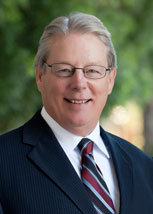
Photo of Bill Monning
D California Senate · District 17

Sen. Bill Monning

Compare
Total votes
26,121
all sessions
Attendance
97%
669 missed
Higher than 80% of chamber peers
With party
99%
of cast votes
Higher than 85% of chamber peers
Bipartisan score
0%
crosses aisle rarely
Near the chamber average
Sponsored
788
bills & resolutions
Lower than 90% of chamber peers
Committees
0
assignments
788 bills and resolutions

Sponsored bills

Total
788
Primary
218
Co-sponsor
570
This page
788
matching current filters
Co-sponsor SCR 122
Signed into law · California Senate · Co-sponsor
Relative to Autism Awareness Month.

This measure would designate the month of April 2016 as Autism Awareness Month and would encourage residents to show support for autism awareness by lighting their homes, businesses, schools, and places of worship with blue light bulbs.

Signed into law May 10, 2016 1 co-sponsor
Primary SCR 108
Signed into law · California Senate · Lead sponsor
Relative to Rare Disease Day.

This measure would proclaim February 29, 2016, as Rare Disease Day in California and would provide for the recognition of Rare Disease Day in California in subsequent years, as specified.

Signed into law May 4, 2016 0 co-sponsors
Co-sponsor SCR 132
Passed · California Senate · Co-sponsor
California Peace Officers' Memorial Day.

This measure would designate Monday, May 2, 2016, as California Peace Officers' Memorial Day, and would urge all Californians to honor those individuals who have given their lives for our safety and express appreciation to those who continue to dedicate themselves to making California a safer place in which to live and raise our families.

Passed May 2, 2016 1 co-sponsor
Co-sponsor ACR 147
Signed into law · California Assembly · Co-sponsor
Relative to California Agriculture Day.

This measure would recognize and honor the men and women of California agriculture for their dedication and productivity by observing March 15, 2016, as National Agriculture Day, and designating March 16, 2016, as California Agriculture Day.

Signed into law Apr 29, 2016 1 co-sponsor
Primary SB 475
Vetoed · California Senate · Lead sponsor
Continuing care contracts: cancellation: payments.

Existing law requires a continuing care retirement facility, as defined, to possess a certificate of authority issued by the State Department of Social Services before it can enter into a continuing care contract, as defined. Existing law requires that a continuing care contract be in writing and contain specified information. Existing law provides that a continuing care contract may be canceled without cause by written notice from either party within 90 days of the resident's initial occupancy. Existing law requires a provider to pay, during the cancellation period, all refunds owed to a resident within 14 days after a resident makes possession of the living unit available to the provider. Existing law requires a provider to pay a lump-sum payment that is conditioned upon resale of a unit to a resident within 14 days after resale of the unit. This bill would require a continuing care retirement facility to pay the full lump-sum payment that is conditioned upon resale of a unit to a resident within 14 days after resale of a unit. The bill would require a continuing care retirement facility, for contracts signed after January 1, 2016, to pay a resident or his or her estate a specified portion of the full lump-sum payment, notwithstanding a provider's documented good-faith effort to resell the unit, if the unit remains vacant 120 days after the resident's termination. The bill would require any payment balance not paid to a resident within 180 days to accrue simple interest, to be compounded annually, at a rate of 4% until the full lump-sum payment is made. The bill would require any payment balance not paid to a resident within 240 days to accrue simple interest, to be compounded annually, at a rate of 6% until the full lump-sum payment is made. The bill would require a facility to make the lump-sum payment to a resident's estate if the resident is deceased. The bill would provide that the repayment by a provider of all or a portion of an entrance fee before the resale of a unit would not subject any other entrance fee to the refund reserve requirements, except as provided. The bill would provide that, until January 1, 2017, these provisions do not apply to specified projects that are in development prior to January 1, 2016, provided that the initial contract for the project is entered into on or before January 1, 2017. The bill would authorize any resident whose contract calls for a lump-sum payment conditioned upon resale of a unit to file a complaint with the department if the unit has not been resold for more than 12 months after possession of the unit was made available to the provider. The bill would require the department, in response to the complaint, to perform an investigation, as specified, to determine whether the provider made a sufficient good-faith effort to resell or reoccupy the unit. The bill would authorize a resident or a provider to submit a written request to the department for a formal review of the determination. The bill would require the provider to repay the full lump-sum payment owed to the resident within 20 business days of the department's final determination that the provider did not make a sufficient good-faith effort to reoccupy or resell the unit. The bill would make corresponding changes to require a continuing care contract to contain a statement that a provider is prohibited from charging the resident or his or her estate a monthly fee once a unit has been permanently vacated by the resident, unless the fee is part of an equity interest contract. The bill would also require a continuing care contract that provides for a refund or repayment of a lump sum of all or part of the entrance fee to include a statement that the provider will make a good faith effort to reoccupy or resell a unit for which a lump-sum payment is conditioned upon resale of the unit.

Vetoed Apr 25, 2016 0 co-sponsors
Co-sponsor SB 3
Signed into law · California Senate · Co-sponsor
Minimum wage: in-home supportive services: paid sick days.

(1) Under existing law, the Healthy Workplaces, Healthy Families Act of 2014, an employee who, on or after July 1, 2015, works in California for the same employer for 30 or more days within a year from the commencement of employment is entitled to paid sick days, as specified. Existing law requires an employee to accrue paid sick days at the rate of not less than one hour per every 30 hours worked subject to specified use and accrual limitations. For the purposes of the act, an "employee" does not include a provider of in-home supportive services, as described. This bill, on and after July 1, 2018, would entitle a provider of in-home supportive services who works in California for 30 or more days within a year from the commencement of employment to paid sick days, subject to specified full amount of leave time amounts and that rate of accrual. The bill would require the State Department of Social Services, in consultation with stakeholders, to convene a workgroup to implement paid sick leave for in-home supportive services providers and to issue guidance in that regard by December 1, 2017. The bill would authorize the department to implement that paid sick leave without complying with the Administrative Procedure Act. (2) On and after July 1, 2014, existing law requires the minimum wage for all industries to be not less than $9 per hour. On and after January 1, 2016, existing law requires the minimum wage for all industries to be not less than $10 per hour. This bill would require the minimum wage for all industries to not be less than specified amounts to be increased from January 1, 2017, to January 1, 2022, inclusive, for employers employing 26 or more employees and from January 1, 2018, to January 1, 2023, inclusive, for employers employing 25 or fewer employees, except when the scheduled increases are temporarily suspended by the Governor, based on certain determinations. The bill would also require the Director of Finance, after the last scheduled minimum wage increase, to annually adjust the minimum wage under a specified formula. On or before July 28, 2017, and on or before every July 28 thereafter until the minimum wage is a specified amount for employers employing 26 or more employees, the bill would require the Director of Finance to annually determine, based on certain factors, whether economic conditions can support a scheduled minimum wage increase and certify that determination to the Governor and the Legislature. The bill would also require the State Board of Equalization to publish specified retail sales and use tax information on its Internet Web site to be used by the Director of Finance in making that determination. On or before July 28, 2017, and on or before every July 28 thereafter until the minimum wage is a specified amount for employers employing 26 or more employees, in order to ensure that the General Fund can support the next scheduled minimum wage increase, the bill would also require the Director of Finance to annually determine and certify to the Governor and the Legislature whether the General Fund would be in a deficit in the current fiscal year, or in either of the following 2 fiscal years.


Signed into law Apr 4, 2016 1 co-sponsor
Primary SB 6
Failed · California Senate · Lead sponsor
Smoking in the workplace.

Existing law prohibits smoking of tobacco products inside an enclosed space, as defined, at a place of employment. The violation of the prohibition against smoking in enclosed spaces of places of employment is an infraction punishable by a specified fine. This bill would expand the prohibition on smoking in a place of employment to include an owner-operated business, as defined. This bill would also eliminate most of the specified exemptions that permit smoking in certain work environments, such as hotel lobbies, bars and taverns, banquet rooms, warehouse facilities, and employee break rooms. By expanding the scope of an infraction, this bill would impose a state-mandated local program. The California Constitution requires the state to reimburse local agencies and school districts for certain costs mandated by the state. Statutory provisions establish procedures for making that reimbursement. This bill would provide that no reimbursement is required by this act for a specified reason.

Failed Mar 15, 2016 0 co-sponsors
Co-sponsor SB 1
Failed · California Senate · Co-sponsor
Developmental services: funding.

(1) The Lanterman Developmental Disabilities Services Act requires the State Department of Developmental Services to contract with regional centers to provide services and supports to individuals with developmental disabilities. Under existing law, the regional centers purchase needed services for individuals with developmental disabilities through approved service providers or arrange for those services through other publicly funded agencies. The annual Budget Act also appropriates funds to the department to fund regional center operations. This bill would require the department, subject to an appropriation by the Legislature for these purposes, to increase the funding paid to a regional center for the regional center's operating budget by 10%, and to increase funding to enable the regional center and the regional center's purchase-of-service vendors to fund certain costs related to minimum wage requirements. The bill would also require the department to develop a 10-year financial sustainability plan to ensure that the state's community-based developmental services system effectively serves all individuals with developmental disabilities. (2) Existing law establishes specified rates to be paid to certain service providers and the rates to be paid for certain developmental services. Existing law requires that rates to be paid to other developmental service providers either be set by the department or negotiated between the regional center and the service provider. This bill would increase the rates established by existing law by 10%, as specified, and would require a 10% increase to the rates set by the department and the rates negotiated between regional centers and service providers, as specified. (3) Existing law requires an entity that receives payments between $250,000 and $500,000 per year from one or more regional centers to obtain either an independent audit or independent review report of its financial statements and requires an entity that receives payments that are equal to or more than $500,000 per year to obtain an independent audit. Existing law exempts payments made using usual and customary rates for services provided by regional centers from these requirements. This bill would instead require an entity to obtain only an independent review report of its financial statements relating to payments made by regional centers if it receives payments between $250,000 and $2,000,000 from one or more regional centers and would authorize these entities to apply for, and require the regional center to grant, a 2-year exemption from this requirement if the regional center does not find issues in the prior year's independent review report that have an impact on regional center services. The bill would also require an entity to obtain an independent audit of its financial statements relating to payments made by regional centers if it receives payments that are equal to or more than $2,000,000 and would authorize these entities to apply for, and require the regional center to grant, a 2-year exemption from the audit requirement if the prior year's audit resulted in an unmodified opinion, an unmodified opinion with additional communication, or a qualified opinion with issues that are not material and pervasive. The bill would require a regional center to notify the department of any exemption it grants to an entity that receives a qualified opinion report. The bill would also exempt social security benefit payments from these requirements.

Failed Mar 10, 2016 1 co-sponsor
Primary SB 1181
In committee · California Senate · Lead sponsor
Health care service plan contracts.

Existing law, the Knox-Keene Health Care Service Plan Act of 1975, provides for the licensure and regulation of health care service plans by the Department of Managed Health Care and makes a willful violation of the act a crime. Existing law regulates the manner in which a plan makes premium or coverage changes to a contract, including requiring prescribed notice to enrollees within a specified time period. This bill would make technical, nonsubstantive changes to these provisions.

In committee Mar 3, 2016 0 co-sponsors
Showing 181 to 190 of 788 bills
Previous 1 … 18 19 20 … 79 Next