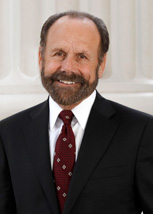
This measure would designate that January 18, 2010, be observed as the official memorial of the late Rev. Dr. Martin Luther King, Jr.'s birth, commemorate Martin Luther King, Jr. Day, the work of Dr. Martin Luther King, Jr., and the Civil Rights Movement in changing public policy in California and in the United States of America.
Sponsored bills
The State Housing Law requires the Department of Housing and Community Development to submit to the Building Standards Commission proposed building standards for hotels, motels, lodging houses, apartment houses, and dwellings. Existing law authorizes the department to adopt regulations it determines are necessary for the use and enforcement of certain provisions relating to a list of universal accessibility features for persons with disabilities. This bill would require the department to establish the Accessible Housing Task Force. The bill would require the director of the department to appoint the members of the task force, which would include, but not be limited to, representatives of specified organizations and state agencies. The bill would also require the task force to prepare and submit a report to the Legislature no later than June 30, 2012, making specified recommendations relating to increasing housing accessability. The bill would further require the department to carry out the bill's provisions relating to the Accessible Housing Task Force only to the extent that funding is made available from local, regional, federal, or private sources.
(1) Existing law authorizes the limit line, intersection, or other places where a driver is required to stop to be equipped with an automated enforcement system, as defined, if the system meets certain requirements. Existing law authorizes a governmental agency to contract out the operation of the system under certain circumstances, except for specified activities, that include, among other things, establishing guidelines for selection of location. A violation of the Vehicle Code is a crime. This bill would require that, no later than January 1, 2012, those requirements include identifying the system by signs posted within 200 feet of an intersection where a system is operating. The bill would require the governmental agency to adopt a finding of fact establishing the need for the system at a specific location for reasons related to safety for those systems installed after January 1, 2011. The bill would require, if an employee, agent, or representative of the governmental agency or of a law enforcement agency contacts the registered owner of a vehicle prior to issuing a notice to appear in an effort to determine the identity of the driver, the registered ownerto be made aware, in a clear and prominent fashion, that the registered owner is not required to provide that information and that failure to provide that information will not result in additional responsibility or liability associated with the alleged violation. The bill would prohibit a governmental agency that proposes to install or an automated traffic enforcement system from considering revenue generation, beyond recovering its actual costs of operating the system, as a factor when considering whether or not to install or operate a system within its local jurisdiction. The bill would require the manufacturer or supplier that operates an automated traffic enforcement system, in cooperation with the governmental agency, to submit an annual report to the Judicial Council that includes specified information. (2) Existing law provides special written, mailed notice to appear procedures in connection with certain alleged violations recorded by an automated traffic enforcement system and provides that whenever a written notice to appear has been issued by a peace officer or by a qualified employee of a law enforcement agency on a form approved by the Judicial Council for an alleged traffic violation recorded by an automated traffic enforcement system, and delivered by mail within 15 days of the alleged violation to the current address of the registered owner of the vehicle on file with the Department of Motor Vehicles, with a certificate of mailing obtained as evidence of service, an exact and legible duplicate copy of the notice when filed with the magistrate constitutes a complaint to which the defendant may enter a plea. This bill would expand the information that must be included on a notice to appear. The bill would authorize the mailing of a specified courtesy notice or any other notice other than a notice to appear by the issuing agency to the registered owner or the alleged violator prior to issuing a notice to appear that is required to contain specified information. The bill would prohibit a manufacturer or supplier of an automated traffic enforcement system or the governmental agency operating the system from altering the notice to appear or any other form approved by the Judicial Council. If a form is found to have been materially altered, the bill would authorize that the citation, based on the altered form, be dismissed. The bill would also require that the citation be dismissed if a magistrate or judge makes a finding that there are grounds for dismissal, in certain circumstances. (3) Because it is unlawful and constitutes an infraction for any person to violate, or fail to comply with any provision of the Vehicle Code, this bill would impose a state-mandated local program. (4) The California Constitution requires the state to reimburse local agencies and school districts for certain costs mandated by the state. Statutory provisions establish procedures for making that reimbursement. This bill would provide that no reimbursement is required by this act for a specified reason.

Existing law, the Knox-Keene Health Care Service Plan Act of 1975, provides for the licensure and regulation of health care service plans by the Department of Managed Health Care and makes a willful violation of the act a crime. Existing law provides for the regulation of health insurers by the Department of Insurance. Existing law requires a health care service plan contract or a health insurance policy covering prescription drug benefits to provide specified coverage to subscribers, enrollees, and insureds. This bill would require health care service plan contracts and health insurance policies that cover outpatient prescription drug benefits to provide coverage for a drug that has been prescribed for the treatment of pain and would prohibit those contracts and policies from requiring the subscriber, enrollee, or insured to first use another drug or product as specified. The bill would specify that these provisions do not apply to a health care service plan or health insurance policy purchased by the Board of Administration of the Public Employees' Retirement System. Because a willful violation of the bill's requirements with respect to health care service plans would be a crime, the bill would impose a state-mandated local program. The California Constitution requires the state to reimburse local agencies and school districts for certain costs mandated by the state. Statutory provisions establish procedures for making that reimbursement. This bill would provide that no reimbursement is required by this act for a specified reason.

Existing law authorizes a fair, a combination of fairs, or an association conducting racing at a fair, after approval from the California Horse Racing Board, to contribute 1% of the total amount handled daily in conventional and exotic pools for facilities maintenance and improvements at a fair's racetrack inclosure, for those fairs that contribute or those fairs where an association conducting racing at that fair contributes. The money raised is required to be deposited into the Inclosure Facilities Improvement Fund, which is created as a special fund in the State Treasury, and that money is required to be available upon appropriation by the Legislature in the annual Budget Act. Existing law requires the Secretary of Food and Agriculture to appoint a committee to advise on the administration of the funds, and requires the secretary to report any allocations made pursuant to these provisions of existing law, as specified. This bill would authorize the secretary to make money in the Inclosure Facilities Improvement Fund available to maintain operations at any fair satellite wagering facility regardless of whether the fair, or the association conducting racing at the fair, contributed to that fund.
This measure would recognize the 45th Anniversary of the California Land Conservation Act of 1965, otherwise known as the Williamson Act, and would recognize the value to the state of agricultural land conservation contracts.
This measure would memorialize the Congress and the President of the United States to uphold protections of women's equality and to encourage all Americans to participate in the celebration of Women's Equality Day on August 26, 2010, the 90th anniversary of the passage of the Nineteenth Amendment to the United States Constitution, which gave women the right to vote.
This measure would declare April 2010 as Financial Aid and Literacy Month to raise public awareness about the need for increased financial literacy.
Existing law, the Mello-Granlund Older Californians Act, creates the California Department of Aging, with prescribed duties, including the development of the state plan on aging. This bill would require, if specified conditions are met, the department to report data from the Elder Economic Security Standard Index (Elder Index) , as defined, for each service area included in the state plan. Existing law establishes area agencies on aging with specified duties, including creation of a plan for the agencies that considers available data and population trends, assesses the need for services, identifies sources of funding for services, and develops and implements a plan for the delivery of services based on the need. This bill would also require, if specified conditions are met, that the plan utilize the Elder Index to specify the cost of meeting basic needs for elders in each planning and service area, and identify the number or percentage of elders who are living at or below the Elder Index. Existing law, the federal Older Americans Act, provides for various programs, including the Senior Community Service Employment Program (SCSEP) , an employment and training program for employed, low-income seniors. This program is locally administered by area agencies on aging. This bill would require, if specified conditions are met, that the area agencies on aging use the Elder Index to track state-administered SCSEP participants progress toward economic sustainability.
Under existing law, several agencies have prescribed responsibilities relating to homeless persons. This bill would create the California Interagency Council on Homelessness, composed of specified members and performing duties, including preparation of a homelessness state plan, updated every 2 years. It would permit the council to apply for federal funding for its activities.