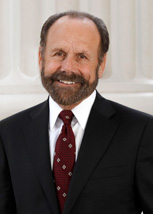
Photo of Jerry Hill
D California Senate · District 13 · Former member

Sen. Jerry Hill

Compare
Total votes
34,484
all sessions
Attendance
99%
121 missed
Higher than 94% of chamber peers
With party
99%
of cast votes
Near the chamber average
Bipartisan score
0%
crosses aisle rarely
Near the chamber average
Sponsored
1,209
bills & resolutions
Near the chamber average
Committees
0
assignments
1,209 bills and resolutions

Sponsored bills

Total
1,209
Primary
295
Co-sponsor
914
This page
1,209
matching current filters
Co-sponsor ACR 92
Passed · California Assembly · Co-sponsor
Relative to human trafficking.

This resolution would recognize the month of January 2012, and each following January, as National Slavery and Human Trafficking Prevention Month, and it would recognize February 1, 2012, and each following February 1, as California's Free From Slavery Day.

Passed Feb 7, 2012 1 co-sponsor
Co-sponsor SB 582
Vetoed · California Senate · Co-sponsor
Commute benefit policies.

Existing law requires transportation planning agencies to undertake various transportation planning activities, including preparation of a regional transportation plan. Existing law requires transportation planning agencies that are designated under federal law as metropolitan planning organizations to include a sustainable communities strategy as part of the regional transportation plan for their region. Existing law creates air quality management districts and air pollution control districts with various responsibilities relative to reduction of air pollution. This bill, beginning on January 1, 2013, subject to certain exceptions, would authorize a metropolitan planning organization jointly with the local air quality management district or air pollution control district to adopt a commute benefit ordinance that requires covered employers operating within the common area of the organization and district with a specified number of covered employees to offer those employees certain commute benefits. The bill would require that the ordinance specify certain matters, including any consequences for noncompliance, and would impose a specified reporting requirement. The bill would provide for the 8 metropolitan planning organizations within the region served by a specified air district to adopt the ordinance only after the district first acts to adopt the ordinance. The bill would exclude from its provisions an air district with a trip reduction regulation initially adopted prior to the federal Clean Air Act Amendments of 1990 as long as it continues to have a regulation that allows trip reduction as a method of compliance. The bill would make its provisions inoperative on January 1, 2017.

Vetoed Feb 2, 2012 1 co-sponsor
Co-sponsor AB 661
died · California Assembly · Co-sponsor
Public postsecondary education: community college districts: baccalaureate degree pilot program.

Existing law establishes the California Community Colleges, under the administration of the Board of Governors of the California Community Colleges, as one of the segments of public postsecondary education in this state. Existing law establishes community college districts, administered by governing boards, throughout the state, and authorizes these districts to provide instruction to students at the community college campuses maintained by the districts. Existing law requires community colleges to offer instruction through, but not beyond, the 2nd year of college and authorizes community colleges to grant associate in arts and science degrees. This bill would authorize the Grossmont-Cuyamaca Community College District and the San Mateo County Community College District to establish one baccalaureate degree pilot program per campus. This bill would require a baccalaureate degree pilot program to expire 8 years after the establishment of the program. If one or more of the authorized districts establish a baccalaureate program, this bill would require the districts to meet specified requirements, including, but not limited to, offering baccalaureate degrees in a limited number of fields of study, and submitting a report to the Legislature within one year prior to the expiration of the baccalaureate degree pilot program that would evaluate specified factors. This bill would also require, if one or more of the authorized districts establish a baccalaureate program, the governing boards of the districts to perform certain functions and would authorize the governing boards to charge baccalaureate degree-seeking students a fee for enrollment in specified courses, which would be required to be expended for the purpose of providing a pilot program. This bill would authorize the governing boards of the districts to enter into agreements with local businesses and agencies to provide educational services to students participating in a baccalaureate degree pilot program.

died Feb 1, 2012 1 co-sponsor
Primary AB 356
died · California Assembly · Lead sponsor
Public works projects: local hiring policies.

Existing law authorizes state agencies to enter into public works projects, as defined, and imposes various requirements with respect to the contracting and bidding process. This bill would prohibit any local agency, as defined, from mandating that any portion or percentage of work on a public works project be performed by local residents or persons residing within particular geographic areas if any portion of that public works project will take place outside the geographical boundaries of the local agency. The bill would also require a local agency to fund any increase in cost of a public works project that is located entirely within the geographical boundaries of the local agency where the public works project is funded with state funds and the local agency implements a local resident hiring policy, as specified.

died Feb 1, 2012 0 co-sponsors
Primary AB 1197
Failed · California Assembly · Lead sponsor
Whistleblower protection.

Under existing law, the Public Utilities Commission has regulatory authority over public utilities. The California Constitution authorizes the commission to establish rules for all public utilities, subject to control by the Legislature. This bill would require the commission to establish a comprehensive whistleblower protection program to protect public utility employees, former employees, and third-party contractors and subcontractors from retaliation for bringing information to the commission or other public entities, as defined, regarding, but not limited to, safety issues. Under existing law, a violation of any order, decision, rule, direction, demand, or requirement of the commission is a crime. Because the bill would require the commission to adopt rules for the protection of whistleblowers and a violation of these rules would be a crime, the bill would impose a state-mandated local program by creating a new crime. The California Constitution requires the state to reimburse local agencies and school districts for certain costs mandated by the state. Statutory provisions establish procedures for making that reimbursement. This bill would provide that no reimbursement is required by this act for a specified reason.

Failed Feb 1, 2012 0 co-sponsors
Co-sponsor AB 1
died · California Assembly · Co-sponsor
Education finance: CalWORKs Stage 3.

Existing law requires that child care be provided in 3 stages to recipients of benefits under the California Work Opportunity and Responsibility to Kids (CalWORKs) program. The first stage of child care begins upon the entry of a person into the CalWORKs program. The 2nd stage of child care begins when a county determines that the work or approved work activity of the recipient is stable or when a recipient is making the transition off of aid and child care is available through a local stage 2 program. The 3rd stage of child care, which is administered by programs contracting with the State Department of Education, begins when a funded child care space becomes available for the child or children of the eligible CalWORKs recipient. This bill would reappropriate $60,000,000 in unobligated balances appropriated in the Budget Act of 2009 to the State Department of Education for CalWORKs Stage 3 child care services. The bill would also require the State Department of Education to use those funds for families that were receiving, or would have been eligible to receive, CalWORKs Stage 3 child care services, before, on, or after October 31, 2010. The bill would declare that it makes appropriations for the usual and current expenses of the state, thereby taking immediate effect.

died Feb 1, 2012 1 co-sponsor
Primary AB 1160
Failed · California Assembly · Lead sponsor
Public utilities: reporting: safety issues.

Under existing law, the Public Utilities Commission has regulatory authority over public utilities. The California Constitution authorizes the commission to establish rules for all public utilities, subject to control by the Legislature. This bill would require a public utility to file a completed report with the commission within 30 days as to any final judgment, arbitration award, compromise, or settlement in excess of $50,000 in any civil action brought by an employee or former employee of the utility against the utility regarding safety issues that could jeopardize the lives or health of Californians. The bill would authorize the commission to limit this reporting requirement to those particular types of claims that the commission determines are likely to involve claims or allegations that could jeopardize the lives or health of Californians. The bill would require the commission to develop and adopt the report form to be used by a public utility to comply with this reporting requirement. The bill would require specified civil penalties to be imposed for a violation of these requirements. Under existing law, a violation of any order, decision, rule, direction, demand, or requirement of the commission is a crime. Because a violation of these requirements of the commission would be a crime, the bill would impose a state-mandated local program. The California Constitution requires the state to reimburse local agencies and school districts for certain costs mandated by the state. Statutory provisions establish procedures for making that reimbursement. This bill would provide that no reimbursement is required by this act for a specified reason.

Failed Feb 1, 2012 0 co-sponsors
Co-sponsor AB 1148
Failed · California Assembly · Co-sponsor
Political Reform Act of 1974: advertisements: disclosure.

The Political Reform Act of 1974 regulates mass mailings, known as slate mailers, that support or oppose multiple candidates or ballot measures for an election. The act requires that each slate mailer identify the slate mailer organization or committee primarily formed to support or oppose one or more ballot measures that is sending the slate mailer, and to contain other specified information in specified formatting. The act requires that each candidate and each ballot measure that has paid to appear in the slate mailer be designated by an asterisk. This bill would instead require that a candidate or ballot measure appearing in the slate mailer be designated by an asterisk if the slate mailer organization or committee primarily formed to support or oppose one or more ballot measures that is sending the slate mailer has received payment to include the candidate or ballot measure in the slate mailer. The bill would also recast the language of the prescribed notice to voters that must be included on a slate mailer. The act also regulates advertisements, which are defined as any general or public advertisement that is authorized and paid for by a person or committee for the purpose supporting or opposing a candidate for elective office or a ballot measure or ballot measures. The act places certain disclosure requirements on advertisements for or against any ballot measure, including that the advertisement disclose any person who has made cumulative contributions of $50,000 or more, as prescribed. The act places more specific disclosure requirements on broadcast or mass mailing advertisements that are paid for by independent expenditures that support or oppose a candidate or ballot measure. This bill would repeal provisions relating to disclosures for advertisements paid for by an independent expenditure and required disclosures of persons who have made cumulative contributions of $50,000 or more. This bill would, instead, impose specified disclosure requirements on radio, television, and video advertisements, and certain mass mailing and print advertisements that support or oppose a candidate or ballot measure or solicit contributions in support of those purposes. The bill would require advertisements that are authorized by a candidate or agent of the candidate to include a statement in which the candidate identifies himself or herself and states that he or she approves the message. The bill would require advertisements that are not authorized by a candidate or an agent of the candidate to disclose, in a prescribed format, the 3 largest identifiable contributors, as defined, of the committee that paid for the advertisement. The bill would require mass mailings or print advertisements that are paid for by certain persons who are not committees to disclose the name of that person as the funder of the mass mailing or print advertisement. The bill would also require that certain committees establish and maintain a committee disclosure Internet Web site, as defined, which discloses the top 5 identifiable contributors and provides a link to the Internet Web site maintained by the Secretary of State for campaign finance disclosures of the committee. The bill would require these advertisements to identify the address for the committee disclosure Internet Web site. Existing law makes a knowing or willful violation of the Political Reform Act of 1974 a misdemeanor and subjects offenders to criminal penalties. This bill would impose a state-mandated local program by creating additional crimes. The California Constitution requires the state to reimburse local agencies and school districts for certain costs mandated by the state. Statutory provisions establish procedures for making that reimbursement. This bill would provide that no reimbursement is required by this act for a specified reason. The Political Reform Act of 1974, an initiative measure, provides that the Legislature may amend the act to further the act's purposes upon a 23 vote of each house and compliance with specified procedural requirements. This bill would declare that it furthers the purposes of the act.


Failed Jan 31, 2012 1 co-sponsor
Co-sponsor SB 331
died · California Senate · Co-sponsor
Retail tobacco licenses.

The Cigarette and Tobacco Products Licensing Act of 2003 requires a retailer to obtain a license from the State Board of Equalization to engage in the sale of cigarette and tobacco products in this state, and specifies instances when the board is not required to issue a license. Existing law requires an application for a license to be filed on or before April 15, 2004. Existing law makes it a misdemeanor to sign the application if the signer knows the application has false statements. Existing law, the Stop Tobacco Access to Kids Enforcement Act, or STAKE Act, establishes various requirements for retailers relating to tobacco sales to minors. This bill would make the location of a retail location within 600 feet of a public or private elementary or secondary school on or after January 1, 2013, a violation of the STAKE Act, and would prohibit the issuance of a license for a retail location that is located within 600 feet of a public or private elementary or secondary school on or after January 1, 2013. This bill would require the application to include a statement regarding the location. This bill would require the board to cancel licenses for retail locations issued on or after January 1, 2013, if these licenses were wrongfully issued, as specified, would delete the April 15, 2004, application deadline, and would make conforming changes. By changing the definition of a crime, this bill would impose a state-mandated local program. The California Constitution requires the state to reimburse local agencies and school districts for certain costs mandated by the state. Statutory provisions establish procedures for making that reimbursement. This bill would provide that no reimbursement is required by this act for a specified reason.

died Jan 31, 2012 1 co-sponsor
Showing 681 to 690 of 1,209 bills
Previous 1 … 68 69 70 … 121 Next