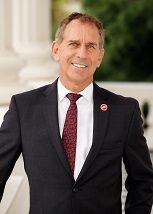
Photo of Bob Wieckowski
D California Senate · District 10

Sen. Bob Wieckowski

Compare
Total votes
29,825
all sessions
Attendance
98%
401 missed
Higher than 77% of chamber peers
With party
99%
of cast votes
Near the chamber average
Bipartisan score
0%
crosses aisle rarely
Near the chamber average
Sponsored
988
bills & resolutions
Lower than 88% of chamber peers
Committees
0
assignments
988 bills and resolutions

Sponsored bills

Total
988
Primary
224
Co-sponsor
764
This page
988
matching current filters
Co-sponsor ACR 122
Signed into law · California Assembly · Co-sponsor
Relative to California Sikh American Awareness and Appreciation Month.

This measure would designate November as California Sikh American Awareness and Appreciation Month. The measure would recognize and acknowledge the significant contributions that Californians of Sikh heritage have made to the state and would seek to afford all Californians the opportunity to understand, recognize, and appreciate the rich history and shared principles of Sikh Americans. The measure would also condemn all hate crimes and bias incidents against Sikh Americans and encourage all Sikhs to practice their faith freely and fearlessly.

Signed into law Sep 21, 2017 1 co-sponsor
Co-sponsor ACR 121
Signed into law · California Assembly · Co-sponsor
Relative to California Hindu American Awareness and Appreciation Month.

This measure would designate the month of October 2017 as California Hindu American Awareness and Appreciation Month. The measure would also recognize and acknowledge the significant contributions made by Californians of Hindu heritage to our state. By adoption of this resolution, the Legislature seeks to increase awareness and understanding of the Hindu American community.

Signed into law Sep 21, 2017 1 co-sponsor
Co-sponsor SCA 3
In committee · California Senate · Co-sponsor
A resolution to propose to the people of the State of California an amendment to the Constitution of the State, by amending Section 1 of Article XIIIA thereof, and by amending Section 18 of Article XVI thereof, relating to public libraries.

The California Constitution prohibits the ad valorem tax rate on real property from exceeding 1% of the full cash value of the property, subject to certain exceptions that include a tax rate to service bonded indebtedness incurred by a school district, community college district, or county office of education for school facilities and approved by 55% of the voters of the district or county voting on the proposition at an election. This measure would create an additional exception to the 1% limit for a rate imposed by a city, county, city and county, or special district to service bonded indebtedness incurred to fund public library facilities, that is approved by 55% of the voters of the city, county, city and county, or special district, as applicable, if the proposition meets specified requirements. The California Constitution prohibits specified local government agencies from incurring any indebtedness exceeding in any year the income and revenue provided in that year, without the assent of 23 of the voters and subject to other conditions. In the case of a school district, community college district, or county office of education, the California Constitution permits a proposition for the incurrence of indebtedness in the form of general obligation bonds for the construction, reconstruction, rehabilitation, or replacement of school facilities, including the furnishing and equipping of school facilities, or the acquisition or lease of real property for school facilities, to be adopted upon the approval of 55% of the voters of the district or county, as appropriate, voting on the proposition at an election. This measure would similarly lower to 55% the voter-approval threshold for a city, county, or city and county to incur bonded indebtedness, exceeding in any year the income and revenue provided in that year, that is in the form of general obligation bonds issued to fund public libraries.

In committee Sep 13, 2017 1 co-sponsor
Primary SB 157
Signed into law · California Senate · Lead sponsor
Invasion of privacy: distribution of sexually explicit materials: protection of plaintiff's identity.

Existing law creates a private right of action against a person who intentionally distributes a photograph or recorded image of another that exposes the intimate body parts, as defined, of that person or him or her engaged in specified sexual acts, without his or her consent, knowing that the other person had a reasonable expectation that the material would remain private, if specified conditions are met. Existing law authorizes a plaintiff in a civil proceeding pursuant to these provisions to use a pseudonym instead of his or her true name and to exclude or redact from all pleadings and documents filed in the action other identifying characteristics of the plaintiff. Existing law requires specified court documents, including motions and papers filed by parties, to be worded in a way that protects the name or other identifying characteristics of the plaintiff from public revelation. Existing law specifies that identifying characteristics include certain information for these purposes. This bill would require, in cases where a plaintiff uses a pseudonym, all other parties and their agents and attorneys to use the plaintiff's pseudonym in all pleadings, discovery documents, and other documents filed or served in the action, and at hearings, trial, and other court proceedings that are open to the public. The bill would require any party filing a pleading, discovery document, or other document in the action to exclude or redact identifying characteristics of the plaintiff from those documents, except as specified, and to file with the court and serve upon all other parties a confidential information form that includes the plaintiff's name and other identifying characteristics excluded or redacted. The bill would require the court to keep the plaintiff's name and excluded or redacted characteristics confidential. The bill would define identifying characteristics to include, among other information from which the plaintiff's identity can be discerned, telephone number, email address, social media profiles, online identifiers, as defined, and images of the plaintiff. Existing constitutional provisions require that a statute that limits the right of access to the meetings of public bodies or the writings of public officials and agencies be adopted with findings demonstrating the interest protected by the limitation and the need for protecting that interest. This bill would make legislative findings to that effect.


Signed into law Sep 11, 2017 0 co-sponsors
Primary SB 407
Signed into law · California Senate · Lead sponsor
Common interest developments: noncommercial solicitation.

Existing law, the Davis-Stirling Common Interest Development Act, defines and regulates common interest developments that are managed by homeowners' associations. The act requires an association to adopt rules that ensure access to the common area meeting space, if any exists, during a campaign, at no cost, to all candidates and to all members advocating a point of view. The act also requires the adoption of rules that ensure that if any candidate or member advocating a point of view is provided access to association media, newsletters, or Internet Web sites during a campaign, for purposes that are related to that election, equal access is provided to all candidates and members advocating a point of view. This bill would provide that the governing documents, including bylaws and operating rules, of a residential common interest development may not prohibit a member or resident of a common interest development from engaging in certain activities, including peacefully assembling or meeting during reasonable hours and in a reasonable manner for purposes relating to common interest development living, association elections, legislation, election to public office, or the initiative, referendum, or recall processes. The bill would prohibit a member or resident of a common interest development from being required to pay a fee, make a deposit, obtain liability insurance, or pay the premium or deductible on the association's insurance policy to use the association's common area for these activities. The bill would authorize a member or resident of a common interest development who is prevented by the association or its agents from engaging in any of these activities to bring a civil or small claims court action to enjoin the enforcement of a governing document that violates this bill. The bill would authorize a court to assess a civil penalty of not more than $500 per violation.

Signed into law Sep 11, 2017 0 co-sponsors
Co-sponsor SB 8
Passed · California Senate · Co-sponsor
Diversion: mental disorders.

Existing law authorizes a court, with the consent of the defendant and a waiver of the defendant's speedy trial right, to postpone prosecution of a misdemeanor and place the defendant in a pretrial diversion program if the defendant is suffering from sexual trauma, a traumatic brain injury, post-traumatic stress disorder, substance abuse, or mental health problems as a result of his or her military service. Existing law authorizes the defendant to be referred to services for treatment and requires the responsible agencies to report to the court and the prosecution not less than every 6 months. This bill would authorize a court, with the consent of the defendant and a waiver of the defendant's speedy trial right, to postpone prosecution of a misdemeanor or a felony punishable in a county jail, and place the defendant in a pretrial diversion program for up to 2 years if the court is satisfied the defendant suffers from a mental disorder, that the defendant's mental disorder played a significant role in the commission of the charged offense, and that the defendant would benefit from mental health treatment. For specified offenses, the bill would condition granting diversion on the consent of the prosecution. The bill would require the defense to arrange, to the satisfaction of the court, for a program of mental health treatment utilizing existing inpatient or outpatient mental health resources. The bill would require the divertee's mental health provider to provide reports on the defendant's progress to the court, the defense, and the prosecution not less than every 3 months. By increasing the duties of local prosecutors and public defenders, this bill would impose a state-mandated local program. The bill would require, upon successful completion of the diversion program, that the charges be dismissed and the records of the arrest sealed, and that the arrest be deemed never to have occurred, except as provided. The bill would state findings and declarations by the Legislature regarding the need for the diversion program. The California Constitution requires the state to reimburse local agencies and school districts for certain costs mandated by the state. Statutory provisions establish procedures for making that reimbursement. This bill would provide that, if the Commission on State Mandates determines that the bill contains costs mandated by the state, reimbursement for those costs shall be made pursuant to the statutory provisions noted above.

Passed Sep 1, 2017 1 co-sponsor
Primary SB 316
Passed · California Senate · Lead sponsor
Attorneys: pro bono legal aid services.

The State Bar Act provides for the licensure and regulation of attorneys by the State Bar of California, a public corporation governed by a board of trustees. The act provides that it has been the tradition of those learned in the law and licensed to practice law in this state to provide voluntary pro bono legal services to those who cannot afford the help of a lawyer and further provides that every lawyer authorized and privileged to practice law in California is expected to make a contribution, whether by directly providing pro bono legal services or, if that is not feasible, by providing financial support to organizations providing free legal services to persons of limited means, as specified. The State Bar Act also, with specified exceptions, requires a law firm that contracts with the state for legal services exceeding $50,000 to certify that it agrees to make a good faith effort to provide a minimum number of hours of pro bono legal services, as defined, during each year of the contract. The act provides that failure of a firm to make a good faith effort to provide those hours may be cause for nonrenewal of a state contract and may be taken into account when determining the award of future contracts with the state. This bill would revise references to "pro bono legal services" in those provisions to instead refer to "pro bono legal aid services" and would define pro bono legal aid services for those purposes. This bill, with respect to the expectation of every lawyer authorized and privileged to practice law in California to make a contribution, instead would provide that those lawyers are strongly encouraged to fulfill their individual pro bono ethical commitments to make a contribution of both 50 hours of pro bono legal aid services and financial contributions to legal aid organizations, as defined, based on their individual annual incomes. The bill would require an active member of the State Bar to report the hours of pro bono legal aid services performed and the amount of financial contributions to California legal aid organizations and nonprofit public benefit corporations through the member's My State Bar online profile when payment of annual fees is due. The bill would require the design of a member's State Bar online profile to allow the member to report this and other related information and choose whether to keep the reported information private or available to the public, as specified. Under the bill, failure of a member to make the encouraged contributions or required reports would not be grounds for disciplinary or administrative recourse. The bill would require the State Bar to retain and maintain reported information during the time the member's status is active and would further require up to the previous 5 years of active status of the information to be made publicly available on the member's State Bar online profile pursuant to the voluntary public disclosure of that information by the member. The bill would provide for the confidentiality of, and prohibit disclosure of, reported information not made publicly available. Existing constitutional provisions require that a statute that limits the right of access to the meetings of public bodies or the writings of public officials and agencies be adopted with findings demonstrating the interest protected by the limitation and the need for protecting that interest. This bill would make legislative findings to that effect.
Passed Aug 30, 2017 0 co-sponsors
Co-sponsor AJR 1
Signed into law · California Assembly · Co-sponsor
Presidential elections: electoral college.

This measure would urge the United States Congress to propose and send to the states for ratification a constitutional amendment to abolish the electoral college and provide for the direct election of the President and Vice President of the United States by the popular vote of all eligible citizens of the United States.

Signed into law Aug 28, 2017 1 co-sponsor
Co-sponsor ACR 111
Signed into law · California Assembly · Co-sponsor
Relative to India's Independence Day.

This measure would recognize August 15, 2017, as India's Independence Day and would urge all Californians to join in celebrating India's independence.

Signed into law Jul 31, 2017 1 co-sponsor
Showing 271 to 280 of 988 bills
Previous 1 … 27 28 29 … 99 Next