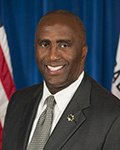
Photo of Jim Cooper
D California Assembly · District 9 · Former member

Asm. Jim Cooper

Compare
Total votes
15,375
all sessions
Attendance
93%
1,066 missed
Near the chamber average
With party
98%
of cast votes
Lower than 78% of chamber peers
Bipartisan score
1%
crosses aisle rarely
Near the chamber average
Sponsored
1,450
bills & resolutions
Near the chamber average
Committees
0
assignments
1,450 bills and resolutions

Sponsored bills

Total
1,450
Primary
176
Co-sponsor
1,274
This page
1,450
matching current filters
Co-sponsor ACR 141
Signed into law · California Assembly · Co-sponsor
Relative to California Fitness Week.

This measure would declare the week of January 7 to January 13, 2018, as California Fitness Week and would encourage Californians to enrich their lives through proper nutrition and exercise.

Signed into law Feb 7, 2018 1 co-sponsor
Primary AB 52
Failed · California Assembly · Lead sponsor
Public employees: orientation and informational programs: exclusive representatives.

(1) Existing law, including the Meyers-Milias-Brown Act, the Ralph C. Dills Act, the Trial Court Employment Protection and Governance Act, the Trial Court Interpreter Employment and Labor Relations Act, and the Los Angeles County Metropolitan Transportation Authority Transit Employer-Employee Relations Act, as well as provisions commonly referred to as the Educational Employment Relations Act and the Higher Education Employer-Employee Relations Act, regulates the labor relations of the state, the courts, and specified local public agencies and their employees. Existing law establishes the Public Employment Relations Board and prescribes its powers and duties, in relation to these acts. These acts grant specified public employees of these entities the right to form, join, and participate in the activities of employee organizations of their choosing and require public agency employers, among other things, to meet and confer with representatives of recognized employee organizations and exclusive representatives on terms and conditions of employment. This bill would require the public employers regulated by the acts described above to provide all employees an orientation. The bill would also require these public employers to permit the exclusive representative, if applicable, to participate. By creating new duties for various local agencies, this bill would impose a state-mandated local program. (2) The California Constitution requires the state to reimburse local agencies and school districts for certain costs mandated by the state. Statutory provisions establish procedures for making that reimbursement. This bill would provide that, if the Commission on State Mandates determines that the bill contains costs mandated by the state, reimbursement for those costs shall be made pursuant to the statutory provisions noted above.

Failed Feb 1, 2018 0 co-sponsors
Co-sponsor AB 223
Failed · California Assembly · Co-sponsor
Commercial sexual exploitation of youth: services.

Existing law proscribes the crime of human trafficking, as defined. A person who causes, induces, or persuades, or attempts to cause, induce, or persuade, a person who is a minor at the time of commission of the offense to engage in a commercial sex act, with the intent to effect or maintain a violation of any of specified sex offenses, is guilty of human trafficking. Existing law also proscribes the crime of prostitution. Existing law establishes the Board of State and Community Corrections to provide statewide leadership, coordination, and technical assistance to promote effective state and local efforts and partnerships in California's adult and juvenile criminal justice system. Existing law authorizes the County of Alameda to create a pilot project, contingent upon local funding, for the purposes of developing a comprehensive, replicative, multidisciplinary model to address the needs and effective treatment of commercially sexually exploited minors, as specified. Existing law establishes the Commercially Sexually Exploited Children Program, which is administered by the State Department of Social Services in order to adequately serve children who have been sexually exploited, and requires the department, in consultation with the County Welfare Directors Association of California, to develop an allocation methodology to distribute funding to counties that elect to participate in the program. This bill would require the Board of State and Community Corrections to establish a pilot project in each of the Counties of Alameda, Sacramento, and San Joaquin, if the county elects to participate in the pilot project. The bill would authorize each participating county to determine whether that county's probation department or child welfare agency, or both, would create and operate a program funded by the pilot project. The bill would require a program funded by the pilot project to provide services to youth within that county's jurisdiction in order to address the need for services relating to the commercial sexual exploitation of youth. The bill would state that the purpose of the pilot project is to test a service model, as specified, that would produce improved outcomes for youth victims of human trafficking. The bill would require the programs created by the pilot project that receive funding pursuant to these provisions to be licensed by the State Department of Social Services. The bill would make the funding for the pilot projects established pursuant to this authority contingent upon an appropriation in the annual Budget Act and would require the Board of State and Community Corrections to administer those funds. The bill would also require a county that elects to participate in the pilot project and establishes a program pursuant to these provisions to conduct at least one evaluation of the program's impact and effectiveness and to submit that evaluation to the board and the Legislature no later than January 1, 2024. The bill would repeal these provisions on January 1, 2025.

Failed Feb 1, 2018 1 co-sponsor
Co-sponsor AB 445
Failed · California Assembly · Co-sponsor
Career technical education: the California Career Technical Education Grant Program.

(1) Existing law establishes the California Career Technical Education Incentive Grant Program as a state education, economic, and workforce development initiative with the goal of providing pupils in kindergarten and grades 1 to 12, inclusive, with the knowledge and skills necessary to transition to employment and postsecondary education. Existing law appropriates $200,000,000 from the General Fund to the State Department of Education for purposes of this grant program for the 2017–18 fiscal year. Existing law requires applicants for grants under the program to demonstrate that they have local matching funds, as specified. Existing law specifies that no applicant may receive a renewal grant under the program for the 2018–19 fiscal year. This bill would change the name of the program to the California Career Technical Education Grant Program. The bill would increase to $300,000,000 the General Fund appropriation to the State Department of Education for this program for the 2017–18 fiscal year, and would further provide for an appropriation to the department in this amount for the 2018–19, 2019–20, and 2020–21 fiscal years. The bill would lower the amount of local matching funds required of an applicant from $1.50 for every dollar received to $1 for every dollar received, for the 2017–18, 2018–19, 2019–20, and 2020–21 fiscal years. The bill would also provide that an applicant receiving a grant from this program in the 2017–18, 2018–19, or 2019–20 fiscal year would be eligible for a renewal grant in the next fiscal year if that applicant demonstrates continued compliance with program requirements. (2) The funds appropriated by this bill would be applied toward the minimum funding requirements for school districts and community college districts imposed by Section 8 of Article XVI of the California Constitution.

Failed Feb 1, 2018 1 co-sponsor
Co-sponsor SB 600
In committee · California Senate · Co-sponsor
Sales and use taxes: exemption: manufacturing and research: useful life: electric power generation.

Existing sales and use tax laws impose taxes on retailers measured by gross receipts from the sale of tangible personal property sold at retail in this state, or on the storage, use, or other consumption in this state of tangible personal property purchased from a retailer for storage, use, or other consumption in this state, measured by sales price. Those laws partially exempt from those taxes, for a specified period, the gross receipts from the sale of, and the storage, use, or other consumption of, specified tangible personal property purchased for use by a qualified person, as defined, to be used primarily in manufacturing or other processes, and in research and development. On and after July 1, 2014, tangible personal property with a useful life of one or more years, as defined by reference to state income or franchise taxes, is deemed to have a useful life of one or more years for purposes of the exemption. This bill would define "useful life" for periods on and after July 1, 2014, to also include tangible personal property that is expensed for state income or franchise tax purposes and that has a physical useful life of one or more years. The bill, with respect to property with a useful life of one or more years as redefined by this bill, would require the State Board of Equalization to cancel any notice of determination and any related penalties and interest and would prohibit the board from issuing any notice of determination with respect to the purchase or sale of that property. The bill would authorize a qualified person to offset the amount of sales tax reimbursement or use tax paid against any sales and use tax imposed on the qualified person when a qualified person has paid sales tax reimbursement or use tax on purchases of qualified tangible personal property that has a useful life of one or more years, as redefined by the bill, as provided. The bill, beginning on and after January 1, 2018, and before July 1, 2026, would additionally exempt from those taxes special purpose buildings and foundations used for the generation or production or storage and distribution, as defined, of electric power and qualified tangible personal property purchased for used by a qualified person to be used primarily in the generation or production or storage and distribution of electric power or purchased for use by a contractor for the qualified person, as specified. The bill, on and after January 1, 2018, would expand the definition of qualified person to include, among others, a person primarily engaged in the business of electric power generation. The bill would declare the intent of the Legislature to enact legislation that would improve the state's sales and use tax incentives to promote a stronger California economy by securing a greater share of the high-paying, high-skilled jobs in manufacturing and research and development.


In committee Feb 1, 2018 1 co-sponsor
Primary AB 875
In committee · California Assembly · Lead sponsor
Petty theft: subsequent convictions.

Existing law establishes the penalty for petty theft as a fine not exceeding $1,000, or by imprisonment in the county jail not exceeding 6 months, or by both that fine and imprisonment. Existing law, the Safe Neighborhoods and Schools Act, enacted as an initiative statute by Proposition 47, as approved by the electors at the November 4, 2014, statewide general election, provides that a registered sex offender or a person with a prior conviction for certain serious or violent felonies, such as a sexually violent offense, who commits petty theft, is subject to imprisonment in the county jail for up to one year or in the state prison for 16 months, or 2 or 3 years. Existing law allows individuals charged with specified crimes to qualify for deferred entry of judgment. Under the existing deferred entry of judgment program, an eligible defendant may have entry of judgment deferred, upon pleading guilty to the offenses charged and entering a drug treatment program for 18 months up to 3 years. If the defendant completes the program, the criminal charges are dismissed. This bill would expand the enhanced petty theft penalties described above to a person who has a prior conviction for any serious or violent felony, and to any person who has 3 or more prior convictions for crimes such as petty theft or shoplifting, grand theft, and burglary. The bill would also authorize a court to grant deferred entry of judgment, for no less than 18 months and no longer than 3 years, to a defendant who has 3 or more prior convictions for those theft-related crimes, under certain conditions, including that the court is satisfied that the defendant suffers from a drug or alcohol addiction and the court finds that the addiction played a significant role in the commission of the offense. The bill would provide that if the person performs satisfactorily during the period of deferred entry of judgment, the criminal charges would be dismissed. The bill would establish procedures for deferred entry of judgment, including requiring county probation departments to file progress reports as directed by the court. The bill would additionally make conforming changes. The California Constitution authorizes the Legislature to amend an initiative statute by another statute that becomes effective only when approved by the electors. This bill would provide that it would become effective only upon approval of the voters, and would provide for the submission of this measure to the voters for approval at the statewide general election.

In committee Feb 1, 2018 0 co-sponsors
Showing 901 to 910 of 1,450 bills
Previous 1 … 90 91 92 … 145 Next