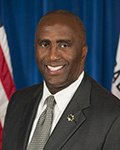
Photo of Jim Cooper
D California Assembly · District 9

Asm. Jim Cooper

Compare
Total votes
15,375
all sessions
Attendance
93%
1,066 missed
Near the chamber average
With party
98%
of cast votes
Lower than 78% of chamber peers
Bipartisan score
1%
crosses aisle rarely
Near the chamber average
Sponsored
1,450
bills & resolutions
Near the chamber average
Committees
0
assignments
1,450 bills and resolutions

Sponsored bills

Total
1,450
Primary
176
Co-sponsor
1,274
This page
1,450
matching current filters
Co-sponsor AJR 45
Signed into law · California Assembly · Co-sponsor
Civil rights: the Equality Act.

This act would urge the United States Congress to enact the Equality Act of 2015, which would amend the Civil Rights Act of 1964 to include protections on the basis of sexual orientation, gender identity, and sex for, among other things, employment, housing, public education, and public accommodations.

Signed into law Sep 1, 2016 1 co-sponsor
Primary AB 2835
Passed · California Assembly · Lead sponsor
Public employees: orientation and informational programs: exclusive representatives.

(1) Existing law, including the Meyers-Milias-Brown Act, the Ralph C. Dills Act, the Trial Court Employment Protection and Governance Act, the Trial Court Interpreter Employment and Labor Relations Act, and the Los Angeles County Metropolitan Transportation Authority Transit Employer-Employee Relations Act, as well as provisions commonly referred to as the Educational Employment Relations Act and the Higher Education Employer-Employee Relations Act, regulates the labor relations of the state, the courts, and specified local public agencies and their employees. Existing law establishes the Public Employment Relations Board and prescribes its powers and duties, in relation to these acts. These acts grant specified public employees of these entities the right to form, join, and participate in the activities of employee organizations of their choosing and requires public agency employers, among other things, to meet and confer with representatives of recognized employee organizations and exclusive representatives on terms and conditions of employment. This bill would require the public employers regulated by the acts described above to provide newly hired employees, as defined, a specified public employee orientation within 4 months of hiring, to be conducted in-person, during work hours. The bill would require, if employees are represented, that the exclusive representative be given notice not less than 10 days in advance of an orientation. The bill would require the pertinent exclusive representative to be permitted to make a presentation of 30 minutes in the first half of the orientation. This bill would require an affected public employer to provide the exclusive representative with the name, job title, department, work location, phone number, and home address of newly hired employees within 30 days of the date of hire. The bill would permit agreements between a public employer and an exclusive representative that provide for orientations that vary from the bill's requirements, but in absence of an agreement on orientations, the bill's requirements would apply. The bill would also require affected public employers to provide the exclusive representative with the name, job title, department, work location, telephone number, and home address of all employees in the bargaining unit at least every 90 days, except as specified. The bill would provide that affected public employers do not unlawfully support or favor an employee organization or encourage employees to join any organization in preference to another, as specified, by permitting presentations at employee orientations or informational programs, as described above, or consistent with a negotiated agreement. The bill would grant the Public Employment Relations Board jurisdiction over a violation of these provisions. The bill would except from its provisions public employers with respect to in-home supportive services providers, as specified. By creating new duties for various local agencies, this bill would impose a state-mandated local program. (2) The California Constitution requires the state to reimburse local agencies and school districts for certain costs mandated by the state. Statutory provisions establish procedures for making that reimbursement. This bill would provide that, with regard to certain mandates, no reimbursement is required by this act for a specified reason. With regard to any other mandates, this bill would provide that, if the Commission on State Mandates determines that the bill contains costs so mandated by the state, reimbursement for those costs shall be made pursuant to the statutory provisions noted above.


Passed Aug 31, 2016 0 co-sponsors
Primary AB 869
Passed · California Assembly · Lead sponsor
Public transportation agencies: fare evasion and prohibited conduct.

Existing law authorizes a public transportation agency to adopt and enforce an ordinance to impose and enforce civil administrative penalties for fare evasion or other passenger misconduct, other than by minors, on or in a transit facility or vehicle in lieu of the criminal penalties otherwise applicable, with specified administrative procedures for the imposition and enforcement of the administrative penalties, including an initial review and opportunity for a subsequent administrative hearing. This bill would provide that a person who fails to pay the administrative penalty when due or successfully complete the administrative process to dismiss the notice of fare evasion or passenger conduct violation may be subject to those criminal penalties. The bill would require the notice of fare evasion or passenger conduct violation to contain a printed statement that the person may be charged with an infraction or misdemeanor if the administrative penalty is not paid when due or dismissed pursuant to these provisions. The bill would also require the processing agency to dismiss the original notice of fare evasion or passenger conduct violation and make no further attempts to collect the administrative penalty if the person is charged with an infraction or misdemeanor after failing to pay the administrative penalty or successfully complete the civil administrative process. The bill would require the processing agency to personally serve the person charged with an infraction or misdemeanor with a new notice of fare evasion or passenger conduct violation that sets forth the criminal violation. Because the bill would expand the scope of an existing crime, the bill would impose a state-mandated local program. The California Constitution requires the state to reimburse local agencies and school districts for certain costs mandated by the state. Statutory provisions establish procedures for making that reimbursement. This bill would provide that no reimbursement is required by this act for a specified reason.

Passed Aug 30, 2016 0 co-sponsors
Co-sponsor SB 799
Passed · California Senate · Co-sponsor
School finance: school districts: annual budgets: reserve balance.

Existing law requires the governing board of a school district, on or before July 1 of each year, to hold a hearing on, and adopt a budget for, the subsequent fiscal year. Existing law requires the governing board of a school district that proposes to adopt a budget that includes a combined assigned and unassigned ending fund balance in excess of the minimum recommended reserve for economic uncertainties adopted by the State Board of Education to provide specified information for public review and discussion. This bill would instead require the governing board of a school district that proposes to adopt a budget that includes unassigned ending balances in the school district's general fund and special reserve fund for other than capital outlay projects in excess of the minimum recommended reserve for economic uncertainties to provide specified information for public review and discussion. The bill would also require the governing board of a school district to adopt a policy establishing procedures for reporting the fund balances as reflected in the school district's governmental fund financial statements, as specified. By imposing additional duties on school districts, the bill would impose a state-mandated local program. Existing law limits the amount of the combined assigned or unassigned ending fund balance contained in a school district's annual budget in any fiscal year immediately after a fiscal year in which a transfer is made into the Public School System Stabilization Account. Existing law establishes formulas for calculating the maximum amount allowable for school districts with less than 400,000 units of average daily attendance and for school districts with more than 400,000 units of average daily attendance, as specified. Existing law authorizes the county superintendent of schools to grant an exemption from those requirements if the school district provides documentation indicating extraordinary fiscal circumstances substantiate the need for a combined assigned or unassigned ending fund balance that is in excess of the minimum recommended reserve for economic uncertainties, as specified. This bill would instead provide that the school district's budget shall not contain unassigned ending balances in the school district's general fund and special reserve fund for other than capital outlay projects in excess of 15% of those funds, and would require a county superintendent of schools to grant a school district an exemption if the school district provides documentation indicating extraordinary fiscal circumstances substantiate the need for those fund balances, as specified. The bill would require the governing board of a school district to report in a public meeting its assigned and unassigned fund balances in the school district's general fund and special reserve fund for other than capital outlay projects, as specified. Because the bill would impose additional duties on school districts and county superintendents of schools, the bill would impose a state-mandated local program. The California Constitution requires the state to reimburse local agencies and school districts for certain costs mandated by the state. Statutory provisions establish procedures for making that reimbursement. This bill would provide that, if the Commission on State Mandates determines that the bill contains costs mandated by the state, reimbursement for those costs shall be made pursuant to these statutory provisions.

Passed Aug 30, 2016 1 co-sponsor
Co-sponsor AJR 42
Signed into law · California Assembly · Co-sponsor
Relative to the transport by rail of flammable and combustible liquids.

This measure would urge the United States Department of Transportation, Department of Energy, and the Office of Management and Budget to expedite the rulemaking and implementation processes for federal safety regulations governing the transport by rail of flammable and combustible liquids, including crude oil, and would also urge the President and the Congress of the United States to pass specified federal legislation mandating public safety measures regulating the transport by rail of those liquids.

Signed into law Aug 30, 2016 1 co-sponsor
Co-sponsor AB 171
Passed · California Assembly · Co-sponsor
Department of Veterans Affairs: veterans' services.

Existing law requires the Department of Veterans Affairs to disburse funds, appropriated to the department for the purpose of supporting county veterans service officers pursuant to the annual Budget Act, on a pro rata basis, to a county that complies with certain conditions. This bill would require the department, no later than July 1, 2016, to develop an allocation formula based upon performance standards that encourage innovation and reward outstanding service by county veterans service officers, and would require those moneys to be allocated, upon appropriation by the Legislature, in accordance with that formula, as specified. The bill would require the department to annually report to the Legislature the efficacy, return on investment, work volume, and regional impact of the subvention funds on each county that receives those funds, as specified. The bill would also delete obsolete provisions and would make conforming changes.

Passed Aug 29, 2016 1 co-sponsor
Primary AB 1798
Signed into law · California Assembly · Lead sponsor
Firearms: imitation firearms: gun-shaped phone cases.

Existing federal law prohibits a person from manufacturing, entering into commerce, shipping, transporting, or receiving any toy, look-alike, or imitation firearm unless the firearm contains, or has affixed to it, a marking approved by the federal Secretary of Commerce. Existing state law defines "imitation firearm" as any BB device, toy gun, replica of a firearm, or other device that is so substantially similar in coloration and overall appearance to an existing firearm as to lead a reasonable person to perceive that the device is a firearm. Under existing law, a manufacturer, importer, or distributor of imitation firearms that, among other things, fails to comply with any applicable federal law or regulation governing the marking of a toy, look-alike, or imitation firearm, as defined by federal law or regulation, is guilty of a misdemeanor. This bill would specify that the definition of imitation firearm described above includes, but is not limited to, a protective case for a cellular telephone that is so substantially similar in coloration and overall appearance to an existing firearm as to lead a reasonable person to perceive that the device is a firearm.

Signed into law Aug 26, 2016 0 co-sponsors
Showing 1,141 to 1,150 of 1,450 bills