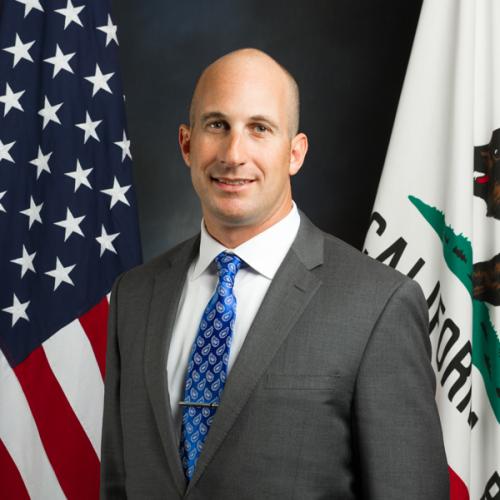
Photo of Heath Flora
R California Assembly · District 9 On the 2026 ballot

Asm. Heath Flora

Compare
Total votes
23,533
all sessions
Attendance
83%
3,189 missed
Lower than 98% of chamber peers
With party
98%
of cast votes
Lower than 77% of chamber peers
Bipartisan score
1%
crosses aisle rarely
Higher than 75% of chamber peers
Sponsored
1,713
bills & resolutions
Lower than 96% of chamber peers
Committees
1
assignment
1,713 bills and resolutions

Sponsored bills

Total
1,713
Primary
192
Co-sponsor
1,521
This page
1,713
matching current filters
Co-sponsor SCR 99
Signed into law · California Senate · Co-sponsor
Relative to Take Our Daughters And Sons To Work Day.

This measure would declare April 28, 2022, as Take Our Daughters and Sons to Work Day, and would recognize the goals of introducing our daughters and sons to the workplace and commend all participants of Take Our Daughters And Sons To Work Day.

Signed into law May 27, 2022 1 co-sponsor
Co-sponsor SB 1134
Passed · California Senate · Co-sponsor
Substance use disorder counselors: Allied Behavioral Health Board.

Existing law provides for the licensure and regulation of adult alcoholism or drug abuse recovery or treatment facilities by the State Department of Health Care Services and authorizes the department to enforce those provisions. Existing law also requires the department to require that an individual providing counseling services within a program be certified by a certifying organization approved by the department. Existing law authorizes the department to charge a fee to all programs for licensure or certification by the department, and establishes the Residential and Outpatient Program Licensing Fund to hold these fees. This bill would create the Allied Behavioral Health Board within the Department of Consumer Affairs, and would transfer the responsibility to oversee those certifying organizations from the State Department of Health Care Services to the board. The bill would require the board to establish regulations and standards for the licensure of substance use disorder counselors, as specified. This bill would require an applicant for a substance use disorder counselor license to have documented to a certifying organization that they have obtained a master's degree in alcohol and drug counseling or a related counseling master's degree, as specified, and to pass specified examinations. The bill would require the board to review the criminal history of the applicant, as specified. The bill would prohibit a person from using the title of "Licensed Alcohol Drug Counselor" unless the person has applied for and obtained a license from the board, and would make a violation of that provision punishable by an administrative penalty not to exceed $1,000. The bill would require the board to establish fees for licensure, as specified, and would revert all unencumbered funds appropriated from fees in the Residential and Outpatient Program Licensing Fund to the State Department of Health Care Services for the purpose of certification oversight of substance use disorder counselors to that fund. The bill would make its provisions operative upon the appropriation by the Legislature of sufficient funds allocated to the state from a specified settlement agreement, consistent with the requirements of the settlement agreement.

Passed May 26, 2022 1 co-sponsor
Co-sponsor SCR 88
Signed into law · California Senate · Co-sponsor
Relative to California Wines: Down to Earth Month.

This measure would proclaim, in perpetuity, the month of April as California Wines: Down to Earth Month, to celebrate the sustainable leadership of California wineries and winegrape growers throughout the month of April.

Signed into law May 24, 2022 1 co-sponsor
Co-sponsor AB 35
Signed into law · California Assembly · Co-sponsor
Civil damages: medical malpractice.

Existing law, referred to as the Medical Injury Compensation Reform Act of 1975 (MICRA) , prohibits an attorney from contracting for or collecting a contingency fee for representing any person seeking damages in connection with an action for injury or damage against a health care provider based upon alleged professional negligence in excess of specified limits. This bill would recast those provisions and base the amount of contingency fee that may be contracted for upon whether recovery is pursuant to settlement agreement and release of all claims executed before a civil complaint or demand for arbitration is filed, or pursuant to settlement, arbitration, or judgment after a civil complaint or demand for arbitration is filed, as specified. The bill would add and revise definitions for these purposes. Existing law provides that in any action against a health care provider based upon professional negligence, the injured plaintiff is entitled to recover noneconomic losses to compensate for pain, suffering, inconvenience, physical impairment, disfigurement, and other nonpecuniary damage. Existing law limits the amount of damages for noneconomic losses in an action for injury against a health care provider based on professional negligence to $250,000. This bill would remove the $250,000 limit on noneconomic damages and expand the recast provisions to include an action for injury against a health care institution, as defined. The bill would increase the applicable limitation based upon whether the action for injury involved wrongful death. The bill would specify that these limitations would increase by $40,000 each January 1st for 10 years and beginning on January 1, 2034, the applicable limitations on noneconomic damages for personal injury and for wrongful death would be adjusted for inflation on January 1st of each year by 2%. Existing law specifies that in any action for injury or damages against a provider of health care services, a superior court shall, at the request of either party, enter a judgment ordering that money damages or its equivalent for future damages of the judgment creditor be paid in whole or in part by periodic payments rather than by a lump-sum payment if the award equals or exceeds $50,000. This bill would increase the minimum amount of the judgment required to request periodic payments to $250,000. Existing law makes statements, writings, or benevolent gestures expressing sympathy or a general sense of benevolence relating to the pain, suffering, or death of a person involved in an accident and made to that person, or to the family of that person, inadmissible as evidence of an admission of liability in a civil action. This bill would specify that statements, writings, or benevolent gestures expressing sympathy, regret, a general sense of benevolence, or suggesting, reflecting, or accepting fault relating to the pain, suffering, or death of a person, or to an adverse patient safety event or unexpected health care outcome, as specified, shall be confidential, privileged, protected, not subject to subpoena, discovery, or disclosure, and shall not be used or admitted into evidence in any civil, administrative, regulatory, licensing, or disciplinary board, agency, or body action or proceeding, and shall not be used or admitted in relation to any sanction, penalty, or other liability, as evidence of an admission of liability or for any other purpose.


Signed into law May 23, 2022 1 co-sponsor
Co-sponsor AB 2093
In committee · California Assembly · Co-sponsor
First responders: loan forgiveness program.

Existing law establishes the Student Aid Commission as the primary state agency for the administration of state-authorized student financial aid programs available to students attending all segments of postsecondary education. This bill would require the commission to, upon appropriation by the Legislature, establish an educational loan repayment program for first responders serving in disadvantaged communities, as specified. The bill would require applicants for the program to be active first responders within the state who have served for a minimum of 5 years within a disadvantaged community. The bill would require an applicant to provide proof of full-time employment and for the applicant's supervisor, manager, or business owner to attest, under penalty of perjury, that the applicant is in good standing with the respective agency for which they serve. By expanding the crime of perjury, this bill would create a state-mandated local program. The bill would create the Disadvantaged Communities Account for First Responders Fund, and authorize the commission to accept donations for the purposes of the program and deposit them in the fund. The bill would require the commission to monitor the program for fraud and to annually report to the Legislature on the program, as specified. The California Constitution requires the state to reimburse local agencies and school districts for certain costs mandated by the state. Statutory provisions establish procedures for making that reimbursement. This bill would provide that no reimbursement is required by this act for a specified reason.

In committee May 19, 2022 1 co-sponsor
Primary AB 2126
In committee · California Assembly · Lead sponsor
Controlled substances.

Existing law establishes the California Victim Compensation Board within the Government Operations Agency. Existing law provides for the indemnification of victims of specified types of crimes, subject to specified criteria. Existing law makes it a crime to possess for sale, sell, or transport specified controlled substances. This bill would create the Fentanyl Victim Compensation Fund and would authorize the California Victim Compensation Board to accept applications for reimbursement up to $7,500 for funeral and burial expenses arising from, and up to $5,500 for mental health counseling related to, a fatal fentanyl overdose, if those applications are submitted by a surviving parent, grandparent, sibling, child, grandchild, spouse, or fiance of the deceased. The bill would authorize the board to reimburse the person for those expenses and costs, and require that reimbursement to only be granted upon appropriation of funds from the Fentanyl Victim Compensation Fund by the Legislature for this purpose. Existing law classifies controlled substances into 5 schedules and classifies the drug fentanyl in Schedule II. Existing law authorizes a trial court to impose a fine up to $20,000 upon a person who is convicted of a violation of specified provisions of law with respect to the possession, possession for sale, or transportation of, among other controlled substances, Schedule II controlled substances. The bill would require, for a conviction involving a substance containing fentanyl, 110 of the fine collected to be deposited into the Fentanyl Victim Compensation Fund.

In committee May 19, 2022 0 co-sponsors
Primary AB 2672
In committee · California Assembly · Lead sponsor
Fire prevention: defensible space inspections: statewide defensible space and home hardening platform.

Existing law requires a person who owns, leases, controls, operates, or maintains a building or structure in, upon, or adjoining a mountainous area, forest-covered lands, shrub-covered lands, grass-covered lands, or land that is covered with flammable material, to at all times maintain a defensible space of 100 feet from each side and from the front and rear of the structure, as provided. Existing law requires a seller of real property that is located in a high or very high fire hazard severity zone to provide the buyer documentation stating that the property is in compliance with that defensible space requirement. This bill would authorize the Director of Forestry and Fire Protection, using specified funds, to procure or establish a statewide defensible space and home hardening platform that would allow property owners to support and augment the Department of Forestry and Fire Protection in defensible space inspection requests, as provided. The bill would require the platform to have specified features, including a functionality that would allow for live video and audio interaction between a fire safety official and a property owner. The bill would require the director to establish any necessary quality control measures to ensure that the inspection information that is shared on the platform is accurate, reliable, and auditable. The bill would authorize a seller of real property to use the platform for purposes of providing specified documentation relating to defensible space requirements, as provided. The bill would subject a property owner to a specified civil penalty if the property owner provides false information, omits information requested by a fire safety official, or otherwise seeks to use the platform to provide false or misleading information for the purpose of providing the documentation described above.

In committee May 19, 2022 0 co-sponsors
Co-sponsor AB 2797
In committee · California Assembly · Co-sponsor
Decarbonizing Fuels Incentive.

Existing law, the Use Fuel Tax Law (UFTL) , imposes a state excise tax on the use of fuel, as defined, at specified rates. This bill would establish in the state treasury the Carbon Neutrality Fund, and would require, for taxable years beginning on or after January 1, 2023, and before January 1, 2029, the California Department of Tax and Fee Administration to pay annually from the fund an incentive payment to a qualified taxpayer on a first-come-first-served basis, as prescribed. The bill would, among other things, require the incentive payment for a taxable year to be an amount equal to the applicable amount, as determined based on the carbon intensity of a transportation fuel, multiplied by the number of diesel gallons equivalent or gasoline gallons equivalent of qualified liquid or gaseous transportation fuel sold by the qualified taxpayer during a taxable year, reported as prescribed. The bill would prohibit the incentive payment in a taxable year from exceeding the amount of tax paid by the qualified taxpayer pursuant to the UFTL in that taxable year and would prohibit the aggregate amount of incentive payments in a taxable year from exceeding $500,000,000.

In committee May 19, 2022 1 co-sponsor
Primary AB 2078
In committee · California Assembly · Lead sponsor
Atmospheric Rivers: Research, Mitigation, and Climate Forecasting Program.

Existing law establishes the Atmospheric Rivers: Research, Mitigation, and Climate Forecasting Program in the Department of Water Resources. Existing law requires the department, upon an appropriation for purposes of the program, to research climate forecasting and the causes and impacts that climate change has on atmospheric rivers, to operate reservoirs in a manner that improves flood protection, and to reoperate flood control and water storage facilities to capture water generated by atmospheric rivers. This bill would rename that program the Atmospheric Rivers Research and Forecast Improvement Program: Enabling Climate Adaptation Through Forecast-Informed Reservoir Operations and Hazard Resiliency (AR/FIRO) Program. The bill would, upon the appropriation of funds for these purposes, require the department to research, develop, and implement new observations, prediction models, novel forecasting methods, and tailored decision support systems to improve predictions of atmospheric rivers and their impacts on water supply, flooding, post-wildfire debris flows, and environmental conditions. The bill would also require the department to take all actions within its existing authority to operate reservoirs in a manner that improves flood protection in the state and to reoperate flood control and water storage facilities to capture water generated by atmospheric rivers.

In committee May 19, 2022 0 co-sponsors
Showing 891 to 900 of 1,713 bills
Previous 1 … 89 90 91 … 172 Next