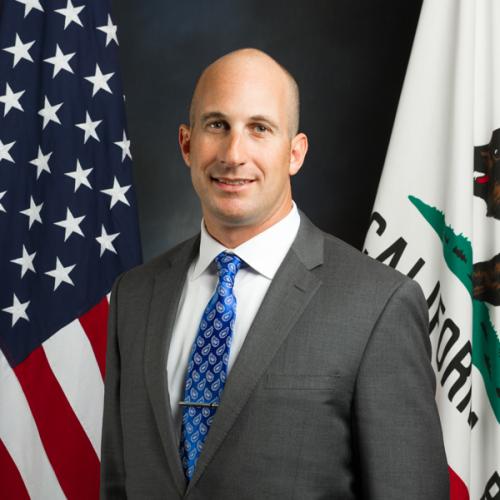
Photo of Heath Flora
R California Assembly · District 9 On the 2026 ballot

Asm. Heath Flora

Compare
Total votes
23,533
all sessions
Attendance
83%
3,189 missed
Lower than 85% of chamber peers
With party
98%
of cast votes
Near the chamber average
Bipartisan score
1%
crosses aisle rarely
Near the chamber average
Sponsored
1,713
bills & resolutions
Higher than 91% of chamber peers
Committees
1
assignment
1,713 bills and resolutions

Sponsored bills

Total
1,713
Primary
192
Co-sponsor
1,521
This page
1,713
matching current filters
Primary AB 1666
died · California Assembly · Lead sponsor
Nursing schools: religious exception.

The Nursing Practice Act provides for the licensure and regulation of nurses by the Board of Registered Nursing within the Department of Consumer Affairs. That act establishes an exception for schools conducted by religious institutions for the purpose of training the adherents of that religion in the care of the sick in accordance with its religious tenets. This bill would make a nonsubstantive change to that provision.

died Feb 1, 2024 0 co-sponsors
Primary AB 1009
died · California Assembly · Lead sponsor
Property taxation.

Existing law with respect to the collection of property taxes provides that any county department, officer, or employee may refrain from collecting any tax, assessment, penalty or cost, license fees, or money owing to the county where the amount to be collected is $20 or less. This bill would make nonsubstantive changes to that provision.

died Feb 1, 2024 0 co-sponsors
Primary AB 1363
died · California Assembly · Lead sponsor
Consumer protection.

Existing law establishes the Department of Financial Protection and Innovation within the Business, Consumer Services, and Housing Agency and places the department under the direction of the Commissioner of Financial Protection and Innovation. Under existing law, the department has charge of the execution of specified laws relating to various financial institutions and financial products and services. This bill would declare the intent of the Legislature to enact legislation relating to consumer financial protections, including protecting consumers from misleading advertising and unfair fees and costs for professional services.

died Feb 1, 2024 0 co-sponsors
Primary AB 1300
died · California Assembly · Lead sponsor
Health care service plans.

Existing law, the Knox-Keene Health Care Service Plan Act of 1975, provides for the licensure and regulation of health care service plans by the Department of Managed Health Care. Existing law charges the department with the execution of the laws of this state relating to health care service plans to ensure that health care service plans provide enrollees with access to quality health care services. This bill would make technical, nonsubstantive changes to those provisions.

died Feb 1, 2024 0 co-sponsors
Co-sponsor AB 290
Failed · California Assembly · Co-sponsor
Career technical education: California Career Technical Education Incentive Grant Program: Strong Workforce Program.

(1) Existing law establishes the California Career Technical Education Incentive Grant Program, administered by the State Department of Education, with the purpose of encouraging, maintaining, and strengthening the delivery of high-quality career technical education programs. Existing law provides, for the 2021–22 fiscal year and each fiscal year thereafter, that $300,000,000 shall be available to the department, upon appropriation by the Legislature, for the program. Existing law requires an applicant to demonstrate a proportional dollar-for-dollar match and sets that amount for the 2021–22 fiscal year, and each fiscal year thereafter, at $2 for every $1 received from the program. Existing law prohibits an applicant from being awarded an amount higher than the amount that the allocation formula determines them to be eligible to receive under the program. This bill instead would provide, for the 2024–25 fiscal year, and each fiscal year thereafter, that $450,000,000 shall be made available to the department upon appropriation by the Legislature, for the program. The bill would reduce the proportional match for the 2023–24 fiscal year, and each fiscal year thereafter, to $1 for regional occupational centers or programs operated by a joint powers authority or those operated by a county office of education, and to $1.50 for local educational agencies. The bill would delete the prohibition against an applicant being awarded more than the amount determined by the allocation formula. (2) Existing law requires grant applicants to meet minimum requirements, including, among other things, reporting to the Superintendent of Public Instruction data on the number of pupils completing career technical education coursework. This bill would require applicants to additionally report data on the number of pupils completing a career technical education pathway consisting of a sequence of 2 or more career technical education courses in the same career technical education subject matter discipline. (3) Existing law requires the Superintendent to take specified actions for purposes of administering the California Career Technical Education Incentive Grant Program. This bill would require the Superintendent to establish, in collaboration with the executive director of the State Board of Education, a stakeholder workgroup on or before January 31, 2024, to consider and provide recommendations on methods to simplify the allocation of funding under the program and maximize career technical education opportunities for pupils, as provided, and to report those recommendations to the policy and fiscal committees of the Legislature, the Department of Finance, and the Governor by July 1, 2024. The bill would require the Superintendent to ensure a level of professional staffing within the department that is dedicated to career technical education, sufficient to effectively administer the program and other federal and state career technical education programs, as specified. (4) Existing law requires the K–12 Workforce Pathway Coordinators and the K–14 Technical Assistance Providers to provide technical assistance and support to grant recipients, as provided. This bill would, commencing with the 2024–25 fiscal year, and each fiscal year thereafter, instead require $12,000,000 to be made available to the department, subject to an appropriation in the annual Budget Act or another statute, to provide regional career technical education coordinators for the provision of technical assistance and support to local educational agencies in implementing all of their career technical education courses, programs, and pathways, as provided. (5) Existing law establishes the California Community Colleges, under the administration of the Board of Governors of the California Community Colleges, as one of the segments of public postsecondary education in this state. Existing law establishes the Strong Workforce Program to provide funding to career technical education regional consortia made up of community college districts, as specified. Existing law also establishes a K–12 component of the Strong Workforce Program. Existing law provides that, commencing with the 2018–19 fiscal year, the amount appropriated in the annual Budget Act for the K–12 component of the program is used to create, support, or expand high-quality career technical education programs at the K–12 level that are aligned with the workforce development efforts occurring through the program. This bill would, as of July 1, 2024, repeal the K–12 component of the Strong Workforce Program and would require the administration of any outstanding allocations for the K–12 component of the Strong Workforce Program to be administered by the department pursuant to the California Career Technical Education Incentive Grant Program.


Failed Feb 1, 2024 1 co-sponsor
Primary AB 1629
died · California Assembly · Lead sponsor
Endangered species: locally designed voluntary programs.

Existing law requires the Department of Fish and Game, in cooperation with the Department of Food and Agriculture and specified persons, to adopt regulations that authorize locally designed voluntary programs for routine and ongoing agricultural activities on farms or ranches that encourage habitat for candidate, threatened, and endangered species, and wildlife generally. Existing law requires these authorized programs to, among other things, be supported by the best available scientific information for both agricultural and conservation practices. Existing law requires the department to, every 5 years, post a report regarding the effect of these programs on the department's internet website. Existing law authorizes the department to approve an application submitted by certain nonprofit organizations to initiate and undertake public education and outreach activities promoting specified objectives and requires a participating organization to file an annual report with the department containing certain information, including, among other things, information on a farm or ranch that has expressed interest in participating in a voluntary program, as provided. This bill would make nonsubstantive changes to the above-described provision.

died Feb 1, 2024 0 co-sponsors
Primary AB 989
died · California Assembly · Lead sponsor
Local government: ordinances.

Existing law authorizes any local agency to enact any ordinance that adopts a code by reference if the referenced code is specified in the title of the ordinance. Existing law requires that after the first reading of the title of the adopting ordinance, and of the title of the code to be adopted thereby, and of the title of the secondary codes therein adopted by reference, the legislative body shall make copies of the primary code and also copies of the secondary codes, if any, being considered for adoption, open to public inspection with the clerk of the legislative body. Existing law prohibits, however, the adoption by reference of any penalty clauses that may appear in any code that is adopted by reference; a penalty clause may be enacted only if set forth in full, and published, in the adopting ordinance. This bill would make nonsubstantive changes to the provision prohibiting adoption by reference of any penalty clause.

died Feb 1, 2024 0 co-sponsors
Primary AB 1010
died · California Assembly · Lead sponsor
Firearms.

Existing law generally prohibits the carrying of a concealed firearm, subject to specified exemptions. A violation of this prohibition is punishable either as a felony or misdemeanor, as specified. This bill would make a technical, nonsubstantive change to those provisions.

died Feb 1, 2024 0 co-sponsors
Co-sponsor SB 224
In committee · California Senate · Co-sponsor
Agricultural land: foreign ownership and interests: foreign governments.

Existing law provides that all property has an owner, whether that owner is the state, and the property is public, or the owner is an individual, and the property is private. Existing law, the California Emergency Services Act, establishes the Office of Emergency Services, which is responsible for the state's emergency and disaster response services for natural, technological, or man-made disasters and emergencies, among other duties. This bill would prohibit a foreign government from purchasing, acquiring, leasing, or holding a controlling interest, as defined, in agricultural land within the State of California. The bill would exempt land held by foreign governments before January 1, 2024, from that prohibition. The bill would provide that land transferred in violation of these provisions would be subject to divestiture, as specified. Existing federal law requires any foreign person, defined to include foreign governments, who acquires or transfers any interest, other than a security interest, in agricultural land to submit to the United States Secretary of Agriculture a report containing specified information relating to, among other things, the type of interest the foreign person acquired or transferred and their legal name, address, and citizenship or country in which they are created or organized. Existing federal law requires the secretary every 6 months to transmit to each state department of agriculture a copy of each report that was submitted to the secretary in the most recent 6-month period and that involved agricultural land located in that state. This bill would require the Office of Emergency Services, in consultation with the appropriate boards or departments and based on the above-described reports from the United States Secretary of Agriculture, and other information the office deems appropriate, to compile an annual report containing, among other information, the total amount of agricultural land that is under foreign ownership, how that land is currently being put to use, and any legislative, regulatory, or administrative policy recommendations in light of the information from the annual report. The bill would require the office to publish the inaugural annual report on its website by December 31, 2024, and by March 31 every year thereafter. The bill would require the office to deliver copies of any recommendations for legislative policy changes contained in the report to the Governor and the Assembly and Senate Committees on Agriculture. The bill would require the office to be reimbursed for costs incurred for compiling data, printing, and mailing the report, as specified. The bill would make its provisions operative upon appropriation by the Legislature. This bill would declare that it is to take effect immediately as an urgency statute.

In committee Feb 1, 2024 1 co-sponsor
Primary AB 1531
Failed · California Assembly · Lead sponsor
Electrified security fences: local ordinances.

Existing law authorizes an owner of real property to install and operate on their property an electrified security fence that meets specified requirements, including that the fence is used to protect and secure commercial, manufacturing, or industrial property, or property zoned under another designation, but legally authorized to be used for a commercial, manufacturing, or industrial purpose. Existing law prohibits an owner of real property from installing and operating an electrified security fence if a local ordinance prohibits that installation and operation. This bill would instead prohibit an owner of real property that is not commercial, manufacturing, or industrial property, or property zoned under another designation, but legally authorized to be used for those purposes, from installing and operating an electrified security fence if a local ordinance prohibits that installation and operation. The bill would authorize a local ordinance to prohibit the installation of an electrified security fence only if that fence fails to meet specified requirements. Existing law requires, if a local ordinance allows the installation and operation of an electrified security fence, that the installation and operation of the fence meets both the requirements of that ordinance and other specified requirements. This bill would remove that requirement. The bill, instead, would, for commercial, manufacturing, or industrial property, or property zoned under another designation, but legally authorized to be used for those purposes, that meets specified requirements, prohibit a city, county, or city and county from prohibiting the installation and operation of an electrified security fence or requiring a permit or approval that is in addition to an alarm system permit issued by the city, county, or city and county.

Failed Feb 1, 2024 0 co-sponsors
Showing 491 to 500 of 1,713 bills
Previous 1 … 49 50 51 … 172 Next