The Budget Act of 2022 made appropriations for the support of state government for the 2022–23 fiscal years. This bill would amend the Budget Act of 2022 by amending an item of appropriation relating to the Lockeford Community Services District. This bill would declare that it is to take effect immediately as a Budget Bill.
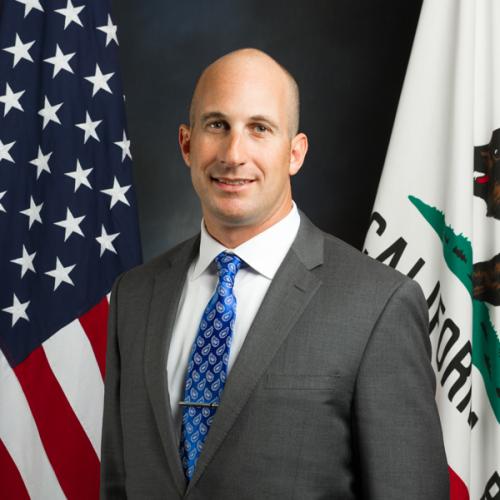
Asm. Heath Flora
Sponsored bills
This measure would urge the federal Office of Management and Budget to update its Uniform Guidance in order to improve job creation, quality, and equity.
This measure would recognize the month of January 2024 as National Human Trafficking Awareness Month.
This measure would designate, in perpetuity, the 4th week of January as Data Privacy Week and the last Sunday of January as Data Privacy Day.
Existing law regulates the terms and conditions of residential tenancies. Existing law requires the lessor of a building intended for human occupation to repair dilapidations, as specified, that render it untenantable. Existing law, with certain exceptions, does not impose this duty upon the landlord if the tenant is in substantial violation of specified affirmative obligations, or with regard to dilapidations relating to the presence of mold, as specified. This bill would prohibit a landlord from being liable for dilapidations rendering the premises untenantable, unless the landlord receives written or oral notice of the dilapidations and the landlord is given a reasonable time to repair the dilapidations. The bill would specify that if a landlord acts to repair the dilapidations within 30 days following the notice, it is presumed they acted within a reasonable time.
Under existing law, parties to actions or proceedings are entitled to their costs, as specified. Except to the extent attorney's fees are specifically provided for by statute, existing law requires the measure and mode of compensation of attorneys and counselors at law to be left to the agreement, express or implied, of the parties. Existing law provides for the award of costs, including attorney's fees, to successful defendants in certain cases where the court finds that the proceeding was not brought in good faith. This bill would require a court, whenever a defendant prevails in a civil action, to award reasonable attorney's fees to a prevailing defendant against the plaintiff upon a finding by the court that the plaintiff's prosecution of the action was not in good faith.
Existing law requires law enforcement agencies to either submit sexual assault forensic evidence received on or after January 1, 2016, to a crime lab within 20 days after it is booked into evidence or to ensure that a rapid turnaround deoxyribonucleic acid (DNA) program is in place, as specified. Existing law also requires a crime lab that receives sexual assault forensic evidence on or after January 1, 2016, to either process the evidence, create DNA profiles when able, and upload qualifying DNA profiles into the Combined DNA Index System, as specified, or transmit the sexual assault forensic evidence to another crime lab as soon as practically possible, but no later than 30 days after receiving the evidence, for processing of the evidence for the presence of DNA. This bill would require a law enforcement agency, for any sexual assault forensic evidence connected to a reported crime received by the law enforcement agency prior to January 1, 2016, to submit that evidence to the crime lab on or before January 31, 2025. The bill would additionally require a crime lab, for any sexual assault evidence kit received by a law enforcement agency prior to January 1, 2016, and submitted to the crime lab on or after January 1, 2024, to process that evidence kit no later than January 31, 2026. Because the bill would impose a higher level of service on local law enforcement agencies in processing that evidence, it would impose a state-mandated local program. The California Constitution requires the state to reimburse local agencies and school districts for certain costs mandated by the state. Statutory provisions establish procedures for making that reimbursement. This bill would provide that, if the Commission on State Mandates determines that the bill contains costs mandated by the state, reimbursement for those costs shall be made pursuant to the statutory provisions noted above.

Existing law provides that all property has an owner, whether that owner is the state, and the property is public, or the owner is an individual, and the property is private. Existing law establishes the California National Guard and regulates the operation of that force. The United States Constitution authorizes Congress to provide for the common defense and general welfare of the United States. This bill would prohibit a prohibited foreign actor, as defined, from purchasing, acquiring, leasing, or holding an interest, as defined, in any land that is located within 50 miles of a United States military base or California National Guard base within the State of California. The bill would exempt land held by a prohibited foreign actor before January 1, 2024, from that prohibition. The bill would provide land transferred in violation of these provisions would be subject to divestiture, as specified. The bill would provide that these provisions may not be applied in a manner inconsistent with any provision of any treaty between the United States and another country.