This measure would declare May 23, 2024, as GM1 Gangliosidosis Awareness Day in California.
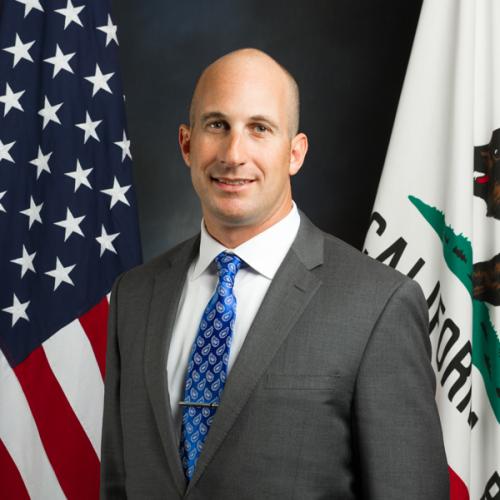
Asm. Heath Flora
Sponsored bills
Existing law authorizes the limit line, intersection, or other places where a driver is required to stop to be equipped with an automated traffic enforcement system if the governmental agency utilizing the system meets certain requirements, including, among other things, that the system is visible to traffic approaching from all directions in which the automated traffic enforcement system is being utilized to issue citations. Existing law requires a local jurisdiction utilizing an automated traffic enforcement system to commence a program to issue only warning notices for 30 days before issuing citations. Existing law authorizes only a governmental agency to operate an automated enforcement system. This bill would, until January 1, 2030, authorize a city or city and county to establish an automated traffic enforcement system for a period of 5 years if, among other things, the system meets the criteria specified above. The bill would require a violation of any traffic law that is recorded by an automated traffic enforcement system to be subject only to a civil penalty, and would prohibit the Department of Motor Vehicles from suspending or revoking the privilege of a violator to drive a motor vehicle. The bill would require a notice of violation to be in writing and issued to the registered owner of the vehicle within 15 calendar days of the date of the violation.
This measure would proclaim March 2024 as American Red Cross Month and would dedicate it to all those who continue to advance the noble legacy of the organization's founder. The measure would encourage all Californians to reach out, support the organization's humanitarian mission, and join in their commitment to care for people in need.
This measure would proclaim March 4, 2024, to March 8, 2024, inclusive, as School Breakfast Week.
This measure would declare 2024 as the year to Coexist with Wildlife, California.
Existing sales and use tax laws impose taxes on retailers measured by the gross receipts from the sale of tangible personal property sold at retail in this state, or on the storage, use, or other consumption in this state of tangible personal property purchased from a retailer for storage, use, or other consumption in this state, and provides various exemptions from the taxes imposed by those laws. This bill, on and after January 1, 2025, and before January 1, 2030, would exempt from those taxes the gross receipts from the sale of, and the storage, use, or other consumption of, qualified school supplies, as defined, purchased during the first weekend in August, beginning at 12:01 a.m. on Saturday and ending at 11:59 p.m. on Sunday. Existing law requires any bill authorizing a new tax expenditure to contain, among other things, specific goals that the tax expenditure will achieve, detailed performance indicators, and data collection requirements. This bill would include additional information required for any bill authorizing a new tax expenditure. The Bradley-Burns Uniform Local Sales and Use Tax Law authorizes counties and cities to impose local sales and use taxes in conformity with the Sales and Use Tax Law, and existing laws authorize districts, as specified, to impose transactions and use taxes in accordance with the Transactions and Use Tax Law, which generally conforms to the Sales and Use Tax Law. Amendments to the Sales and Use Tax Law are automatically incorporated into the local tax laws. Existing law requires the state to reimburse counties and cities for revenue losses caused by the enactment of sales and use tax exemptions. This bill would provide that, notwithstanding Section 2230 of the Revenue and Taxation Code, no appropriation is made and the state shall not reimburse any local agencies for sales and use tax revenues lost by them pursuant to this bill. This bill would take effect immediately as a tax levy.

Existing law establishes requirements that apply when a public entity is required by statute or regulation to obtain an enforceable commitment that a bidder, contractor, or other entity will use a skilled and trained workforce to complete a contract or project. This bill would exempt from these requirements a contractor or subcontractor that is subject to a valid collective bargaining agreement requiring participation in a state-approved apprenticeship program provided that the contractor or subcontractor performs only work within the scope of that agreement and provides a declaration verifying the existence of that agreement. The bill would make its provisions severable. By expanding the crime of perjury, this bill would impose a state-mandated local program. The California Constitution requires the state to reimburse local agencies and school districts for certain costs mandated by the state. Statutory provisions establish procedures for making that reimbursement. This bill would provide that no reimbursement is required by this act for a specified reason.
This measure would proclaim February 22, 2024, as Introduce a Girl to Engineering Day.