

Existing law establishes, under the Medi-Cal program, certain time and distance standards for specified Medi-Cal managed care covered services, consistent with federal regulations relating to network adequacy standards, to ensure that those services, including certain specialty care, are available and accessible to enrollees of Medi-Cal managed care plans in a timely manner. Existing law sets forth other timely access requirements for health care service plans and health insurers, including with regard to referrals to a specialist. Existing law establishes various health professions development programs, within the Department of Health Care Access and Information, for the promotion of education, training, and recruitment of health professionals to address workforce shortage and distribution needs. Existing law sets forth various provisions for the authorized use of telehealth in the delivery of health care services. This bill would, subject to an appropriation, require the California Health and Human Services Agency, in collaboration with the Department of Health Care Access and Information and the State Department of Health Care Services, to establish a demonstration project for a grant program. Under the bill, the grant program would be aimed at facilitating a telehealth and other virtual services specialty care network or networks that are designed to serve patients of safety-net providers consisting of qualifying providers, as defined. Under the bill, the purpose of the demonstration project would be to improve access to specialty care for Medi-Cal beneficiaries through development of a financially sustainable specialty care network or networks that are focused on serving the needs of the health care safety net. The bill would authorize the focus of the project to include increasing access to behavioral and maternal health services and additional specialties prioritized by the agency. The bill would state the intent of the Legislature that implementation of the demonstration project would facilitate compliance with any applicable network adequacy standards. The bill would require the agency to administer the grant program to award grant funds to one or more grantees based on an application process and by meeting specified conditions. The bill would require a grantee to use the funds to develop a network or networks by, among other things, providing health information technology and technical assistance to support both the specialists and any primary care provider care coordination, referral, or electronic consultations. The bill would require the agency to arrange an independent evaluation of the demonstration project. The bill would require the evaluation to examine the extent to which the project was successful in achieving certain objectives, including, among others, reducing structural barriers to access experienced by patients. The bill would require a grantee to report data and information to allow for monitoring and evaluation of the project. The bill would require the agency to ensure that lessons learned, recommendations, and best practices from the project are publicly disseminated to inform the development of a telehealth and specialty care network or networks to serve the needs of the health care safety net.
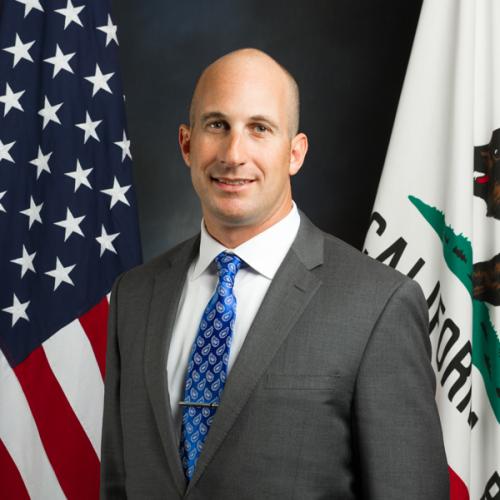
Asm. Heath Flora
Sponsored bills
Existing law requires, upon the immediate approach of an authorized emergency vehicle that is sounding a siren and has a lighted lamp exhibiting red light, that a driver of a vehicle yield the right-of-way to the emergency vehicle, that the operator of a street car immediately stop the street car, and that all pedestrians proceed to the nearest curb or place of safety and remain there until the authorized emergency vehicle has passed. Existing law makes a violation of that provision an infraction, punishable by specified fines. This bill would prohibit a person driving a vehicle upon a highway or a pedestrian from willfully obstructing a highway, including in the course of a protest, in any manner that interferes with the ability of an authorized emergency vehicle to pass and would make a violation of this provision punishable by specified fines. By creating a new crime, this bill would impose a state-mandated local program. The California Constitution requires the state to reimburse local agencies and school districts for certain costs mandated by the state. Statutory provisions establish procedures for making that reimbursement. This bill would provide that no reimbursement is required by this act for a specified reason.
This measure would proclaim the week of April 14, 2024 to April 20, 2024, to be Cities Week, and would encourage all Californians to be involved in their communities and be civically engaged with their local government.
This measure would join Asian and Pacific Islander communities throughout the state, nation, and world in celebrating April 13, 2024, to April 15, 2024, as the Songkran New Year Festival.
Maddy summaryThis bill is a House Resolution that formally recognizes May 2024 as Asian and Pacific Islander American Heritage Month in California. It directly affects the state legislature and the broader public by establishing an official period to honor the history and contributions of Asian and Pacific Islander communities. The resolution highlights the diverse backgrounds of these populations, their significant roles in California's development, and their ongoing achievements in various fields. By adopting this measure, the Assembly commends these communities for their accomplishments and acknowledges the hardships they have faced throughout history.
This measure would proclaim the week of April 7 through April 13, 2024, as Adult Education Week, and would salute the teachers, administrators, classified staff, and students of adult education programs statewide, honoring their efforts, persistence, and accomplishments.
This measure would designate the week of April 14, 2024, to April 20, 2024, inclusive, as Family Physician Week.