This measure would designate May 29, 2018, as 529 College Savings Day, to raise awareness about the importance of saving for college with the help of 529 college savings plans.
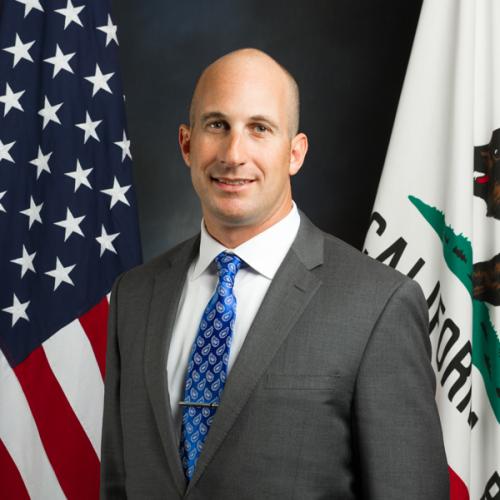
Asm. Heath Flora
Sponsored bills
This measure would recognize May 2018 as Blue Star Mothers of America Month in California, as specified.
This measure would recognize May 2018 as National Mental Health Awareness Month in California to enhance public awareness of mental illness.
The Personal Income Tax Law authorizes various credits against the taxes imposed by that law. This bill would authorize a credit against that tax for each taxable year beginning on and after January 1, 2019, and before January 1, 2024, in an amount equal to 35% or 80% of the amount paid or incurred by a qualified firefighter during the taxable year for qualified firefighter expenses, as defined, and would limit the amount of the credit allowed to a taxpayer for each taxable year to $1,500. This bill would take effect immediately as a tax levy.
The Personal Income Tax Law excludes from the gross income of an employee amounts paid or incurred by an employer for educational assistance to the employee, as specified, up to $5,250 during a calendar year. This bill would exclude from the gross income of an employee amounts, not exceeding an aggregate amount of $5,250 per year, that are paid or incurred by an employer on and after January 1, 2018, and before January 1, 2023, for the payment of principal or interest on a qualified education loan, as defined, incurred by the employee. This bill would take effect immediately as a tax levy.
Existing property tax law, pursuant to the authorization of the California Constitution, provides a disabled veteran's property tax exemption for the principal place of residence of a veteran, the veteran's spouse, or the veteran and veteran's spouse jointly, and the unmarried surviving spouse of a veteran, as provided, if the veteran, is blind in both eyes, has lost the use of 2 or more limbs, or is totally disabled as a result of injury or disease incurred in military, or if the veteran has, as a result of a service-connected injury or disease, died while on active duty in military service. Existing law exempts that part of the full value of the residence that does not exceed $100,000, or $150,000, if the household income of the veteran or the unmarried surviving spouse of a veteran does not exceed $40,000, adjusted for inflation, as specified. This bill, beginning with the 2019–20 fiscal year and for each fiscal year thereafter, would instead exempt the full value of the principal place of residence of a veteran or veteran's spouse and the unmarried surviving spouse of a veteran. Existing law requires the state to reimburse local agencies annually for certain property tax revenues lost as a result of any exemption or classification of property for purposes of ad valorem property taxation. This bill would provide that, notwithstanding those provisions, no appropriation is made and the state shall not reimburse local agencies for property tax revenues lost by them pursuant to the bill. This bill would take effect immediately as a tax levy.
Existing law establishes the Department of Veterans Affairs, which is responsible for administering various programs and services for the benefit of veterans. Existing law provides for the licensure of residential care facilities for the elderly, community care facilities, and residential care facilities for persons with chronic, life-threatening illness by the State Department of Social Services. Existing law exempts from the application of these provisions specified facilities, including general acute care hospitals and clinics. Existing law authorizes the California State Auditor, upon the request by the Joint Legislative Audit Committee and to the extent funding is available, to audit a state or local governmental agency, as defined, or any other publicly created entity. Existing law, Chapter 650 of the Statutes of 2014, established the Medical Foster Home Pilot Program from June 1, 2015, until January 1, 2018, which authorized a United States Department of Veterans Affairs (USDVA) facility to establish a medical foster home that is not subject to licensure or regulation as a residential care facility for the elderly, a community care facility, or a residential care facility for persons with chronic, life-threatening illness, pursuant to specified federal requirements. Existing law required the USDVA facility establishing the home to agree to be subject to the jurisdiction of the California State Auditor, and further required the USDVA to obtain criminal background information for caregivers and specified individuals residing in the home. This bill would reestablish the Medical Foster Home Pilot Program, until January 1, 2022, under substantially similar requirements as the previous pilot program. The bill would state the intent of the Legislature that the California State Auditor, through a request to the Joint Legislative Audit Committee, conduct an audit evaluating the pilot program created by this bill no sooner than January 1, 2020, as specified. The bill additionally would require medical foster home caregivers and individuals, other than veteran residents, over 18 years of age and who reside in the medical foster home to register as independent home care aides, under existing provisions, including a background examination, as specified. An applicant for registration as an independent home care aide is required to submit to the State Department of Social Services a signed declaration, under penalty of perjury, regarding any prior criminal convictions. By requiring additional individuals to register as independent home care aides, the bill would expand the scope of the crime of perjury, thereby imposing a state-mandated local program. The California Constitution requires the state to reimburse local agencies and school districts for certain costs mandated by the state. Statutory provisions establish procedures for making that reimbursement. This bill would provide that no reimbursement is required by this act for a specified reason.

Existing law authorizes the governing board of a school district to establish a security department under the supervision of a chief of security as designated by, and under the direction of, the superintendent of the school district. Existing law also authorizes the governing board of a school district to establish a school police department under the supervision of a school chief of police and to employ peace officers. This bill would require a school district or a charter school to hire or contract with at least one armed school resource officer, as defined, authorized to carry a loaded firearm, to be present at each school of the school district or charter school during regular school hours and any other time when pupils are present on campus. By imposing an additional requirement on school districts and charter schools, the bill would impose a state-mandated local program. The bill would provide that a school district's or charter school's costs of implementing this requirement shall be reimbursed as a state mandate and shall not be funded with the funding provided to school districts and charter schools pursuant to the local control funding formula. The California Constitution requires the state to reimburse local agencies and school districts for certain costs mandated by the state. Statutory provisions establish procedures for making that reimbursement. This bill would provide that, if the Commission on State Mandates determines that the bill contains costs mandated by the state, reimbursement for those costs shall be made pursuant to the statutory provisions noted above.