

Passed Aug 13, 2018
1 co-sponsor
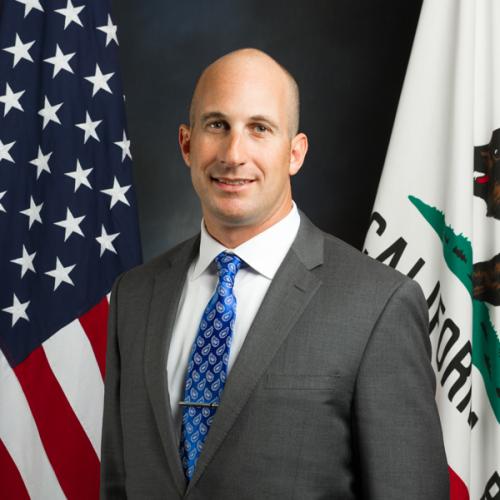
Asm. Heath Flora
Total votes
23,533
all sessions
Attendance
83%
3,189 missed
Lower than 85% of chamber peers
With party
98%
of cast votes
Near the chamber average
Bipartisan score
1%
crosses aisle rarely
Near the chamber average
Sponsored
1,713
bills & resolutions
Higher than 91% of chamber peers
Committees
1
assignment
1,713 bills and resolutions
Sponsored bills
Total
1,713
Primary
192
Co-sponsor
1,521
This page
1,713
matching current filters
Passed Aug 13, 2018
1 co-sponsor
Relative to the Eagle Staff.
This measure would recognize the history and significance of the Eagle Staff to Native American tribes. The measure would express the Legislature's commitment to inclusiveness for all Native Americans and respect for the traditions and symbolism of the Eagle Staff and would urge state government departments to incorporate these principles into their policies and practices.
Signed into law Aug 10, 2018
1 co-sponsor
Relative to California Grown Flower Month.
This measure would proclaim June 2018 as California Grown Flower Month to recognize and honor the people of the California grown flower industry for their dedication and productivity.
Signed into law Aug 9, 2018
1 co-sponsor
Passed Aug 9, 2018
1 co-sponsor
Relative to the 68th anniversary of the Korean War.
This measure would, among other things, mark June 25, 2018, as the 68th anniversary of the Korean War and encourage participants in specified discussions regarding North and South Korea to have a sincere intention of achieving peace in the region.
Passed Aug 6, 2018
1 co-sponsor
Bicycle operation.
Existing law regulates the operation of bicycles and pedicabs. Existing law defines a Class I bikeway as a bike path or shared use path that provides a completely separated right-of-way designated for the exclusive use of bicycles and pedestrians. Under existing law, a person riding a bicycle or operating a pedicab on a highway has all the rights prescribed in, and is subject to the requirements in, the Vehicle Code that are applicable to the driver of a vehicle. This bill would subject a person riding a bicycle on a Class I bikeway to those rights and requirements of the Vehicle Code that apply if that person is involved in an accident resulting in injury or death of a person other than himself or herself, as specified. Because a violation of those provisions of the Vehicle Code by that person would be a crime, this bill would impose a state-mandated local program. The California Constitution requires the state to reimburse local agencies and school districts for certain costs mandated by the state. Statutory provisions establish procedures for making that reimbursement. This bill would provide that no reimbursement is required by this act for a specified reason.
Signed into law Jul 20, 2018
1 co-sponsor
Vital records: local registrar: copy of records.
Existing law prescribes the duties of the State Registrar of Vital Statistics (State Registrar) and local registrars of births and deaths with respect to the registration of certificates of live birth, fetal death, or death, and marriage licenses. Existing law requires each local registrar of births and deaths to transmit to the county recorder, for a special county record, a copy of each original birth certificate and death certificate, and send the original certificates to the State Registrar. In lieu of that procedure, existing law instead authorizes the county recorder to make the copies of certificates for the special county record, requires the local registrar to transmit the original certificates to the county recorder for this purpose, and requires the county recorder to forward the original certificates to the State Registrar. Existing law exempts a local registrar from the application of these provisions if it serves a countywide health jurisdiction of over 550,000 population, as determined by the 1950 census. This bill would revise and recast that provision and would instead require each local registrar of births and deaths to transmit a copy of each original birth certificate and death certificate to the county recorder for the special county record, and, at the same time, forward the original certificates to the State Registrar. The bill would delete the exemption for the local registrar described above. To the extent that the bill imposes new duties on local entities, the bill would create a state-mandated local program. Existing law authorizes a local registrar of births and deaths, after one year from the date of registration and with the approval of, and under the supervision of, the State Registrar, to dispose of the local registrar's copies of the records if the original copies of the records are on file in the office of the State Registrar and copies of the records are on file in the office of the county recorder. Existing law authorizes the county recorder to accept the local registrar's copies as a special county record of events. This bill would instead require the disposal of those records after 2 years from the date of registration. By adding to the duties of local entities, the bill would impose a state-mandated local program. The bill would authorize the county recorder to instead accept the State Registrar's copies as a special county record of events. Existing law authorizes the amendment of a certificate of birth, death, fetal death, or marriage, as prescribed. Existing law requires the State Registrar, if an amendment is accepted by the State Registrar, to transmit copies of the amendment to the local registrar and county recorder in whose offices copies of the original record and information are on file. This bill would eliminate the requirement that the State Registrar transmit copies of an amendment to the local registrar unless the amendment is made within 2 years of the registration of the original record. The California Constitution requires the state to reimburse local agencies and school districts for certain costs mandated by the state. Statutory provisions establish procedures for making that reimbursement. This bill would provide that, if the Commission on State Mandates determines that the bill contains costs mandated by the state, reimbursement for those costs shall be made pursuant to the statutory provisions noted above.
Signed into law Jul 20, 2018
0 co-sponsors
Transportation Development Act: County of Stanislaus.
(1) Existing law authorizes transportation planning agencies to administer transit funding made available under the Transportation Development Act. Existing law imposes certain financial requirements on transit operators making claims for transit funds, including requirements that fare revenue collected by the operator cover a specified percentage of operating costs. In certain cases, transit operators are required to meet a higher percentage if they met that standard in the 1978–79 fiscal year. This bill would authorize the Stanislaus Council of Governments, a transportation planning agency, when determining if specified operators have met the requirements for claims for transit funds for the 2018–19 and the 2019–20 fiscal years, to reduce the applicable ratio of fare revenues to operating cost for specified operators by up to 5 percentage points from the ratio that was effective during the 2015–16 fiscal year. If the Stanislaus Council of Governments acts pursuant to this authorization, the bill would require it, before January 1, 2020, to submit a report to the transportation policy committee of each house of the Legislature and to the Department of Transportation analyzing the options for organizing and supporting transit service in the county, as specified. (2) This bill would make legislative findings and declarations as to the necessity of a special statute for the County of Stanislaus. (3) This bill would declare that it is to take effect immediately as an urgency statute. (4) This bill would make these provisions inoperative on July 1, 2020, and would repeal them as of January 1, 2021.
Signed into law Jul 16, 2018
1 co-sponsor
Relative to Philippine Independence Day.
This measure would recognize June 12, 2018, as the 120th Anniversary of Philippine Independence and would call upon the people of the state to observe the month of June with appropriate ceremonies, programs, and activities.
Signed into law Jul 10, 2018
1 co-sponsor
Ask Maddy
·
AI policy assistant
Ask Maddy about Heath Flora
Scope: california
Hi! I can help you understand Heath Flora's legislative record. What would you like to know?
Try one of these
i
Maddy answers using official bill text and legislative records. Always verify before sharing.
Sources cited inline