

Existing law establishes various programs, including, among others, the Emergency Housing and Assistance Program, to provide assistance to homeless persons. Existing law requires a state agency or department that funds, implements, or administers a state program that provides housing or housing-related services to people experiencing homelessness or at risk of homelessness, except as specified, to revise or adopt guidelines and regulations to include enumerated Housing First policies. Existing law establishes the Homeless Coordinating and Financing Council to oversee the implementation of the Housing First guidelines and regulations and, among other things, to identify resources, benefits, and services that can be accessed to prevent and end homelessness in California. This bill would require the Homeless Coordinating and Financing Council, by July 1, 2021, to develop and implement a statewide strategic plan for addressing homelessness in the state, as specified. The bill would require the council, by January 1, 2021, to implement strategic plans to assist federal Housing and Urban Development Continuum of Care lead agencies in better implementing Housing and Urban Development recommended activities and meeting Housing and Urban Development requirements.
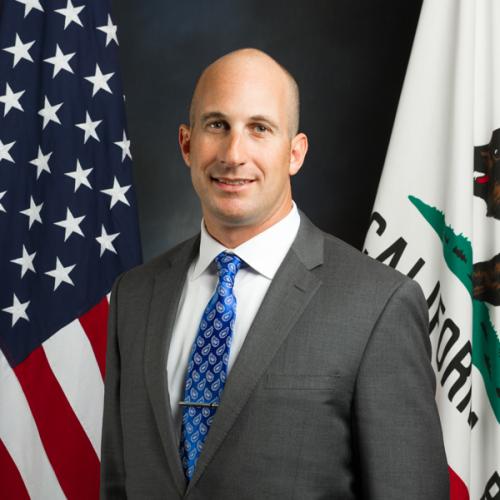
Asm. Heath Flora
Sponsored bills
Existing law establishes the Medi-Cal program, which is administered by the State Department of Health Care Services and under which qualified low-income individuals receive health care services. The Medi-Cal program is, in part, governed and funded by federal Medicaid program provisions. Existing federal law authorizes a state to provide in its Medicaid state plan that in determining eligibility under the federal Medicaid program for a child, the state is authorized to rely on a finding made within a reasonable period from an Express Lane agency, as defined, when it determines whether a child satisfies one or more components of eligibility for medical assistance under the federal Medicaid program. Existing law establishes the California Special Supplemental Nutrition Program for Women, Infants, and Children (WIC Program) , which is administered by the State Department of Public Health and counties and under which nutrition and other assistance are provided to eligible low-income pregnant women, low-income postpartum and lactating women, and low-income infants and children under 5 years of age, who have been determined to be at nutritional risk. Existing law requires the former Managed Risk Medical Insurance Board and former State Department of Health Services, in collaboration with program offices for the WIC Program and other designated entities, to design, promulgate, and implement policies and procedures for an automated enrollment gateway system, subject to appropriation, allowing children applying to the WIC Program to obtain presumptive eligibility for, and to facilitate application for enrollment in, the Medi-Cal program or the former Healthy Families Program, to the extent federal financial participation is available, as specified. This bill would delete the above-described provisions relating to the automated enrollment gateway system and would instead require the State Department of Health Care Services, in collaboration with the same designated entities, to design, promulgate, and implement policies and procedures for an automated enrollment pathway, designating the WIC Program and its local WIC agencies as Express Lane agencies and using WIC eligibility determinations to meet Medi-Cal eligibility requirements. The bill would require the pathway to perform specified functions to streamline Medi-Cal enrollment and maximize health care coverage. The bill would require that benefits for applicants enrolling in the Medi-Cal program using the pathway be provided immediately through accelerated enrollment for children and presumptive eligibility for pregnant women. The bill would also require the pathway to modify the existing WIC enrollment system and Medi-Cal eligibility and enrollment systems to electronically transfer to the WIC Program the Medi-Cal eligibility determinations and contact information of Medi-Cal enrollees who are eligible for the WIC Program for the purpose of local WIC agencies contacting prospective WIC enrollees to complete their enrollment in the WIC Program. The bill would, while the automated enrollment pathway is being developed, require the department, in coordination with the WIC Program and local WIC agencies to, among other things, conduct regular data matches to identify which WIC recipients are not enrolled in the Medi-Cal program and which Medi-Cal beneficiaries are eligible for, but not enrolled in, the WIC Program, and to provide specified notices about program eligibility to those persons. The bill would require the department to seek approval of any amendments to the state plan necessary to implement these provisions, and would condition their implementation on the department obtaining all necessary federal approvals. The bill would also require the department to complete the project approval lifecycle process, as specified, for the automated enrollment pathway prior to implementing these provisions. Because counties are responsible for making eligibility determinations under the Medi-Cal program, by revising eligibility requirements, this bill would impose a state-mandated local program. The California Constitution requires the state to reimburse local agencies and school districts for certain costs mandated by the state. Statutory provisions establish procedures for making that reimbursement. This bill would provide that, if the Commission on State Mandates determines that the bill contains costs mandated by the state, reimbursement for those costs shall be made pursuant to the statutory provisions noted above.
Existing law makes it a misdemeanor to import into the state for commercial purposes, to possess with intent to sell, or to sell within the state, the dead body, or a part or product thereof, of a polar bear, leopard, ocelot, tiger, cheetah, jaguar, sable antelope, wolf, zebra, whale, cobra, python, sea turtle, colobus monkey, kangaroo, vicuna, sea otter, free-roaming feral horse, dolphin, porpoise, Spanish lynx, or elephant. Existing law, commencing January 1, 2020, makes it a misdemeanor to import into the state for commercial purposes, to possess with intent to sell, or to sell within the state, the dead body, or a part or product thereof, of a crocodile or alligator. This bill would require manufacturers of products that use the hides of crocodiles or alligators, after consultation with the Department of Fish and Wildlife, to submit to the Director of Fish and Wildlife proposals for technologies or processes that allow for the tracking or tracing of the source of origin of crocodile or alligator hides used to manufacture products sold in this state and require humane treatment of farmed crocodiles and alligators, as well as humane slaughtering techniques. The bill would require the director, on or before March 30, 2021, to approve technologies or processes that meet those requirements. This bill would make it a misdemeanor, on or after March 30, 2022, to import into this state for commercial purposes, to possess with intent to sell, or to sell within the state, the dead body, or any part or product thereof, of a crocodile or alligator unless the part or product has been tracked using the established technology or process. The bill, if the director determines that a technology or process has not been submitted that meets the requirements, would make it a misdemeanor to import into this state for commercial purposes, to possess with intent to sell, or to sell within the state, the dead body, or any part or product thereof, of a crocodile or alligator for purposes other than medical research, specialized pet food, or human consumption after January 1, 2021, or the date of the director's determination and would also make it a misdemeanor to import into this state for commercial purposes, to possess with intent to sell, or to sell within the state, the dead body, or any part or product thereof, of a crocodile or alligator for purposes of medical research, specialized pet food, or human consumption on or after January 1, 2022. By changing the definition of a crime, this bill would impose a state-mandated local program. The California Constitution requires the state to reimburse local agencies and school districts for certain costs mandated by the state. Statutory provisions establish procedures for making that reimbursement. This bill would provide that no reimbursement is required by this act for a specified reason.
(1) Existing law generally requires the State Department of Social Services to license and regulate designated types of care facilities. The department is required to investigate the criminal record of certain individuals who provide services to the residents and clients of a community care facility, a residential care facility for persons with chronic life-threatening illness, a residential care facility for the elderly, or a child daycare facility. Violations of the licensing requirements for these different types of care facilities are crimes. This bill would expand who is required to comply with the requirement for obtaining a criminal record clearance by including individuals who are otherwise associated at the facility and would expand a requirement for the department to maintain criminal record clearances of individuals in its active files. The bill would require, until an automated information system for tracking changes in facility associations is available, the department to permit a licensee who operates more than one of the same kind of care facility to coordinate the criminal record clearances for individuals associated with its facilities, and a licensee to update the department regarding individuals associated with its facilities, as specified. By expanding the requirements for these different licensees, this bill would expand the crimes for a failure to comply with those requirements, thereby imposing a state-mandated local program. This bill would also make technical, nonsubstantive changes to these provisions. (2) The California Constitution requires the state to reimburse local agencies and school districts for certain costs mandated by the state. Statutory provisions establish procedures for making that reimbursement. This bill would provide that no reimbursement is required by this act for a specified reason.
Existing property tax law establishes a veterans' organization exemption under which property is exempt from taxation if, among other things, that property is used exclusively for charitable purposes and is owned by a veterans' organization. This bill would provide that the veterans' organization exemption shall not be denied to a property on the basis that the property is used for fraternal, lodge, or social club purposes, and would make specific findings and declarations in that regard. The bill would also provide that the exemption shall not apply to any portion of a property that consists of a bar where alcoholic beverages are served. The bill would apply these changes to lien dates occurring on and after January 1, 2020, and before January 1, 2030. Existing law requires the state to reimburse local agencies annually for certain property tax revenues lost as a result of any exemption or classification of property for purposes of ad valorem property taxation. This bill would provide that, notwithstanding those provisions, no appropriation is made and the state shall not reimburse local agencies for property tax revenues lost by them pursuant to the bill. This bill would take effect immediately as a tax levy.
(1) Existing law, the Alcoholic Beverage Control Act, which is administered by the Department of Alcoholic Beverage Control, regulates the application, issuance, and suspension of alcoholic beverage licenses. Existing law defines a licensed branch office with reference to certain winegrower and brandy manufacturer facilities for which a duplicate license has been issued. Existing law prohibits a winegrower or brandy manufacturer from selling wine or brandy to consumers, or engaging in winetasting activities, at more than one licensed branch premise. Existing law limits the effect of this prohibition in connection with other premises, as specified. Existing law generally provides that a violation of the Alcoholic Beverage Control Act is a misdemeanor. This bill would revise the prohibition described above to allow a winegrower or brandy manufacturer to sell wine or brandy to consumers, or to engage in winetasting activities, at up to 2 licensed branch premises. By broadening the definition of a crime, this bill would impose a state-mandated local program. (2) The California Constitution requires the state to reimburse local agencies and school districts for certain costs mandated by the state. Statutory provisions establish procedures for making that reimbursement. This bill would provide that no reimbursement is required by this act for a specified reason.
Existing law establishes the Carl Moyer Memorial Air Quality Standards Attainment Program, which is administered by the State Air Resources Board. The program authorizes the state board to provide grants to offset the incremental cost of eligible projects that reduce emissions from covered vehicular sources. The program also authorizes funding for a fueling infrastructure demonstration program and for technology development efforts that are expected to result in commercially available technologies in the near-term that would improve the ability of the program to achieve its goals. This bill, until January 1, 2023, would add as an eligible project under the program a used heavy-duty truck exchange, as specified. The bill would require, on or before December 31, 2020, that the state board hold a public workshop on the heavy-duty truck exchange and develop a plan to help air pollution control and air quality management districts add a heavy-duty truck exchange as an eligible project under the program.
Existing law establishes a public school financing system that requires state funding for county superintendents of schools, school districts, and charter schools to be calculated pursuant to a local control funding formula. Existing law requires the Superintendent of Public Instruction to determine the amount of funding to be provided for each special education local plan area in accordance with specified calculations. Existing law requires the Superintendent, for the 2013–14 fiscal year, to compute an equalization adjustment for each special education local plan area for purposes of increasing the funding rates for special education local plan areas with funding rates below the 90th percentile, as specified. This bill would increase that percentile to the 95th percentile and would require the Superintendent to compute that equalization adjustment commencing with the first fiscal year after funds are apportioned pursuant to a specified formula and for each fiscal year thereafter in which an equalization appropriation is made, as specified. The bill would require the Superintendent to make certain computations following each year in which an equalization appropriation is made. The bill would establish the high-cost service allowance for the purpose of providing supplemental funding to a special education local plan area on the basis of the number of pupils who are severely disabled and the number pupils with both deafness and blindness, traumatic brain injury, or multiple disabilities, and would require the Superintendent to make specified computations that would determine the high-cost service allowance for each special education local plan area. The bill would require, commencing with the first fiscal year after funds are apportioned pursuant to a specified formula, a special education local plan area that reports serving children 3 or 4 years of age who meet the definition of an "individual with exceptional needs" to count 3 times all units of average daily attendance generated by children enrolled in kindergarten less those children eligible for transitional kindergarten, for purposes of calculating units of average daily attendance, except as provided. By adding to the duties of special education local plan areas, the bill would impose a state-mandated local program. Existing law defines "average daily attendance reported for the special education local plan area" for purposes of these and other provisions to mean the total number of units of average daily attendance reported in the school district or districts and in the county office of education or county offices of education, or portion of a county office of education that is a part of more than one special education local plan area, as specified. The bill would revise that definition to mean the total number of units of average daily attendance reported for the current school year or the prior school year, whichever is greater, in those same entities, as specified. The California Constitution requires the state to reimburse local agencies and school districts for certain costs mandated by the state. Statutory provisions establish procedures for making that reimbursement. This bill would provide that, if the Commission on State Mandates determines that the bill contains costs mandated by the state, reimbursement for those costs shall be made pursuant to the statutory provisions noted above.
This measure would recognize June 12, 2019, as the 121st Anniversary of Philippine Independence and would call upon the people of the state to observe the month of June with appropriate ceremonies, programs, and activities.