

Existing law, the Firefighters Procedural Bill of Rights Act, grants certain employment rights to firefighters, as defined. Among other things, the act requires that, when a firefighter is under investigation and is interrogated by the firefighter's commanding officer, or another member of the employing agency, on matters that could lead to punitive action, the interrogation be conducted pursuant to certain requirements. Existing law defines "punitive action" for these purposes as any action that may lead to dismissal, demotion, suspension, reduction in salary, written reprimand, or transfer for purposes of punishment. This bill would include in the definition of "firefighter" a temporary, seasonal firefighter employed by the Department of Forestry and Fire Protection.
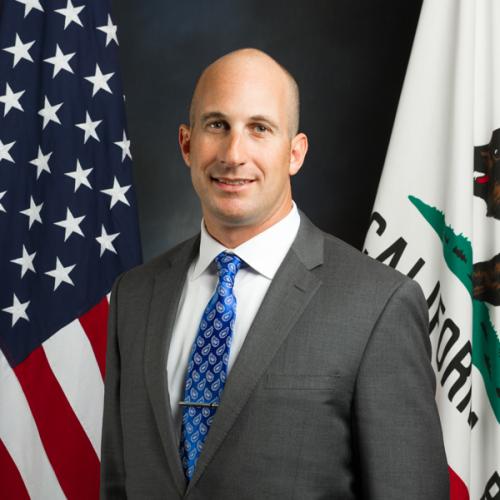
Asm. Heath Flora
Sponsored bills
Existing law, the California Safe Drinking Water Act, requires the State Water Resources Control Board to administer provisions relating to the regulation of drinking water to protect public health. This bill would require the state board to establish and convene a working group composed of representatives of affected small businesses, environmental justice advocates, and representatives of working lands to review the state board's regulation and enforcement of water quality standards for small businesses that use their own, independent sources of water supply that may not meet the water quality standards imposed on public water systems or public water suppliers. The bill would authorize the state board to exercise its discretion in appointing members to the working group.
Existing law requires the State Water Resources Control Board to identify and recommend to the Legislature funding options to extend, until January 1, 2024, a specified comprehensive groundwater quality monitoring program. This bill would instead require the department to identify and recommend to the Legislature funding options to extend that comprehensive groundwater quality monitoring program indefinitely.
Existing law provides for the In-Home Supportive Services (IHSS) program, under which qualified aged, blind, and disabled persons receive services enabling them to remain in their own homes. Existing law requires prospective providers of in-home supportive services to complete a provider orientation at the time of enrollment and, at the conclusion of the provider orientation, to sign a specified statement. Existing law requires the county to retain this statement indefinitely in the provider's file. This bill would instead require the county, beginning July 1, 2021, to retain the statement in the provider's file for a period of 7 years.
Existing law provides for the Medi-Cal program, which is administered by the State Department of Health Care Services, under which qualified low-income individuals receive health care services. The Medi-Cal program is, in part, governed and funded by federal Medicaid program provisions. Existing law establishes the Medi-Cal Hospital/Uninsured Care Demonstration Project Act. The act revises hospital supplemental payment methodologies in the Medi-Cal program to maximize the use of federal funds consistent with federal Medicaid law and to stabilize the distribution of funding for hospitals that provide care to Medi-Cal beneficiaries and uninsured patients. This demonstration project provides funding, in supplementation of Medi-Cal reimbursement, to various hospitals, such as designated public hospitals, specified nondesignated public hospitals, and private hospitals, in accordance with certain provisions relating to disproportionate share hospitals. Existing law establishes several continuously appropriated funds, including the Demonstration Disproportionate Share Hospital Fund, the Private Hospital Supplemental Fund, the Nondesignated Public Hospital Supplemental Fund, and the Distressed Hospital Fund, to be expended by the department for purposes of the act. This bill would require the payment of Medi-Cal disproportionate share hospital replacement payment adjustments to any eligible hospital that is a nondesignated public hospital. By expanding the purposes of continuously appropriated funds by authorizing payment of appropriated funds to additional hospital facilities, this bill would make an appropriation. This bill would declare that it is to take effect immediately as an urgency statute.
Existing law makes it unlawful to produce, process, sell, offer to sell, or possess olive oil that indicates on its label "California Olive Oil," or uses similar words, to suggest that California is the source of the oil, unless 100% of that oil is derived from olives grown in California. This bill would make it unlawful and subject to imprisonment, fine, or both, as specified, to make any false representation in a brand name, label, advertising matter, packaging material, letterhead, invoice, tag, sign, business card, or other oral, written, or printed matter that an olive oil is produced entirely from olives grown within California, including using the terms "California olive oil," "California olives," or substantially similar representations. This bill would apply a similar prohibition on representations that an olive oil was produced from olives from a specific region of California unless at least 85% of the olive oil, by weight, was produced from olives grown in that specific region. This bill would authorize the Department of Food and Agriculture to seize olive oil labeled in violation of these prohibitions and to dispose of the olive oil. By creating a new crime, this bill would impose a state-mandated local program. The California Constitution requires the state to reimburse local agencies and school districts for certain costs mandated by the state. Statutory provisions establish procedures for making that reimbursement. This bill would provide that no reimbursement is required by this act for a specified reason.
Existing law requires the Department of Justice to provide subsequent state or federal arrest or disposition notification to the State Department of Social Services, the Medical Board of California, the Osteopathic Medical Board of California, and other authorized entities to assist in, among other things, fulfilling employment, licensing, or certification duties. Existing law requires an entity, other than a law enforcement agency, as defined, to enter into a contract with the Department of Justice in order to receive notification of subsequent state or federal arrests or dispositions for licensing, employment, or certification purposes. This bill would provide that the department is authorized to submit fingerprints to the Federal Bureau of Investigation (FBI) where they will be retained for the purpose of being searched against future submissions to the FBI, as specified. This bill would authorize the department to search latent fingerprint images against all retained fingerprint submissions. This bill would also authorize the department to collect fees for federal subsequent notification services and remit the fees to the FBI.
This measure would designate the week of February 24, 2020, to March 1, 2020, as Eating Disorders Awareness Week.
The California Global Warming Solutions Act of 2006 designates the State Air Resources Board as the state agency charged with monitoring and regulating sources of emissions of greenhouse gases. The act authorizes the state board to include the use of market-based compliance mechanisms. Existing law requires all moneys, except for fines and penalties, collected by the state board as part of a market-based compliance mechanism to be deposited in the Greenhouse Gas Reduction Fund and to be available upon appropriation. Existing law authorizes the Department of Forestry and Fire Protection to administer various programs, including grant programs, relating to forest health and wildfire protection. Existing law states that a specified amount is to be annually appropriated, through the 2023–24 fiscal year, from the Greenhouse Gas Reduction Fund to the department in the annual Budget Act for specified healthy forest and fire prevention programs and projects. Under existing law, the 2019–20 annual Budget Act appropriated $165,000,000 to the department, with at least $5,000,000 to be made available to the California Conservation Corps, as specified. This bill would appropriate $330,000,000 for the 2020–21 fiscal year from the Greenhouse Gas Reduction Fund, as specified, to the department for specified healthy forest and fire prevention programs and projects that improve forest health and reduce greenhouse gas emissions caused by uncontrolled wildfires, with not less than $10,000,000 for the California Conservation Corps' fire prevention projects and activities in, or adjacent to, the state responsibility areas.
Existing law provides for the Medi-Cal program, which is administered by the State Department of Health Care Services, under which qualified low-income individuals receive health care services, including podiatric services. The Medi-Cal program is, in part, governed and funded by federal Medicaid program provisions. Existing law does not require prior authorization for podiatric services provided on an outpatient or inpatient basis, but podiatric services are subject to the same Medi-Cal billing and services policies as required for a physician and surgeon, including a maximum numerical service limitation in any one calendar month. Existing law requires an applicant to be a provider or a current provider of Medi-Cal Services to submit a complete application package for enrollment, continuing enrollment, or enrollment at a new location or a change in location. This bill would make conforming changes to the provisions that govern applying to be a provider in the Medi-Cal program or for a change of location by an existing provider to include a doctor of podiatric medicine licensed by the California Board of Podiatric Medicine.