

Passed Jan 23, 2023
1 co-sponsor
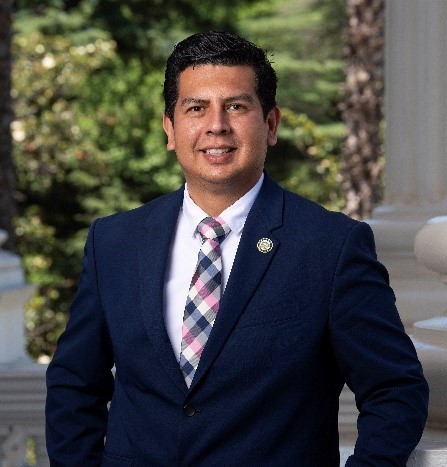
Rep. David Alvarez
Total votes
10,279
all sessions
Attendance
71%
3,490 missed
Lower than 84% of chamber peers
With party
99%
of cast votes
Near the chamber average
Bipartisan score
0%
crosses aisle rarely
Near the chamber average
Sponsored
858
bills & resolutions
Near the chamber average
Committees
10
assignments
858 bills and resolutions
Sponsored bills
Total
858
Primary
90
Co-sponsor
768
This page
858
matching current filters
Affordable Housing and High Road Jobs Act of 2022.
The Planning and Zoning Law authorizes a development proponent to submit an application for a multifamily housing development that is subject to a streamlined, ministerial approval process and not subject to a conditional use permit if the development satisfies specified objective planning standards. This bill would create the Affordable Housing and High Road Jobs Act of 2022, which would authorize a development proponent to submit an application for a housing development that meets specified objective standards and affordability and site criteria, including being located within a zone where office, retail, or parking are a principally permitted use, and would make the development a use by right and subject to one of 2 streamlined, ministerial review processes. The bill would require a development proponent for a housing development project approved pursuant to the streamlined, ministerial review process to require, in contracts with construction contractors, that certain wage and labor standards will be met, including a requirement that all construction workers be paid at least the general prevailing rate of wages, as specified. The bill would require a development proponent to certify to the local government that those standards will be met in project construction. By expanding the crime of perjury, the bill would impose a state-mandated local program. This bill would require the Labor Commissioner to enforce the obligation to pay prevailing wages. The bill would require a development proponent for a development of 50 or more housing units approved by a local government pursuant to the above-described provisions to require construction contractors to participate in an apprenticeship program or request dispatch of apprentices from a state-approved apprenticeship program, and to make specified health care expenditures for construction craft employees. The bill would require the development proponent to certify compliance with those requirements to the local government and to report monthly to the local government that they are in compliance with those requirements. The bill would subject the development proponent and the construction contractors and subcontractors to specified civil penalties for failing to comply with those requirements, and would require the penalty funds to be deposited in the State Public Works Enforcement Fund. The bill would prohibit a local government from imposing any requirement, including increased fees, on the basis that the project is eligible to receive ministerial or streamlined approval. Because the bill would impose new duties on local governments, the bill would impose a state-mandated local program. This bill would require the Department of Housing and Community Development to undertake specified studies of the outcomes of the Affordable Housing and High Road Jobs Act of 2022, to publish reports on the findings of those studies, to post the reports on its internet website, and to submit the reports to the Legislature. This bill would repeal the provisions of the Affordable Housing and High Road Jobs Act of 2022 on January 1, 2033. The Planning and Zoning Law requires a city or county to adopt a general plan for land use development within its boundaries that includes, among other things, a housing element. The law also requires a planning agency to provide a specified annual report after the legislative body has adopted all or part of a general plan. This bill would require the annual report to include specified information about applications for housing developments submitted pursuant to the Affordable Housing and High Road Jobs Act of 2022. The Planning and Zoning Law also requires the Department of Housing and Community Development to notify the city, county, or city and county, and authorizes the department to notify the Attorney General, that the city, county, or city and county is in violation of state law if the department finds that the housing element or an amendment to that element, or any specified action or failure to act, does not substantially comply with the law as it pertains to housing elements or that any local government has taken an action in violation of certain housing laws. This bill would add the Affordable Housing and High Road Jobs Act of 2022 to that list of housing laws. The California Environmental Quality Act (CEQA) requires a lead agency, as defined, to prepare, or cause to be prepared, and certify the completion of, an environmental impact report on a project that it proposes to carry out or approve that may have a significant effect on the environment or to adopt a negative declaration if it finds that the project will not have that effect. CEQA also requires a lead agency to prepare a mitigated negative declaration for a project that may have a significant effect on the environment if revisions in the project would avoid or mitigate that effect and there is no substantial evidence that the project, as revised, would have a significant effect on the environment. CEQA does not apply to the approval of ministerial projects. This bill would define "use by right" for purposes of the Affordable Housing and High Road Jobs Act of 2022, in part, as a development project that is not a project for purposes of CEQA, and the approval process established by this bill would be ministerial in nature, thereby exempting the approval of development projects subject to that approval process from CEQA. This bill would incorporate additional changes to Section 65400 of the Government Code proposed by AB 1743, AB 2094, and AB 2653, to be operative only if this bill and any one or a combination of AB 1743, AB 2094, and AB 2653, are enacted, and this bill is enacted last, as described. This bill would incorporate additional changes to Section 65585 of the Government Code proposed by AB 2097 and AB 2653 to be operative only if this bill and either or both of AB 2097 and AB 2653 are enacted, and this bill is enacted last, as described. The California Constitution requires the state to reimburse local agencies and school districts for certain costs mandated by the state. Statutory provisions establish procedures for making that reimbursement. This bill would provide that with regard to certain mandates no reimbursement is required by this act for a specified reason. With regard to any other mandates, this bill would provide that, if the Commission on State Mandates determines that the bill contains costs so mandated by the state, reimbursement for those costs shall be made pursuant to the statutory provisions noted above. This bill would make its provisions operative on July 1, 2023.
Signed into law Sep 28, 2022
1 co-sponsor
Water quality: California-Mexico cross-border rivers.
Existing law establishes the California-Mexico Border Relations Council in state government, chaired by the Secretary for Environmental Protection, and prescribes the functions and duties of the council with respect to coordinating the activities of state agencies that are related to cross-border programs, initiatives, projects, and partnerships that exist within state government, and state and local efforts that are of concern between California and Mexico. Existing law requires the council to develop a strategic plan to guide a project to study, monitor, remediate, and enhance water quality in the New River in the County of Imperial. Existing law requires the council to establish the New River Water Quality, Public Health, and River Parkway Development Program to coordinate funding for, and the implementation of, recommendations from the strategic plan and related projects. This bill would make $100,000,000 available from the General Fund, upon appropriation by the Legislature in the annual Budget Act or another statute, to the State Water Resources Control Board for grants and direct expenditures to address water quality problems arising in the California-Mexico cross-border rivers. The bill would require the funding to be available for purposes consistent with the New River Water Quality, Public Health, and River Parkway Development Program and water quality projects for the Tijuana River and would make 5% of the funding available for the administrative costs of the state board in implementing these provisions and 5% available for the costs of the Office of the Attorney General in enforcing these provisions. The bill would require the state board, in consultation with the California Environmental Protection Agency, the San Diego Regional Water Quality Control Board, and the Colorado River Basin Regional Water Quality Control Board, to administer the funding, as specified. The bill would require expenditures of the funding to be consistent with the work of the California Environmental Protection Agency Border Affairs Program and would require priority for the funding to be given to projects that have funding committed by the United States, the Republic of Mexico, the State of Baja California, or the City of Tijuana or Mexicali. The bill would authorize grant funding to be conditioned on enforceability and accountability mechanisms agreed upon by the state board and the recipient, as prescribed, and would authorize funding to be provided for activities or projects in the State of Baja California under certain circumstances. The bill would require the state board and the California Environmental Protection Agency to notify the leadership office in each house of the Legislature on cross-border collaboration and the expenditure of the funding.
Vetoed Sep 18, 2022
1 co-sponsor
Otay Mesa East Toll Facility Act.
(1) The Otay Mesa East Toll Facility Act authorizes the San Diego Association of Governments (SANDAG) to carry out a construction project for the State Highway Route 11 corridor, including, among other things, highway improvements and international border crossing facilities, to be operated as a toll facility. The act, among other things, authorizes SANDAG to fix and revise from time to time and charge and collect tolls and other charges. The act requires toll revenues to be used to pay for costs in categories with specified priority given to certain categories. This bill would authorize SANDAG to instead only impose tolls for entrance to or the use of the corridor, except as specified. The bill would place various requirements on SANDAG's authorized toll authority, including, among other things, requiring SANDAG to review the adequacy of the toll rates established to cover the aggregate costs of all projects within 2 years following the opening of an initial project to be supported by toll revenue and at least biennially after the initial review for so long as SANDAG imposes tolls. The bill would eliminate the priority given to certain categories and would authorize other specified costs to be paid by toll revenues. The bill would additionally revise various references from "project revenues" to "toll revenues." This bill would authorize SANDAG to enter into an agreement in order to impose and collect tolls, acquire, operate, and maintain tolling facilities, and exercise related powers jointly with the tolling powers of one or more of the federal government of Mexico or a governmental agency or unit thereof. The bill would authorize SANDAG to contract with one or more of the federal government of Mexico or a governmental agency or unit thereof to receive from or provide to the other contracting parties toll collection and remittance functions and services. The bill would require an agreement entered into for these purposes by SANDAG to contain specified provisions. The bill would authorize SANDAG's toll structure to include discounts and premiums to encourage efficient use of any "project," defined as property and related facilities acquired or constructed to facilitate the movement of goods and people along the corridor or at the Otay Mesa East Port of Entry, not just tolled projects. The bill would revise other provisions in the act, including changing certain terminology and expressly authorizing the use of alternative bidding and building procedures, authorized in existing law under specified conditions for a project, for components of a project under the same conditions. (2) Existing law requires highway projects constructed pursuant to the act, at all times following construction, to be owned by the department and requires that international port of entry facilities constructed pursuant to the act, at all times following construction, be owned by a federal agency. The act requires all other property and facilities constructed pursuant to the act to be owned by SANDAG, unless transferred to a state or federal agency upon agreement between SANDAG and the relevant agency. The bill would require international port of entry facilities constructed pursuant to the act, or the land on which those facilities are constructed, to be owned by either the federal government or by SANDAG, at SANDAG's option, and would require SANDAG, if it chooses to own the land or facilities, to lease the land or facilities to a federal agency. If Department of Transportation property is conveyed to either SANDAG or the federal government under these provisions, the bill would require that it be conveyed free of charge and only upon a finding by the California Transportation Commission that the conveyance is in the state's interest.
Signed into law Sep 18, 2022
1 co-sponsor
Speech-language pathologists, audiologists, and hearing aid dispensers.
Existing law, the Speech-Language Pathologists and Audiologists and Hearing Aid Dispensers Licensure Act, until January 1, 2023, establishes the Speech-Language Pathology Audiology and Hearing Aid Dispensers Board within the Department of Consumer Affairs for the licensure and regulation of speech-language pathologists, speech-language pathology aides, speech language pathology assistants, audiologists, dispensing audiologists, and hearing aid dispensers. Existing law provides for the appointment of members of the board by specified appointing authorities, and, until January 1, 2023, authorizes the board to appoint an executive officer. Existing law authorizes an appointing authority to remove from office at any time any member of a board appointed by the appointing authority for continued neglect of duties, incompetence, or unprofessional or dishonorable conduct. Existing law makes a violation of the act a misdemeanor. This bill would extend the operation of the board and the authorization to appoint an executive officer until January 1, 2027, and would authorize an appointing authority to remove from office at any time any member of the board appointed by that appointing authority. The bill would specify that, in addition to the enforcement and administration of the act, the board is vested with other regulatory duties of the act. The bill would require an applicant, registrant, or licensee under the act who has an email address to provide it to the board no later than July 1, 2023. By expanding the scope of a crime, the bill would impose a state-mandated local program. Existing law establishes the Hearing Aid Dispensing Committee, comprised of 5 members, within the jurisdiction of the board. This bill would abolish the committee. Existing law defines "audiology aide" to mean any person meeting the minimum requirements established by the board. Existing law prohibits an audiology aide from performing any function that constitutes the practice of audiology unless they are under the supervision of an audiologist. This bill would delete that prohibition and would instead define "audiology aide" to mean any person meeting the minimum requirements established by the board who works directly under the supervision of an audiologist. Existing law requires speech-language pathologists and audiologists supervising speech-language pathology or audiology aides to register with the board the name of each person working under their supervision. This bill would make speech-language pathology and audiology aide registrations expire every 2 years and would require the board to establish a renewal fee in an amount not to exceed $30. The bill would require the speech-language pathologist or audiologist supervising the speech-language pathology or audiology aide to, at the time of renewal, update the board on the duties the aide performs and the training program and assessment methods the supervisor is using. Existing law requires an applicant for licensure as an audiologist to submit evidence of satisfactory completion of supervised clinical practice under the direction of an educational institution approved by the board and satisfactory completion of supervised professional experience following completion of the didactic and clinical rotation requirements of an audiology doctoral program. This bill would require the clinical practice to be under the direction of an audiology doctoral program at an educational institution approved by the board, and would delete the requirement that supervised professional experience follow completion of the didactic and clinical rotation requirements of the audiology doctoral program. Existing law requires the board to deem a person who holds a Certificate of Clinical Competence in Speech-Language Pathology issued by the American Speech-Language-Hearing Association's Council for Clinical Certification to have met specified educational and experience requirements for licensure as a speech-language pathologist or audiologist. This bill would make that requirement applicable only to licensure as a speech-language-pathologist and effective only until January 1, 2027, and would instead require the board, until January 1, 2027, to deem a person who holds either a valid Certification of Clinical Competence in Audiology issued by the American Speech-Language-Hearing Association's Council for Clinical Certification or a valid American Board of Audiology certificate issued by the American Academy of Audiology to have met specified educational and experience requirements for licensure as an audiologist. Existing law lists various reasons for which the board is authorized to suspend, revoke, or impose terms and conditions upon the license of any licensee, including incompetence, gross negligence, or repeated negligent acts. This bill would add specified reasons for which the board is authorized to suspend, revoke, or impose terms and conditions upon a license, including for a disciplinary action taken by any public agency in any state or territory for any act substantially related to the practice of speech-language pathology, audiology, or hearing aid dispensing. The bill would authorize a person whose license has been revoked, suspended, or who has been placed on probation to petition the board for reinstatement or modification of penalty after a specified minimum period of time has elapsed from the effective date of the decision ordering that disciplinary action in accordance with specified procedural and other requirements. Existing law provides that a plea or verdict of guilty or a conviction following a plea of nolo contendere made to a charge substantially related to the qualifications, functions, and duties of a speech-language pathologist or audiologist is deemed to be a conviction for specified provisions of the act. This bill would also make that provision applicable to hearing aid dispensers. The bill would also make various other conforming and technical changes to the act, including updating cross-references and deleting an obsolete provision. This bill would incorporate additional changes to Section 2530.2 of the Business and Professions Code proposed by SB 1453 to be operative only if this bill and SB 1453 are enacted and this bill is enacted last. The California Constitution requires the state to reimburse local agencies and school districts for certain costs mandated by the state. Statutory provisions establish procedures for making that reimbursement. This bill would provide that no reimbursement is required by this act for a specified reason. Existing constitutional provisions require that a statute that limits the right of access to the meetings of public bodies or the writings of public officials and agencies be adopted with findings demonstrating the interest protected by the limitation and the need for protecting that interest. This bill would make legislative findings to that effect.
Signed into law Sep 18, 2022
1 co-sponsor
Prostate Cancer Awareness Month.
This measure would proclaim the month of September 2022 as Prostate Cancer Awareness Month.
Signed into law Sep 13, 2022
1 co-sponsor
Relative to the Stan Statham Memorial Highway.
This measure would designate a specified portion of State Highway Route 44, near Oak Run in the County of Shasta, as the Stan Statham Memorial Highway. This measure would request the Department of Transportation to determine the cost of appropriate signs showing this special designation and, upon receiving donations from nonstate sources covering that cost, to erect those signs.
Signed into law Sep 13, 2022
1 co-sponsor
Relative to state government.
This measure would designate the East End Complex-Block 171 in Sacramento as the Mario Obledo Building, and would request the Department of General Services to determine the cost of erecting appropriate plaques and markers showing the designation and, upon receiving donations from nonstate sources, to cover that cost to erect signage.
Signed into law Sep 13, 2022
1 co-sponsor
Relative to Social Security benefits.
This measure would urge the United States Congress to amend the United States Social Security Administration's index of earnings to ensure that a decline in aggregate wages due to COVID-19 does not result in decreased benefits.
Signed into law Sep 13, 2022
1 co-sponsor
Christopher Columbus Transcontinental Highway: removal of designation.
This measure would request that the Department of Transportation remove the "The Christopher Columbus Transcontinental Highway" designation from the portion of Interstate 10 in the state, as well as any signage and markers memorializing that designation, and advise the Federal Highway Administration of the state's action.
Signed into law Sep 13, 2022
1 co-sponsor
Ask Maddy
·
AI policy assistant
Ask Maddy about David Alvarez
Scope: california
Hi! I can help you understand David Alvarez's legislative record. What would you like to know?
Try one of these
i
Maddy answers using official bill text and legislative records. Always verify before sharing.
Sources cited inline