

Passed Feb 7, 2019
1 co-sponsor
Total votes
19,803
all sessions
Attendance
98%
299 missed
Among the lowest in the chamber
With party
99%
of cast votes
Higher than 96% of chamber peers
Bipartisan score
0%
crosses aisle rarely
Lower than 99% of chamber peers
Sponsored
1,254
bills & resolutions
Lower than 98% of chamber peers
Committees
0
assignments
1,254 bills and resolutions
Sponsored bills
Total
1,254
Primary
184
Co-sponsor
1,070
This page
1,254
matching current filters
Passed Feb 4, 2019
1 co-sponsor
Passed Jan 22, 2019
1 co-sponsor
Employment discrimination: enforcement.
Existing law imposes various restrictions on employers with respect to contracts and applications for employment. A violation of those restrictions is a misdemeanor. Existing law creates the Division of Labor Standards Enforcement, which is under the direction of the Labor Commissioner, and generally commits to the commissioner the authority and responsibility for the enforcement of employment laws. This bill would prohibit a person from, as a condition of employment, continued employment, the receipt of any employment-related benefit, or as a condition of entering into a contractual agreement, prohibiting an applicant for employment, employee, or independent contractor from disclosing to any person an instance of sexual harassment that the employee or independent contractor suffers, witnesses, or discovers in the workplace or in the performance of the contract, or otherwise opposing any lawful practice, or from exercising any right or obligation or participating in any investigation or proceeding with respect to unlawful harassment or discrimination. The bill would also prohibit an employer from requiring any applicant for employment or any employee to waive any right, forum, or procedure for a violation of any provision of the California Fair Employment and Housing Act (FEHA) or other specific statutes governing employment, as a condition of employment, continued employment, the receipt of any employment-related benefit, or as a condition of entering into a contractual agreement. The bill would also prohibit an employer from threatening, retaliating or discriminating against, or terminating any applicant for employment or any employee because of the refusal to consent to the waiver of any right, forum, or procedure for a violation of specific statutes governing employment. The bill would establish a specific exemption from those prohibitions. Because a violation of these prohibitions would be a crime, the bill would impose a state-mandated local program. FEHA makes specified employment and housing practices unlawful and provides procedures for enforcement by the Department of Fair Employment and Housing. FEHA authorizes a person alleging a violation of specified provisions of the act relating to employment discrimination to submit a verified complaint to the Department of Fair Employment and Housing, and requires the department to take actions to investigate and conciliate that complaint. FEHA authorizes the department to bring a civil action on behalf of the person who submitted the complaint upon the failure to eliminate an unlawful practice under these provisions. FEHA requires the department to issue a right-to-sue notice to a person who submitted the complaint if certain conditions occur, and FEHA requires a person who has been issued a right-to-sue notice to bring an action within one year from when the department issued that notice. This bill would additionally make violations of the prohibitions described above, relating to sexual harassment and waivers, unlawful employment practices under FEHA. The California Constitution requires the state to reimburse local agencies and school districts for certain costs mandated by the state. Statutory provisions establish procedures for making that reimbursement. This bill would provide that no reimbursement is required by this act for a specified reason.
Vetoed Sep 30, 2018
1 co-sponsor
Pupil rights: pregnant and parenting pupils.
(1) Federal and state regulations prohibit an educational institution from applying any rule concerning a pupil's actual or potential parental, family, or marital status that treats pupils differently on the basis of sex. This bill would codify those regulations and related regulations in state law, as they apply to local educational agencies, defined to include a school district, a county office of education, a school operated by a school district or a county office of education, a charter school, the California Schools for the Deaf, or the California School for the Blind. The bill would find and declare that pregnant and parenting pupils are entitled to accommodations that provide them with the opportunity to succeed academically while protecting their health and the health of their children, and would establish specified accommodations as rights of pregnant and parenting pupils of local educational agencies. The bill would include in these established accommodations, among other rights, that a pregnant or parenting pupil is entitled to 8 weeks of parental leave, as specified. The bill would authorize a complaint of noncompliance with those established rights to be filed with the local educational agency pursuant to the Uniform Complaint Procedures, as specified. The bill would require local educational agencies to notify pregnant and parenting pupils and parents and guardians of pupils of the rights and options available to pregnant and parenting pupils, as specified. (2) Existing law requires a pupil to be excused from school for specified types of absences. This bill would include as another type of excused absence an absence to care for a sick child, for which the school is prohibited from requiring a note from a doctor. (3) To the extent that this bill would impose additional duties on schools of school districts and county offices of education, charter schools, county offices of education, and school districts, the bill would impose a state-mandated local program. (4) This bill would incorporate additional changes to Section 48205 of the Education Code proposed by SB 816 to be operative only if this bill and SB 816 are enacted and this bill is enacted last. (5) The California Constitution requires the state to reimburse local agencies and school districts for certain costs mandated by the state. Statutory provisions establish procedures for making that reimbursement. This bill would provide that, if the Commission on State Mandates determines that the bill contains costs mandated by the state, reimbursement for those costs shall be made pursuant to the statutory provisions noted above.
Signed into law Sep 30, 2018
0 co-sponsors
Criminal procedure: disposition of evidence.
Existing law requires the appropriate governmental entity to retain any biological material that is secured in connection with a criminal case in a condition suitable for DNA testing for the duration of time that any person is incarcerated in connection with that criminal case. Existing law, however, authorizes the governmental entity possessing that material to dispose of it earlier if certain conditions are met, including that the incarcerated person is sent notice of the intent to destroy the evidence and does not object, as specified. This bill would require the governmental entity to preserve any object or material that contains or includes that biological material. The bill would also require the notice of intent to destroy to be sent to the incarcerated person at the location where the person is currently incarcerated. By imposing new evidence preservation requirements, this bill would create a state-mandated local program. The California Constitution requires the state to reimburse local agencies and school districts for certain costs mandated by the state. Statutory provisions establish procedures for making that reimbursement. This bill would provide that, if the Commission on State Mandates determines that the bill contains costs mandated by the state, reimbursement for those costs shall be made pursuant to the statutory provisions noted above.
Signed into law Sep 30, 2018
0 co-sponsors
Peace officers: release of records.
The California Public Records Act requires a state or local agency, as defined, to make public records available for inspection, subject to certain exceptions. Existing law requires any peace officer or custodial officer personnel records, as defined, and any records maintained by any state or local agency relating to complaints against peace officers and custodial officers, or any information obtained from these records, to be confidential and prohibits the disclosure of those records in any criminal or civil proceeding, except by discovery. Existing law describes exceptions to this requirement for investigations or proceedings concerning the conduct of peace officers or custodial officers, and for an agency or department that employs those officers, conducted by a grand jury, a district attorney's office, or the Attorney General's office. This bill would require, notwithstanding any other law, certain peace officer or custodial officer personnel records and records relating to specified incidents, complaints, and investigations involving peace officers and custodial officers to be made available for public inspection pursuant to the California Public Records Act. The bill would define the scope of disclosable records. The bill would require records disclosed pursuant to this provision to be redacted only to remove personal data or information, such as a home address, telephone number, or identities of family members, other than the names and work-related information of peace officers and custodial officers, to preserve the anonymity of complainants and witnesses, or to protect confidential medical, financial, or other information in which disclosure would cause an unwarranted invasion of personal privacy that clearly outweighs the strong public interest in records about misconduct by peace officers and custodial officers, or where there is a specific, particularized reason to believe that disclosure would pose a significant danger to the physical safety of the peace officer, custodial officer, or others. Additionally the bill would authorize redaction where, on the facts of the particular case, the public interest served by nondisclosure clearly outweighs the public interest served by disclosure. The bill would allow the delay of disclosure, as specified, for records relating to an open investigation or court proceeding, subject to certain limitations. The California Constitution requires local agencies, for the purpose of ensuring public access to the meetings of public bodies and the writings of public officials and agencies, to comply with a statutory enactment that amends or enacts laws relating to public records or open meetings and contains findings demonstrating that the enactment furthers the constitutional requirements relating to this purpose. This bill would make legislative findings to that effect. The California Constitution requires the state to reimburse local agencies and school districts for certain costs mandated by the state. Statutory provisions establish procedures for making that reimbursement. This bill would provide that no reimbursement is required by this act for a specified reason.
Signed into law Sep 30, 2018
1 co-sponsor
Pupil discipline: restraint and seclusion.
Existing law prohibits a person employed by or engaged in a public school to inflict, or cause to be inflicted, corporal punishment upon a pupil. This bill would authorize an educational provider, as defined, to use behavioral restraints, which includes physical and mechanical restraints, or seclusion, as defined, only to control behavior that poses a clear and present danger of serious physical harm to the pupil or others that cannot be immediately prevented by a response that is less restrictive, and if other specified conditions are met. The bill would prohibit an educational provider from using a behavioral restraint or seclusion in certain circumstances, including, but not limited to, using seclusion or a behavioral restraint for the purpose of coercion, discipline, convenience, or retaliation, and would prohibit the use of certain restraint and seclusion techniques. The bill would require a local educational agency that meets a specified federal definition to collect and, no later than 3 months after the end of a school year, report to the State Department of Education annually on the use of behavioral restraints and seclusion for pupils enrolled in or served by the local educational agency for all or part of the prior school year, as specified. The bill would require that the data collection and reporting requirements be conducted in compliance with specified federal law, and would prohibit those requirements from being construed to impose a new program or higher level of service on local educational agencies or nonpublic schools or agencies. The California Constitution requires the state to reimburse local agencies and school districts for certain costs mandated by the state. Statutory provisions establish procedures for making that reimbursement. This bill would provide that no reimbursement is required by this act for a specified reason.
Signed into law Sep 30, 2018
0 co-sponsors
Public postsecondary education: California State University: support staff employees: merit salary adjustments.
Existing law establishes the California State University, under the administration of the Trustees of the California State University, as one of the segments of public postsecondary education in this state. The California State University system comprises 23 institutions of higher education. Existing law authorizes the trustees to provide by rule for the government of their appointees and employees, as specified. This bill, notwithstanding any other law, would require, after completion of the first year in a position, and after completion of each subsequent year thereafter, each support staff employee of the California State University to receive a merit salary intermediate step adjustment of 5% when he or she meets the standards for satisfactory performance of the position, as determined by the employee's appropriate administrator pursuant to a uniform employee evaluation process. The bill would provide that, if a provision of the bill is expressly in conflict with a provision of a memorandum of understanding, but is not expressly in conflict with a provision of a collective bargaining agreement, the provision of the memorandum of understanding would prevail. The bill would also provide that, if a provision of the bill is expressly in conflict with a provision of a collective bargaining agreement, or a provision of a collective bargaining agreement and a provision of a memorandum of understanding, the provision of the collective bargaining agreement would prevail. This bill would provide that, on and after the date that the bill becomes operative, language that effectuates its provisions would automatically be incorporated into any pertinent memorandum of understanding or collective bargaining agreement entered into, or renewed, by the California State University. The bill would further provide that any costs associated with the implementation of the bill that are incurred by the California State University shall be paid for using existing resources of the university. This bill would make these provisions inoperative on July 1, 2029, and would repeal them as of January 1, 2030.
Vetoed Sep 30, 2018
0 co-sponsors
Pupil instruction: ethnic studies: grant program.
Existing law requires a pupil to complete designated coursework while in grades 9 to 12, inclusive, in order to receive a diploma of graduation from high school. Existing law requires the Instructional Quality Commission to develop, and the State Board of Education to adopt, modify, or revise, a model curriculum in ethnic studies. Existing law also encourages each school district and charter school that maintains any of grades 9 to 12, inclusive, and that does not otherwise offer a standards-based ethnic studies curriculum to offer, beginning in the school year following the adoption of the model curriculum, a course of study in ethnic studies based on the model curriculum. This bill would authorize the governing board of a school district to, during the 2019–20 school year, apply to the State Department of Education for a grant to fund, for the 2020–21, 2021–22, and 2022–23 school years, a semester- or year-long course in ethnic studies that the governing board of the school district would require each pupil to complete, except as specified, while in any of grades 9 to 12, inclusive, in order to receive a diploma of graduation from high school. The bill would require the governing board of a school district to base any course required as part of the grant program on the model curriculum in ethnic studies adopted by the state board. The bill would require the department to award grants for these purposes, as specified, to provide professional development and technical assistance to school districts for purposes of applying for and implementing grants, and to submit a report to the Legislature that contains best practices and recommendations for including an ethnic studies course in the state's high school graduation requirements. The bill would make implementation of its provisions contingent upon funding being provided for those purposes from private or public sources. The bill would make these provisions inoperative on March 1, 2028, and would repeal them as of January 1, 2029.
Vetoed Sep 30, 2018
1 co-sponsor
Ask Maddy
·
AI policy assistant
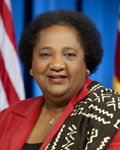
Ask Maddy about Shirley N. Weber
Scope: california
Hi! I can help you understand Shirley N. Weber's legislative record. What would you like to know?
Try one of these
i
Maddy answers using official bill text and legislative records. Always verify before sharing.
Sources cited inline