This measure would recognize October 12, 2021, as the 20th anniversary of the enactment of the exemption from nonresident tuition for qualified students during the 2001–02 Regular Session. The measure would also call on the United States Congress to pass the American Families Plan and provide financial resources for undocumented students through the budget reconciliation process, and to adopt comprehensive immigration reform.
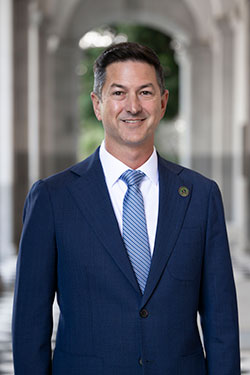
Asm. Chris Ward
Sponsored bills
This measure would affirm the Legislature's support for expanding Social Security and requests California Representatives in Congress to support expanding Social Security by voting in favor of the Social Security 2100 Act: A Sacred Trust.
This measure would designate the month of September 2022 as Opioid, Heroin, Fentanyl, and Prescription Drug Abuse Awareness Month, as specified.
This measure would designate the portion of U.S. Route 101 in the County of San Luis Obispo, from postmile 19.812 to postmile 15.579, as the Katcho Achadjian Memorial Highway. The measure would request the Department of Transportation to determine the cost of appropriate signs showing this special designation and, upon receiving donations from nonstate sources covering that cost, to erect those signs.
This measure would proclaim the month of October 2022 as Domestic Violence Awareness Month.
The Sales and Use Tax Law imposes a tax on retailers measured by the gross receipts from the sale of tangible personal property sold at retail in this state or on the storage, use, or other consumption in this state of tangible personal property purchased from a retailer for storage, use, or other consumption in this state. The Sales and Use Tax Law provides various exemptions from those taxes, including an exemption for the sale of, or the storage, use, or consumption of, tangible personal property sold by a thrift store located on a military installation and operated by a designated entity, as defined, that, in partnership with the United States Department of Defense, provides financial, educational, and other assistance to members of the Armed Forces of the United States, eligible family members, and survivors that are in need. Existing law provides that this exemption will remain in effect only until January 1, 2024. This bill would remove the exemption's expiration date. Existing law requires any bill authorizing a new tax expenditure to contain, among other things, specific goals, purposes, and objectives that the tax expenditure will achieve, detailed performance indicators, and data collection requirements. This bill would make findings and declarations in satisfaction of that requirement. The Bradley-Burns Uniform Local Sales and Use Tax Law authorizes counties and cities to impose local sales and use taxes in conformity with the Sales and Use Tax Law, and existing laws authorize districts, as specified, to impose transactions and use taxes in accordance with the Transactions and Use Tax Law, which generally conforms to the Sales and Use Tax Law. Amendments to the Sales and Use Tax Law are automatically incorporated into the local tax laws, as specified. Existing law requires the state to reimburse counties and cities for revenue losses caused by the enactment of sales and use tax exemptions. This bill would provide that, notwithstanding that provision, no appropriation is made and the state shall not reimburse any local agencies for sales and use tax revenues lost by them pursuant to the provisions this bill would impose. This bill would take effect immediately as a tax levy.

(1) Existing law generally regulates the operation of vessels and associated equipment used, to be used, or carried in vessels used on waters subject to the jurisdiction of the state. Existing law provides specified exemptions to the above-described provision, including for a vessel whose owner is a state or subdivision thereof, that is used principally for governmental purposes, and which is clearly identifiable as such. This bill would define "subdivision thereof" or "subdivision of the state" to include cities and counties. (2) Existing law provides that an owner, operator, or person in command of any vessel propelled by machinery who uses it, or permits it to be used, at a speed in excess of 5 miles per hour in any portion of specified beach, swimming, or boat landing areas, not otherwise regulated by local rules and regulations, is guilty of an infraction, as specified. Existing law exempts specified vessels from this provision. This bill would additionally exempt vessels, including personal water craft, clearly identifiable as lifeguard rescue vessels, as defined, and public safety vessels engaged in public safety activities, as defined, and personal water craft, clearly identifiable as lifeguard rescue vessels or public safety vessels, operating within the surf zone from the above-described provision.
Existing law defines certain chemicals as controlled substances and prohibits, among other things, the possession and use of those substances. Existing law also defines drug paraphernalia and prohibits, among other things, the manufacture, sale, and possession, as specified, of drug paraphernalia. This bill would exclude from these prohibitions any testing equipment that is designed, marketed, used, or intended to be used to analyze a substance for the presence of fentanyl, ketamine, gamma hydroxybutyric acid, or any analog of fentanyl.
(1) Existing law, the CalSavers Retirement Savings Trust Act, administered by the CalSavers Retirement Savings Board, establishes the CalSavers Retirement Savings Program and the CalSavers Retirement Savings Trust. Under existing law, the trust consists of a program fund and an administrative fund with trust moneys that are continuously appropriated and administered by the CalSavers Retirement Savings Board for the purpose of promoting greater retirement savings for California private employees. Existing law requires eligible employers to offer a payroll deposit retirement savings arrangement so that eligible employees may contribute a portion of their salary or wages to a retirement savings program account in the program, as specified. Existing law defines "eligible employer" for purposes of the act to mean a person or entity engaged in a business, industry, profession, trade, or other enterprise in the state, excluding specified federal, state, and local governmental entities, with 5 or more employees and that satisfies certain requirements to establish or participate in a payroll deposit retirement savings arrangement. This bill would expand that definition of "eligible employer" to include a person or entity, as described above, that has at least one eligible employee and that satisfies the requirements to establish or participate in a payroll deposit retirement savings arrangement, and would additionally exclude from the definition of "eligible employer" sole proprietorships, self-employed individuals, or other business entities that do not employ any individuals other than the owners of the business. By expanding eligibility under the act, the bill would remove a restriction limiting expenditure of funds and authorize the expenditure of continuously appropriated moneys for a new purpose, thereby making an appropriation. (2) Existing law authorizes an employer to choose to have a payroll deposit retirement savings arrangement to allow employee participation in the program under the terms and conditions prescribed by the board. Existing law requires eligible employers with more than 100 eligible employees and those with more than 50 eligible employees, that do not offer a retirement savings program, to have a payroll deposit retirement savings arrangement to allow employee participation in the program within 12 or 24 months, respectively, as prescribed. Existing law requires all other eligible employers that do not offer a retirement savings program, within 36 months after the board opens the program for enrollment, to have a payroll deposit retirement savings arrangement to allow employee participation in the program. This bill would instead require eligible employers with 5 or more employees and that do not offer a retirement savings program to have a payroll deposit savings arrangement to allow employee participation in the program within 36 months after the board opens the program for enrollment. By December 31, 2025, the bill would require eligible employers with one or more eligible employees and that do not provide a retirement savings program, to have a payroll deposit savings arrangement to allow employee participation in the program.