

CalSavers: retirement savings.
Summary
(1) Existing law, the CalSavers Retirement Savings Trust Act, administered by the CalSavers Retirement Savings Board, establishes the CalSavers Retirement Savings Program and the CalSavers Retirement Savings Trust. Under existing law, the trust consists of a program fund and an administrative fund with trust moneys that are continuously appropriated and administered by the CalSavers Retirement Savings Board for the purpose of promoting greater retirement savings for California private employees. Existing law requires eligible employers to offer a payroll deposit retirement savings arrangement so that eligible employees may contribute a portion of their salary or wages to a retirement savings program account in the program, as specified. Existing law defines "eligible employer" for purposes of the act to mean a person or entity engaged in a business, industry, profession, trade, or other enterprise in the state, excluding specified federal, state, and local governmental entities, with 5 or more employees and that satisfies certain requirements to establish or participate in a payroll deposit retirement savings arrangement. This bill would expand that definition of "eligible employer" to include a person or entity, as described above, that has at least one eligible employee and that satisfies the requirements to establish or participate in a payroll deposit retirement savings arrangement, and would additionally exclude from the definition of "eligible employer" sole proprietorships, self-employed individuals, or other business entities that do not employ any individuals other than the owners of the business. By expanding eligibility under the act, the bill would remove a restriction limiting expenditure of funds and authorize the expenditure of continuously appropriated moneys for a new purpose, thereby making an appropriation. (2) Existing law authorizes an employer to choose to have a payroll deposit retirement savings arrangement to allow employee participation in the program under the terms and conditions prescribed by the board. Existing law requires eligible employers with more than 100 eligible employees and those with more than 50 eligible employees, that do not offer a retirement savings program, to have a payroll deposit retirement savings arrangement to allow employee participation in the program within 12 or 24 months, respectively, as prescribed. Existing law requires all other eligible employers that do not offer a retirement savings program, within 36 months after the board opens the program for enrollment, to have a payroll deposit retirement savings arrangement to allow employee participation in the program. This bill would instead require eligible employers with 5 or more employees and that do not offer a retirement savings program to have a payroll deposit savings arrangement to allow employee participation in the program within 36 months after the board opens the program for enrollment. By December 31, 2025, the bill would require eligible employers with one or more eligible employees and that do not provide a retirement savings program, to have a payroll deposit savings arrangement to allow employee participation in the program.
Bill status
signed
all 5 stages cleared
Introduction
Feb 2022
Committee Review
Aug 2022
Senate Passage
May 2022
Assembly Passage
Aug 2022
Signed into Law
Aug 2022
Introduced Feb 16, 2022
Signed Aug 26, 2022
Floor votes · Senate May 23, 2022 · Assembly Aug 11, 2022
How they voted
28–9
Passed · 3 other
Total votes 40
May 23, 2022
D
Democratic31
90% Yea
R
Republican9
100% Nay
Vote distribution
All Yea
All Nay
Mixed
No data
Full legislative history
Actions timeline
Total actions
23
Key actions
9
Committee
6
Amendments
2
Aug 26, 2022
Signed into law
Approved by the Governor.
legislature
Aug 11, 2022
Lower · Passed
Read third time. Passed. (Ayes 57. Noes 14. Page 5823.) Ordered to the Senate.
lower
Aug 3, 2022
Lower · Passed
From committee: Do pass. (Ayes 11. Noes 4.) (August 3).
lower
Jun 15, 2022
Lower · Passed
From committee: Do pass and re-refer to Com. on APPR. (Ayes 5. Noes 1.) (June 15). Re-referred to Com. on APPR.
lower
May 27, 2022
Committee
Referred to Com. on L. & E.
lower
May 23, 2022
Upper · Passed
Read third time. Passed. (Ayes 28. Noes 9. Page 3831.) Ordered to the Assembly.
upper
May 16, 2022
Upper · Passed
From committee: Be ordered to second reading pursuant to Senate Rule 28.8.
upper
May 9, 2022
Upper · Passed
From committee with author's amendments. Read second time and amended. Re-referred to Com. on APPR.
upper
Apr 27, 2022
Upper · Passed
From committee: Do pass and re-refer to Com. on APPR. (Ayes 4. Noes 1. Page 3545.) (April 27). Re-referred to Com. on APPR.
upper
Mar 2, 2022
Upper · Passed
From committee with author's amendments. Read second time and amended. Re-referred to Com. on L., P.E. & R.
upper
Feb 23, 2022
Committee
Referred to Com. on L., P.E. & R.
upper
Feb 16, 2022
Introduced
Introduced. Read first time. To Com. on RLS. for assignment. To print.
upper
1 primary · 3 co-sponsors
Sponsors
Role
Legislator
Party
State
District
P

Dave Cortese
DDemocratic
Co
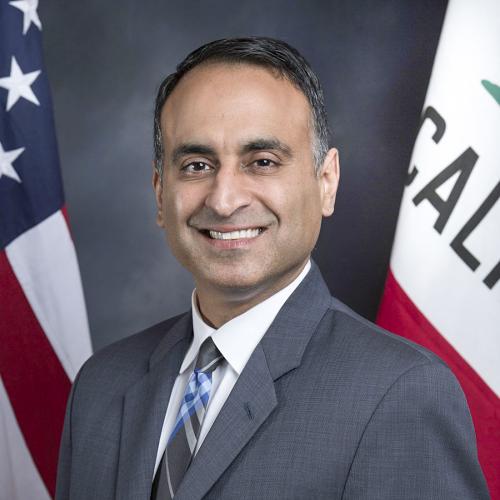
Ash Kalra
DDemocratic
Co

Chris Ward
DDemocratic
Co
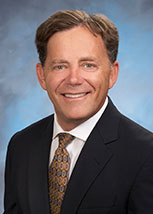
Josh Newman
DDemocratic
Ask Maddy
·
AI policy assistant
Ask Maddy about SB 1126
Scope: CA
Hi! I can help you understand SB 1126. What would you like to know?
Try one of these
i
Maddy answers using official bill text and legislative records. Always verify before sharing.
Sources cited inline