Maddy summaryThis House Resolution designates a month as Filipino American History Month in California. It recognizes the historical contributions of Filipino Americans to the state, including early settlement (dating to 1587), agricultural labor, community building (such as "Little Manila" in Stockton), and military service during World War II. As a symbolic resolution, it does not create new laws, policies, or direct effects on any specific group.
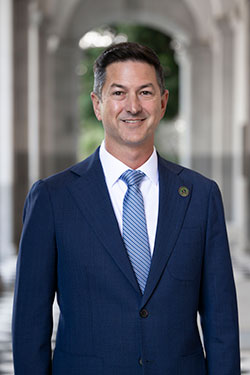
Asm. Chris Ward
Sponsored bills
This measure would proclaim that the State of California celebrates the numerous contributions of public and private sector nuclear fusion organizations within California for advancing fusion energy research and development, applauds recent scientific advances in magnetic fusion energy and inertial confinement at public research facilities in San Diego and Livermore, recognizes the vast potential of fusion energy for addressing key climate and national security goals and the contributions of California's private fusion industry, commends the University of California's Office of the President for its leadership in establishing the Pacific CREST Fusion initiative, and supports developing the fusion energy ecosystem with the goal of siting a first-of-a-kind fusion pilot plant in California by the 2040s.
Existing law, the California Building Standards Law, establishes the California Building Standards Commission (commission) within the Department of General Services and sets forth its powers and duties, including approval and adoption of building standards and codification of those standards into the California Building Standards Code (code) . Existing law requires the commission to publish, or cause to be published, editions of the code in its entirety once every 3 years. Existing law requires the building standards and rules and regulations to impose substantially the same requirements as are contained in the most recent editions of specified international or uniform industry codes, including the International Residential Code of the International Code Council. Existing law establishes the Department of Housing and Community Development (department) in the Business, Consumer Services, and Housing Agency and requires the department to submit an annual report to the Governor and both houses of the Legislature on the operations and accomplishments during the previous fiscal year of the housing programs administered by the department. This bill would require the department to convene a working group no later than December 31, 2026, to research and consider identifying and recommending amendments to state building standards allowing residential developments to be built under the requirements of the California Residential Code, as specified. The bill would require the department, no later than December 31, 2028, to provide a one-time report of its findings to the Legislature in the annual report described above. The bill, if the report identifies and recommends amendments to building standards, would require the department to research, develop, and consider proposing the standards for adoption by the commission, as specified. For the purposes of these provisions, the bill would authorize the department to exceed the scope and application of the International Residential Code to allow residential developments of between 3 and 10 units to be designed and constructed under the requirements of the California Residential Code. The bill would additionally require the department to perform a review of construction cost pressures for single-family and multifamily residential construction as a results of new or existing building standards and provide its findings to the Legislature in its above-described annual report on or before December 31, 2026. The bill would require the department to perform the same review every 3 years to revise or update standards, as needed, to reduce construction costs, as specified.
Existing law requires a contract entered into by any state agency for the procurement or laundering of apparel, garments, or corresponding accessories, or the procurement of equipment, materials, or supplies, other than procurement related to a public works contract, to require that a contractor certify that nothing furnished to the state pursuant to the contract has been laundered or produced by certain types of labor, including forced labor, as defined. Existing law makes any person who falsely certifies pursuant to these provisions guilty of a misdemeanor. This bill would, for a contract entered into or renewed on or after January 1, 2026, revise the above contracting requirements to also require a contractor to certify that the contract complies with specified requirements relating to human trafficking, including certain prohibitions on contractors, contractor employees, subcontractors, subcontractor employees, and their agents. The bill would revise the definition of forced labor to mean knowingly providing or obtaining labor or services of a person by, among other things, threats of serious harm to, or physical restraint against, that person or another person. This bill would require contractors and subcontractors to notify employees of specified prohibited activities and the actions that may be taken against them for violations. The bill would provide that a contractor is ineligible for, and shall not bid on, or submit a proposal for, a contract under these provisions if the contractor has failed to certify its compliance. The bill would also require a contractor to exercise due diligence in ensuring that its subcontractors comply with those requirements, including requiring each subcontractor to sign a certification. By expanding the scope of a crime, the bill would impose a state-mandated local program. This bill would require, before a contract or subcontract is awarded, a proposed contractor or proposed subcontractor to provide a certification to the contracting officer or contractor, as applicable, that states the contractor or subcontractor has implemented a compliance plan, as specified, and has conducted due diligence that either (1) to the best of the contractor's or subcontractor's knowledge and belief, certain parties have not engaged in any specified prohibited activities or (2) if the contractor or subcontractor is aware of abuses relating to the specified prohibited activities, then certain parties have taken the appropriate remedial and referral actions. This bill would require a contractor or subcontractor to take specified actions to ensure compliance with the above-described provisions, including requiring the contractor or subcontractor to disclose to the contracting officer and the state agency with oversight information sufficient to identify the nature and extent of a violation of a prohibited activity. The bill would specify certain actions a contractor would be required to take if a contractor, contractor employee, subcontractor, subcontractor employee, or agent violates these provisions or specified provisions, including, among others, notifying its employees of the actions that will be taken against the employee or agent for violations. Existing law authorizes certain sanctions to be imposed if a contractor knew or should have known that the apparel, garments, corresponding accessories, equipment, materials, or supplies furnished to the state were laundered or produced in violation of specified conditions, including, among others, voiding the contract under which the prohibited apparel, garments, or corresponding accessories, equipment, materials, or supplies were laundered or provided at the option of the state agency and removing the contractor from the bidder's list for a period not to exceed 360 days. This bill would, for a contract entered into or renewed on or after January 1, 2026, authorize additional sanctions, including, among others, requiring a contractor to remove a contractor employee from the performance of the contract, requiring the contractor to terminate a subcontractor, and suspending contract payments until the contractor has taken appropriate remedial action. The bill would also specify that these requirements govern contracts and subcontracts entered into by a state agency, regardless of place of performance. Existing law authorizes a contractor to request a hearing before an administrative law judge when sanctions are imposed. Existing law requires the administrative law judge to consider any measures the contractor has taken to ensure compliance with the above-described provisions and authorizes the administrative law judge to waive any or all sanctions if it is determined that the contractor has acted in good faith. This bill would, for a contract entered into or renewed on or after January 1, 2026, authorize the administrative law judge to additionally consider mitigating factors and aggravating factors, as specified. Existing law authorizes a state agency that investigates a complaint against a contractor for violation of the above-described provisions to limit its investigation to evaluating the information provided by the person or entity submitting the complaint and information provided by the contractor. This bill would, for a contract entered into or renewed on or after January 1, 2026, authorize the state agency to limit its investigation to credible information. The bill would require the contracting officer, upon receipt of credible information regarding a violation of specified provisions, to promptly notify the state agency with oversight, the agency debarring and suspending official, and law enforcement officials with jurisdiction over the alleged offense, as specified. The bill would authorize the contracting officer to direct the contractor to take specific steps to abate the alleged violation or enforcement of the requirements of its compliance plan. The California Constitution requires the state to reimburse local agencies and school districts for certain costs mandated by the state. Statutory provisions establish procedures for making that reimbursement. This bill would provide that no reimbursement is required by this act for a specified reason.

This measure would recognize February 2025 as Black History Month, urge all citizens to join in celebrating the accomplishments of African Americans during Black History Month, and encourage the people of California to recognize the many talents of African Americans and the achievements and contributions they make to their communities to create equity and equality for education, economics, and social justice. The measure would also recognize the significance in protecting citizens' right to vote and remedying racial discrimination in voting.
Maddy summaryThis is a commemorative resolution, not a bill with policy changes. It recognizes key historical milestones of transgender people in California, including Indigenous gender diversity documented in 1775, 19th-century transgender figures in San Francisco's Tenderloin, early activism like the 1959 Cooper Do-nuts Riot, and legal precedents such as Sir Lady Java's 1967 employment discrimination case. The resolution has no binding effect and does not create new laws or directly affect any individuals or groups. It serves solely to honor these historical contributions.
Maddy summaryThis House Resolution designates September as "Student Parent Month" in California. It recognizes the approximately 400,000 student parents across the state - over half a million children - and aims to raise awareness of their needs. The resolution does not create new policies or funding but encourages colleges, policymakers, and communities to honor student parents and support their educational success. It follows California’s prior legislative actions (like AB 2881 and AB 2458) that established concrete support mechanisms for student parents.
Maddy summaryThis resolution designates August 2025 as "Chicano Heritage Month" in California. It symbolically recognizes the historical contributions of Chicanos/Chicanas to U.S. society, including their role in cultural, educational, and political movements. The resolution encourages all Californians to acknowledge and celebrate this heritage, without creating new programs, funding, or legal requirements. It directly affects the public by promoting awareness of this cultural identity, aligning with similar declarations like Santa Ana's 2021 adoption. The resolution was unanimously passed by the California Assembly on August 25, 2025.
Maddy summaryThis is a ceremonial House Resolution (not a bill), designating August 2, 2025, as California Disc Golf Day and the month of August 2025 as California Disc Golf Month. It recognizes disc golf's historical origins in California and its community benefits, including physical activity and mental well-being. The resolution has no policy impact, funding requirements, or direct effect on any individuals or organizations. It serves solely as a symbolic acknowledgment of the sport's popularity.
Maddy summaryHouse Resolution 50 designates November 25, 2025, as "Elimination of Violence Against Women Day" in California. It also recognizes the International Day for the Elimination of Violence Against Women on that date and urges policymakers to advance year-round efforts to prevent and eliminate violence against women and girls. This resolution does not create new laws or funding but serves as a symbolic statement of commitment from the California State Assembly. It directly affects the state government and policymakers by formally acknowledging the issue and encouraging ongoing action.