This measure would proclaim the month of May 2026 as California Tourism Month and would urge the citizens of this great state to support tourism and local businesses by traveling in the state as an act of civic pride.
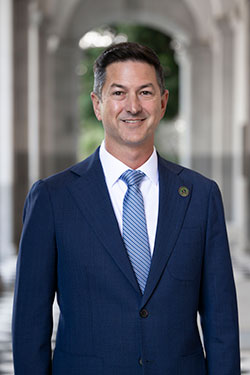
Asm. Chris Ward
Sponsored bills
This measure would recognize the historical wrongdoing committed against California Native Americans and urge the federal government to work alongside tribal leaders to address historic injustices, uphold treaty obligations, and ensure equitable access to resources, healthcare, education, and environmental stewardship.
Existing law prescribes requirements for the disposal of surplus land by a local agency. Existing law defines "surplus land" for these purposes to mean land owned in fee simple by any local agency for which the local agency's governing body takes formal action in a regular public meeting declaring that the land is surplus and is not necessary for the agency's use. Existing law requires that land be declared either "surplus land" or "exempt surplus land," as supported by written findings, before a local agency may take any action to dispose of it consistent with an agency's policies or procedures. Existing law provides that an agency is not required to follow the requirements for the disposal of surplus land for "exempt surplus land." Existing law defines "exempt surplus land" to include certain types of land. Existing law makes a local agency that disposes of surplus land, in violation of the requirements for the disposal of surplus land after receiving specified notification from the Department of Housing and Community Development that the local agency is in violation, liable for a penalty of 30% of the applicable disposition value for a first violation and 50% for any subsequent violation, as provided. This bill would expand the definition of "exempt surplus land" to include lands that comprise Mission Bay Park located within the City of San Diego, as provided. Among other requirements, the bill would require the city to provide the Department of Housing and Community Development a written notification of its declaration and findings, and any restrictions recorded against the property, at least 30 days prior to disposing of land declared exempt surplus land, and would require the department to notify the city if the department has determined the city is in violation of these provisions, as provided. This bill would require that the city meet specified requirements to declare exempt surplus land pursuant to these provisions, including depositing funds from the deposition into a local housing-specific set-aside account, as provided. The bill would provide that a violation of these provisions would be considered a 2nd or subsequent violation of the requirements for the disposal of surplus land, as provided. The bill would require that these requirements be contained in a covenant or restriction recorded against the surplus land at the time of disposition, as provided. This bill would make legislative findings and declarations as to the necessity of a special statute for Mission Bay Park.
Maddy summaryThis House Resolution recognizes May 17, 2026, as the International Day Against Homophobia, Biphobia, Interphobia, and Transphobia within the California Legislature. The measure formally acknowledges the ongoing discrimination faced by LGBTQ+ individuals globally and reaffirms the state's commitment to equality and civil rights. By adopting this resolution, the Assembly encourages all Californians to support inclusive practices and stand against hate toward the LGBTQ+ community.
Maddy summaryThis bill designates the week of May 17 to May 24, 2026, as National Public Works Week throughout California to honor the contributions of public works professionals. It directly affects engineers, managers, and employees in government and the private sector who maintain essential infrastructure like transportation systems, water supplies, and public buildings. The resolution requests that the Governor issue a proclamation encouraging the public to observe the week with educational programs and activities that highlight the importance of these workers.
Existing law prohibits the touching of an intimate part, as defined, of another person if the touching is against the will of the person touched and is for the specific purpose of sexual arousal, sexual gratification, or sexual abuse. Existing law makes a physician and surgeon, psychotherapist, or alcohol and drug abuse counselor who engages in specified sexual acts or sexual contact with a patient or client guilty of sexual exploitation and makes a violation of those provisions a crime, except as specified, punishable as a misdemeanor or a felony. This bill would make a member of the clergy, as defined, who engages in specified sexual acts or contact with a current or former patient, client, or member of the congregation, as specified, guilty of sexual exploitation by a member of the clergy. The bill would specify that consent is not a defense to a violation of that provision and would make the crime punishable as a misdemeanor or a felony. By creating a new crime, this bill would impose a state-mandated local program. The California Constitution requires the state to reimburse local agencies and school districts for certain costs mandated by the state. Statutory provisions establish procedures for making that reimbursement. This bill would provide that no reimbursement is required by this act for a specified reason.
Existing law establishes the Division of Labor Standards Enforcement within the Department of Industrial Relations. Existing law authorizes the division, which is headed by the Labor Commissioner, to enforce the Labor Code and all labor laws of the state, the enforcement of which is not specifically vested in any other officer, board, or commission. This bill would prohibit an employer from using a worker's personal information, as defined, to train an artificial intelligence system to replicate, automate, or replace a worker's job, and would prohibit an employer from selling, disclosing, or otherwise providing access to a worker's personal information to a third party for the purpose of training an artificial intelligence system to replicate, automate, or replace a worker's job. The bill would prohibit a vendor providing services to an employer under a contract from providing access to the personal information of an employer's worker to a third party or using the personal information of an employer's worker to train artificial intelligence, as specified. The bill would require a contract between an employer and vendor to include a requirement that the vendor implement and maintain reasonable security procedures to protect the worker's personal information from, among other things, unauthorized or illegal access. The bill would define terms for these provisions, including "employer" and "personal information." The bill would require the Labor Commissioner and authorize a public prosecutor to enforce these provisions. The bill would authorize a worker, or their exclusive representative, who suffered a violation of these provisions to bring a civil action for damages, injunctive relief, punitive damages, and attorney's fees and costs. The bill would establish a statutory penalty for a violation of these provisions of up to $500 for each violation. The bill would include findings that changes proposed by this bill address a matter of statewide concern rather than a municipal affair and, therefore, apply to all cities, including charter cities.

This measure would encourage all Californians to support the arts and would recognize April 2026 as a significant time to recognize, appreciate, and celebrate the arts, culture, and creativity of all Californians. This measure would also recognize the 50th anniversary of the California Arts Council, which supports local arts infrastructure and programming statewide through grants, programs, and services.
Maddy summaryThis bill designates April 2026 as Second Chance Month in California to raise awareness about opportunities for individuals reentering society after incarceration. The measure is a ceremonial proclamation that does not alter laws, allocate funding, or change government operations. Its primary purpose is to encourage public recognition of the challenges faced by formerly incarcerated people and to highlight available support resources during that specific month.
Maddy summaryThis bill designates April 2026 as Parkinson's Disease Awareness Month in California. It requires state officials to issue a formal proclamation highlighting the importance of raising public awareness about the condition. The measure does not change laws or allocate funding but serves to recognize the month dedicated to this health issue.