

Passed May 8, 2023
1 co-sponsor
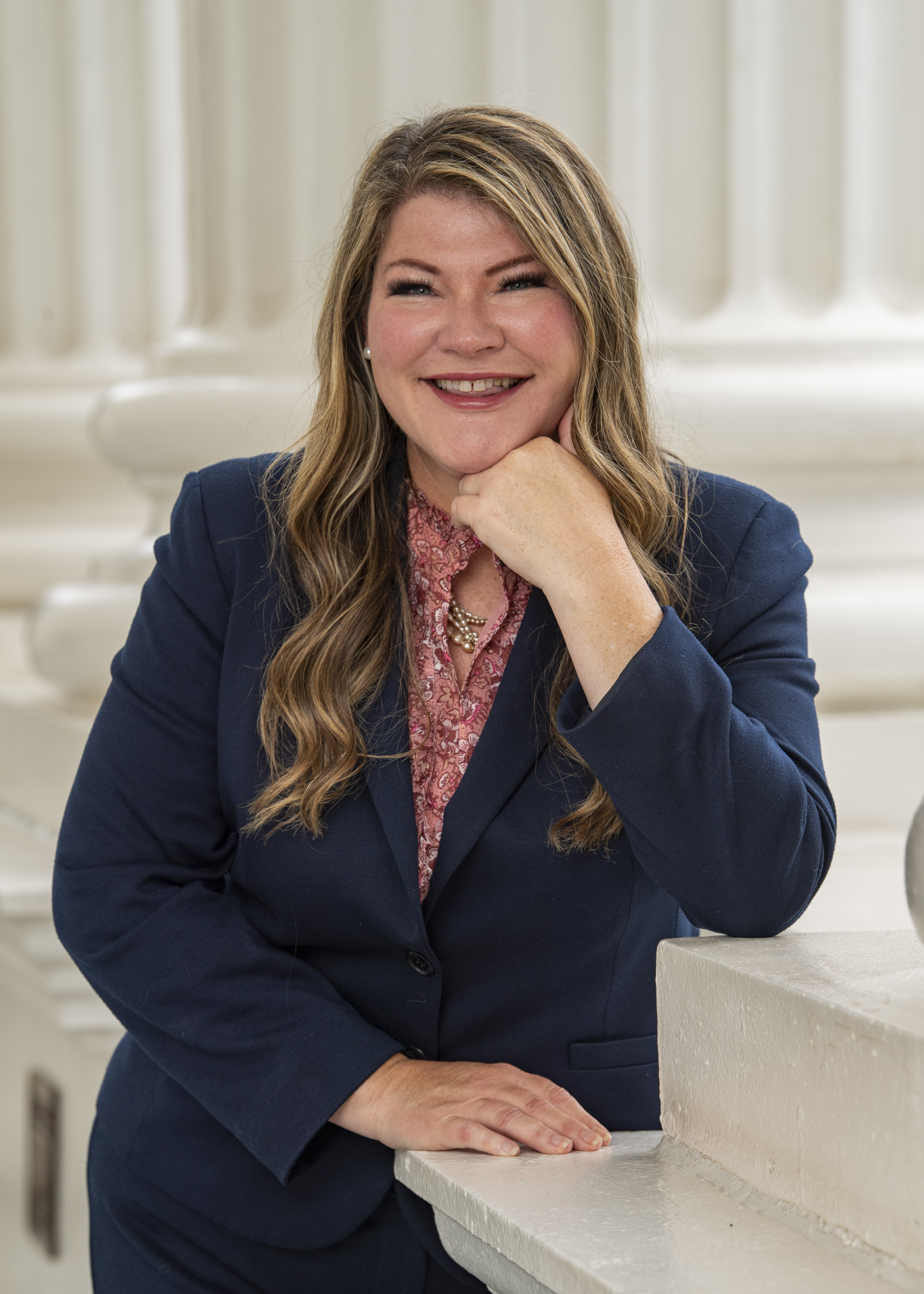
Asm. Tasha Boerner
Total votes
16,471
all sessions
Attendance
94%
941 missed
Near the chamber average
With party
98%
of cast votes
Near the chamber average
Bipartisan score
1%
crosses aisle rarely
Near the chamber average
Sponsored
1,554
bills & resolutions
Near the chamber average
Committees
12
assignments
1,554 bills and resolutions
Sponsored bills
Total
1,554
Primary
165
Co-sponsor
1,389
This page
1,554
matching current filters
Passed May 4, 2023
1 co-sponsor
Relative to California Attractions and Parks Day.
This measure would recognize May 11, 2023, as California Attractions and Parks Day, and would declare that the Legislature intends to take actions to commemorate the 19th anniversary of the California Attractions and Parks Association and celebrate the organization's important role and many contributions to California's tourism industry through its promotion, support, and sponsorship of a wide variety of activities and programs at attractions and parks throughout the state.
Passed May 1, 2023
1 co-sponsor
Passed May 1, 2023
1 co-sponsor
Passed Apr 24, 2023
1 co-sponsor
Passed Apr 24, 2023
1 co-sponsor
California Environmental Quality Act: exemptions: transportation-related projects.
The California Environmental Quality Act (CEQA) requires a lead agency, as defined, to prepare, or cause to be prepared, and certify the completion of an environmental impact report on a project that it proposes to carry out or approve that may have a significant effect on the environment or to adopt a negative declaration if it finds that the project will not have that effect. CEQA also requires a lead agency to prepare a mitigated negative declaration for a project that may have a significant effect on the environment if revisions in the project would avoid or mitigate that effect and there is no substantial evidence that the project, as revised, would have a significant effect on the environment. CEQA, until January 1, 2030, exempts from its requirements bicycle transportation plans for an urbanized area for restriping of streets and highways, bicycle parking and storage, signal timing to improve street and highway intersection operations, and related signage for bicycles, pedestrians, and vehicles under certain conditions. This bill would delete the requirement that the bicycle transportation plan is for an urbanized area. The bill would extend the exemption to an active transportation plan or pedestrian plan. The bill would define "active transportation plan" and "pedestrian plan." The bill would specify that individual projects that are a part of an active transportation plan or pedestrian plan remain subject to the requirements of CEQA unless those projects are exempt by another provision of law. CEQA exempts from its requirements certain projects that are, among other things, located in an urbanized area, including transit prioritization projects, as defined, and projects for pedestrian and bicycle facilities or for the institution or increase of new bus rapid transit, bus, or light rail services on public or highway rights-of-way. For those exempted projects exceeding $100,000,000 in 2020 United States dollars, CEQA, except as provided, requires the lead agency to, among other things, complete and consider the results of a project business case and a racial equity analysis, as specified, and requires the lead agency, before exempting a project from CEQA, to hold at least 3 noticed public meetings in the project area, as provided. CEQA requires the lead agency, before granting an exemption for projects under the above provisions, to certify that those projects will be carried out by a skilled and trained workforce, except as provided. Existing law repeals the above-described exemption on January 1, 2023. This bill would extend the exemption to January 1, 2030. The bill would revise and recast the exemption to, among other things, repeal the requirement that the exempted projects are located in an urbanized area, extend the exemption by revising the definition of transit prioritization projects, and require projects for the institution or increase of bus rapid transit, bus, or light rail service, as provided, to be located on a site that is wholly within the boundaries of an urbanized area or urban cluster, as designated by the United States Census Bureau. The bill would revise the requirements for the project business case and racial equity analysis and noticed public meetings to apply to exempted projects exceeding $100,000,000 and would additionally require the lead agency to complete an analysis of residential displacement and suggest antidisplacement strategies, designs, or actions for those projects for which at least 50% of the project or projects' stops and stations are located in an area at risk of residential displacement and will have a maximum of 15-minute peak headways. The bill would require the lead agency to define or identify areas at risk of residential displacement. For projects that provide for the construction or maintenance of certain hydrogen refueling infrastructure or facilities or that exceed $50,000,000, the bill would require the lead agency to hold certain noticed meetings, as provided. The bill would require the lead agency to take an action at a public meeting of its governing board to certify that the project will be completed by a skilled and trained workforce following the granting of the exemption and would provide that the certification requirement is not required under specified circumstances. This bill would specify that the revision made by this bill to the exemption for projects for the institution or increase of bus rapid transit, bus, or light rail service may apply to projects for which a notice of exemption is filed before January 1, 2023. The bill would, for projects exempted by the above-described provisions for which a notice of exemption was filed before January 1, 2023, authorize the lead agency to either certify that the project will be completed by a skilled and trained workforce after the granting of the exemption or exempt those projects from the certification requirement if the lead agency demonstrates compliance with certain conditions.
Signed into law Sep 30, 2022
1 co-sponsor
California State University: doctoral programs in public health.
Existing law establishes the California State University, under the administration of the Trustees of the California State University, and the University of California, under the administration of the Regents of the University of California, as 2 of the segments of public postsecondary education in this state. Existing law provides for the missions and functions of these segments, and states that the University of California has the sole authority in public higher education to award doctoral degrees in all fields of learning, except that it may agree with the California State University to award joint doctoral degrees in selected fields. However, existing law authorizes the California State University to offer doctoral programs in education, audiology, physical therapy, and occupational therapy without that agreement. This bill would authorize the California State University to award the Doctor of Public Health degree. The bill would require the Doctor of Public Health degree programs to be focused on health and scientific knowledge translation and transformative community leadership, and to be designed to address the community public health workforce needs of California and prepare qualified professionals to be leaders and experienced practitioners who apply their advanced knowledge in service to California's diverse communities. The bill would require each student in these degree programs to be charged fees comparable to, but no higher than, those fees charged for the Doctor of Public Health degree at the University of California.
Signed into law Sep 30, 2022
1 co-sponsor
Unemployment insurance: contribution rates: disability insurance: paid family leave: weekly benefit amount.
(1) Existing unemployment compensation disability law requires workers to pay contribution rates based on wages received in employment, for payment into the Unemployment Compensation Disability Fund, a special fund in the State Treasury. Under existing law, those funds are continuously appropriated for the purpose of providing disability benefits and making payment of expenses in administering those provisions. Existing law authorizes the Director of Employment Development to increase or decrease the rate of worker contributions, up to a certain amount, if the director determines the adjustment is necessary to reimburse the Unemployment Compensation Disability Fund for disability benefits paid or estimated to be paid or to prevent the accumulation of funds in excess of those needed to maintain an adequate fund balance. Under existing law, the remuneration of a worker over a specified amount is not subject to the contribution levels described above. Under existing law, specifically, the worker contribution provision does not apply to that part of a worker's remuneration which is paid after remuneration with respect to employment equal to 4 times the maximum weekly benefit for each calendar year specified, multiplied by 13 and divided by 55%, has been paid to an individual by an employer. This bill would remove that limitation on January 1, 2024. (2) Existing unemployment compensation disability law provides a formula for determining benefits available to qualifying disabled individuals. Under existing law, for periods of disability commencing on and after January 1, 2018, but before January 1, 2023, (A) if the amount of wages paid an individual during the quarter of their disability base period in which those wages were highest is less than $929, the weekly benefit amount is $50, (B) if the amount of wages paid to the individual during the quarter of their disability base period in which those wages were highest is $929 or more, and is less than 13 of the amount of the state average quarterly wage, the weekly benefit amount is 70% of those wages divided by 13, and (C) if the amount of wages paid an individual during the quarter of their disability base period in which those wages were highest is 13 of the amount of the state average quarterly wage or more, the weekly benefit amount is the greater of 23.3% of the state average weekly wage or 60% of those wages divided by 13. Under existing law, for periods of disability commencing on and after January 1, 2023, if the amount of wages paid an individual during the quarter of their disability base period in which those wages were highest exceeds $1,749.20, the weekly benefit amount is 55% of those wages divided by 13. Under existing law, a benefit that is not a multiple of $1 shall be computed to the next higher multiple of $1, and the amount of the benefit is prohibited from exceeding the maximum workers' compensation temporary disability indemnity weekly benefit amount. Under existing law, the maximum amount of benefits payable to an individual during any one disability benefit period is 52 times their weekly benefit amount, as specified. This bill would revise the formulas described above by extending the formula applicable for periods of disability commencing on and after January 1, 2018, but before January 1, 2023, through periods of disability commencing before January 1, 2025. The bill would revise the formula for periods of disability commencing after January 1, 2025, by redefining the weekly benefit amount to be equal to (A) $50 if the amount of wages paid an individual during the quarter of their disability base period in which those wages were highest is less than $722.50, (B) the greater of 70% of wages divided by 13, but not exceeding the maximum workers' compensation temporary disability indemnity weekly benefit amount, or 63% of the state average weekly wage, if the amount of wages paid an individual during the quarter of their disability base period in which those wages were highest is more than 70% of the state average quarterly wage, and (C) 90% of wages divided by 13, but not exceeding the maximum workers' compensation temporary disability indemnity weekly benefit amount, if the amount of wages paid an individual during the quarter of their disability base period in which those wages were highest is $722.50 or more, but 70% or less than the state average quarterly wage. (3) Existing law establishes, within the above state disability insurance program, a family temporary disability insurance program, also known as the paid family leave program, for the provision of wage replacement benefits for up to 8 weeks to workers who take time off work to care for a seriously ill family member or to bond with a minor child within one year of birth or placement, as specified. Existing law defines "weekly benefit amount" for purposes of both employee contributions and benefits under this program to mean the amount of weekly benefits available to qualifying disabled individuals pursuant to unemployment compensation disability law, calculated pursuant to specified formulas partly based on the applicable percentage of the wages paid to an individual for employment by employers during the quarter of the individual's disability base period in which these wages were highest, but not to exceed the maximum workers' compensation temporary disability indemnity weekly benefit amount established by the Department of Industrial Relations. This bill would revise the formula for the weekly benefit amount under the family temporary disability insurance program to conform to the changes for periods of disability commencing before January 1, 2025. The bill would also revise the formula for periods of disability commencing on or after January 1, 2025, by redefining the weekly benefit amount to be equal to (A) $50 if the amount of wages paid an individual during the quarter of their disability base period in which those wages were highest is less than $722.50, (B) the greater of 70% of wages divided by 13, but not exceeding the maximum workers' compensation temporary disability indemnity weekly benefit amount, or 63% of the state average weekly wage, if the amount of wages paid an individual during the quarter of their disability base period in which those wages were highest is more than 70% of the state average quarterly wage, and (C) 90% of wages divided by 13, but not exceeding the maximum workers' compensation temporary disability indemnity weekly benefit amount, if the amount of wages paid an individual during the quarter of their disability base period in which those wages were highest is $722.50 or more, but 70% or less than the state average quarterly wage. (4) By providing for the deposit of additional contributions in, and by authorizing an increase in disbursements from, the Unemployment Compensation Disability Fund, this bill would make an appropriation.
Signed into law Sep 30, 2022
1 co-sponsor
Theft: jurisdiction.
Under existing law, when a public offense is committed in part in one jurisdictional territory and in part in another jurisdictional territory, or the acts constituting or requisite to the consummation of the offense occur in 2 or more jurisdictional territories, the jurisdiction for the offense is in any competent court within either jurisdictional territory. This bill would establish the jurisdiction of a criminal action brought by the Attorney General for theft, organized retail theft, or receipt of stolen property as including the county where an offense involving the theft or receipt of the stolen merchandise occurred, the county in which the merchandise was recovered, or the county where any act was done by the defendant in instigating, procuring, promoting, or aiding in the commission of the offense. The bill would also, if multiple offenses of theft or other specified crimes all involving the same defendant or defendants and the same merchandise, or the same defendant or defendants and the same scheme or substantially similar activity, occur in multiple jurisdictions, establish that any of those jurisdictions is a proper jurisdiction for all of the offenses. The bill would extend jurisdiction to all associated offenses connected together in their commission to the underlying theft offenses.
Signed into law Sep 30, 2022
1 co-sponsor
Ask Maddy
·
AI policy assistant
Ask Maddy about Tasha Boerner
Scope: CA
Hi! I can help you understand Tasha Boerner's legislative record. What would you like to know?
Try one of these
i
Maddy answers using official bill text and legislative records. Always verify before sharing.
Sources cited inline