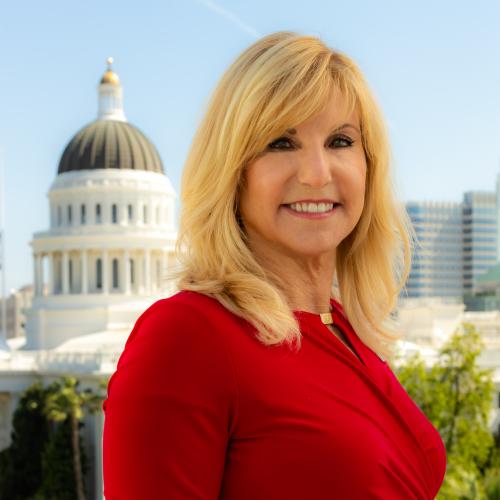
Photo of Laurie Davies
R California Assembly · District 74 On the 2026 ballot

Asm. Laurie Davies

Compare
Total votes
15,899
all sessions
Attendance
92%
934 missed
Near the chamber average
With party
97%
of cast votes
Lower than 99% of chamber peers
Bipartisan score
2%
crosses aisle rarely
Higher than 96% of chamber peers
Sponsored
1,401
bills & resolutions
Higher than 95% of chamber peers
Committees
10
assignments
1,401 bills and resolutions

Sponsored bills

Total
1,401
Primary
107
Co-sponsor
1,294
This page
1,401
matching current filters
Primary AB 1569
Signed into law · California Assembly · Lead sponsor
Pupil safety: electric bicycle: safety and training program.

Existing law establishes the State Department of Education in state government, and vests the department with specified powers and duties relating to the state's public school system. Existing law establishes the Department of the California Highway Patrol, under the control of the Commissioner of the California Highway Patrol, within the Transportation Agency. Existing law requires the Department of the California Highway Patrol to develop statewide safety and training programs based on evidence-based practices for users of electric bicycles. This bill would require, on or before March 1, 2028, the State Department of Education, in consultation with the Department of the California Highway Patrol, to develop a standardized electric bicycle safety and training program for pupils in grades 7 to 12, inclusive, as provided. In developing the program, the bill would authorize the State Department of Education and the Department of the California Highway Patrol to collaborate with local law enforcement agencies or local governments that have implemented electric bicycle training programs already to ensure the program reflects proven best practices. The bill would encourage local educational agencies and parent organizations to offer training demonstrations to pupils and parents on electric bicycle operations in collaboration with local law enforcement agencies or local governments, as specified.

Signed into law Aug 27, 2026 0 co-sponsors
Co-sponsor SB 936
Passed · California Senate · Co-sponsor
Nitrous oxide: sales.

Existing law makes it a misdemeanor to possess nitrous oxide with the intent of inhaling it for specified purposes, including to cause intoxication. Existing law also makes it a misdemeanor to sell nitrous oxide to any person under 18 years of age. Existing law makes it a misdemeanor to dispense nitrous oxide to a person and knowing that the person will use it for specified prohibited purposes, if that person then causes death or great bodily injury to themselves or another person. Under existing law, the Cigarette and Tobacco Products Licensing Act of 2003, the California Department of Tax and Fee Administration (CDTFA) administers and enforces a statewide program to license manufacturers, importers, distributors, wholesalers, and retailers of cigarettes and tobacco products. Existing law specifically requires a retailer, distributor, or wholesaler, as defined, to hold a license from the CDTFA to engage in the sale of cigarettes or tobacco products. Existing law subjects these licenses to suspension or revocation for violations of existing law. Existing law imposes specified noticing and posting requirements for retailer licenses that are revoked. A violation of these provisions is a misdemeanor. This bill would, except as specifically exempted, prohibit the sale and distribution of a nitrous oxide container that is capable of holding more than 8 grams of nitrous oxide or from which an individual may directly inhale nitrous oxide. The bill would also prohibit the sale and distribution of a nitrous oxide that has, or is marketed as having, the taste or smell of any food. The bill would prohibit knowingly selling or distributing a device that allows an individual to inhale nitrous oxide from the container or hold nitrous oxide for the purposes of inhalation. The bill would punish a violation of these provisions as an infraction, as specified. The bill would also authorize a court to suspend a business license if the business has a prior conviction for violating these prohibitions, and to revoke a license to sell tobacco products if the business has 2 prior convictions for violating these prohibitions. The bill would make any person, distributor, or business found to have violated these prohibitions liable for all reasonable costs incurred by a public agency in the investigation, inspection, seizure, storage, transportation, handling, venting, abatement, disposal, or destruction of nitrous oxide products, nitrous oxide containers, inhalation devices, or related materials involved in the violation, as specified. This bill would prohibit a person that is engaged in the business of selling cigarettes or tobacco products in this state from possessing, storing, owning, or selling nitrous oxide, in violation of the criminal provisions outlined above, at any site where cigarettes and tobacco products are stored or sold. The bill would authorize the CDTFA to seize nitrous oxide products, as prescribed. The bill would subject a violator to civil penalties in amounts depending on the aggregate retail value of the seized nitrous oxide and the number of violations within 5 years of the first violation. The bill would require the deposit of collected civil penalties in the Cigarette and Tobacco Products Compliance Fund. The bill would also subject a violator who commits a 2nd violation to license suspension and who commits a 3rd violation to license revocation, as prescribed. This bill would establish procedures for the CDTFA to follow for a court-ordered revocation. The bill would require the CDTFA to assess a $250 civil penalty for each revoked license and to deposit collected civil penalties into the fund, to be made available to the department, upon appropriation by the Legislature, for purposes of administering the bill. The bill would authorize a licensee to apply for a new license at the previously revoked location 6 months after the date of revocation and would authorize the CDTFA, at its discretion, to issue a new license. The bill would apply these noticing and posting requirements to a retailer subject to a court-ordered revocation pursuant to the bill. The California Constitution provides for the establishment of the State Board of Equalization, which, before July 1, 2017, had primary responsibility for most of the state's duties, powers, and responsibilities regarding the administration of taxes and fees. Existing law, on July 1, 2017, transferred to the CDTFA various duties, powers, and responsibilities of the State Board of Equalization, including administration of the Cigarette and Tobacco Products Licensing Act of 2003, as specified. This bill would change references in the provisions of the Cigarette and Tobacco Products Licensing Act of 2003 amended by this bill from the "State Board of Equalization" to the "California Department of Tax and Fee Administration" to reflect the transfer of the board's duties, powers, and responsibilities to the CDTFA. Because this bill would create new crimes, it would impose a state-mandated local program. The California Constitution requires the state to reimburse local agencies and school districts for certain costs mandated by the state. Statutory provisions establish procedures for making that reimbursement. This bill would provide that no reimbursement is required by this act for a specified reason.


Passed Aug 27, 2026 1 co-sponsor
Co-sponsor AB 1652
Signed into law · California Assembly · Co-sponsor
State agencies: regulations and legislation: nondisclosure agreements.

Existing law prohibits Members of the Legislature from entering into, or requesting that another party enter into, a nondisclosure agreement relating to the drafting, negotiation, or discussion of proposed legislation, and makes any nondisclosure agreement relating to the drafting, negotiation, or discussion of proposed legislation void and unenforceable. Existing law provides an exception for nondisclosure agreements, or portions thereof, that prevent only the disclosure of trade secrets, financial information, or proprietary information, as specified. This bill would prohibit an elective or appointive officer of a state agency acting in their official capacity from entering into, or requesting that another party enter into, a nondisclosure agreement relating to the drafting, negotiation, or discussion of a proposed regulation or legislation. The bill would also make any nondisclosure agreement relating to the drafting, negotiation, or discussion of a proposed regulation or legislation entered into by an elective or appointive officer of a state agency acting in their official capacity after the effective date of this bill void and unenforceable. The bill would provide an exception for nondisclosure agreements, or portions thereof, that prevent only the disclosure of trade secrets, private financial information, or proprietary information, as specified.

Signed into law Aug 27, 2026 1 co-sponsor
Co-sponsor AB 760
Passed · California Assembly · Co-sponsor
Income taxes: exclusions: 2026 Garden Grove chemical leak.

The Personal Income Tax Law and the Corporation Tax Law, in conformity with federal income tax law, generally define "gross income" as income from whatever source derived, except as specifically excluded, and provide various exclusions from gross income. This bill would, for taxable years beginning on or after January 1, 2027, and before January 1, 2032, provide an exclusion from gross income for any qualified taxpayer, as defined, for amounts received for costs and losses associated with the 2026 Garden Grove chemical leak, as provided. Existing law requires any bill authorizing a new tax expenditure to contain, among other things, specific goals that the tax expenditure will achieve, detailed performance indicators, and data collection requirements. This bill would include additional information required for any bill authorizing a new tax expenditure. This bill would take effect immediately as a tax levy.

Passed Aug 27, 2026 1 co-sponsor
Co-sponsor HR 141
Introduced · California Assembly · Co-sponsor
Relative to tire affordability.

Maddy summaryCalifornia Assembly Resolution 141 expresses concern that the state's new energy efficiency standards for replacement tires may impose significant financial burdens on consumers and businesses. The resolution cites industry data suggesting tire costs could rise by up to $365 per set, contradicting official estimates of a smaller increase, and argues that the program's environmental benefits have not fully accounted for the impacts of manufacturing, transporting, and disposing of additional tires. It urges the State Energy Resources Conservation and Development Commission to reassess the program by conducting a comprehensive evaluation of affordability, tire safety, and full life-cycle environmental effects.

Introduced Aug 26, 2026 1 co-sponsor
Co-sponsor AB 2066
Passed · California Assembly · Co-sponsor
Triggering event: pregnancy.

Existing law, the Knox-Keene Health Care Service Plan Act of 1975, provides for the licensure and regulation of health care service plans by the Department of Managed Health Care and makes a willful violation of the act a crime. Existing law provides for the regulation of disability insurers by the Department of Insurance. Existing law requires a health care service plan or disability insurer to allow an individual to enroll in or change their health benefit plan as a result of a specified triggering event. This bill would make pregnancy a triggering event for purposes of enrollment or changing a health benefit plan. Because a willful violation of this provision by a health care service plan would be a crime, the bill would impose a state-mandated local program. The California Constitution requires the state to reimburse local agencies and school districts for certain costs mandated by the state. Statutory provisions establish procedures for making that reimbursement. This bill would provide that no reimbursement is required by this act for a specified reason.
Passed Aug 26, 2026 1 co-sponsor
Primary AB 1816
Passed · California Assembly · Lead sponsor
Probation: duration.

Existing law authorizes courts that have jurisdiction in misdemeanor cases to suspend the sentence and make and enforce terms of probation in those cases, for a period not to exceed one year, except as specified. Existing law authorizes the court, in an order granting probation, to suspend the imposition or execution of the sentence and direct the suspension to continue for a period of time not exceeding 2 years, except for specified offenses, including, among others, violent felonies and embezzlement. This bill would, for an offender required to register as a sex offender, if the probation department files a petition to the court and the court makes a finding the defendant has not successfully completed probation and additional time is necessary for programming, as specified, authorize the court to order the term of probation to continue for a period not exceeding one additional year. The California Constitution requires the state to reimburse local agencies and school districts for certain costs mandated by the state. Statutory provisions establish procedures for making that reimbursement. This bill would provide that, if the Commission on State Mandates determines that the bill contains costs mandated by the state, reimbursement for those costs shall be made pursuant to the statutory provisions noted above.

Passed Aug 26, 2026 0 co-sponsors
Co-sponsor AB 2054
Passed · California Assembly · Co-sponsor
Family temporary disability insurance program: covered active duty.

Existing unemployment compensation disability law requires workers to pay contribution rates based on, among other things, wages received in employment and benefit disbursement, for payment into the Unemployment Compensation Disability Fund, a special fund in the State Treasury. That fund is continuously appropriated for the purpose of providing disability benefits and making payment of expenses in administering those provisions. Existing law, the family temporary disability insurance program, provides up to 8 weeks of wage replacement benefits to workers who take time off work to care for a seriously ill child, spouse, parent, grandparent, grandchild, sibling, or domestic partner, or to bond with a minor child within one year of birth or placement in connection with foster care or adoption, or to participate in a qualifying exigency related to the covered active duty or call to covered active duty of the individual's spouse, domestic partner, child, or parent in the Armed Forces of the United States. Existing law defines "covered active duty" to mean, with respect to a member of the regular Armed Forces of the United States, duty during the deployment of the member with the regular armed forces to a foreign country and, with respect to a member of the reserve components of the Armed Forces of the United States, duty during the deployment of the member of those reserve components to a foreign country under a federal call or order to active duty. This bill would, starting upon specified changes to the Employment Development Department's integrated claims management system or on July 1, 2028, whichever occurs sooner, expand the definition of "covered active duty" to additionally include duty during training, deployment other than deployment to a foreign country, and, with respect to a member of the reserve components of the Armed Forces of the United States, a call or order to state active duty. By authorizing expenditures from the continuously appropriated fund for these expanded purposes, this bill would make an appropriation.

Passed Aug 26, 2026 1 co-sponsor
Co-sponsor SB 868
Passed · California Senate · Co-sponsor
Electricity: portable solar generation devices.

Existing law vests the Public Utilities Commission with regulatory authority over public utilities, including electrical corporations, while local publicly owned electric utilities are under the direction of their governing boards. This bill would, until January 1, 2030, exempt a portable solar generation device, as defined, from all interconnection requirements imposed by state law, the commission, electrical corporation rules, or local publicly owned electric utility rules, as specified. The bill would, until January 1, 2030, prohibit an electrical corporation or a local publicly owned electric utility from requiring a customer using a portable solar generation device to take specified actions, including, among other things, paying any fee or charge related to the device or the electricity the device feeds into a building's electrical system. The bill would, until January 1, 2030, authorize an electrical corporation or a local publicly owned electric utility to require a customer using a portable solar generation device to notify the electrical corporation or local publicly owned electric utility, using a simple online registration form, of the address, make, model, and size of the portable solar generation device, as provided. Beginning January 1, 2030, the bill would prohibit the sale of a portable photovoltaic energy generation device that is designed to be connected to and disconnected from a building's electrical system through a receptacle and does not meet the definition of a portable solar generation device, as specified. Under existing law, a violation of any order, decision, rule, direction, demand, or requirement of the commission is a crime. Because a violation of a commission action implementing the bill's requirements would be a crime, the bill would impose a state-mandated local program. Additionally, by imposing new duties on local publicly owned electric utilities, the bill would impose a state-mandated local program. The California Constitution requires the state to reimburse local agencies and school districts for certain costs mandated by the state. Statutory provisions establish procedures for making that reimbursement. This bill would provide that no reimbursement is required by this act for specified reasons.

Passed Aug 26, 2026 1 co-sponsor
Showing 21 to 30 of 1,401 bills
Previous 1 … 2 3 4 … 141 Next