Maddy summaryThis bill is a House Resolution that formally recognizes the work of school board members across California by designating January 2025 as School Board Recognition Month. It directly affects local school districts and county offices of education by honoring the nearly 5,000 elected school board members who serve in these roles. The resolution expresses appreciation for their dedication to public education and encourages community members to support these local officials in their efforts to serve students. This is a commemorative measure rather than a policy change, as it does not alter laws or regulations but instead highlights the importance of school governance.
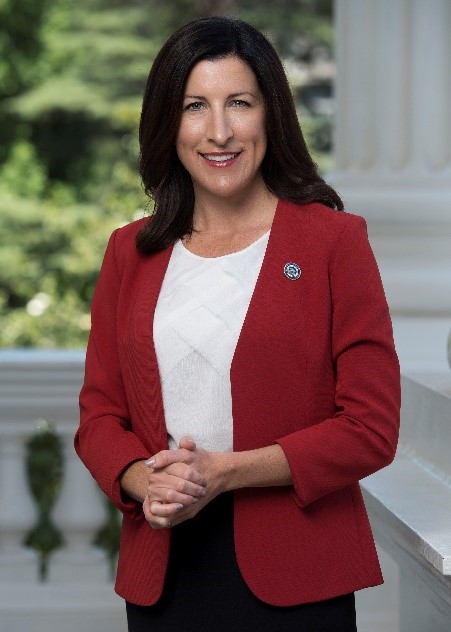
Asm. Cottie Petrie-Norris
Sponsored bills
Existing law authorizes the State Air Resources Board to adopt and implement motor vehicle fuel specifications for the control of air contaminants and sources of air pollution. Existing law prohibits the state board from adopting any regulation that establishes a specification for motor vehicle fuel unless that regulation, and a multimedia evaluation conducted by affected agencies and coordinated by the state board, are reviewed by the California Environmental Policy Council. This bill would authorize the state board to adopt a schedule of fees, not to exceed a total amount collected of $5,000,000 over 3 years, to cover all or a portion of the state board's reasonable costs associated with the development, implementation, and enforcement of a specification for a blend of gasoline that contains more than 10% and up to 15% ethanol by volume for use as a transportation fuel, as provided. The bill would require that the revenues from those fees be deposited into the Cost of Implementation Account and be available, upon appropriation by the Legislature, for purposes of carrying out these provisions. This bill would require the state board to ensure that the multimedia evaluation of gasoline containing up to 15% ethanol by volume conducted pursuant to those provisions is completed, and ready for review by the council, on or before July 1, 2025. Existing law requires the State Energy Resources Conservation and Development Commission, on or before January 1, 2024, and every 3 years thereafter, to submit an assessment to the Governor and the Legislature that, among other things, identifies methods to ensure a reliable supply of affordable and safe transportation fuels in California, as provided. This bill would require the commission, in consultation with the state board, to prepare and submit a report to the Legislature on or before July 1, 2025, regarding potential solutions to increase the supply of gasoline through the production enhancement strategies identified by the commission in its 2024 assessment submitted to the Legislature and the Governor, as specified. This bill would declare that it is to take effect immediately as an urgency statute.

Existing law, the Knox-Keene Health Care Service Plan Act of 1975, provides for the licensure and regulation of health care service plans by the Department of Managed Health Care and makes a willful violation of the act a crime. Existing law provides for the regulation of health insurers by the Department of Insurance. Existing law requires a victim of sexual assault who seeks a medical evidentiary examination to be provided with one, as specified. Existing law prohibits costs incurred by a qualified health care professional, hospital, clinic, sexual assault forensic examination team, or other emergency medical facility for the medical evidentiary examination portion of the examination of the victim of a sexual assault, as described in a specified protocol, when the examination is performed as specified, from being charged directly or indirectly to the victim of the assault. This bill would require a health care service plan or health insurance policy that is issued, amended, renewed, or delivered on or after July 1, 2025, to provide coverage without cost sharing for emergency room medical care and followup health care treatment for an enrollee or insured who is treated following a rape or sexual assault for the first 9 months after the enrollee initiates treatment, as specified. The bill would prohibit a health care service plan or health insurer from requiring, as a condition of providing coverage, (1) an enrollee or insured to file a police report, (2) charges to be brought against an assailant, (3) or an assailant to be convicted of rape or sexual assault. Because a violation of the bill by a health care service plan would be a crime, the bill would impose a state-mandated local program. The California Constitution requires the state to reimburse local agencies and school districts for certain costs mandated by the state. Statutory provisions establish procedures for making that reimbursement. This bill would provide that no reimbursement is required by this act for a specified reason.
Existing law authorizes a chief administrative officer of a postsecondary educational institution, or an officer or employee designated by the chief administrative officer to maintain order on the school campus or facility, that has a student who has suffered a credible threat of violence made off the school campus or facility from any individual which can reasonably be construed to be carried out or to have been carried out at the school campus or facility, to seek a temporary restraining order and an injunction on behalf of the student and, at the discretion of the court, any number of other students at the campus or facility, as specified. "Postsecondary educational institution" is defined for purposes of these provisions as a private institution of vocational, professional, or postsecondary education. This bill would, beginning January 1, 2026, expand the definition of postsecondary educational institution to include public institutions, expand the conduct for which a restraining order can be sought to include unlawful violence, as defined, and remove the requirements that such conduct occur off the school campus or facility and be construed to be carried out or to have been carried out at the campus or facility.
Under existing law, in any civil action that contains allegations of sexual harassment, sexual assault, or sexual battery, opinion evidence, reputation evidence, and evidence of specific instances of a plaintiff's sexual conduct with someone other than the alleged perpetrator, is not admissible by the defendant in order to prove consent by the plaintiff or the absence of injury to the plaintiff. This bill would also make the specified types of evidence inadmissible in such civil actions when being used to attack the credibility of the plaintiff's testimony on consent or absence of injury. Under existing law, in any sexual battery civil action involving a minor and an adult who is in a position of authority, as specified, evidence of the plaintiff minor's sexual conduct with the defendant adult is not admissible to prove consent by the plaintiff or the absence of injury to the plaintiff. Existing law authorizes evidence of the minor plaintiff's sexual conduct to be introduced only to attack the credibility of the plaintiff or to prove something other than consent by the plaintiff if, upon a hearing of the court out of the presence of the jury, the defendant proves that the probative value of that evidence outweighs the prejudice to the plaintiff, as specified. This bill would remove the requirement, in cases involving a minor and an adult who is in a position of authority, that prior to the introduction of specified types of evidence, a court hold a hearing out of the presence of the jury, where the defendant bears the burden to prove that the probative value of the evidence outweighs the prejudice. The introduction of evidence relating to the sexual conduct of the minor in such cases would be evaluated under procedures already in place under existing law.
Existing law prohibits the production, development, duplication, distribution, or possession, as specified, of matter, in specified formats, that depicts a person under 18 years of age engaging in or simulating sexual conduct, as defined. Existing law separately prohibits this conduct where it is done for consideration or where such matter is shared with a minor. Existing law provides an enhanced punishment when these offenses are committed using government property. This bill would expand the scope of certain of these provisions to include matter that is digitally altered or generated by the use of artificial intelligence, as such matter is defined. By expanding the scope of an existing crime, this bill would impose a state-mandated local program. The California Constitution requires the state to reimburse local agencies and school districts for certain costs mandated by the state. Statutory provisions establish procedures for making that reimbursement. This bill would provide that no reimbursement is required by this act for a specified reason. This bill would become operative only if SB 1381 of the 2023–24 Regular Session is enacted and takes effect on or before January 1, 2025.
Existing law, the Knox-Keene Health Care Service Plan Act of 1975, provides for the licensure and regulation of health care service plans by the Department of Managed Health Care, and makes a willful violation of the act a crime. Existing law provides for the regulation of health insurers by the Department of Insurance. Existing law generally regulates contractual provisions between health care service plans and health insurers and their contracting health care providers. This bill would require a contract between a health care service plan or health insurer and a health care provider issued, amended, or renewed on or after January 1, 2025, to authorize a provider to separately bill for devices, implants, or professional services, or a combination thereof, associated with immediate postpartum contraception if the birth takes place in a general acute care hospital or licensed birth center. The bill would prohibit that provider contract from considering those devices, implants, or services to be part of a payment for a general obstetric procedure. Because a violation of the bill's requirements by a health care service plan would be a crime, the bill would impose a state-mandated local program. The California Constitution requires the state to reimburse local agencies and school districts for certain costs mandated by the state. Statutory provisions establish procedures for making that reimbursement. This bill would provide that no reimbursement is required by this act for a specified reason.
Existing law requires a consumer credit reporting agency to place a security freeze for a protected consumer if it receives a request from a protected consumer's representative for the placement of a security freeze, as specified, and the protected consumer's representative submits the request to the consumer credit reporting agency in accordance with certain requirements. For purposes of these provisions, a "protected consumer" includes an individual who is under the jurisdiction of a county welfare department or county probation department, has been placed in a foster care setting, and is under 16 years of age at the time a request for placement of a security freeze is made. Existing law authorizes a consumer credit reporting agency to remove a security freeze for a protected consumer, or to delete a record of a protected consumer if the security freeze was placed or the record was created based upon a material misrepresentation of fact by the protected consumer or the protected consumer's representative. Existing law requires a county welfare department, county probation department, or the State Department of Social Services to inquire of each of the 3 major credit reporting agencies as to whether a child in foster care placement who reaches their 14th birthday has any consumer credit history, as specified. Existing law, with respect to a nonminor dependent, requires the county welfare department or county probation department to assist the young adult, on a yearly basis while the nonminor dependent is under the jurisdiction of the juvenile court, with requesting the consumer credit report from each of the 3 major credit reporting agencies, as specified. Existing law requires the county social worker or county probation officer to ensure that the child or nonminor dependent receives assistance with interpreting the consumer credit report and resolving any inaccuracies, including, but not limited to, referring the youth to a governmental or nonprofit agency that provides consumer credit. This bill would deem certain requirements for the placement or removal of a security freeze for a protected consumer to be met if the request is from the county welfare department or county probation department appearing on the most recent list provided or made available to the consumer credit reporting agency by the State Department of Social Services, and the requesting entity provides sufficient proof of identification under a specified federal law. The bill would restrict a county welfare department or county probation department from requesting a security freeze for a protected consumer placed in foster care that continues beyond the protected consumer's 18th birthday, as specified. If the child placed in a foster care setting has a consumer credit history, the bill would require any information that appears on the protected consumer's credit report to be promptly blocked and not reported, in the same manner as if the credit reporting agency had received a police report pursuant to a specified provision relating to identity theft. The bill also would require the credit reporting to comply with additional requirements relating to the blocking and unblocking of credit history information that is subject to investigation by the police or the Department of Motor Vehicles. The bill would authorize the freeze to be removed by the representative of the protected consumer or by the protected consumer if they are 16 years of age or older, under certain circumstances, including upon the protected consumer's removal from foster care.
Existing law generally requires that the prosecution of a felony sex offense be commenced within 10 years after the commission of the offense. Existing law requires specified sex offenses that are committed when the victim is under 18 years of age and under certain circumstances, such as rape of a person with a mental disorder or disability or sodomy with force or fear, to be commenced by the victim's 40th birthday. This bill would clarify that if the conditions authorizing prosecution for these crimes are not met, the prosecuting agency may nevertheless provide victim assistance to the person, including support with pursuing restorative justice.
Existing law classifies certain criminal offenses as a "violent felony" for the purposes of various provisions of the Penal Code, including sentencing enhancements for prior convictions, as well as numerous other provisions. Existing law includes among the list of violent felonies rape accomplished against a person's will by means of force, violence, duress, menace, or fear, or rape accomplished against the victim's will by threat of violent retaliation, but does not include rape of a person unable to give consent due to disability, intoxication, or unconsciousness, rape under false pretenses, or rape accomplished by threat of incarceration, arrest, or deportation. This bill would also include the rape of an intoxicated person wherein the defendant drugged the victim, as specified, in the list of violent felonies. By expanding the scope of an enhancement, this bill would impose a state-mandated local program. The California Constitution requires the state to reimburse local agencies and school districts for certain costs mandated by the state. Statutory provisions establish procedures for making that reimbursement. This bill would provide that no reimbursement is required by this act for a specified reason.