

Existing law requires state agencies to take into account the current and future impacts of climate change when planning, designing, building, operating, maintaining, and investing in state infrastructure. Existing law requires specified entities to submit to the Natural Resources Agency sea level rise planning information, as provided. This bill would require state agencies to take into account the current and future impacts of sea level rise when planning, designing, building, operating, maintaining, and investing in coastal infrastructure, or otherwise approving, to the extent not in conflict with an appropriation or any other law, the dispersal of state funds for those purposes. The bill would require, by March 1, 2021, the Ocean Protection Council, in consultation with the Office of Planning and Research, to establish a multiagency working group, consisting of specified individuals, on sea level rise to provide recommended policies, resolutions, projects, and other actions to address sea level rise, the breadth of its impact, and the severity of its anticipated harm. The bill would require the working group to, among other things, develop, in consultation with the Office of Planning and Research, a standardized methodology and template for conducting economic analyses of risks and adaptation strategies associated with sea level rise, as provided. The bill would require state agencies to conduct economic analyses of risks and adaptation strategies associated with sea level rise for all state-funded projects, and restrict funding as needed, to the extent not in conflict with an appropriation or any other law, pursuant to this methodology. The bill would require state agencies to annually submit, on or before ______, a form, that the Controller would be required to create, to the Controller that certifies that the state agency is in compliance with certain of the above provisions. The bill would authorize the Controller to conduct audits of state agencies to ensure compliance with certain of the above provisions.
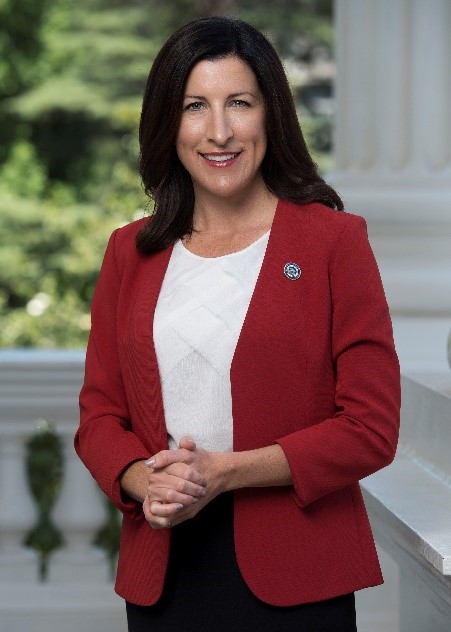
Asm. Cottie Petrie-Norris
Sponsored bills
Existing law prohibits the use of tobacco and nicotine products in a county office of education, charter school, or school district-owned or leased building, on school or school district property, and in a school or school district vehicle. Existing law requires school districts, charter schools, and county offices of education to prominently display signs at all entrances to school property stating "Tobacco use is prohibited." Existing law prohibits a school from permitting the smoking or use of a tobacco product by pupils of the school while the pupils are on campus, attending school-sponsored activities, or under the supervision and control of school district employees. This bill would authorize a school of a school district or county office of education or a charter school to permanently confiscate and immediately dispose of a tobacco product, as defined, or cannabis product, as defined, taken from a pupil while the pupil is on campus, attending a school-sponsored activity, or under the supervision and control of a school employee.
Existing law establishes the Medi-Cal program, which is administered by the State Department of Health Care Services, and under which qualified low-income individuals receive health care services. The Medi-Cal program is, in part, governed and funded by federal Medicaid program provisions. Existing federal law authorizes a state to provide in its Medicaid state plan that in determining eligibility under the federal Medicaid program for a child, the state may rely on a finding made within a reasonable period from an Express Lane agency, as defined, when it determines whether a child satisfies one or more components of eligibility for medical assistance under the federal Medicaid program. Existing law establishes the California Special Supplemental Nutrition Program for Women, Infants, and Children (WIC or WIC Program) , which is administered by the State Department of Public Health and counties and under which nutrition and other assistance are provided to eligible low-income pregnant women, low-income postpartum and lactating women, and low-income infants and children under 5 years of age, who have been determined to be at nutritional risk. This bill would require the State Department of Health Care Services to designate the WIC Program and its local WIC agencies as Express Lane agencies, and to use WIC Program eligibility determinations to meet Medi-Cal program eligibility requirements, including financial eligibility and state residence. The bill would require the department, in collaboration with specified entities, such as program offices for the WIC Program and local WIC agencies, to complete various tasks, including receiving eligibility findings and information from WIC records on WIC recipients to process their Medi-Cal program expedited eligibility determination. The bill would require the department to eliminate procedural burdens imposed on Medi-Cal program applicants by implementing specified policies, such as providing presumptive eligibility and WIC-based verification of Medi-Cal program eligibility for WIC Program recipients. The bill would require the department to conduct a feasibility study to assess and design electronic express lane eligibility systems pathways between the Medi-Cal program and the WIC Program, and to maximize federal Medicaid funding for systems modifications. The bill would condition the implementation of these provisions on the department obtaining federal approval. Because counties are responsible for making eligibility determinations under the Medi-Cal program, and by modifying eligibility requirements and processes, this bill would impose a state-mandated local program. The California Constitution requires the state to reimburse local agencies and school districts for certain costs mandated by the state. Statutory provisions establish procedures for making that reimbursement. This bill would provide that, if the Commission on State Mandates determines that the bill contains costs mandated by the state, reimbursement for those costs shall be made pursuant to the statutory provisions noted above.
Existing law requires the State Department of Health Care Services to license and regulate facilities that provide residential nonmedical services to adults who are recovering from problems related to alcohol, drug, or alcohol and drug misuse or abuse, and who need alcohol, drug, or alcohol and drug recovery treatment or detoxification services. Existing law also requires the department to implement a voluntary certification program for alcohol and other drug treatment recovery services. Existing law prohibits specified persons, programs, or entities from giving or receiving remuneration or anything of value for the referral of a person who is seeking alcoholism or drug abuse recovery and treatment services. Existing law authorizes the department to investigate allegations of violations of that prohibition and to impose sanctions for a violation, including assessing a penalty upon, or suspending or revoking the license of, a facility or the certification of a program. This bill would require a facility licensed or program certified by the department to disclose its license or certification number and the date that the license or certification is scheduled to expire, as applicable, in specified circumstances that include, among others, posting on its internet website and in any advertising or marketing in a clear and conspicuous manner. A violation of these disclosure requirements would be investigated and penalized in the same manner as described above.
Existing law requires the State Department of Health Care Services to license and regulate facilities that provide residential nonmedical services to adults who are recovering from problems related to alcohol, drug, or alcohol and drug misuse or abuse, and who need alcohol, drug, or alcohol and drug recovery treatment or detoxification services. Existing law also requires the department to implement a voluntary certification procedure for alcohol and other drug treatment recovery services. Existing law requires all programs certified and licensed by the department to disclose, among other things, ownership or control of, or financial interest in, a recovery residence, as defined. Existing law requires the department to conduct a site visit to investigate an allegation of an operating unlicensed alcoholism or drug abuse recovery or treatment facility and issue a notice to cease providing services under specified conditions. This bill would require the department to take action against an unlicensed facility that is disclosed as a recovery residence pursuant to these disclosure requirements. The bill would authorize the department to refer a substantiated complaint against a recovery residence to other enforcement entities as appropriate under state or federal law. The bill would make a technical change to refer to licensed facilities in these requirements.
The Personal Income Tax Law allows a credit against the net tax imposed by that law to residents for net income taxes paid to another state on income derived from sources within that state. This bill, for taxable years beginning on or after January 1, 2020, and before January 1, 2025, would provide that the credit allowed to residents for net income taxes paid to another state on income derived from sources within that state includes taxes paid by an S corporation that were calculated using the Cost of Goods Sold Method, as specified in the Revised Texas Franchise Tax, imposed by the State of Texas. The bill would require the Franchise Tax Board to provide the Legislature with a biannual report regarding the credit, as provided. This bill would take effect immediately as a tax levy.
(1) Existing law requires a person who claims title to a firearm that is in the custody of a court or law enforcement agency and wishes to have it returned to make an application for a determination by the Department of Justice as to whether the applicant is eligible to possess a firearm. Existing law requires the application to be submitted via the California Firearms Application Reporting System (CFARS) . Existing law requires the application to provide the firearm's make, model, caliber, barrel length, type, country of origin, and serial number, identification number, or identification mark. If the firearm is not a handgun and does not have a serial number, identification number, or identification mark, existing law requires that the application have a place to note that fact. This bill would delete the provisions for noting a firearm that is not a handgun and does not have a serial number, identification number, or identification mark, and would instead require the application to have a place to note that the firearm is an antique and does not have a serial number, identification number, or identification mark. The bill would require an applicant for the return of a firearm to establish a CFARS account and to advise the department whether the firearm is self-manufactured, self-assembled, an antique, or if the firearm was made or assembled prior to December 16, 1968, and is not a handgun. The bill would allow the department to request photos from the law enforcement agency that has custody of the firearm in an effort to assist in the evaluation of the weapons legality. By imposing additional duties on local law enforcement agencies, this bill would impose a state-mandated local program. (2) Existing law requires an agency or court that has direct access to the Automated Firearms System (AFS) to verify that a firearm subject to an application for return is not listed as stolen and that firearm has been recorded in the name of the individual who seeks its return. This bill would delete that provision and would instead prohibit the Department of Justice from processing an application to determine the applicant's eligibility to possess a firearm until the firearm has been accurately entered into the AFS by the law enforcement agency that has custody of the weapon. By imposing additional duties on local law enforcement agencies, this bill would impose a state-mandated local program. (3) If a law enforcement agency determines that an applicant is the legal owner of a firearm deposited with the agency and that the applicant is prohibited from possessing a firearm, existing law requires, if the firearm is otherwise legal, that the applicant be entitled to sell or transfer the firearm to a licensed dealer. This bill would prohibit a law enforcement agency from causing or allowing a firearm to be dismantled or altered so that the firearm is no longer an illegal firearm in order to release the firearm to the owner. (4) The California Constitution requires the state to reimburse local agencies and school districts for certain costs mandated by the state. Statutory provisions establish procedures for making that reimbursement. This bill would provide that, if the Commission on State Mandates determines that the bill contains costs mandated by the state, reimbursement for those costs shall be made pursuant to the statutory provisions noted above.
This measure would designate the week of February 24, 2020, to March 1, 2020, as Eating Disorders Awareness Week.
Existing law makes the State Department of Health Care Services the sole authority in state government to license adult alcoholism or drug abuse recovery or treatment facilities and prohibits a person, firm, corporation, or other specified entity from operating that type of facility without a valid license. Existing law also prohibits specified persons, programs, or entities from giving or receiving remuneration or anything of value for the referral of a person who is seeking alcoholism or drug abuse recovery and treatment services. Existing law authorizes the department to investigate allegations of violations of that prohibition and to impose sanctions for a violation, including assessing a penalty upon, or suspending or revoking the license or certification of, a facility. This bill would enact Brandon's Law, which would prohibit an operator of a licensed alcoholism or drug abuse recovery or treatment facility or a certified alcohol or other drug program from engaging in various acts, including making a false or misleading statement about the entity's products, goods, services, or geographical locations. The bill would also prohibit a picture, description, staff information, or the location of an entity from being included on an internet website along with false contact information that surreptitiously directs the reader to a business that does not have a contract with the entity. The bill would authorize the department to investigate allegations of a violation of these provisions and, upon finding a violation, to impose the sanctions available pursuant to existing law, as specified.
The Personal Income Tax Law allows various credits against the taxes imposed by that law. This bill, for each taxable year beginning on or after January 1, 2021, and before January 1, 2026, would allow a credit against those taxes in an amount equal to 50% of the amount paid or incurred by a family caregiver during the taxable year for eligible expenses related to the care of an eligible family member, not to exceed $5,000. The bill would limit the aggregate amount of these credits to be allocated in each calendar year to $150,000,000 as well as any unused credit amount, if any, allocated in the preceding calendar year. The bill would require the Franchise Tax Board to allocate and certify these credits to taxpayers on a first-come-first-served basis. The bill would make these provisions operative on the effective date of any budget measure specifically appropriating funds to the Franchise Tax Board for its costs to administer these provisions. The bill would require an eligible family member to be certified by a physician, registered nurse, advanced practice registered nurse, or physician assistant, under penalty of perjury, as being an individual with long-term care needs and would require the family caregiver to retain, and make available to the Franchise Tax Board upon request, that certification. By expanding the scope of the crime of perjury, this bill would impose a state-mandated local program. The bill would make specified findings detailing the goals, purposes, and objectives of the above-described credit, performance indicators for determining whether the credit meets those goals, purposes, and objectives, and data collection requirements. The California Constitution requires the state to reimburse local agencies and school districts for certain costs mandated by the state. Statutory provisions establish procedures for making that reimbursement. This bill would provide that no reimbursement is required by this act for a specified reason. This bill would take effect immediately as a tax levy.