

Passed Jun 11, 2020
1 co-sponsor
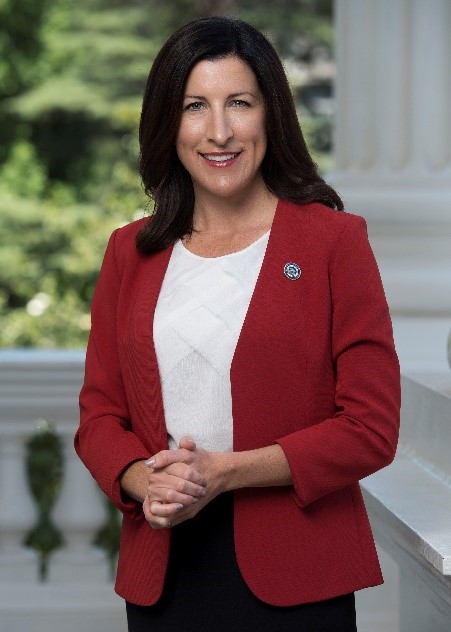
Asm. Cottie Petrie-Norris
Total votes
17,959
all sessions
Attendance
94%
885 missed
Near the chamber average
With party
98%
of cast votes
Near the chamber average
Bipartisan score
1%
crosses aisle rarely
Near the chamber average
Sponsored
1,605
bills & resolutions
Near the chamber average
Committees
10
assignments
1,605 bills and resolutions
Sponsored bills
Total
1,605
Primary
169
Co-sponsor
1,436
This page
1,605
matching current filters
California Down Syndrome Awareness Week and Day.
This measure would proclaim March 15, 2020, to March 22, 2020, as California Down Syndrome Awareness Week and March 21, 2020, as California Down Syndrome Day, and would encourage all Californians to support and participate in related activities.
Passed May 26, 2020
1 co-sponsor
Income taxes: credits: leased or rented property: persons receiving Section 8 assistance.
The Personal Income Tax Law and the Corporation Tax Law allow various credits against the taxes imposed by those laws. Under existing federal law, Section 8 of the United States Housing Act of 1937 (Section 8) , the United States Department of Housing and Urban Development is authorized to enter into annual contributions contacts with public housing agencies pursuant to which those agencies are authorized to enter into contracts with owners of dwelling units to make housing assistance payments, including tenant-based assistance payments to benefit low-income families and rental assistance to certain homeless veterans. This bill, for taxable years beginning on or after January 1, 2021, and before January 1, 2026, would allow a credit against those taxes to a qualified taxpayer, as defined, in an amount equal to 3% of the amount of rent or lease payments in the form of certain federal housing assistance vouchers issued under Section 8 per qualified property, defined as a dwelling or unit rented or leased to persons receiving certain federal assistance. The bill would require the taxpayer, to be eligible for the credit, to obtain verification from the appropriate local housing authority, as defined, that the property for which a credit is claimed satisfies the definition of qualified property and to provide a copy of the verification to the Franchise Tax Board. This bill would limit the credit to 5 qualified properties per taxpayer per taxable year. The bill would also provide that the credit amount is $0 for each taxable year beginning on or after January 1, 2021, and before January 1, 2026, unless otherwise specified in a bill providing for appropriations related to the Budget Act. Existing law requires any bill authorizing a new tax expenditure, including income tax credits under the Personal Income Tax Law and the Corporation Tax Law, to contain, among other things, specific goals, purposes, and objectives that the new tax expenditure will achieve, detailed performance indicators, and data collection requirements, as provided. This bill would also include that additional information required for any bill authorizing a new tax expenditure. By imposing new duties upon local government officials with respect to the verification of qualified properties, this bill would impose a state-mandated local program. The California Constitution requires the state to reimburse local agencies and school districts for certain costs mandated by the state. Statutory provisions establish procedures for making that reimbursement. This bill would provide that, if the Commission on State Mandates determines that the bill contains costs mandated by the state, reimbursement for those costs shall be made pursuant to the statutory provisions noted above. This bill would take effect immediately as a tax levy.
In committee May 18, 2020
0 co-sponsors
California Works and Recovery Act.
(1) The Personal Income Tax Law and the Corporation Tax Law allow credits against the taxes imposed under those laws. Existing law allows an earned income tax credit under the Personal Income Tax Law, beginning on or after January 1, 2015, in modified conformity with federal income tax laws. This bill would allow a small business or a nonprofit organization impacted by the COVID-19 pandemic, as those terms are defined, an earned income tax credit for each taxable year beginning on and after January 1, 2020, in an amount equal to 20% of the taxpayer's annual revenue. The bill would specify that the credit is only operative for taxable years for which the Legislature appropriates from the General Fund to the Franchise Tax Board moneys to administer the credit. The Personal Income Tax Law and the Corporation Tax Law also allow a credit against the taxes imposed under those laws, for each taxable year beginning on and after January 1, 2014, and before January 1, 2030, in an amount as provided in a written agreement between the GO-Biz and the taxpayer, agreed upon by the California Competes Tax Credit Committee, and based on specified factors, including the number of jobs the taxpayer will create or retain in the state and the amount of investment in the state by the taxpayer. This bill would, upon appropriation by the Legislature from the General Fund to the GO-Biz to administer this provision, require GO-Biz, when determining whether to enter into a written agreement with a taxpayer for allocation periods beginning with the 2020–21 fiscal year, to consider the overall economic impact in this state of the COVID-19 pandemic to the taxpayer's project or business. (2) Existing law establishes the Office of Small Business Advocate within the Governor's Office of Business and Economic Development, also known as GO-Biz, and prescribes the duties and functions of the Small Business Advocate, who is also the Director of the Office of Small Business Advocate. Among these duties, the director is to serve as the principal advocate in the state on behalf of small businesses and to represent the views and interests of small businesses before other state agencies whose policies and activities may affect small businesses. This bill would require, upon appropriation by the Legislature from the General Fund, the Small Business Advocate to convene a task force to research and provide a report to the Legislature, on or after the effective date of this bill, regarding the regulations or regulatory areas that most negatively impact small businesses in the state. (3) Existing law creates the Department of Human Resources, which succeeds to and is vested with all of the powers and duties exercised and performed by the Department of Personnel Administration. Existing law specifically grants the department the powers, duties, and authority necessary to operate the state civil service system in accordance with Article VII of the California Constitution, the Government Code, the merit principle, and applicable rules duly adopted by the State Personnel Board. Existing law requires the State Personnel Board to prescribe rules consistent with a merit-based civil service system to govern classification, examinations, probationary periods, disciplinary actions, and other matters related to the board's authority under the California Constitution. This bill would require the State Personnel Board to prescribe rules to include as a factor for recruitment, outreach, and hiring whether the person can demonstrate that they have become unemployed due to the COVID-19 pandemic, as provided. (4) Existing law establishes in the Natural Resources Agency the Department of Forestry and Fire Protection. Under existing the law, the department is responsible for, among other things, the fire protection, fire prevention, maintenance, and enhancement of the state's forest, range, and brushland resources, and for maintaining an integrated staff to accomplish, among other things, fire protection and fire prevention activities as needed. Existing law requires the department, in accordance with a plan approved by the State Board of Forestry and Fire Protection, to, among other things, provide fire prevention and firefighting implements and apparatus, organize fire crews and patrols, and employ people to effect the plan. This bill would, upon appropriation by the Legislature, require the department to establish new, or expand existing, entry-level positions within the department that are aimed at reducing and mitigating wildfire risk and to give priority, in hiring for these positions, to applicants who have lost their jobs due to the novel coronavirus, known as COVID-19, pandemic. (5) Existing law establishes the California Conservation Corps and requires that young people participating in the corps program generally be engaged in projects that, among other things, preserve, maintain, and enhance environmentally important lands and waters. Existing law authorizes the Director of the California Conservation Corps to adopt criteria for selecting applicants for enrollment in the corps program. This bill would authorize, notwithstanding any other law, a person who is over 25 years of age to serve as a corpsmember, require priority, in the selection of any corpsmember, to be given to applicants who have lost their jobs because of the novel coronavirus, known as COVID-19, pandemic, and require corpsmembers who join the corps because they lost their jobs due to the COVID-19 pandemic to be paid at least minimum wage pursuant to existing law. The bill would require these provisions to be implemented only upon appropriation by the Legislature. (6) Existing law establishes the Office of Statewide Health Planning and Development in the California Health and Human Services Agency. The office is vested with all the duties, powers, purposes, responsibilities, and jurisdiction of the State Department of Public Health relating to health planning and research development. Existing law establishes various scholarship and training programs that are managed by the office to improve access to health care. These programs include, among others, the Steven M. Thompson Physician Corps Loan Repayment Program, which provides for the repayment of prescribed educational loans obtained by a physician and surgeon who practices in a medically underserved area of the state. Existing law also requires the office to establish a nonprofit public benefit corporation known as the Health Professions Education Foundation to perform various duties with respect to implementing health professions scholarship and loan programs. This bill would establish, upon appropriation by the Legislature, the Health Profession Economic Recovery Program to be administered by the office. The bill would require the program to accomplish various goals, including expanding the number of primary care physician and psychiatry residency positions and expanding and strengthening programs to recruit and prepare students from underrepresented and low-income backgrounds for health careers. (7) Existing law authorizes a person or gleaner engaged in the business of processing, distributing, or selling an agricultural product to donate, free of charge, a product that is in a condition that it may be used as food for human consumption to a nonprofit charitable organization within the state. For this purpose, existing law authorizes the Secretary of Food and Agriculture to divert agricultural products to nonprofit organizations, including food banks, and authorizes the board of supervisors of a county to establish a surplus food collection and distribution system. In order to qualify as a food bank, existing law requires an organization to meet certain minimum standards. This bill would require the Department of Food and Agriculture, upon appropriation by the Legislature from the General Fund, to create a grant program to provide grants to food banks to contract labor to harvest produce from farms willing to donate produce and to transport the produce to the food bank for distribution to the public. (8) Under existing law, the Department of Housing and Community Development Department administers various grant programs to local governments to fund housing and community development projects. This bill would require the department, upon appropriation by the Legislature from the General Fund, to create a grant program to award grants to local governments for shovel-ready housing and community development projects. (9) Existing law vests the Department of Transportation with full possession and control of the state highway system and associated property. Existing law provides various sources of funding to local governments for transportation projects and operations. This bill would require the department, upon appropriation by the Legislature from the General Fund, to create a grant program to award grants to local governments for shovel-ready transportation projects. (10) The Alfred E. Alquist Hospital Facilities Seismic Safety Act of 1983 establishes a program of seismic safety building standards for certain hospitals. The act requires the office to observe the construction of, or addition to, a hospital building or the reconstruction or alteration of a hospital building, as it deems necessary to comply with the act for the protection of life and property. This bill would establish, upon appropriation by the Legislature, the Economic Recovery Seismic Retrofitting Program to be administered by the office. The bill would require the office to provide loans to hospitals to fund seismic retrofit construction, as defined. The bill would also establish the Economic Recovery Seismic Retrofitting Program Fund to fund loans made under the program.
In committee May 14, 2020
1 co-sponsor
Unsolicited images.
(1) Existing law makes it a crime for a person to willfully and lewdly expose their private parts in a public place where there are other persons are present who may be offended or annoyed. This bill would make it a crime for a person to knowingly send an unsolicited image by electronic means depicting any person engaging in an act of sexual intercourse, sodomy, oral copulation, sexual penetration, or masturbation or depicting the exposed genitals or anus of any person. The bill would make the crime punishable as an infraction by a fine of $500 for a first offense and $1,000 for a 2nd or subsequent offense. By creating a new crime, this bill would impose a state-mandated local crime. (2) Existing law creates a private cause of action against a person who intentionally distributes material that exposes an intimate body part of another person or shows that other person engaging in sexual conduct if the person knew that the other person had a reasonable expectation that the material would remain private. This bill would create a private cause of action against a person who knowingly sends an unsolicited image by electronic means depicting any person engaging in an act of sexual intercourse, sodomy, oral copulation, sexual penetration, or masturbation or depicting the exposed genitals or anus of any person. The bill would entitle the plaintiff to recover economic and noneconomic damages or statutory damages of a sum not less than $1,500 but not more than $30,000, as well as punitive damages, reasonable attorney's fees and costs, and other available relief, including injunctive relief. The California Constitution requires the state to reimburse local agencies and school districts for certain costs mandated by the state. Statutory provisions establish procedures for making that reimbursement. This bill would provide that no reimbursement is required by this act for a specified reason.
In committee May 12, 2020
1 co-sponsor
Housing finance: Affordable Housing Common Application Act.
Existing law establishes the Department of Housing and Community Development and requires it to administer various housing programs, including the Multifamily Housing Program, pursuant to which the department provides assistance in the form of deferred payment loans to pay for specified eligible costs of development of specified housing projects. Existing law provides for the financing of housing development under various other programs, including the Affordable Housing and Sustainable Communities Program administered by the Strategic Growth Council. This bill would enact the Affordable Housing Common Application Act, which would require the Department of Housing and Community Development to create, or enter into a contract with a contractor to create, and administer an online portal for applicants to apply for grants or loans administered by the department for the purpose of acquiring, developing, or rehabilitating affordable housing, as provided. The bill would require the department to collaborate with other state agencies that administer grant or loan funds for the purpose of acquiring, developing, or rehabilitating affordable housing in order to ensure that applicants may apply for those grant or loan funds using the online portal created pursuant to the bill. The bill would allow an applicant seeking grant or loan funds made available under any program included in the online portal to use, and require the applicable state agency to accept, a common application included as part of the online portal, provided that the applicant provides all necessary information required by law for the applicable program.
In committee May 5, 2020
0 co-sponsors
Future of Work Commission.
Executive Order No. N-17-19 establishes the Future of Work Commission with the primary mission to study, understand, analyze, and make recommendations regarding the kinds of jobs Californians could have in the decades to come, the impact of technology on work, workers, employers, jobs, and society, methods of promoting better job quality, wages, and working conditions through technology, modernizing worker safety net protections, and the best way to preserve good jobs, ready the workforce for the jobs of the future through lifelong learning, and ensure shared prosperity for all. The executive order requires the commission to engage in specified activities to further this mission, including, identifying the potential jobs of the future and opportunities to shape those jobs for the improvement of life for all of California, and requires the commission to report on its progress by May 1, 2020. This bill would establish in statute the Future of Work Commission with the same primary mission and require the commission to engage in the same specified activities to further that mission. The bill would require the Governor to appoint the members of the commission, require the members to serve concurrent 4-year terms without compensation, and meet each calendar quarter. The bill would require the commission to issue a report to the Legislature detailing its progress on its activities on or before April 1, 2022, and on or before April 1 each year thereafter.
In committee May 5, 2020
0 co-sponsors
Climate change: California Climate Adaptation Center and Regional Support Network.
Existing law requires the Natural Resources Agency, in collaboration with the Ocean Protection Council, to create, and update biannually, a Planning for Sea Level Rise Database describing steps being taken throughout the state to prepare for, and adapt to, sea level rise. This bill would establish the Climate Adaptation Center and Regional Support Network in the Ocean Protection Council to provide local governments facing sea level rise challenges with information and scientific expertise necessary to proceed with sea level rise mitigation.
In committee May 5, 2020
1 co-sponsor
Environmental protection: Natural Resources Agency: coastal adaptation projects: sea level rise: regulatory review and permitting: report.
Existing law establishes the Natural Resources Agency. Existing law requires the agency, by July 1, 2017, and every 3 years thereafter, to update the state's climate adaptation strategy to identify vulnerabilities to climate change by sectors and priority actions needed to reduce the risks in those sectors. This bill would enact the Coastal Adaptation Permitting Act of 2020. The bill would require the agency to explore, and authorize it to implement, options within the agency's jurisdiction to establish a more coordinated and efficient regulatory review and permitting process for coastal adaptation projects, as defined. The bill would require the agency to submit, by July 1, 2022, a report to the Legislature with suggestions and recommendations for improving and expediting the regulatory review and permitting process for coastal adaptation projects.
In committee May 5, 2020
0 co-sponsors
Electrical corporations: failure to comply with safety standards or requirements: enforcement.
Under existing law, the Public Utilities Commission has regulatory authority over public utilities, including electrical corporations. Existing law authorizes the commission to establish rules for all public utilities, subject to control by the Legislature. Existing law authorizes the commission, after a hearing, to require every public utility to construct, maintain, and operate its line, plant, system, equipment, apparatus, tracks, and premises in a manner so as to promote and safeguard the health and safety of its employees, passengers, customers, and the public. The Public Utilities Act provides that any public utility that violates any provision of the California Constitution or the act, or that fails or neglects to comply with any order, decision, decree, rule, direction, demand, or requirement of the commission, where a penalty has not otherwise been provided, is subject to a penalty of not less than $500 and not more than $100,000 for each offense. This bill would authorize the Attorney General or the district attorney of a proper county or city and county, as specified, to bring an action in the name of the people, pursuant to the above-described civil penalty provision, against an electrical corporation involving a failure to comply with safety standards or requirements. The bill would provide that when the conduct that constitutes the violation or failure to comply is of a continuing nature, each day of that violation or failure to comply is subject to a separate and distinct civil penalty. The bill would require that an action seeking these civil penalties be commenced within 4 years after the cause of action accrues. The Public Utilities Act provides that every public utility and every officer, agent, or employee of a public utility, who violates or fails to comply with, or who procures, aids, or abets any violation by any public utility of any provision of the California Constitution or of the act, or who fails to comply with any part of any order, decision, rule, direction, demand, or requirement of the commission, or who procures, aids, or abets any public utility in a violation or noncompliance, in a case in which a penalty has not otherwise been provided, is guilty of a misdemeanor and is punishable by a fine not exceeding $5,000, or by imprisonment in a county jail not exceeding one year, or by both fine and imprisonment. This bill would authorize the Attorney General or the district attorney of a proper county or city and county, as specified, to bring an action in the name of the people, pursuant to the above-described criminal provision, against an electrical corporation involving a failure to comply with safety standards or requirements. The bill would provide that when the conduct that constitutes the violation or failure to comply is of a continuing nature, each day of that violation or failure to comply is a separate and distinct offense subject to a fine or imprisonment, or both a fine and imprisonment. The bill would require that an action seeking a fine or imprisonment pursuant to the above-described criminal provision be commenced within 4 years after the commission discovers the violation or failure to comply, or within 4 years after completion of the violation or failure to comply, whichever is later. The Public Utilities Act provides that all penalties accruing under the act are cumulative, and a suit for the recovery of one penalty does not bar or affect the recovery of any other penalty or forfeiture or serve as a bar to any criminal prosecution against any public utility, or any officer, director, agent, or employee of the public utility, or any other corporation or person. This bill would expressly provide that the above-described civil penalty and criminal sanction provisions are in addition to other fines or penalties imposed by other law. The Public Utilities Act requires the commission to ensure that where enforcement of provisions affecting public utilities is not specifically vested in some other officer or tribunal, that those provisions are enforced and obeyed and that violations are promptly prosecuted and penalties are recovered and collected. To accomplish this requirement, the commission is authorized to sue in the name of the people and to request the Attorney General or a district attorney to aid in any investigation, hearing, or trial and to institute and prosecute actions or proceedings. This bill would provide that the bill does not diminish the duty of the commission to be the primary entity responsible to ensure that the laws pertaining to public utilities are enforced and obeyed and does not diminish the authority of the commission to request the Attorney General or the district attorney of a proper county or city and county to aid in any investigation, hearing, or trial pursuant to the act.
In committee May 5, 2020
1 co-sponsor
Ask Maddy
·
AI policy assistant
Ask Maddy about Cottie Petrie-Norris
Scope: california
Hi! I can help you understand Cottie Petrie-Norris's legislative record. What would you like to know?
Try one of these
i
Maddy answers using official bill text and legislative records. Always verify before sharing.
Sources cited inline