

Existing law prescribes certain rules and requirements relating to gun shows and events, and the organizers, vendors, and participants, including rules governing firearms transactions at the event. The existing Safety For All Act of 2016, approved as an initiative statute at the November 8, 2016, statewide general election, requires a person, firm, corporation, or other business enterprise that sells more than 500 rounds of ammunition in any 30-day period to have a valid ammunition vendor license. Existing law generally requires ammunition to be sold only to people who meet specified criteria, including to a person whose firearms ownership information matches an entry in the Automated Firearms System and who is eligible to possess ammunition. This bill would, beginning July 1, 2022, allow the Department of Justice to inspect firearms dealers, ammunition vendors, or manufacturers participating in a gun show or event in order to ensure that all transfers or sales are conducted in compliance with applicable state and local laws. The bill would also allow the department to inspect ammunition vendors to ensure compliance with applicable state and federal laws. The bill would allow the department to adopt regulations to administer the application and enforcement of laws relating to gun shows and ammunition vendors.
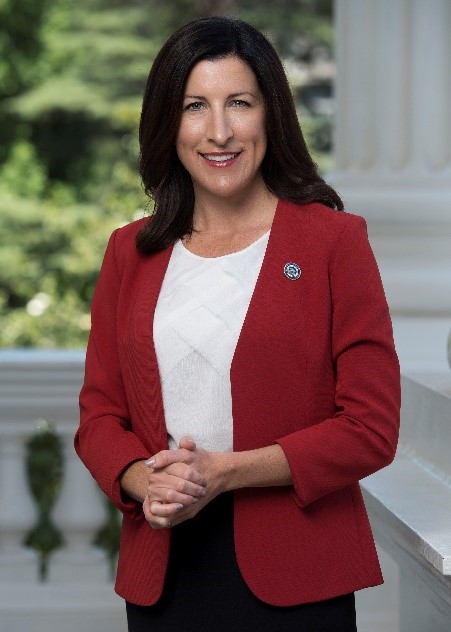
Asm. Cottie Petrie-Norris
Sponsored bills
Existing law makes it a crime to commit various acts of sexual assault, including sexual battery and rape. Existing law makes it a crime to possess or use various controlled substances or for a person who is under 21 years of age to purchase or consume alcohol, as specified. Existing law provides, with respect to specified proceedings or investigations regarding felony offenses, that if a person refuses to answer a question or produce evidence on the ground that the person may be incriminated and if the person is ordered to comply but would have been privileged to withhold the answer given or the evidence produced except for the order, the person shall not be prosecuted or subjected to any penalty or forfeiture for, or on account of, any fact or act concerning which the person was required to answer or produce evidence, except as specified. Under existing law, a district attorney or other prosecuting agency may request an order granting use immunity or transactional immunity to a witness compelled to give testimony or produce evidence. This bill would make the testimony of a victim or witness in a felony prosecution for a violation or attempted violation of specified crimes of sexual assault that states that the victim or witness, at or around the time of the violation or attempted violation, unlawfully possessed or used a controlled substance or alcohol inadmissible in a separate prosecution of that victim or witness to prove illegal possession or use of that controlled substance or alcohol. The bill would specify that evidence that the testifying witness unlawfully possessed or used a controlled substance or alcohol is not excluded from use in the felony prosecution for a violation or attempted violation of specified crimes of sexual assault. The bill would specify that evidence that a witness received use immunity for testimony is not excluded in the felony prosecution of a violation or attempted violation of specified crimes of sexual assault. The California Constitution provides for the Right to Truth-In-Evidence, which requires a 23 vote of each house of the Legislature to exclude any relevant evidence from any criminal proceeding, as specified. Because this bill would exclude from a criminal action a person's statement regarding their use of controlled substances or alcohol that would otherwise be admissible, it requires a 23 vote of each house of the Legislature.
Existing law provides for various public social services programs, including, among others, the California Work Opportunity and Responsibility to Kids (CalWORKs) program, under which each county provides cash assistance and other benefits to qualified low-income families and individuals. Existing law also provides for various funding programs under which state agencies allocate or grant funding to specified entities for purposes of addressing various issues relating to homelessness. This bill would require a recipient, as defined, that receives state funds for specified CalWORKs programs related to homeless assistance, the Housing and Disability Income Advocacy Program, or state funds appropriated in the Budget Act of 2019 for a Whole Person Care pilot program, to submit a report containing specified information regarding the use of state funds to the appropriate agency. The bill would require the recipient to submit that report on a form and method provided by the agency annually. This bill would require every agency to post all reports received on its internet website within 30 days of receipt and provide notice of the posting to specified offices and committees of the Legislature. The bill would also require every agency to aggregate all reports received by October 1 of every year into one report and send the report to the Department of Finance by December 1 of every year, commencing with the year 2021. The bill would also require the Department of Finance to post the aggregated report on its internet website by December 31 of every year, commencing with the year 2021, in a manner that is easily accessible by the public and provide notice of the posting to the Legislature, as provided. By requiring counties to provide reports relating to CalWORKs, this bill would impose a state-mandated local program. The California Constitution requires the state to reimburse local agencies and school districts for certain costs mandated by the state. Statutory provisions establish procedures for making that reimbursement. This bill would provide that, if the Commission on State Mandates determines that the bill contains costs mandated by the state, reimbursement for those costs shall be made pursuant to the statutory provisions noted above.
Existing law allows taxpayers to designate amounts in excess of their personal income tax liability for the support of specified voluntary contribution funds on the personal income tax return, including, until January 1, 2021, the California Firefighters' Memorial Fund and the California Peace Officer Memorial Foundation Fund, except as otherwise provided. This bill would rename the above-described funds as the California Firefighters' Memorial Voluntary Tax Contribution Fund and the California Peace Officer Memorial Foundation Voluntary Tax Contribution Fund, respectively, and would allow taxpayers to designate voluntary contributions for those funds on the personal income tax return until January 1, 2028, except as otherwise provided. The bill would require the California Fire Foundation and the California Peace Officers Memorial Foundation, Inc. to annually post information on the distribution of the funds, as specified, on their internet websites.
Existing law, the Student Loan Servicing Act, prohibits a person from engaging in the business of servicing a student loan in California without first obtaining a license. Existing law commits the administration of these provisions to the Commissioner of Business Oversight and grants the commissioner various powers in this regard, including the authority to conduct investigations of applicants and licensees. The act requires an applicant for a license to submit audited financial statements prepared in accordance with generally accepted accounting principles and acceptable to the commissioner that indicate a net worth of at least $250,000 and requires a licensee to maintain a minimum net worth of $250,000. Existing law, the Rosenthal Fair Debt Collection Practices Act, regulates the collection of consumer debts by debt collectors, as defined. Under existing law, a debt collector who violates the act is liable to a debtor for actual damages resulting from the violation, and is subject to additional civil penalties for any willful or knowing violation of the act, and other specified remedies. This bill would authorize the commissioner to allow a licensee that is a wholly owned subsidiary of a public holding company required to comply with the requirements of the Securities and Exchange Commission to satisfy the requirement to submit audited financial statements with an application for a license and to maintain a minimum net worth of $250,000 by submitting the annual consolidated audited financial statements filed with the Securities and Exchange Commission, as specified. This bill would impose new requirements on a student loan servicer, defined as any person engaged in the business of servicing student loans in the state. These requirements would include the timely posting, processing, and crediting of student loan payments within certain timeframes, applying overpayments consistent with the best financial interest of a student loan borrower, as defined, applying partial payments to minimize late fees and negative credit reporting, maintaining records, timely processing of paperwork, and diligently overseeing service providers. The bill would require a student loan servicer to provide specialized training for customer service personnel that advises military borrowers, borrowers in public service, borrowers with disabilities, and older borrowers. The bill would prohibit a student loan servicer from engaging in unfair or deceptive practices, or abusive acts or practices in connection with the servicing of a student loan, as specified. The bill would authorize a consumer who suffers damages as a result of a person's failure to comply with these provisions as well as all applicable federal laws relating to student loan servicing to bring an action for actual damages, injunctive relief, restitution, punitive damages, attorney's fees, and other relief, including treble damages in certain circumstances. The bill would require a consumer to give specified notice to a person before bringing an action for damages against that person for a violation of the bill's provisions and would provide that person an opportunity to cure the alleged violation, as specified. The bill would prohibit an attempt to cure a violation by a person who receives a notice of that violation from being admissible in court against that person but would authorize the attempt to cure to be admitted as evidence by that person, as specified. The bill would define terms for purposes of its provisions. The bill would require, beginning on July 1, 2021, the commissioner, as specified, to designate a Student Loan Ombudsman to work within the department and to hire additional staff, as needed to implement these provisions. The bill would require the Student Loan Ombudsman to receive and review complaints, to refer complaints to an appropriate unit within the department that would be authorized to investigate the complaint, and to refer complaints regarding servicers not subject to licensing under the Student Loan Servicing Act to the Department of Justice, which would be permitted to investigate those complaints. The bill would require complaints regarding any private postsecondary educational institution licensed by the Bureau for Private Postsecondary Education to be referred to the Bureau for Private Postsecondary Education's Office of Student Assistance and Relief. The bill would require the Student Loan Ombudsman to confer with the Department of Justice and the Office of Student Assistance and Relief regarding the student loan servicing complaints, the proper referral processes for those complaints, and the reporting requirements imposed by the bill. The bill would require the Student Loan Ombudsman not later than 18 months after the operative date of the bill, and no less than once yearly thereafter, to submit a report to the appropriate committees of the Legislature regarding the implementation of these provisions, the types of complaints received, and other data and analysis on student loan issues. The bill would also, beginning July 1, 2021, authorize the Commissioner of Business Oversight to monitor for risks to consumers in the provision of student loan servicing and would authorize the commissioner to gather information regarding the organization, business conduct, and activities of student loan services. The bill would authorize the commissioner to gather and compile information from student loan servicers and to develop and publicize metrics based on the data collected. Among other actions, the bill would authorize the commissioner to require student loan servicers to file, under oath or otherwise, annual or special reports or answers in writing to specific questions. By expanding the crime of perjury, the bill would impose a state-mandated local program. The bill would include related legislative findings and would make conforming and nonsubstantive changes to provisions in the Student Loan Servicing Act. The California Constitution requires the state to reimburse local agencies and school districts for certain costs mandated by the state. Statutory provisions establish procedures for making that reimbursement. This bill would provide that no reimbursement is required by this act for a specified reason.
Existing law vests the Department of Transportation with full possession and control of all state highways. Existing law describes the authorized routes in the state highway system and establishes a process for the California Transportation Commission to adopt a highway on an authorized route. Existing law requires the commission to relinquish to local agencies state highway portions that have been deleted from the state highway system by legislative enactment, and authorizes relinquishment in certain other cases. This bill would authorize the commission to relinquish to the City of Laguna Beach a specified portion of Route 133 if the department and the city enter into an agreement providing for that relinquishment, as specified.
This measure would designate a specified portion of State Route 50 in the County of El Dorado as the Deputy Sheriff Brian "Ish" Ishmael Memorial Highway. The measure would request that the Department of Transportation determine the cost of appropriate signs showing this special designation and, upon receiving donations from nonstate sources covering that cost, erect those signs.
Existing law establishes a workers' compensation system, administered by the Administrative Director of the Division of Workers' Compensation, to compensate an employee for injuries sustained in the course of employment. Existing law creates a disputable presumption that specified injuries sustained in the course of employment of a specified member of law enforcement or a specified first responder arose out of and in the course of employment. Existing law allows for a claim to be presumed compensable if it has not been rejected within 90 days of filing, as specified. Existing law imposes a duty on an employer to provide certain safety materials and adopt safety practices as necessary. A failure to meet this duty, under specified circumstances, is a misdemeanor. This bill would, until July 1, 2024, define "injury," for certain state and local firefighting personnel, peace officers, certain correctional and law enforcement personnel, as described, certain health care employees who provide direct patient care at an acute care hospital, and certain fire and rescue services coordinators who work for the Office of Emergency Services to include illness or death resulting from COVID-19, that is diagnosed on or after January 1, 2020, if certain circumstances apply. The bill would create a disputable presumption, as specified, that the injury arose out of and in the course of the employment. The bill would require a claim to be presumed compensable, if not rejected within 30 days, as specified. This bill would explicitly add emergency equipment or personal protective equipment, as described, to those materials required to be provided by an employer. A failure to comply with this additional requirement would not constitute a misdemeanor. This bill would declare that it is to take effect immediately as an urgency statute.
Existing law, the Stop Tobacco Access to Kids Enforcement (STAKE) Act, prohibits a person from selling or otherwise furnishing tobacco products, as defined, to a person under 21 years of age. Existing law also prohibits the use of tobacco products in county offices of education, on charter school or school district property, or near a playground or youth sports event, as specified. This bill would prohibit a tobacco retailer, or any of the tobacco retailer's agents or employees, from selling, offering for sale, or possessing with the intent to sell or offer for sale, a flavored tobacco product or a tobacco product flavor enhancer, as those terms are defined, except as specified. The bill would make a violation of this prohibition an infraction punishable by a fine of $250 for each violation. The bill would state the intent of the Legislature that these provisions do not preempt or prohibit the adoption and implementation of local ordinances that impose greater restrictions on the access to tobacco products than the restrictions imposed by the bill, as specified. The bill would state that its provisions are severable. By creating a new crime, the bill would impose a state-mandated local program. The California Constitution requires the state to reimburse local agencies and school districts for certain costs mandated by the state. Statutory provisions establish procedures for making that reimbursement. This bill would provide that no reimbursement is required by this act for a specified reason.