

Passed Feb 1, 2021
1 co-sponsor
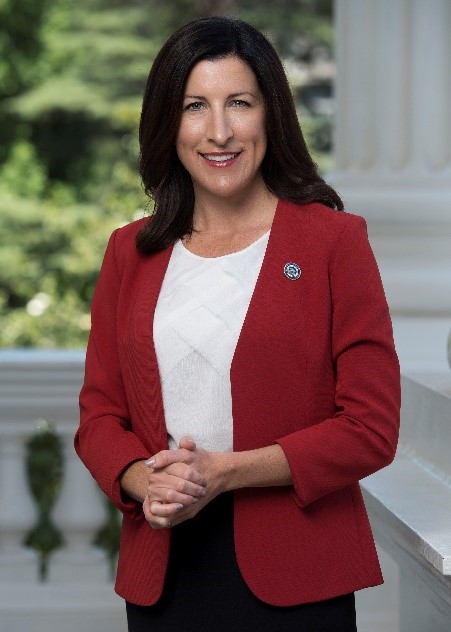
Asm. Cottie Petrie-Norris
Total votes
17,959
all sessions
Attendance
94%
885 missed
Near the chamber average
With party
98%
of cast votes
Near the chamber average
Bipartisan score
1%
crosses aisle rarely
Near the chamber average
Sponsored
1,605
bills & resolutions
Near the chamber average
Committees
10
assignments
1,605 bills and resolutions
Sponsored bills
Total
1,605
Primary
169
Co-sponsor
1,436
This page
1,605
matching current filters
Passed Jan 25, 2021
1 co-sponsor
Relative to Reverend Dr. Martin Luther King, Jr.
This measure would, among other things, honor the late civil rights pioneer and icon Reverend Dr. Martin Luther King, Jr. and commemorate Dr. Martin Luther King, Jr. Day.
Passed Jan 19, 2021
1 co-sponsor
Passed Jan 15, 2021
1 co-sponsor
Passed Jan 11, 2021
1 co-sponsor
Water quality: notification levels and response levels: procedures.
The California Safe Drinking Water Act provides for the operation of public water systems and imposes on the State Water Resources Control Board various duties and responsibilities for the regulation and control of drinking water in the state. The act requires the state board to adopt drinking water standards for contaminants in drinking water based upon specified criteria and requires any person who owns a public water system to ensure that the system, among other things, complies with those drinking water standards. The act requires a public water system to provide prescribed notices within 30 days after it is first informed of a confirmed detection of a contaminant found in drinking water delivered by the public water system for human consumption that is in excess of a maximum contaminant level, a notification level, or a response level established by the state board. This bill would require the state board to comply with specified public notice and comment procedures when establishing or revising a notification level or response level, except as specified for a contaminant that the Division of Drinking Water of the state board finds presents the potential for imminent harm to public health and safety.
Signed into law Sep 30, 2020
1 co-sponsor
Price gouging.
Under existing law, upon the proclamation of a state of emergency, as defined, by the President of the United States or the Governor, or upon the declaration of a local emergency, as defined, by the executive officer of any county, city, or city and county, and for 30 days following the proclamation or declaration of emergency, it is a misdemeanor for a person, contractor, business, or other entity to sell or offer to sell certain goods or services for a price 10% greater than the price charged by that person immediately prior to the proclamation or declaration of emergency. Existing law makes a greater price increase lawful under these provisions if the person can prove that the increase in price was directly attributable to additional costs imposed on it by the supplier of the goods, or directly attributable to additional costs for the labor or materials used to provide the services, during the state of emergency or local emergency, and the price is no more than 10% greater than the total of the cost to the seller plus the markup customarily applied by the seller. Existing law authorizes the local legislative body, local official, Governor, or Legislature, to extend the duration of this prohibition for additional 30 day periods, if deemed necessary to protect the lives, property, or welfare of the citizens. This bill would expand that crime to also include selling or offering to sell those goods or services for a price 10% greater than the price charged immediately prior to a date set by the proclamation or declaration of emergency. The bill would also make it a crime for a person, contractor, business, or other entity who did not charge a price for the goods or services immediately prior to the proclamation or declaration of emergency to charge a price that is more than 50% greater than the seller's existing costs, as specified. The bill would authorize the Governor or the Legislature to extend the duration of these prohibitions for periods greater than 30 days, and during the extension, authorize specified price increases that exceed the otherwise permissible amount, as specified. This bill would make those crimes punishable as a misdemeanor. By expanding the scope of a crime, this bill would create a state-mandated local program. The California Constitution requires the state to reimburse local agencies and school districts for certain costs mandated by the state. Statutory provisions establish procedures for making that reimbursement. This bill would provide that no reimbursement is required by this act for a specified reason.
Signed into law Sep 30, 2020
1 co-sponsor
Firearms: gun violence restraining orders.
Existing law allows a court to issue an order restraining an individual from possessing a firearm for the duration of the order. Existing law allows the court to issue a temporary emergency gun violence restraining order on an ex parte basis if the possession of a firearm by the subject of the petition poses an immediate and present danger. Existing law requires a law enforcement officer who requests a temporary emergency gun violence restraining order to take certain steps, including filing a copy of the order with the court as soon as practicable after issuance. This bill would instead require the law enforcement officer to file a copy of the order with the court as soon as practicable, but not later than 3 court days, after issuance. Under existing law, a person who owns or possesses a firearm or ammunition with the knowledge that they are prohibited from doing so by a gun violence restraining order is guilty of a misdemeanor and shall be prohibited from having custody or control of, owning, purchasing, possessing, or receiving, or attempting to purchase or receive, a firearm or ammunition for a 5-year period, commencing upon the expiration of the existing gun violence restraining order. This bill would specify that this offense also applies to persons who are subject to certain gun violence restraining orders, as described, issued by an out-of-state jurisdiction. This bill would state that its provisions are severable. By expanding the application of an existing crime, this bill would impose a state-mandated local program. The California Constitution requires the state to reimburse local agencies and school districts for certain costs mandated by the state. Statutory provisions establish procedures for making that reimbursement. This bill would provide that no reimbursement is required by this act for a specified reason.
Signed into law Sep 29, 2020
1 co-sponsor
Education: sex equity.
Existing federal law, known as Title IX, prohibits a person, on the basis of sex, from being excluded from participation in, being denied the benefits of, or being subject to discrimination, which includes sexual harassment, under any education program or activity receiving federal financial assistance. A portion of the Donahoe Higher Education Act, known as the Equity in Higher Education Act, declares, among other things, that it is the policy of the State of California that all persons, regardless of their sex, should enjoy freedom from discrimination of any kind in the educational institutions of the state. Existing law provides that a party to a written complaint of prohibited discrimination at certain public postsecondary educational institutions may appeal the action to specified bodies. Existing law also requires that persons who have filed a complaint of prohibited discrimination be advised by the educational institution that civil law remedies may also be available to the complainant. This bill would require, no later than January 1, 2022, except as specified, a postsecondary institution that receives state financial assistance to comply with requirements relating to the protection of students from, and providing students with procedural protections relating to complaints of, sexual harassment. In particular, the bill would require the governing board or body of each of these institutions to (1) disseminate a notice of nondiscrimination to each employee, volunteer, and individual or entity contracted with the institution, (2) designate at least one employee of the institution to coordinate its efforts to comply with its responsibilities specified in this act, (3) adopt rules and procedures for the prevention of sexual harassment, (4) adopt and publish on its internet website grievance procedures providing for the prompt and equitable resolution of sexual harassment complaints, (5) publish on the institution's internet website the name, title, and contact information for the Title IX coordinator or other employee designated to coordinate the institution's efforts to comply with and carry out the responsibilities specified in this act and any individual official with the authority to investigate complaints or to institute corrective measures, as specified, (6) include specified training to each employee engaged in the grievance procedure, (7) include annual training for residential life student and nonstudent staff for the trauma-informed handling of reports regarding incidents of sexual harassment or violence at an institution with on-campus housing, (8) notify employees of the obligation to report sexual harassment to appropriate school officials, and (9) provide training to all employees on the identification of sexual harassment. The bill would authorize enforcement of these provisions through a civil action brought pursuant to existing law, as specified. By imposing new duties on community college districts, this bill would impose a state-mandated local program. The California Constitution requires the state to reimburse local agencies and school districts for certain costs mandated by the state. Statutory provisions establish procedures for making that reimbursement. This bill would provide that, if the Commission on State Mandates determines that the bill contains costs mandated by the state, reimbursement for those costs shall be made pursuant to the statutory provisions noted above.
Signed into law Sep 29, 2020
1 co-sponsor
Medi-Cal: reimbursement rates.
Existing law provides for the Medi-Cal program, which is administered by the State Department of Health Care Services, under which qualified low-income individuals receive health care services, including clinical laboratory or laboratory services. The Medi-Cal program is, in part, governed by, and funded pursuant to, federal Medicaid program provisions. Existing law requires the department to develop, subject to federal approval, reimbursement rates for clinical or laboratory services according to specified standards, such as requiring that reimbursement to providers for those services not exceed the lowest of enumerated criteria, including 80% of the lowest maximum allowance established by the federal Medicare Program for the same or similar services. This bill would delete provisions relating to the above-specified 80% standard and would make conforming changes.
Vetoed Sep 29, 2020
0 co-sponsors
Ask Maddy
·
AI policy assistant
Ask Maddy about Cottie Petrie-Norris
Scope: california
Hi! I can help you understand Cottie Petrie-Norris's legislative record. What would you like to know?
Try one of these
i
Maddy answers using official bill text and legislative records. Always verify before sharing.
Sources cited inline