

Existing law establishes the California Career Technical Education Incentive Grant Program, administered by the State Department of Education, with the purpose of encouraging, maintaining, and strengthening the delivery of high-quality career technical education programs. Existing law appropriates specified amounts for the program from the General Fund for the 2015–16, 2016–17, and 2017–18 fiscal years. Existing law provides, for the 2018–19 fiscal year and every fiscal year thereafter, that $150,000,000 is made available for the program upon appropriation by the Legislature. Existing law specifies minimum eligibility requirements for grant applicants. Existing law also requires the department, on or before January 31, 2024, and on or before January 31 every 5 years thereafter, to submit to the Department of Finance, the Governor, and the appropriate policy and fiscal committees of the Legislature a report evaluating the progress that local educational agencies have made with respect to specified issues related to the program. This bill would provide that, for the 2021–22 fiscal year and each fiscal year thereafter, $300,000,000 would be made available to the department, upon appropriation by the Legislature in the Budget Act or another statute, for the program. The bill would also make slight adjustments to program provisions relating to eligibility requirements for grant applicants and to the reporting requirements referenced above.
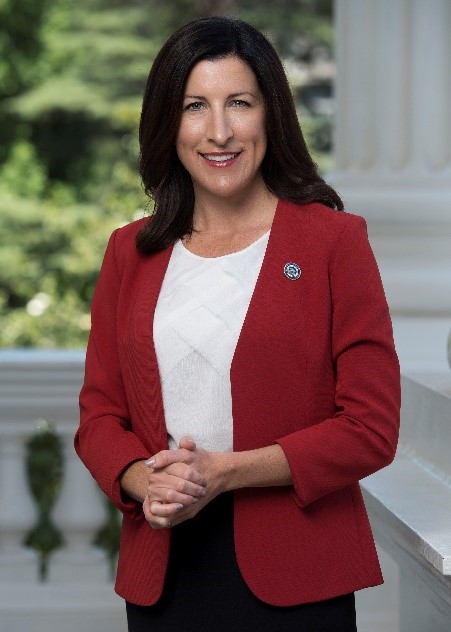
Asm. Cottie Petrie-Norris
Sponsored bills
The Personal Income Tax Law provides various exclusions from gross income in determining tax liability, including an exclusion for the amount of student loan indebtedness repaid or canceled pursuant to specified federal law, relating to repayment plans. Existing federal law, the American Rescue Plan Act of 2021, excludes from gross income for purposes of federal income taxes any amount that would otherwise be includible in gross income by reason of the discharge after December 31, 2020, and before January 1, 2026, of specified student loans. This bill would apply that provision of the American Rescue Plan Act of 2021 to the Personal Income Tax Law. This bill would take effect immediately as a tax levy.
Existing law, the Real Estate Law, provides for the licensure and regulation of real estate brokers and salespersons by the Real Estate Commissioner, who is the chief officer of the Department of Real Estate within the Business, Consumer Services, and Housing Agency. Existing law prohibits a real estate licensee from publishing, circulating, distributing, or causing to be published, circulated, or distributed in newspapers or periodicals or mail, a matter pertaining to any activity for which a real estate license is required that does not contain a designation disclosing that the licensee is performing acts for which a real estate license is required. Existing law also requires a real estate licensee to disclose their name, license identification number, and other specified information, on all solicitation materials intended to be the first point of contact with consumers and on real property purchase agreements, as specified. Existing law authorizes the commissioner to adopt regulations identifying the materials in which a licensee must disclose this information. This bill would authorize a real estate licensee who is a natural person and who legally changes the surname in which their license was originally issued to continue to utilize their former surname for business associated with their license so long as both names are filed with the department. The bill would provide that use of a former surname does not constitute a fictitious name for purposes of certain filing requirements.
(1) Existing law establishes a system of public elementary and secondary education in this state, and authorizes local educational agencies throughout the state to provide instruction to pupils in kindergarten and grades 1 to 12, inclusive. Existing law establishes procedures for the apportionment of state funds to these local educational agencies. Existing law, for purposes of calculating apportionments for the 2020–21 fiscal year, requires a local educational agency to offer in-person instruction and authorizes these agencies to offer distance learning, as specified. This bill would specify that the requirement to provide in-person instruction applies when that instruction is allowed under state and local public health orders. (2) Existing law establishes criteria for local educational agencies to offer distance learning for the 2020–21 school year, including as a result of an order or guidance from a state public health officer or local public health officer, or for pupils who are medically fragile or would be put at risk by in-person instruction or who are self-quarantining. This bill would specify that, from March 1, 2021, to June 30, 2021, inclusive, distance learning is authorized on an agency-wide or schoolwide level as a result of an order from a state public health officer or a local public health officer requiring school campus closure. The bill would also include, in addition to pupils, certificated employees who are medically fragile or who are self-quarantining within the scope of this provision. (3) Existing law requires local educational agencies to offer in-person instruction to the greatest extent possible and to develop written procedures for tiered reengagement strategies for all pupils who are absent from distance learning for more than 3 schooldays or 60% of the instructional days in a school week. This bill would require local educational agencies to publicly adopt plans that offer in-person instruction within 2 weeks of local or state public health orders allowing school campuses to be open, and that outline all local educational agency plans to meet local and state public health school campus safety standards. The bill would also require each local educational agency to implement the written procedures for the tiered reengagement strategies for all pupils who are absent from distance learning for more than 3 schooldays or 60% of the instructional days in a school week, as specified. The bill would also require local educational agencies to develop and implement written procedures for tiered reengagement strategies for all unduplicated pupils who are performing significantly below grade level, with a priority for pupils in kindergarten or grades 1 to 3, inclusive, and pupils at risk of not graduating from high school. Because these provisions would impose new duties on local educational agencies, they would create a state-mandated local program. (4) The California Constitution requires the state to reimburse local agencies and school districts for certain costs mandated by the state. Statutory provisions establish procedures for making that reimbursement. This bill would provide that, if the Commission on State Mandates determines that the bill contains costs mandated by the state, reimbursement for those costs shall be made pursuant to the statutory provisions noted above. (5) This bill would declare that it is to take effect immediately as an urgency statute.
Existing law, the Personal Income Tax Law and Corporation Tax Law, in modified conformity with federal income tax laws, generally allow various deductions in computing the income that is subject to taxes imposed by those laws, including a deduction for a net operating loss as specified. Existing law suspends the deduction for a net operating loss, as specified, for taxable years beginning on or after January 1, 2020, and before January 1, 2023. The Personal Income Tax Law and Corporation Tax Law generally authorize various credits against the taxes imposed by those laws. Existing law provides that, except as specified, the total credits allowable under those laws may not reduce the taxes imposed by those laws by more than $5,000,000, as provided, for taxable years beginning on or after January 1, 2020, and before January 1, 2023. This bill, the Golden State Innovation Act of 2021, would, for taxable years beginning on or after January 1, 2021, and before January 1, 2023, exclude a taxpayer that performs research and development in biotechnology, as described, from the above-described suspension of the deduction for net operating losses and the above-described limitation on the total credits allowable. Existing law requires any bill authorizing a new tax expenditure to contain, among other things, specific goals, purposes, and objectives that the tax expenditure will achieve, detailed performance indicators, and data collection requirements. The bill also would include additional information required for any bill authorizing a new tax expenditure. This bill would take effect immediately as a tax levy.
Existing law provides for the Medi-Cal program, which is administered by the State Department of Health Care Services, under which qualified low-income individuals receive health care services, including clinical laboratory or laboratory services. The Medi-Cal program is, in part, governed by, and funded pursuant to, federal Medicaid program provisions. Existing law requires the department to develop, subject to federal approval, reimbursement rates for clinical or laboratory services according to specified standards, such as requiring that reimbursement to providers for those services not exceed the lowest of enumerated criteria, including 80% of the lowest maximum allowance established by the federal Medicare Program for the same or similar services. This bill would delete provisions relating to the above-specified 80% standard and would make conforming changes.
Existing law requires the State Registrar to create a document, no later than March 1, 2020, with annual updates, containing information received by local registrars concerning marriage certificates in which one or both of the parties were minors at the time of solemnization of the marriage. Existing law requires the local registrar, at least annually, to submit information, as specified, to the State Registrar for those purposes. Existing law restricts the local registrar from submitting that information if the local registrar did not accept any marriage certificates in the same calendar year. This bill would require the State Registrar to also provide that document to the Legislature annually. The bill would require the local registrar to submit that information four times a year, as specified. The bill would instead require, if no marriage certificates were accepted by the local registrar, that the local registrar submit a report to the State Registrar concurrently with the information described above indicating that no marriage certificates were accepted. By creating new duties for county officials relating to certain marriage licenses or certificates, the bill would impose a state-mandated local program. The California Constitution requires the state to reimburse local agencies and school districts for certain costs mandated by the state. Statutory provisions establish procedures for making that reimbursement. This bill would provide that, if the Commission on State Mandates determines that the bill contains costs mandated by the state, reimbursement for those costs shall be made pursuant to the statutory provisions noted above.
Existing federal law prescribes a volume ceiling on the aggregate amount of private activity bonds that may be issued in a state. Existing law creates the California Debt Limit Allocation Committee for the purpose of administering the volume limit for the state on private activity bonds through an allocation system. Existing law defines "private activity bonds" as a part or all of any bond, or other instrument, required to obtain a portion of the state's volume cap, as specified under federal law, in order to be exempt from taxation, which includes qualified mortgage bonds and qualified student loan bonds. Existing law requires the California Debt Limit Allocation Committee to annually determine and announce the state ceiling for the calendar year, and allocates to the committee that amount for further allocation to state and local agencies subject to their applications. Existing law prescribes the duties and powers of the committee, including in connection with the Marks-Roos Local Bond Pooling Act of 1985, mortgage credit certificate programs, the Extra Credit Teacher Home Purchase Program, and the California Homebuyer's Downpayment Assistance Program. Existing law establishes the California Tax Credit Allocation Committee for the purpose of allocating low-income housing tax credits allowed under federal law. This bill would abolish the California Debt Limit Allocation Committee and transfer its powers, duties, and functions to the California Tax Credit Allocation Committee. The bill would provide for the transfer of civil service employees, funds, property, and liabilities of the California Debt Limit Allocation Committee to the California Tax Credit Allocation Committee. The bill would require that regulations of the California Debt Limit Allocation Committee remain in effect until the California Tax Credit Allocation Committee amends or repeals those regulations, or adopts successor regulations. The bill would make conforming changes to properly identify the California Tax Credit Allocation Committee and to repeal obsolete references.
Existing law defines rape as an act of sexual intercourse accomplished with a person not the spouse of the perpetrator under certain circumstances, including where the victim is incapable of giving legal consent because of a mental disorder or developmental or physical disability, where the victim is not aware of the essential characteristics of the act due to the perpetrator's fraudulent representation that the act serves a professional purpose, and where the victim submits to the act under the belief that the perpetrator is someone known to the victim other than the perpetrator, and the perpetrator intentionally and fraudulently induces that belief. Existing law separately defines rape of a spouse as an act of sexual intercourse accomplished with the spouse of the perpetrator under similar circumstances as nonspousal rape, except that spousal rape does not include acts of sexual intercourse accomplished under the specific circumstances described above. This bill would repeal the provisions relating to spousal rape and make conforming changes, thereby making an act of sexual intercourse accomplished with a spouse punishable as rape if the act otherwise meets the definition of rape. By changing the definition of a crime, this bill would impose a state-mandated local program. Existing law authorizes an employer to request from the Department of Justice records of all convictions or any arrest pending adjudication for specified offenses for a person who applies for a license, employment, or volunteer position, in which the person would have supervisory or disciplinary power over a minor and requires the employer to notify the parent or guardian of a child if a person with specified convictions will have supervisory or disciplinary power over that child. Existing law exempts certain convictions, including spousal rape, from that notification requirement. This bill would remove the exemption for spousal rape or any other felony conviction and would instead exempt only misdemeanor convictions from that notification. The bill would make numerous conforming changes. The California Constitution requires the state to reimburse local agencies and school districts for certain costs mandated by the state. Statutory provisions establish procedures for making that reimbursement. This bill would provide that no reimbursement is required by this act for a specified reason.
Existing law, the California Coastal Act of 1976, requires any person wishing to perform or undertake any development in the coastal zone, as defined, in addition to obtaining any other permit required by law from any local government or from any state, regional, or local agency, to obtain a coastal development permit, as provided. The act further provides for the certification of local coastal programs by the California Coastal Commission. The act prohibits the commission, except as provided, from exercising its coastal development permit review authority, as specified, over any new development within the area to which the certified local coastal program, or any portion thereof, applies. Existing law requires a local government, if it has been delegated authority to issue coastal development permits, to recover any costs incurred from fees charged to individual permit applicants. Existing law authorizes the local government to elect to not levy fees, as provided. This bill would, at the request of an applicant for a coastal development permit, authorize a city or county to waive or reduce the permit fee for specified projects. The bill would authorize the applicant, if a city or county rejects a fee waiver or fee reduction request, to submit the coastal development permit application directly to the commission.