

Existing law, the Ralph C. Dills Act (Dills Act) , governs collective bargaining between the state and recognized state public employee organizations. Existing law excludes certain employees from coverage under the Dills Act, including, among others, managerial employees, supervisory employees, and confidential employees, as defined. Existing law creates the Public Employment Relations Board and authorizes it, among other things, to determine appropriate state employee bargaining units, as specified. This bill would enact the Legislature Employer-Employee Relations Act, to provide employees of the Legislature, including some supervisory and managerial employees, the right to form, join, and participate in the activities of employee organizations of their own choosing for the purpose of representation on all matters of employer-employee relations. The bill would prescribe rights, duties, and prohibitions in this context that parallel those in the Dills Act. The bill would prohibit the Public Employment Relations Board from including employees of the Legislature in a bargaining unit that includes employees other than those of the Legislature. The bill would make it a misdemeanor for any person to willfully resist, prevent, impede, or interfere with any member of the board, or any of its agents, in the performance of duties pursuant to its provisions. By expanding the definition of a crime, this bill would impose a state-mandated local program. The bill would provide that the provisions of the Legislature Employer-Employee Relations Act are severable. The California Constitution requires the state to reimburse local agencies and school districts for certain costs mandated by the state. Statutory provisions establish procedures for making that reimbursement. This bill would provide that no reimbursement is required by this act for a specified reason.
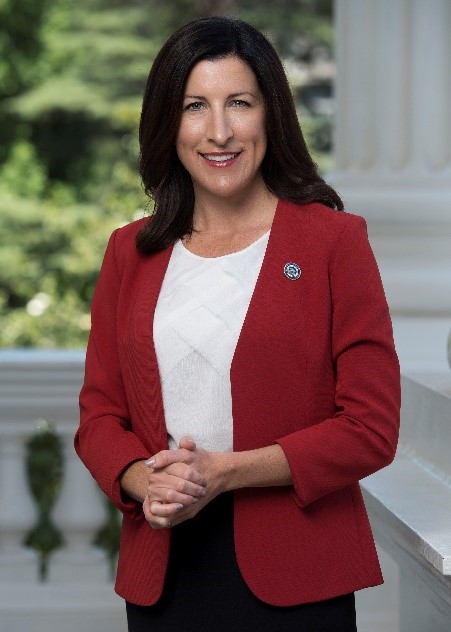
Asm. Cottie Petrie-Norris
Sponsored bills
Existing law makes it a crime to possess for sale or purchase for purpose of sale, transport, sell, furnish, administer, give away, manufacture, compound, convert, produce, derive, process, or prepare various controlled substances, including, among others, fentanyl, peyote, and various other opiates and narcotics. This bill would require a person who is convicted of, or who pleads guilty or no contest to, the above crimes to receive a written advisory of the danger of manufacturing or distribution of controlled substances and that, if a person dies as a result of that action, the manufacturer or distributor can be charged with voluntary manslaughter or murder. The bill would require that the fact the advisory was given be on the record and recorded on the abstract of conviction.
Existing law classifies controlled substances into 5 schedules and places the greatest restrictions and penalties on the use of those substances placed in Schedule I. Existing law classifies the drug fentanyl in Schedule II. Existing law prohibits a person from possessing for sale, or purchasing for purposes of sale, specified controlled substances, including fentanyl, and provides for imprisonment in a county jail for 2, 3, or 4 years for a violation of this provision. Existing law also imposes an additional term, and authorizes a trial court to impose a specified fine, upon a person who is convicted of a violation of, or of a conspiracy to violate, specified provisions of law with respect to a substance containing heroin, cocaine base, and cocaine, if the substance exceeds a specified weight. This bill would impose that additional term upon, and authorize a fine against, a defendant who violates those laws with respect to a substance containing fentanyl. By imposing additional incarceration costs on local agencies, the bill would impose a state-mandated local program. The California Constitution requires the state to reimburse local agencies and school districts for certain costs mandated by the state. Statutory provisions establish procedures for making that reimbursement. This bill would provide that no reimbursement is required by this act for a specified reason.
Existing law establishes the Office of Small Business Advocate (CalOSBA) within the Governor's Office of Business and Economic Development, also known as GO-Biz, to advocate for causes of small business and to provide small businesses with the information they need to survive in the marketplace. Existing law authorizes counties, cities, and other local agencies to impose various taxes and fees in connection with activity or property within those jurisdictions. This bill would enact the California Small Business Rent Relief Act, which would authorize a county to establish a local small business rent forgiveness and tax relief program, as provided, for the purpose of providing credits to qualified taxpayers, as defined, to be used against any tax or fee owed to the county by the qualified taxpayer, and for which the county has authority to collect a credit in lieu of cash. The bill would authorize CalOSBA to establish the California Small Business Rent Forgiveness and Tax Relief Program, as provided, for the purpose of allocating credit authority to qualified counties, as defined, to implement a small business rent forgiveness and tax relief program. The bill would create the Small Business Rent Forgiveness and Tax Relief Account within the California Economic Development Fund, for the purpose of receiving moneys transferred to the account, and would require all moneys in the account to be available for expenditure, upon appropriation by the Legislature, for the purpose of implementing the California Small Business Rent Forgiveness and Tax Relief Program. The bill would require CalOSBA to submit a report to the Governor and the Legislature on program activities, as provided.
Existing law, the California Clean Water, Clean Air, and Safe Neighborhood Parks, and Coastal Protection Act of 2002, approved by the voters as Proposition 40 at the March 5, 2002, statewide primary election, authorizes the issuance of bonds in the amount of $2,600,000,000, for the purpose of financing a program for the acquisition, development, restoration, protection, rehabilitation, stabilization, reconstruction, preservation, and interpretation of park, coastal, agricultural land, air, and historical resources, as specified. Existing law also authorizes the legislative body of any local agency to contract with any other local agency for the furnishing of fire or police protection to that other local agency. This bill would authorize the City of Laguna Woods to lease to a public agency or joint powers authority, for purposes related to fire protection or public safety, the park property upon which improvements were made pursuant to specified grant agreements funded in accordance with the California Clean Water, Clean Air, Safe Neighborhood Parks, and Coastal Protection Act of 2002. The bill would require those leases to be subject to the requirements set forth in the grant contracts that are otherwise applicable to property sales or other dispositions. This bill would make legislative findings and declarations as to the necessity of a special statute for the City of Laguna Woods.
Existing law requires state agencies to take into account the current and future impacts of climate change when planning, designing, building, operating, maintaining, and investing in state infrastructure. Existing law requires specified entities to submit to the Natural Resources Agency sea level rise planning information, as provided. This bill would require a state agency to take into account the current and future impacts of sea level rise based on projections provided by the Ocean Protection Council when planning, designing, building, operating, maintaining, and investing in infrastructure located in the coastal zone, within the jurisdiction of the San Francisco Bay Conservation and Development Commission, or otherwise vulnerable to flooding from sea level rise or storm surges, or when otherwise approving the allocation of state funds, including, but not limited to, bonds, grants, and loans, for those purposes. The bill would provide that new or expanded infrastructure built pursuant to the above-described provision shall only qualify for state funds if the project is not anticipated to be vulnerable to sea level rise risks during the life of that project. The bill would provide that specified projects may be exempt from the above-described analysis so long as the project design is resilient to mid-century sea level rise projections provided by the Ocean Protection Council and consistent with relevant state and local agency policies. The bill would require, by March 1, 2022, the Ocean Protection Council, in consultation with the Office of Planning and Research, to establish a multiagency working group, consisting of specified individuals, on sea level rise to provide recommended policies, resolutions, projects, and other actions to address sea level rise, the breadth of its impact, and the severity of its anticipated harm. The bill would require the council, in consultation with the working group, to, among other things, develop a standardized methodology and template for conducting economic analyses of risks and adaptation strategies associated with sea level rise, as provided. The bill would require a state agency to conduct a sea level rise analysis for any state-funded infrastructure project located in the coastal zone, within the jurisdiction of the commission, or otherwise vulnerable to flooding from sea level rise or storm surges, and restrict funding as needed, pursuant to that methodology. The bill would authorize the Controller to conduct audits of state agencies and consult with working group member agencies, as necessary, to verify and ensure compliance with certain of the above-described provisions.
Existing law requires a person that owns, controls, operates, or maintains any electrical transmission or distribution line upon any mountainous land or forest-covered land, brush-covered land, or grass-covered land to maintain around and adjacent to any pole or tower that supports a switch, fuse, transformer, lightning arrester, line junction, or dead-end or corner pole a firebreak, as specified. Existing law requires a person that owns, controls, operates, or maintains any electrical transmission or distribution line upon any mountainous land or in forest-covered land, brush-covered land, or grass-covered land to maintain a clearance between all vegetation and all conductors that are carrying electric current, as specified. This bill would impose a civil penalty of up to $100,000 for each violation of the above-described provisions after the person that owns, controls, operates, or maintains any electrical transmission or distribution line is offered a reasonable opportunity to cure. The bill would impose an additional civil penalty of up to $1,000 for each acre burned by a fire resulting from a violation of the above-described provisions after the person that owns, controls, operates, or maintains any electrical transmission or distribution line is offered a reasonable opportunity to cure. The bill would require 50% of the penalties collected to be deposited into the Utility Accountability and Wildfire Prevention Fund, which the bill would establish in the State Treasury, and would distributed the remaining 50%, as provided. The bill would provide that the moneys in the Utility Accountability and Wildfire Prevention Fund, upon appropriation by the Legislature, are available for purposes of enhancing forest management, fire planning, wildfire prevention and suppression, and fire-related enforcement activities. The bill would require the Department of Forestry and Fire Protection to develop regulations to define what a reasonable opportunity to cure means for the above-described purposes.
Existing law authorizes the Employment Development Department to administer the state unemployment and disability compensation programs. Existing law requires the department, among other duties, to make unemployment and disability compensation payments, as prescribed. This bill would establish the Unemployment Insurance Oversight Advisory Board (board) in the Labor and Workforce Development Agency as an advisory body to review the operations of the Employment Development Department (department) under the state unemployment and disability compensation programs and make recommendations to the department, the Governor, and the Legislature to, among other things, enhance the efficiency of those operations and ensure equitable access to benefits administered by the department. The bill would require the board to consist of 7 members, as specified, who serve without compensation, but would require members to be reimbursed for their necessary and reasonable expenses incurred in performing their duties and responsibilities, upon appropriation by the Legislature. The bill would require, beginning on and after January 1, 2022, the board to hold at least 2 public meetings a year, during which the board members would be required to accept public comment. The bill would also require, beginning on and after July 1, 2022, the board to issue biannual public reports with its recommendations. The bill would require the department to submit a yearly report to the Assembly Committee on Budget and the Senate Committee on Budget and Fiscal Review regarding the recommendations of the board for state disability insurance and paid family leave benefits, as provided.
Existing law requires the State Department of Health Care Services to license and regulate alcoholism or drug abuse recovery or treatment facilities serving adults. Existing law authorizes the department to certify qualified alcoholism or drug abuse recovery or treatment programs, as prescribed. Under existing law, the department regulates the quality of these programs, taking into consideration the significance of community-based programs to alcohol and other drug abuse recovery and the need to encourage opportunities for low-income and special needs populations to receive alcohol and other drug abuse recovery or treatment services. This bill, commencing January 1, 2026, would require any substance use disorder treatment program to be licensed by the department, except as specified. The bill would require the department, in administering these provisions, to issue licenses for a period of 2 years for substance use disorder treatment programs that meet the requirements in these provisions. The bill would require the department to issue a license to a substance use disorder program once various requirements have been met, including an onsite review. The bill would authorize the department to renew a license, as provided. The bill would prohibit providing substance use disorder treatment services to individuals without a license. The bill would require a substance use disorder program licensed pursuant to these provisions to adopt written policies and procedures, as specified. The bill would require a person or entity applying for a license to submit, among other things, a licensure fee to the department. The bill would require various quality parameters of licensed substance use disorder treatment programs, including, among others, that patients admitted for treatment meet specified medical necessity criteria. The bill would require the department to conduct a site visit if a program is alleged to be in violation of those quality parameters and to provide written notice to the program, as specified. The bill would authorize a licensed substance use disorder treatment program to treat persons 12 to 17 years of age, inclusive, provided certain additional requirements are met, including that assessments include documentation of the person's unique abilities and strengths in the patient treatment plan. The bill would require certain minimum requirements for substance use disorder program administrators and staff who provide services pursuant to these provisions and would grant the department sole authority to establish qualifications that exceed those requirements. The bill would require the department to conduct onsite visits to ensure compliance at least once during the licensure period. The bill would authorize the department to conduct announced or unannounced site visits at any time. The bill would authorize the department to enter any building and inspect the premises and any records of a substance use disorder program to secure information regarding compliance with these provisions. The bill would authorize the Director of Health Care Services to suspend or revoke the license of a substance use disorder program for, among other things, a violation by the program. The bill would require that proceedings for the suspension, revocation, or denial of a license be conducted under specified procedures. The bill would terminate a license if various conditions occur, including, that the substance use program is sold or otherwise transferred. The bill would authorize the department to levy a civil penalty of not less than $250 and no more than $500 per day for each violation, except as specified. The bill would require additional penalties for a program with repeated violations, as specified. The bill would require the department to provide the substance use program with notice and an opportunity to correct the violation prior to assessing the civil penalty. The bill would require that all fees, fines, and penalties collected from substance use disorder programs be deposited in the Residential and Outpatient Program Licensing Fund, to be available upon appropriation by the Legislature. The bill would state that it is the intent of the Legislature to make General Fund money available for purposes of the program if moneys in the Residential and Outpatient Program Licensing Fund are insufficient to fund the regulatory functions of the department. The bill would require the department to adopt regulations to implement these provisions.
Existing law establishes the California Community Colleges, under the administration of the Board of Governors of the California Community Colleges, as one of the segments of public postsecondary education in this state. Under existing law, the board of governors selects the Chancellor of the California Community Colleges to serve as the chief executive officer of the segment. Existing law establishes various programs establishing courses of study at campuses of the California Community Colleges. This bill would make available, upon appropriation in the annual Budget Act, the sum of $10,000,000 to the Chancellor's Office of the California Community Colleges for the purpose of expanding student pathways to biotechnology programs, as specified. The bill would authorize the Board of Governors of the California Community Colleges, or its authorized designees, to contract with the Foundation for California Community Colleges for the purpose of providing administrative support for the expansion of pathways to biotechnology programs. The bill would require the Chancellor's Office of the California Community Colleges, on or before July 1, 2025, to submit a report to the appropriate budget and policy committees of the Legislature regarding the outcomes resulting from the use of these funds, as specified. This bill would repeal these provisions on January 1, 2026.