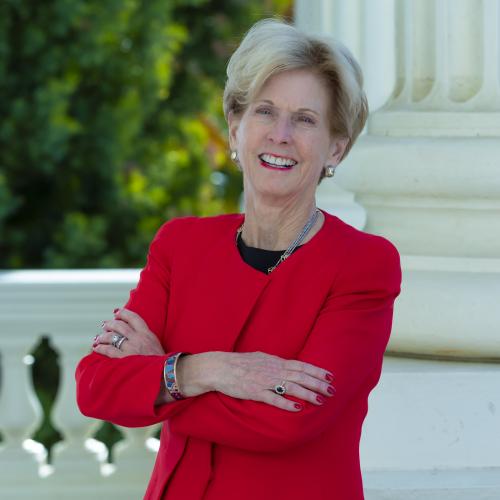
Photo of Diane Dixon
R California Assembly · District 72

Asm. Diane Dixon

Compare
Total votes
14,578
all sessions
Attendance
90%
848 missed
Near the chamber average
With party
98%
of cast votes
Near the chamber average
Bipartisan score
2%
crosses aisle rarely
Near the chamber average
Sponsored
846
bills & resolutions
Higher than 86% of chamber peers
Committees
8
assignments
846 bills and resolutions

Sponsored bills

Total
846
Primary
88
Co-sponsor
758
This page
846
matching current filters
Primary AB 1375
died · California Assembly · Lead sponsor
Coastal protection.

Existing law, the California Coastal Act of 1976, provides for the protection of California's coast and requires any person wishing to perform or undertake any development in the coastal zone, as defined, to obtain a coastal development permit, except as specified. The act makes various findings and declarations regarding the need to preserve the state's natural and scenic resources along the coast and ensure that development in the coastal zone is carefully planned and developed. This bill would state the intent of the Legislature to enact subsequent legislation related to coastal protection.

died Feb 1, 2024 0 co-sponsors
Co-sponsor AB 1368
Failed · California Assembly · Co-sponsor
Sexual assault forensic evidence: testing.

Existing law requires law enforcement agencies to either submit sexual assault forensic evidence received on or after January 1, 2016, to a crime lab within 20 days after it is booked into evidence or to ensure that a rapid turnaround deoxyribonucleic acid (DNA) program is in place, as specified. Existing law also requires a crime lab that receives sexual assault forensic evidence on or after January 1, 2016, to either process the evidence, create DNA profiles when able, and upload qualifying DNA profiles into the Combined DNA Index System, as specified, or transmit the sexual assault forensic evidence to another crime lab as soon as practically possible, but no later than 30 days after receiving the evidence, for processing of the evidence for the presence of DNA. This bill would require a law enforcement agency, for any sexual assault forensic evidence connected to a reported crime received by the law enforcement agency prior to January 1, 2016, to submit that evidence to the crime lab on or before January 31, 2025. The bill would additionally require a crime lab, for any sexual assault evidence kit received by a law enforcement agency prior to January 1, 2016, and submitted to the crime lab on or after January 1, 2024, to process that evidence kit no later than January 31, 2026. Because the bill would impose a higher level of service on local law enforcement agencies in processing that evidence, it would impose a state-mandated local program. The California Constitution requires the state to reimburse local agencies and school districts for certain costs mandated by the state. Statutory provisions establish procedures for making that reimbursement. This bill would provide that, if the Commission on State Mandates determines that the bill contains costs mandated by the state, reimbursement for those costs shall be made pursuant to the statutory provisions noted above.

Failed Feb 1, 2024 1 co-sponsor
Co-sponsor AB 475
Failed · California Assembly · Co-sponsor
Sensitive military land: foreign ownership and interests: prohibited foreign actors.

Existing law provides that all property has an owner, whether that owner is the state, and the property is public, or the owner is an individual, and the property is private. Existing law establishes the California National Guard and regulates the operation of that force. The United States Constitution authorizes Congress to provide for the common defense and general welfare of the United States. This bill would prohibit a prohibited foreign actor, as defined, from purchasing, acquiring, leasing, or holding an interest, as defined, in any land that is located within 50 miles of a United States military base or California National Guard base within the State of California. The bill would exempt land held by a prohibited foreign actor before January 1, 2024, from that prohibition. The bill would provide land transferred in violation of these provisions would be subject to divestiture, as specified. The bill would provide that these provisions may not be applied in a manner inconsistent with any provision of any treaty between the United States and another country.

Failed Feb 1, 2024 1 co-sponsor
Primary AB 1453
Failed · California Assembly · Lead sponsor
Coastal resources: State Coastal Conservancy: grants: ocean waste.

Existing law establishes in the Natural Resources Agency the State Coastal Conservancy. Existing law authorizes the conservancy to undertake educational projects and programs, including projects and programs relating to the preservation, protection, enhancement, maintenance, and enjoyment of coastal resources, as provided. This bill would require the conservancy, on or before January 1, 2025, upon appropriation by the Legislature, to establish a 5-year program to provide grants for specified activities, including funding regular cleanups of beaches and the waterways that empty into them. The bill would require the conservancy, on or before January 1, 2029, to develop a report reviewing the efficacy of this program and submit the report to the Legislature as well as make it available on the conservancy's internet website.

Failed Feb 1, 2024 0 co-sponsors
Co-sponsor AB 293
Failed · California Assembly · Co-sponsor
Lifetime hunting and sport fishing licenses: Gold Star Family members.

Existing law requires the Department of Fish and Wildlife to issue lifetime hunting licenses and lifetime sport fishing licenses, and grants certain lifetime privileges to holders of those licenses, upon the one-time payment of specified fees. This bill would require, upon application to the department, lifetime hunting licenses and lifetime sport fishing licenses to be issued at no cost to Gold Star Family members who meet certain eligibility requirements.

Failed Feb 1, 2024 1 co-sponsor
Co-sponsor AB 237
Failed · California Assembly · Co-sponsor
Intradistrict and interdistrict transfers: low-performing pupils.

Existing law authorizes the governing boards of 2 or more school districts to enter into an agreement, for a term not to exceed 5 school years, for the interdistrict attendance of pupils who are residents of the school districts. Existing law requires a school district of residence to approve an intradistrict transfer request for a victim of an act of bullying, as provided. If there is no available school for an intradistrict transfer, existing law authorizes a victim of an act of bullying to apply for an interdistrict transfer and prohibits a school district of residence from prohibiting that transfer if the school district of proposed enrollment approves the application for transfer. This bill would require a school district of residence to also approve an intradistrict transfer request for a low-performing pupil, as defined, of that school district if the school of attendance has been identified for comprehensive support and improvement or identified as low performing pursuant to specified federal laws, as provided. If there is no available school for an intradistrict transfer, the bill would authorize a low-performing pupil of a school district, if the school of attendance has been identified for comprehensive support and improvement or identified as low performing pursuant to specified federal laws, to apply for an interdistrict transfer and would prohibit the school district of residence from prohibiting that transfer if the school district of proposed enrollment approves the application for transfer. The bill would prohibit a school district of proposed enrollment from approving those transfer requests if the requested school has been identified for comprehensive support and improvement or identified as low performing pursuant to specified federal laws. By requiring school districts to approve intradistrict transfers for certain pupils, the bill would impose a state-mandated local program. The California Constitution requires the state to reimburse local agencies and school districts for certain costs mandated by the state. Statutory provisions establish procedures for making that reimbursement. This bill would provide that, if the Commission on State Mandates determines that the bill contains costs mandated by the state, reimbursement for those costs shall be made pursuant to the statutory provisions noted above.

Failed Feb 1, 2024 1 co-sponsor
Co-sponsor AB 59
Failed · California Assembly · Co-sponsor
Taxation: renter's credit.

The Personal Income Tax Law authorizes various credits against the taxes imposed by that law, including a credit for qualified renters in the amount of $120 for spouses filing joint returns, heads of household, and surviving spouses if adjusted gross income is $50,000, as adjusted, or less, and in the amount of $60 for other individuals if adjusted gross income is $25,000, as adjusted, or less. Existing law requires the Franchise Tax Board to annually adjust for inflation these adjusted gross income amounts. For 2021, the adjusted gross income limit is $87,066 and $43,533, respectively. Existing law establishes the continuously appropriated Tax Relief and Refund Account in the General Fund and provides that payments required to be made to taxpayers or other persons from the Personal Income Tax Fund are to be paid from that account. This bill, for taxable years beginning on or after January 1 of the taxable year that includes the date on which funding is first authorized for purposes of this bill and for the succeeding 4 taxable years, and only when specified in a bill relating to the Budget Act, would increase the credit amount to $2,000 for spouses filing joint returns, heads of households, and surviving spouses and $1,000 for other individuals. In the event the increased credit amount is not specified in a bill relating to the Budget Act, the existing credit amounts, as described above, would be the credit amounts for that taxable year. The bill would require the Franchise Tax Board to annually recompute the credit amounts for inflation for taxable years following the first year in which the increased credit is operative, except as provided. The bill, for credits allowable for taxable years in which the above-described increased credit is operative, would provide that the credit amount in excess of the qualified renter's liability would be refundable and paid from the Tax Relief and Refund Account to the qualified renter upon appropriation by the Legislature. Existing law requires any bill authorizing a new tax credit to contain, among other things, specific goals, purposes, and objectives that the tax credit will achieve, detailed performance indicators, and data collection requirements. The bill would provide findings and declarations relating to the goals, purposes, and objectives of this credit. This bill would take effect immediately as a tax levy.

Failed Feb 1, 2024 1 co-sponsor
Primary AB 1582
Failed · California Assembly · Lead sponsor
Secure youth treatment facilities.

Existing law authorizes a court to order a ward who is 14 years of age or older to be committed to a secure youth treatment facility, operated by the county of commitment, for a period of confinement if the ward is adjudicated and found to be a ward based on the commitment of a specified serious offense committed when the juvenile was 14 years or older, that adjudication is the most recent offense for which the ward has been adjudicated, and the court has made a finding on the record that a less restrictive, alternative disposition for the ward is unsuitable. Existing law requires the baseline term of confinement to be determined according to offense-based classifications, as specified. This bill would prohibit a youth, following a youth's commitment to a secure youth facility, from being found ineligible for continued commitment to a secure youth treatment facility as a result of subsequent adjudicated petitions. The bill would prohibit a court from increasing a youth's current baseline term of confinement based on subsequent adjudications.

Failed Feb 1, 2024 0 co-sponsors
Co-sponsor SB 292
died · California Senate · Co-sponsor
Education expenses: Education Savings Account Act of 2024.

(1) Existing law establishes a system of elementary and secondary education in this state. This system consists of the public and private schools that provide instruction in kindergarten and in grades 1 to 12, inclusive. Existing law establishes a system of higher education in this state, consisting of 4 segments: the University of California, under the administration of the Regents of the University of California; the California State University, under the administration of the Trustees of the California State University; the California Community Colleges, under the administration of the Board of Governors of the California Community Colleges; and independent institutions of higher education. This bill would enact the Education Savings Account Act of 2024 and establish the Education Savings Account (ESA) Trust, to be known as the ESA Trust, as a fund within the State Treasury to be administered by the ESA Trust Board. During the first 4 school years following the operative date of the act, the bill would authorize certain children eligible to be enrolled in kindergarten, or in an elementary or secondary school, in any of grades 1 to 12, inclusive, to establish an ESA, based on parent or guardian income. The bill would remove these income eligibility limits after 4 school years following the operative date of the act, thereby entitling every child eligible to be enrolled in kindergarten, or in an elementary or secondary school, in any of grades 1 to 12, inclusive, to establish an ESA. The bill would specify that every child enrolled in an eligible school shall be entitled, pursuant to this act, to a credit to the child's account for tuition, elementary and secondary eligible education expenses, and undergraduate or graduate eligible education expenses, as defined. Commencing with the first fiscal year following the operative date of the act, the bill would require the Department of Finance to determine, on July 1 of each year, the annual ESA deposit amount for the upcoming school year. The bill would specify the procedure for calculating the ESA deposit amount and would require the Controller to transfer an amount of money from the General Fund to the ESA Trust equal to the ESA deposit amount multiplied by the number of ESAs established, as provided. The bill would require the ESA Trust Board to be composed of specified members and would vest the ESA Trust Board with certain powers and duties. The bill would establish 2 accounts within the ESA Trust, the ESA Trust Program Account and the ESA Trust Administrative Account, and would continuously appropriate the moneys in the program account to the ESA Trust Board for purposes of the bill, thereby making an appropriation. The bill would require the Superintendent of Public Instruction to establish a procedure for the parents and legal guardians of eligible students to apply to establish an ESA and submit an executed participation agreement. The bill would authorize the ESA Trust Board to disburse funds from ESAs to eligible schools. The bill would define "eligible school" as a campus of the California Community Colleges, the California State University, and the University of California, a full-time private school, a private college or university, a public college or university, or a vocational educational or training institution, as specified. The bill would specify the procedures for participating eligible schools to receive funds disbursed by the ESA Trust Board. Once an eligible student graduates from high school or obtains a high school equivalency certification, the bill would impose a $60,000 cap on the balance in any ESA available for an eligible student's use for tuition, undergraduate or graduate eligible education expenses, or expenses associated with vocational education. The bill would require the Department of Finance to adjust this limit annually for inflation using the California Consumer Price Index. (2) The Classroom Instructional Improvement and Accountability Act, an initiative approved by the voters as Proposition 98 at the November 8, 1988, statewide general election, amended the California Constitution to, among other things, set forth a formula for computing the minimum amount of revenues that the state is required to appropriate for the support of school districts and community college districts based on one of 3 tests in any given fiscal year, one of which is based on the percentage of General Fund revenues appropriated for school districts and community college districts, respectively, in the 1986–87 fiscal year, and 2 of which are based on, among other things, changes in enrollment. This bill would require the Legislature to recalculate that minimum education funding guarantee by including eligible students not enrolled in a public elementary or secondary school before the operative date of the act in those minimum funding guarantee calculations based on average daily attendance, as provided. The bill would also require the costs of providing ESA deposit amounts for eligible students to be apportioned between the General Fund and the public school district in which those eligible students reside in the same ratio of General Fund and local property tax revenue that would have been used to educate those eligible students in their public school district. (3) The Personal Income Tax Law, in modified conformity with federal law, generally defines "gross income" as income from whatever source derived, except as specifically excluded, and provides various exclusions from gross income for purposes of computing tax liability. This bill would, for taxable years beginning on or after January 1, 2025, exclude from gross income any amounts received as distribution from an ESA, as defined, as part of a participation agreement. Existing law requires a bill authorizing a new tax expenditure to contain, among other things, specific goals, purposes, and objectives the tax expenditure will achieve, detailed performance indicators, and data collection requirements. This bill would include additional information required for any bill authorizing a new tax expenditure. (4) These provisions would become operative on January 1, 2025, only if Senate Constitutional Amendment 5 of the 2023–24 Regular Session is approved by the voters at the statewide general election on November 5, 2024.


died Feb 1, 2024 1 co-sponsor
Primary AB 1619
Failed · California Assembly · Lead sponsor
Pharmacists: drug disclosures: cannabis or cannabidiol interactions.

The Pharmacy Law provides for the licensure and regulation of pharmacists by the California State Board of Pharmacy. Existing law requires a pharmacist to inform a patient orally or in writing of the harmful effects of a drug dispensed by prescription if a prescription drug poses a substantial risk to the person consuming the drug when taken in combination with alcohol or if the drug may impair a person's ability to drive a motor vehicle, and the board has determined that the drug is a drug or drug type for which this warning shall be given. A violation of the Pharmacy Law is a crime. This bill would require a pharmacist that dispenses a prescription drug to a patient for use that has major or moderate interactions with edible or inhaled cannabis or cannabidiol products to affix an auxiliary label to the prescription container with that information. The bill would require a pharmacy to develop a cannabis labeling guideline on which medications require a label pursuant to the bill. Because a violation of this requirement would be a crime, the bill would impose a state-mandated local program. The California Constitution requires the state to reimburse local agencies and school districts for certain costs mandated by the state. Statutory provisions establish procedures for making that reimbursement. This bill would provide that no reimbursement is required by this act for a specified reason.

Failed Feb 1, 2024 0 co-sponsors
Showing 591 to 600 of 846 bills
Previous 1 … 59 60 61 … 85 Next