

Passed Feb 20, 2024
1 co-sponsor
Total votes
14,578
all sessions
Attendance
90%
848 missed
Near the chamber average
With party
98%
of cast votes
Near the chamber average
Bipartisan score
2%
crosses aisle rarely
Near the chamber average
Sponsored
846
bills & resolutions
Higher than 86% of chamber peers
Committees
8
assignments
846 bills and resolutions
Sponsored bills
Total
846
Primary
88
Co-sponsor
758
This page
846
matching current filters
Relative to National Human Trafficking Awareness Month.
This measure would recognize the month of January 2024 as National Human Trafficking Awareness Month.
Signed into law Feb 15, 2024
1 co-sponsor
Relative to Data Privacy Week.
This measure would designate, in perpetuity, the 4th week of January as Data Privacy Week and the last Sunday of January as Data Privacy Day.
Signed into law Feb 13, 2024
1 co-sponsor
Enforcement of money judgments: exemptions.
Existing law identifies various types of property of a judgment debtor that are exempt from the enforcement of a money judgment, including material that in good faith is about to be applied to the repair or improvement of a residence, as specified. This bill would clarify that this exemption would apply to the judgment debtor's principal place of residence or domicile.
In committee Feb 12, 2024
0 co-sponsors
Medi-Cal: health care services data: children and pregnant or postpartum persons.
Existing law establishes the Medi-Cal program, which is administered by the State Department of Health Care Services and under which qualified low-income individuals receive health care services through various health care delivery systems, including managed care pursuant to Medi-Cal managed care plan contracts. The Medi-Cal program is, in part, governed and funded by federal Medicaid program provisions. Existing law establishes, until January 1, 2026, certain time or distance and appointment time standards for specified Medi-Cal managed care covered services, consistent with federal regulations relating to network adequacy standards, to ensure that those services are available and accessible to enrollees of Medi-Cal managed care plans in a timely manner, as specified. Existing law sets forth various limits on the number of miles or minutes from the enrollee's place of residence, depending on the type of service or specialty and, in some cases, on the county. This bill would require the department, no later than January 1, 2025, to prepare and submit a report to the Legislature that includes certain information, including an analysis of the adequacy of each Medi-Cal managed care plan's network for pediatric primary care, including the number and geographic distribution of providers and the plan's compliance with the above-described time or distance and appointment time standards. Under the bill, the report would also include data, disaggregated as specified, on the number of children and pregnant or postpartum persons who are Medi-Cal beneficiaries receiving certain health care services during the 2021–22, 2022–23, and 2023–24 fiscal years. The report would also include additional information regarding the department's efforts to improve access to pediatric preventive care, as specified. The bill would require that the report be made publicly available through its posting on the department's internet website. The bill would repeal these reporting provisions on January 1, 2029.
Vetoed Feb 12, 2024
1 co-sponsor
Passed Feb 12, 2024
1 co-sponsor
Fentanyl.
Existing law, the California Uniform Controlled Substances Act, classifies certain opioids, including fentanyl, as Schedule II drugs and generally prohibits the possession, sale, transportation, and use of these substances. This bill would state the intent of the Legislature to enact legislation related to fentanyl.
In committee Feb 8, 2024
0 co-sponsors
Public health: alcoholism or drug abuse recovery.
Existing law provides for the licensing and regulation of alcoholism or drug abuse recovery or treatment facilities, as defined, by the State Department of Health Care Services. This bill would make technical, nonsubstantive changes to a related provision.
In committee Feb 8, 2024
0 co-sponsors
Passed Feb 8, 2024
1 co-sponsor
Parole hearings.
Existing law requires the Board of Parole Hearings, among other responsibilities, to conduct parole suitability hearings and determine whether an inmate is suitable for parole. Existing law requires the board to provide by rule for the invitation of the prosecutor of the county from which the inmate was committed, or their representative, at least 30 days before the date of the hearing, to represent the interests of the people at the hearing. This bill, in addition to the prosecutor attending the hearing as specified above, would authorize the original prosecuting attorney in the case, regardless of whether or not they are still employed in that capacity, to appear at all hearings for the purpose of reviewing an inmate's parole suitability, or the setting, postponing, or rescinding of parole, to express their views concerning the inmate and the case, including, but not limited to, the suitability of the inmate for parole. The bill would prohibit the original prosecutor from appearing as a representative of the interests of the people. The bill would require the board to notify the original prosecutor at least 30 days before the date of the hearing.
Failed Feb 1, 2024
0 co-sponsors
Ask Maddy
·
AI policy assistant
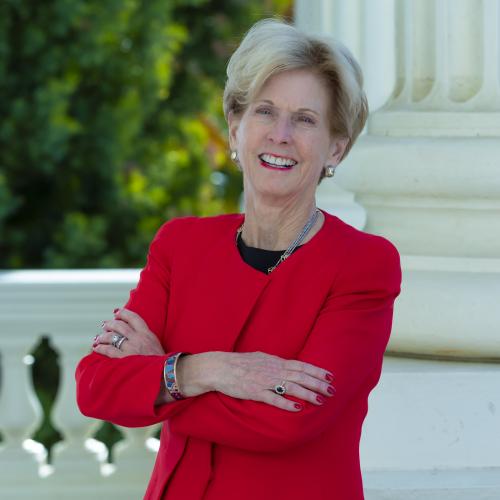
Ask Maddy about Diane Dixon
Scope: california
Hi! I can help you understand Diane Dixon's legislative record. What would you like to know?
Try one of these
i
Maddy answers using official bill text and legislative records. Always verify before sharing.
Sources cited inline