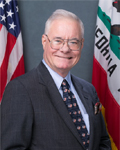
This measure would recognize the month of May 2018 as Foster Care Month as an opportunity to raise awareness about the challenges that children, and particularly lesbian, gay, bisexual, transgender, queer, and questioning (LGBTQ) youth, face in the foster care system, as specified.
Sponsored bills
This measure would recognize May 2018 as National Mental Health Awareness Month in California to enhance public awareness of mental illness.
Existing law imposes an excise tax on motor vehicle fuel (gasoline) and requires these taxes to be deposited in the Motor Vehicle Fuel Account. Existing law requires the moneys attributable to the excise tax on gasoline related to specified off-highway motor vehicles and off-highway vehicle activities to be transferred monthly from the Motor Vehicle Fuel Account to the Off-Highway Vehicle Trust Fund. With respect to the portion of those moneys attributable to an increase in the excise tax as a result of the elimination of the sales tax on gasoline effective July 1, 2010, existing law instead requires those moneys to be transferred to the General Fund. With respect to the portion of those moneys from a $0.12 per gallon increase in the excise tax commencing November 1, 2017, and future inflation adjustments from that increase, existing law instead requires those funds to be transferred to the State Parks and Recreation Fund, to be used for state parks, off-highway vehicle programs, or boating programs. Existing law also requires the Controller to withhold $833,000 from the monthly transfer to the Off Highway Vehicle Trust Fund, and transfer that amount to the General Fund. This bill would, on June 30, 2019, eliminate the requirement that the Controller withhold $833,000 from the monthly transfer to the Off-Highway Vehicle Trust Fund and transfer that amount to the General Fund. The bill would thereby transfer this amount monthly to the Off-Highway Vehicle Trust Fund.
Existing law authorizes a Purple Heart recipient to apply for special license plates inscribed with the Purple Heart insignia to be issued for a vehicle that is owned or coowned by the Purple Heart recipient. The law authorizes an applicant for the Purple Heart license plate who qualifies as a disabled veteran to apply also for a distinguishing placard to be used in conjunction with the Purple Heart license plate for specified special parking privileges. This bill would require a state agency with a parking facility that is available to private persons who conduct business with the agency to reserve a parking space free of charge for the exclusive use of any vehicle that displays a Purple Heart special license plate.
Existing law, the Lanterman Developmental Disabilities Services Act (Lanterman Act) , establishes the State Department of Developmental Services, which is responsible for providing various services and supports to persons with developmental disabilities, and for ensuring the appropriateness and quality of those services and supports. The Lanterman Act requires the department to enter into contracts with private nonprofit corporations to operate regional centers, which are required to provide, or arrange for the provision of, services and supports for persons with developmental disabilities. Under existing law, the state is responsible for developing and implementing a statewide program encouraging the establishment of sufficient numbers and types of living arrangements, both in communities and state hospitals, as necessary, to meet the needs of persons with disabilities. Existing law establishes the Department of Housing and Community Development (DHCD) in the Business, Consumer Services, and Housing Agency. The DHCD is responsible for administering various housing and home loan programs throughout the state. This bill would establish the California Integrated Community Living Program in the State Department of Developmental Services. The program would provide deferred payment loans to finance capital and other specified costs for permanent, supportive housing for individuals who are regional center clients in order to maximize affordable integrated community living opportunities within communities for people with intellectual and developmental disabilities. The bill would require the department and the DHCD to enter into an interagency agreement to administer the Integrated Community Living Program Fund, which would be created by, and continuously appropriated to the department for, the purposes described in the bill. The bill would prescribe the moneys to be deposited into the fund, including all moneys received by the department through the sale, lease, or other revenue-generating agreement for any state developmental center property, with specified exclusions. The bill would specify that moneys in the fund would not be used to supplant or backfill any existing program budget within either department. By creating a continuously appropriated fund, the bill would make an appropriation. The bill would require the department to convene an advisory committee to advise and assist in establishing funding priorities, with an emphasis on funding priorities for this program, as specified. This bill would require the DHCD to set forth minimum criteria for developing and administering a competitive application process to award funding for loans under the bill, as specified. The bill would require the DHCD to distribute funds in a manner that maximizes access to low-income housing tax credit program projects for the target population, and that also incentivizes development of creative permanent supportive housing projects outside of that program, as specified. The bill also would require the DHCD to adopt guidelines establishing income and rent standards for potential residents of properties funded under the program, including standards based solely on federal Supplemental Security Income. The bill would require the department and the DHCD to develop community integration criteria to set the maximum percentage of apartment units reserved for persons with intellectual or developmental disabilities within specified program projects, and to stipulate community integration standards for small projects.

The Personal Income Tax Law excludes from the gross income of an employee amounts paid or incurred by an employer for educational assistance to the employee, as specified, up to $5,250 during a calendar year. This bill would exclude from the gross income of an employee amounts, not exceeding an aggregate amount of $5,250 per year, that are paid or incurred by an employer on and after January 1, 2018, and before January 1, 2023, for the payment of principal or interest on a qualified education loan, as defined, incurred by the employee. This bill would take effect immediately as a tax levy.
Existing law authorizes the governing board of a school district to establish a security department under the supervision of a chief of security as designated by, and under the direction of, the superintendent of the school district. Existing law also authorizes the governing board of a school district to establish a school police department under the supervision of a school chief of police and to employ peace officers. This bill would require a school district or a charter school to hire or contract with at least one armed school resource officer, as defined, authorized to carry a loaded firearm, to be present at each school of the school district or charter school during regular school hours and any other time when pupils are present on campus. By imposing an additional requirement on school districts and charter schools, the bill would impose a state-mandated local program. The bill would provide that a school district's or charter school's costs of implementing this requirement shall be reimbursed as a state mandate and shall not be funded with the funding provided to school districts and charter schools pursuant to the local control funding formula. The California Constitution requires the state to reimburse local agencies and school districts for certain costs mandated by the state. Statutory provisions establish procedures for making that reimbursement. This bill would provide that, if the Commission on State Mandates determines that the bill contains costs mandated by the state, reimbursement for those costs shall be made pursuant to the statutory provisions noted above.
Existing law, the Personal Income Tax law, allows various credits against the taxes imposed by that law. This bill would allow a credit against that tax for each taxable year beginning on or after January 1, 2019, and before January 1, 2020, in an amount equal to 50% of the amount paid or incurred, not to exceed $1,000, for losses sustained by a taxpayer and not compensated for by insurance or otherwise that occurred in a qualified disaster area, as defined. This bill would take effect immediately as a tax levy.